

Atta capiguara
- Scientific Name
- Atta capiguara
- Tribe
- Attini
- Subfamily
- Myrmicinae
- Author
- Gonçalves, 1944
- Distribution
- Found in 1 countries
Atta capiguara Overview
Atta capiguara is an ant species of the genus Atta. It is primarily documented in 1 countries , including Brazil. Detailed taxonomic data and occurrence records can be further explored via authoritative databases such as AntWeb or the Global Biodiversity Information Facility (GBIF).
Atta capiguara
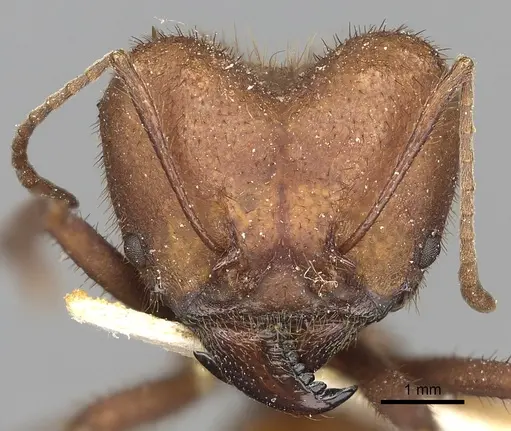
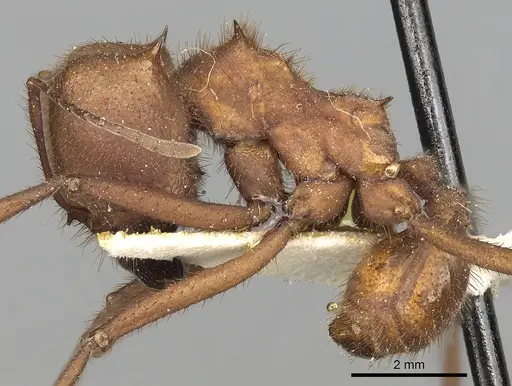
Atta capiguara, commonly known as saúva parda or the grass-cutting ant, is a large fungus-growing species native to Brazil and Paraguay. Queens reach an impressive 25 mm while workers range from tiny minors under 2 mm up to 15 mm soldiers [1][2]. Unlike their leaf-cutting relatives, these ants are specialists in harvesting grasses and monocots, inhabiting open pastures and Cerrado grasslands where they construct remarkably deep nests extending up to 6 meters underground [3][4]. Their nests are architectural marvels, the visible soil mound does not sit above the fungus chambers, which are instead located laterally and deep underground, connected by extensive tunnel systems [5][6]. These ants display a unique foraging rhythm with two daily peaks, one at dawn and a larger nocturnal peak between 6-8 PM, and they maintain physical trails that increase foraging speed up to ten times compared to off-trail surfaces [2][7]. Interestingly, they show almost no interest in sugars or artificial sweeteners, making them distinct from other Atta species that readily accept sugar water [8].
Quick Summary
- Difficulty: Expert
- Origin & Habitat: Brazil and Paraguay, specifically the Brazilian Cerrado, open grasslands, and pastures [3][2][9]
- Colony Type: Single-queen colonies (monogyne), each nest contains exactly one queen and thousands of workers [2][10]
- Colony: Monogyne
- Founding: Claustral
- Size & Growth:
- Queen: Approximately 25 mm [1]
- Worker: 2 mm to 15 mm (highly polymorphic with minors, foragers, and soldiers) [2][1]
- Colony: Thousands of workers, mature colonies can harvest up to 196 kg of grass annually [2][11]
- Growth: Slow, founding success is extremely low at only 0.2%, and colony development requires careful fungus garden management [12]
- Development: Estimated 8-12 weeks at 24-25°C based on typical Atta development patterns, exact timing unconfirmed for this species (First workers (nanitics) may emerge slightly faster than subsequent brood. Colony founding has high mortality rates.)
- Antkeeping:
- Temperature: 24-26°C for the nest area, with a gentle gradient. Foraging activity peaks at 20-25°C and ceases above 30°C or below 15°C [13][2][7]
- Humidity: High humidity 60-80%. Keep fungus garden substrate consistently moist but not waterlogged, the setup should feel damp to touch [13][2]
- Diapause: No, this is a tropical species that remains active year-round [9]
- Nesting: Deep multi-chamber setup required. You will need separate interconnected containers for the fungus garden (sterile), foraging arena, and waste disposal. Chambers must be isolated to prevent contamination [13][5][6]
- Behavior: Primarily nocturnal with peak foraging at dusk. They maintain physical trails and show less aggression than other Atta species, soldiers rarely defend entrances and their mandibles cannot cut human skin effectively [2][14][7]. Workers are constantly active, even in overcast weather, and communicate using trail pheromones [2].
- Common Issues: fungus garden contamination by Escovopsis or other pathogens can wipe out the colony overnight [18], queen mortality during founding is extremely high, only 0.2% of founding attempts succeed in nature, and queens are susceptible to fungal pathogens like Fusarium [12][24], diet specificity, they refuse sugars and artificial sweeteners, requiring fresh grasses and monocots daily [8], nest depth requirements, mature colonies need vertical space equivalent to meters of soil depth to expand properly, which is difficult to replicate in captivity [6], waste management, you must provide separate waste chambers isolated from fungus gardens to prevent pathogen spread [5][6]
Nest Architecture and Captive Housing
Atta capiguara builds unique nests that pose significant challenges for captive keeping. Unlike many ants, their visible soil mound does not sit above the fungus chambers, instead, chambers are located laterally and deep underground, often 1-2 meters deep in mature colonies, with nests extending to 5.85 meters [5][4][6]. The queen initially founds her nest by digging to 15-20 cm and building the first chamber [6]. As the colony grows, workers add chambers following a power function, by 42-54 months, nests contain 21-32 fungus chambers plus separate waste chambers [6]. For captive housing, you must replicate this separation: provide a dark, humid fungus garden chamber (sterile plastic container with gypsum base works well [13]), connected by tubing to a foraging arena, and include separate waste chambers isolated from the fungus to prevent Escovopsis contamination [5]. The fungus chambers should have oval shapes with flat bases, and you will need to allow for vertical expansion as the colony matures [6].
Fungus Garden Management
The symbiotic fungus Leucoagaricus gongylophorus is the colony's true food source, the ants feed the fungus grass fragments and eat the fungal growths [16][17]. This fungus is specialized for grass degradation, producing high levels of cellulase and pectinase enzymes to break down monocot cell walls [16]. In captivity, maintaining sterile conditions is critical. The fungus garden must be kept at high humidity (60-80%) and around 24°C [13]. Contamination by Escovopsis (a parasitic fungus) is the primary cause of colony death [18]. You will notice the fungus garden appears as white cottony masses with small bumps (gongylidia), if it turns green, black, or smells bad, contamination has occurred. The garden contains specialized bacterial communities dominated by Gammaproteobacteria that help with nitrogen fixation and degradation of plant compounds [19][20]. Never introduce unsterilized materials into the fungus chamber.
Feeding and Diet Specialization
Atta capiguara is a strict grass-cutter (monocot specialist) that feeds almost exclusively on grasses like Paspalum, Brachiaria, Hyparrhenia rufa, and sugarcane [2][21][16]. Unlike other Atta species, they show virtually no interest in sugars or artificial sweeteners, experiments showed no statistical difference in attraction between sugar solutions and plain water [8]. You must provide fresh grass blades daily, cutting them into lengths the workers can carry (they transport pieces up to 59 mm long) [14]. Preferred grasses include Paspalum notatum and Hyparrhenia rufa, while Brachiaria species are often rejected due to chemical inhibitors [22]. Workers process grass differently than leaf-cutters: they perforate leaves along veins, scrape and lick the fragments, and deposit fecal fluid at inoculation points rather than thoroughly masticating the material [22]. Remove old grass fragments before they mold, and never feed dicot leaves as the fungus may not process them efficiently.
Temperature and Activity Patterns
These ants prefer warm but not hot conditions. Laboratory colonies thrive at 24±1°C [13], while natural foraging peaks at air temperatures of 20-25°C [2][7]. Activity drops significantly above 30°C and below 15°C, and ceases almost entirely during heavy rain [7]. They show a distinct bimodal daily rhythm: a small morning peak around 7-8 AM and a major nocturnal peak from 6 PM extending until 4-5 AM [2][7]. During the dry season, they shift to almost exclusively nocturnal foraging to avoid midday heat [2]. In captivity, provide a temperature gradient from 22-26°C so workers can self-regulate. High humidity (75-80%) is optimal for foraging activity, dropping significantly below 40% [2]. CO2 levels in nests naturally reach 4.5% in fungus chambers, so ensure your setup has some ventilation but maintains high humidity [23].
Colony Founding and Early Development
Queens found nests claustrally, the queen seals herself in an initial chamber and survives entirely on stored body fat until her first workers hatch [15]. However, founding success in this species is extremely poor: only 0.2% of queens successfully establish colonies, and survival over the first three months is just 0.1% [12]. Queens are vulnerable to fungal pathogens like Fusarium oxysporum, which has been isolated from dead founding queens [24]. When starting a colony, provide the queen with a small, dark chamber with high humidity and do not disturb her. She will lay eggs and tend the initial fungus garden alone. The first workers (nanitics) will be smaller than subsequent generations. Do not attempt to combine multiple queens, colonies are strictly monogyne (single queen), and genetic studies confirm nests contain only one queen's offspring [10]. Be prepared for high mortality rates, even under ideal conditions, most founding attempts fail.
Behavior and Defense
Atta capiguara is notably less aggressive than other leaf-cutting ants. When nest entrances are disturbed, soldiers rarely appear, and those that do emit a hissing sound when captured [14]. Their mandibles are not robust enough to cut human skin effectively, making them safer to handle than Atta sexdens or Atta laevigata [14]. Workers are extremely active, constantly carrying soil particles to the surface even in cold or windy weather [14]. They forage using physical trails that serve as 'memory' of resource locations, increasing foraging speed by 4-10 times compared to unmarked ground [2]. Trails are maintained mechanically by constant ant traffic and cutting, up to 5% of the colony may be involved in trail construction at any time [2]. If a trail is destroyed, workers restore it within 48-96 hours by cutting new grass and transporting it to the nest [2].
Frequently Asked Questions
Can I keep Atta capiguara as a beginner?
No, this is an expert-level species. They require specialized fungus garden maintenance, specific grass diets, deep nesting setups, and have extremely low founding success rates (0.2% in nature). You need experience with fungus-growing ants before attempting Atta capiguara [12][13].
What do Atta capiguara eat?
They are grass specialists that feed exclusively on monocotyledonous plants like Paspalum, Brachiaria, and sugarcane. Unlike other leafcutters, they reject sugars and artificial sweeteners completely. You must provide fresh grass blades daily, they cannot survive on sugar water or honey [8][2][21].
How long until Atta capiguara first workers hatch?
Exact timing is unconfirmed, but based on typical Atta development at 24-25°C, expect approximately 8-12 weeks from egg to first worker. The first workers (nanitics) may emerge slightly faster than subsequent brood. Keep the founding chamber undisturbed during this vulnerable period.
Do Atta capiguara need a fungus garden?
Yes, they are obligate fungus-growers. The colony cultivates Leucoagaricus gongylophorus fungus on grass fragments, and both adults and larvae eat the fungal growths, not the grass itself. Without a healthy fungus garden, the colony will starve within days [16][17].
Can I keep multiple Atta capiguara queens together?
No. Atta capiguara is strictly monogyne (single queen). Genetic studies confirm each nest contains only one queen, and combining queens will result in fighting and death. Only one queen per colony [2][10].
What temperature do Atta capiguara need?
Keep the nest at 24-26°C with high humidity (60-80%). They forage best at 20-25°C and stop activity above 30°C or below 15°C. Provide a gentle heat gradient so workers can choose their preferred temperature [13][2][7].
Do Atta capiguara need hibernation?
No. As a tropical species from Brazil and Paraguay, they remain active year-round and do not require diapause or hibernation. Maintain stable warm temperatures throughout the year [9].
Why is my Atta capiguara fungus garden dying?
Fungus garden failure is usually caused by contamination with Escovopsis (a parasitic fungus), incorrect humidity, or improper food. The garden should be white and fluffy, any green, black, or foul smells indicate contamination. Ensure you are feeding only grasses, keeping humidity high, and have separate waste chambers to prevent pathogen spread [18][5].
How big do Atta capiguara colonies get?
Colonies reach thousands of workers. Mature nests contain 21-32 fungus chambers and can harvest over 100 kg of fresh grass annually. In the wild, nests can extend 6 meters deep and last over 6 years [6][11][12].
How deep should an Atta capiguara nest be?
Founding queens start at 15-20 cm deep, but mature colonies need significant depth, natural nests reach 5-6 meters. In captivity, plan for vertical expansion: start with a small setup but be prepared to move them to deeper containers as they grow, or use stacked modular systems [6][4].
References

This caresheet is licensed under CC BY-SA 4.0 .
CASENT0281784
View on AntWeb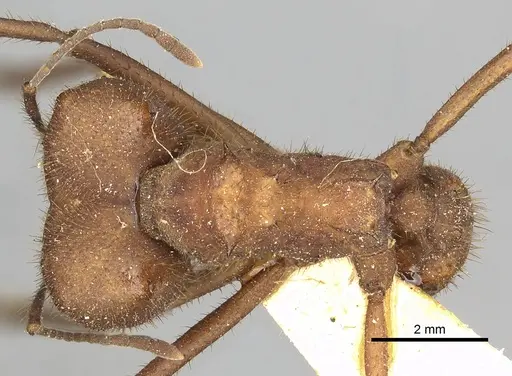
Literature
Loading...Loading products...