

Aphaenogaster muschtaidica
- Scientific Name
- Aphaenogaster muschtaidica
- Tribe
- Stenammini
- Subfamily
- Myrmicinae
- Author
- Emery, 1908
- Distribution
- Found in 2 countries
Aphaenogaster muschtaidica Overview
Aphaenogaster muschtaidica is an ant species of the genus Aphaenogaster. It is primarily documented in 2 countries , including Azerbaijan, Russian Federation. Detailed taxonomic data and occurrence records can be further explored via authoritative databases such as AntWeb or the Global Biodiversity Information Facility (GBIF).
Aphaenogaster muschtaidica
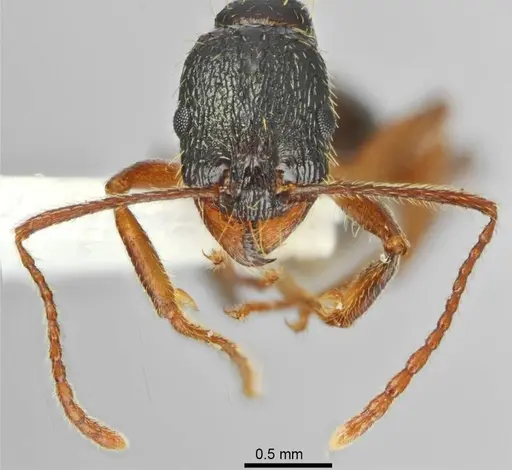
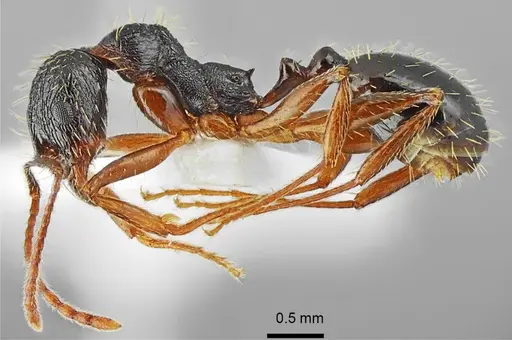
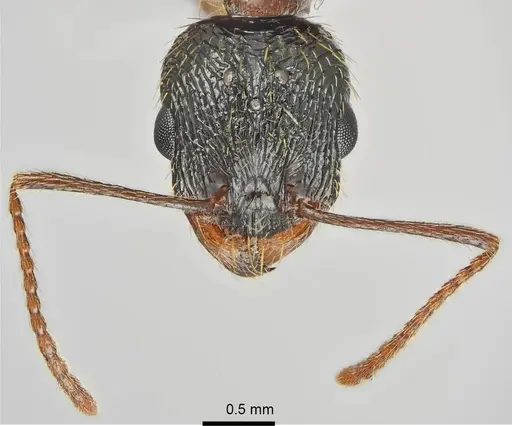
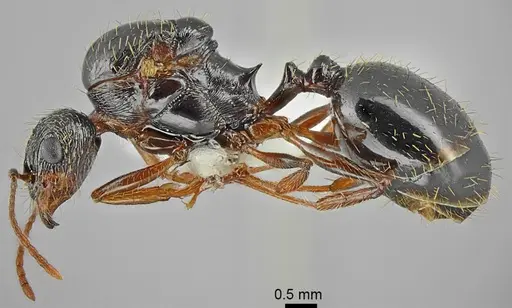
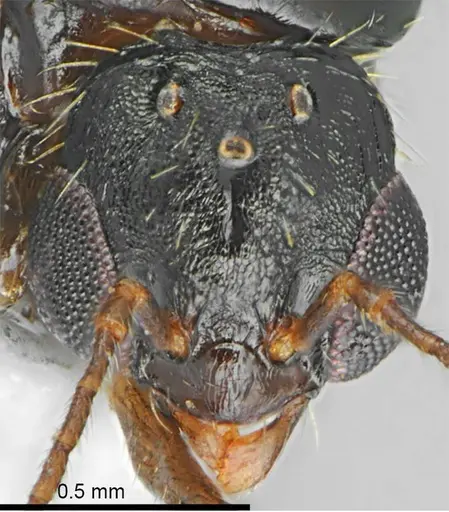
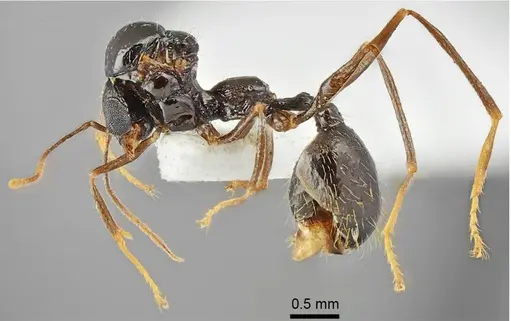
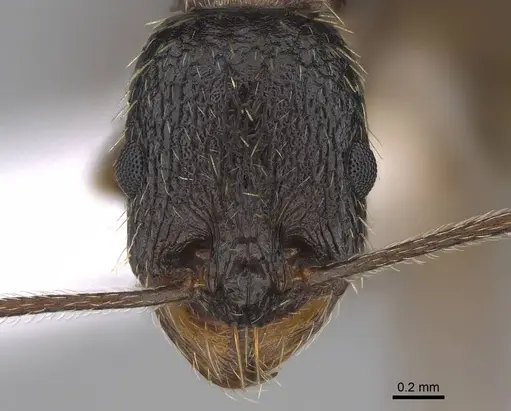
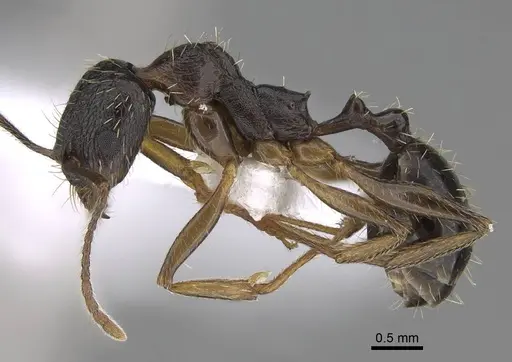
Aphaenogaster muschtaidica is a small, dark ant native to the Transcaucasian region. Workers have black bodies with dark brown to reddish brown legs and antennae, measuring roughly 3-4 mm in length with heads about 0.7-1.0 mm wide [1]. Queens are larger with heads around 1.3 mm wide and black coloration matching the workers [1]. The species was recently redescribed and separated from the similar Aphaenogaster gibbosa, which lives in the western Mediterranean while A. muschtaidica inhabits Georgia, Azerbaijan, Armenia, and Iran [1][2][3].
In nature, these ants nest in dry, sandy soil beneath medium-sized rocks on sunny slopes, often in pine forests [1]. Researchers observed workers surrounding young queens near the nest entrance while males hid in soil heaps nearby, suggesting mating may occur close to the colony rather than in aerial flights [1].
Quick Summary
- Difficulty: Medium
- Origin & Habitat: Transcaucasian region (Georgia, Azerbaijan, Armenia, Iran), dry pine forest slopes with sandy soil and rock cover [1][2]
- Colony Type: Unconfirmed, single or multiple queen systems not documented in research
- Size & Growth:
- Queen: Approximately 5-6 mm (head width 1.28-1.34 mm) [1]
- Worker: Approximately 3-4 mm (head width 0.72-0.96 mm) [1]
- Colony: Unknown, likely moderate based on genus patterns
- Growth: Unknown, estimated moderate
- Development: Unknown (Development time has not been documented for this species. Based on related temperate Aphaenogaster, expect roughly 8-12 weeks at 25°C, but this is speculative.)
- Antkeeping:
- Temperature: Temperate, based on their pine forest habitat in the Transcaucasian region [1], keep at 20-25°C during the active season with a cooling period for winter
- Humidity: Low to moderate, nest in dry sandy soil [1]. Keep nest substrate slightly moist but not wet, with good ventilation
- Diapause: Likely yes, the species inhabits regions with cold winters [1]. Provide winter rest at 5-10°C for 3-4 months
- Nesting: Rock cavities in sandy soil, use shallow nests with flat stones or dark cavities, avoiding deep humid chambers [1]
- Behavior: Temperament unconfirmed in literature. Small size requires excellent escape prevention using fine mesh and barriers [1]
- Common Issues: small size means they can squeeze through tiny gaps and require excellent escape prevention., poorly documented biology means captive care is experimental and requirements are uncertain., dry nesting preferences may lead to mold problems if kept in overly humid setups., confusion with Aphaenogaster gibbosa which has different distribution and potentially different care requirements.
Distribution and Natural History
Aphaenogaster muschtaidica is endemic to the Transcaucasian region, found in Georgia (including Tbilisi), Azerbaijan, Armenia, and Iran [1][2][3]. The species was previously confused with Aphaenogaster gibbosa, but while A. gibbosa inhabits the western Mediterranean, A. muschtaidica is restricted to the Caucasus area [2].
The neotype specimen was collected in Tbilisi Botanical Garden at 429 meters elevation in a dry, sandy area below a medium-sized rock on a pine-covered slope [1]. This habitat suggests they prefer well-drained, sunny locations with some stone cover and scattered tree shade. Associated ant species at collection sites include Camponotus piceus, Cataglyphis nigripes, Crematogaster schmidti, and various Formica, Lasius, and Tetramorium species [1].
Nest Preferences in Captivity
In nature, these ants nest under rocks in dry, sandy soil [1]. For captive colonies, recreate these conditions by providing a shallow nest area with a sandy or sandy-loam substrate that drains well. Place flat stones or dark tiles over part of the nest to create a secure retreat.
Avoid deep, humid plaster nests or tight-fitting acrylic nests that might trap moisture. A naturalistic setup in a terrarium with a soil-sand mix and flat stones works well, or use a Y-tong (AAC) nest with shallow chambers and minimal water reservoirs. Ensure the nest has a dry gradient, moist enough to prevent complete desiccation but with areas where the substrate feels dry to the touch.
Temperature and Seasonal Care
Based on their distribution in the Transcaucasian region with continental climate patterns, these ants likely experience hot summers and cold winters [1]. During the active season (spring through autumn), maintain temperatures around 20-25°C. A heating cable on one side of the nest can create a gentle gradient, but avoid overheating as their natural nests were in shaded pine areas.
For winter care, provide a diapause (hibernation) period at 5-10°C for approximately 3-4 months. Gradually reduce temperature in autumn and cease feeding. Keep the nest slightly drier during winter rest to prevent mold, then gradually warm in spring and resume feeding when the colony shows activity.
Colony Founding
Founding behavior has not been documented in scientific literature for this species. Most Aphaenogaster species are semi-claustral, meaning the queen leaves her chamber to forage for food during the founding stage rather than sealing herself in and living entirely on stored fat reserves. However, this cannot be confirmed for A. muschtaidica.
If starting with a newly mated queen, provide a small founding chamber with access to an outworld where she can forage. Offer small amounts of protein (tiny insect pieces) and sugar water, observing whether she accepts food or remains sealed. If she remains sealed for weeks, she may be claustral (living on stored reserves), but be prepared to offer food if she appears active or restless.
Feeding and Diet
Specific dietary preferences are unstudied in this species. Based on typical Aphaenogaster behavior, they are likely generalist scavengers and predators. Offer small live or freshly killed insects such as fruit flies, springtails, or small cricket pieces. Provide sugar sources like honey water or sugar water in small drops.
Some Aphaenogaster species collect seeds, so offering small seeds (millet, chia, or canary seed) may be accepted. Start with small portions and remove uneaten food promptly to prevent mold in their dry-preference nesting environment. Workers were observed near the soil surface in their natural habitat, suggesting they may forage diurnally [1].
Frequently Asked Questions
How big are Aphaenogaster muschtaidica workers?
Workers are small, approximately 3-4 mm in total body length. Their heads measure 0.72-0.96 mm in width and 0.98-1.27 mm in length [1]. Queens are larger with heads about 1.28-1.34 mm wide [1].
Where do Aphaenogaster muschtaidica live in the wild?
They inhabit the Transcaucasian region including Georgia, Azerbaijan, Armenia, and Iran [1][2][3]. Specifically, they nest in dry, sandy soil beneath rocks on slopes with pine tree cover [1].
Do Aphaenogaster muschtaidica need hibernation?
Likely yes. They come from temperate regions with cold winters (Georgia, Azerbaijan) where they nest in soil under rocks [1]. Provide a winter rest period at 5-10°C for 3-4 months.
Can I keep multiple Aphaenogaster muschtaidica queens together?
This is not recommended. Whether this species accepts multiple queens (polygyne) or fights (monogyne) is completely unknown. Combining unrelated queens risks fighting and injury.
What is the best nest type for Aphaenogaster muschtaidica?
Use a setup that mimics their natural dry, sandy soil under rocks [1]. A naturalistic terrarium with sand-soil mix and flat stones, or a shallow Y-tong (AAC) nest with minimal humidity works best. Avoid deep, humid plaster nests.
How long until Aphaenogaster muschtaidica get their first workers?
The egg-to-worker timeline is unknown for this species. Based on related temperate Aphaenogaster, expect roughly 8-12 weeks at 25°C, but this is speculative and may vary significantly.
Are Aphaenogaster muschtaidica good for beginners?
They are probably not ideal for beginners due to limited documentation of their care requirements. Their small size requires excellent escape prevention, and their specific nesting preferences (dry, sandy substrate) require more attention than standard test tube setups.
What do Aphaenogaster muschtaidica eat?
Their diet is unstudied, but they likely accept small insects (fruit flies, springtails, cricket pieces) and sugar water based on typical Aphaenogaster feeding habits. Small seeds may also be accepted.
How do I tell Aphaenogaster muschtaidica from Aphaenogaster gibbosa?
These species are very similar and were historically confused. A. muschtaidica is found in the Transcaucasian region (Georgia, Azerbaijan, etc.) while A. gibbosa occurs in the western Mediterranean [2]. Detailed morphological differences require examination of specific measurements and sculpture patterns described by Salata and Borowiec [1].
Do Aphaenogaster muschtaidica sting?
Like most Myrmicinae ants, they likely possess a stinger but are too small to penetrate human skin effectively. No specific information about their sting or venom is documented.
References

This caresheet is licensed under CC BY-SA 4.0 .
ANTWEB1008979
View on AntWeb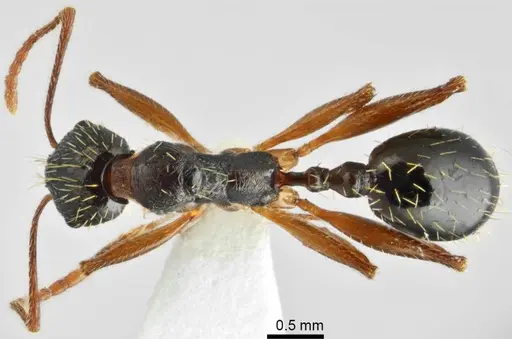
ANTWEB1008980
View on AntWeb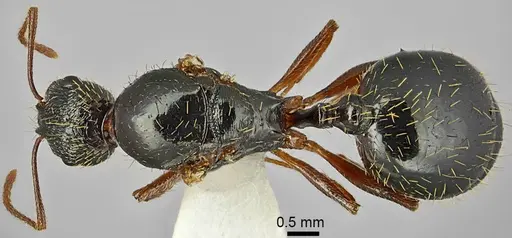
ANTWEB1008981
View on AntWeb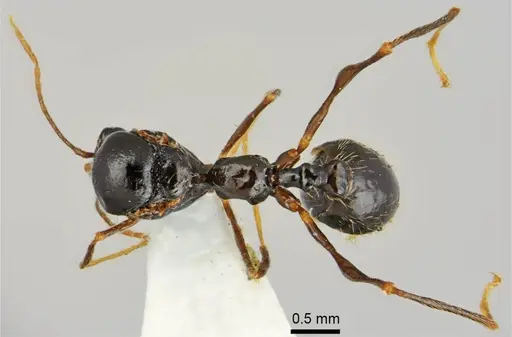
CASENT0922686
View on AntWeb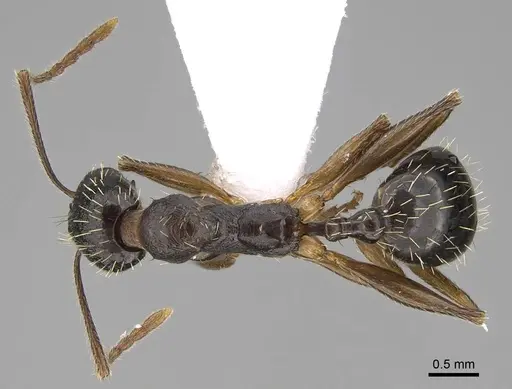
Literature
Loading...Loading products...