

Tetramorium sepultum
- Scientific Name
- Tetramorium sepultum
- Tribe
- Crematogastrini
- Subfamily
- Myrmicinae
- Author
- Bolton, 1980
- Distribution
- Found in 1 countries
Tetramorium sepultum Overview
Tetramorium sepultum is an ant species of the genus Tetramorium. It is primarily documented in 1 countries , including Mozambique. Detailed taxonomic data and occurrence records can be further explored via authoritative databases such as AntWeb or the Global Biodiversity Information Facility (GBIF).
Tetramorium sepultum
Tetramorium sepultum is a small, ground-dwelling ant species native to Southern Africa, found in South Africa, Mozambique, and Eswatini [1][2]. Workers measure around 3.5mm in total length, with a uniformly brown coloration and distinctive morphological features including medium-sized propodeal spines and small eyes [3][1]. This species belongs to the Tetramorium weitzeckeri species group, a complex of leaf-litter ants known for their longitudinally rugose mesosoma and the absence of standing hairs on the first gastral tergite, a key identification feature that separates T. sepultum from related species like T. humbloti and T. tanaense [1]. The species is considered rare in the wild, with only a few collections documented across its range [1].
Quick Summary
- Difficulty: Unknown, likely Medium based on genus typical behavior
- Origin & Habitat: Southern Africa, South Africa, Mozambique, and Eswatini. Based on related species in the weitzeckeri group, they likely inhabit forest floor environments in moist, shaded areas [2][4].
- Colony Type: Unknown, likely monogyne (single queen) based on typical Tetramorium patterns. Colony structure has not been directly studied for this species.
- Size & Growth:
- Queen: Undocumented for this species, related Tetramorium queens are typically 6-9mm
- Worker: 3.5mm total length (TL), with head length 0.79-0.81mm and head width 0.77-0.79mm [3][1]
- Colony: Unknown, likely under 500 workers based on similar litter-dwelling Tetramorium species
- Growth: Unknown, likely moderate based on genus patterns
- Development: Unconfirmed, estimated 6-10 weeks based on typical Tetramorium development at optimal temperatures (Development timeline has not been directly studied for this species. Estimates based on related species in the genus.)
- Antkeeping:
- Temperature: Unconfirmed, aim for 22-26°C as a starting point, typical for Afrotropical Tetramorium species. Monitor colony activity and adjust accordingly.
- Humidity: Unconfirmed, likely requires moderate to high humidity (60-80%) based on forest floor habitat preferences of related species. Keep substrate consistently moist but not waterlogged.
- Diapause: Unknown, Southern African species may have reduced activity during cooler months but true diapause requirements are unconfirmed for this species.
- Nesting: Based on related species in the weitzeckeri group, they likely prefer naturalistic setups with soil/substrate for tunneling. A Y-tong or plaster nest with moist substrate would likely work well. Avoid overly dry conditions.
- Behavior: Behavior is unconfirmed for this species. Based on related Tetramorium species, they are likely ground-dwelling foragers that hunt small prey and may tend aphids for honeydew. Workers are small (3.5mm) so escape prevention should be good regardless of behavior, tiny ants can slip through standard barriers if not careful. They are likely not aggressive but will defend their nest if threatened.
- Common Issues: very limited scientific data means care requirements are largely inferred from related species, expect some trial and error, colony size remains unknown so keepers may not know when growth is on track, nuptial flight timing is unconfirmed, Southern African species typically fly during warm, humid months, humidity requirements are unconfirmed, too dry conditions may stress colonies, as a rare species with few records, wild-caught colonies may be difficult to find
Appearance and Identification
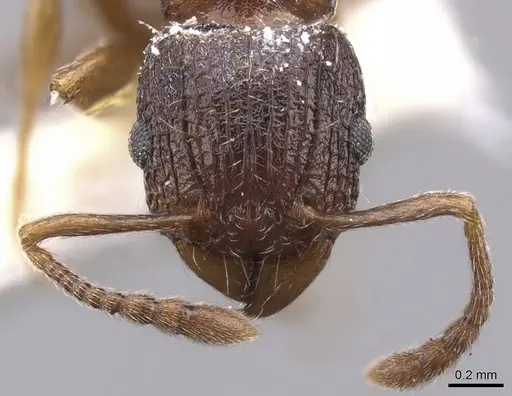
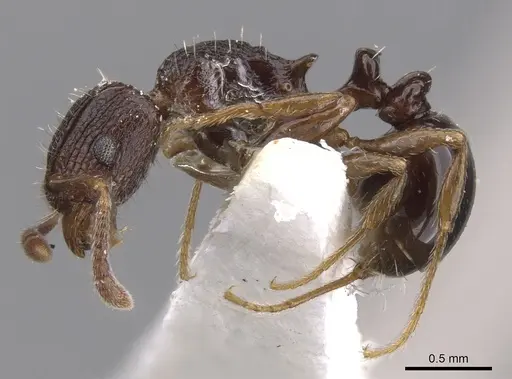
Tetramorium sepultum workers are small ants measuring approximately 3.5mm in total length [3]. They have a uniformly brown coloration throughout the body, which helps distinguish them from some related species [1]. The head is slightly longer than wide, and they possess relatively small eyes with only 8-9 ommatidia in the longest row, this small eye size (OI 21-22) is a key identification feature [1]. The propodeal spines are medium-sized and relatively thick, and the mesosoma has distinctive longitudinal rugae without distinct ground sculpturation. A particularly useful identification marker is the complete absence of standing hairs on the first gastral tergite, which separates T. sepultum from several closely related species [1]. The dorsal mesosoma typically has 14-16 erect hairs, which is more than in similar species like T. humbloti (which has at most 6 hairs) [3].
Natural Habitat and Distribution
This species is known from a limited range in Southern Africa, specifically South Africa, Mozambique, and Eswatini (formerly Swaziland) [2]. It is considered a rare species with few documented collections [1]. As a member of the Tetramorium weitzeckeri species group, it likely inhabits leaf-litter environments in forested areas, similar to other species in this complex [5]. The weitzeckeri group species are typically ground-dwelling ants found in moist, shaded microhabitats. Given the Southern African distribution, they likely experience warm temperatures and seasonal rainfall patterns. In captivity, providing conditions that approximate these forest floor environments, with adequate moisture, shaded nesting areas, and suitable foraging space, would be appropriate starting points.
Housing and Nest Setup
Since specific care requirements for T. sepultum have not been documented, care recommendations must be inferred from related species in the Tetramorium weitzeckeri group. A naturalistic setup with moist substrate (such as a mixture of soil and sand) would likely suit this species, allowing them to create tunnels and chambers similar to their natural forest floor habitat. Y-tong (AAC) nests or plaster nests with moisture reservoirs can also work well for Tetramorium species. The nest should maintain moderate to high humidity (aiming for 60-80% relative humidity), as these ants typically prefer moist conditions. Provide a water tube and ensure the outworld has access to moisture. Given their small size (3.5mm workers), ensure escape prevention is adequate, even small Tetramorium can slip through gaps in poorly sealed setups.
Feeding and Diet
The specific diet of T. sepultum has not been documented, but based on typical Tetramorium behavior and related species in the weitzeckeri group, they are likely omnivorous with a preference for protein sources. In captivity, they would likely accept small live prey such as fruit flies, pinhead crickets, and other tiny insects. They may also accept sugar sources like honey water or sugar water, as many Tetramorium species will tend aphids for honeydew in nature. Feed protein sources 2-3 times per week, and provide a constant sugar source. Remove any uneaten prey after 24-48 hours to prevent mold issues. Start with small prey items appropriate to the colony size and adjust based on consumption rates.
Temperature and Seasonal Care
Temperature requirements for T. sepultum specifically have not been studied. Based on the species' Southern African origin and its placement in the weitzeckeri species group, aim for temperatures in the range of 22-26°C as a starting point. This aligns with typical conditions for Afrotropical Tetramorium species. Monitor your colony's activity levels, if workers become sluggish, consider raising the temperature slightly, if they avoid the heated areas, reduce it. Regarding seasonal care, true diapause requirements are unconfirmed for this species. Southern African ants may experience reduced activity during cooler months but often do not require a full hibernation period like temperate species. If your colony shows reduced activity in winter, you can lower temperatures slightly (to around 18-20°C) for a few months but avoid prolonged cold exposure unless the colony shows clear signs of needing dormancy.
Colony Development and Growth
Detailed colony development data for T. sepultum is not available in the scientific literature. Based on typical Tetramorium development patterns and related species, you can expect the first workers (nanitics) to emerge approximately 6-10 weeks after the queen lays eggs, assuming optimal temperatures around 24-26°C. The queen will remain claustrally sealed in her founding chamber during this time, surviving on her stored fat reserves until the first workers emerge. Colony growth is likely moderate, similar leaf-litter Tetramorium species typically reach several hundred workers over time. Since this is a poorly studied species, keep detailed records of your colony's development to contribute to our understanding of T. sepultum husbandry. Watch for signs of healthy growth: workers actively foraging, brood developing through all stages (eggs, larvae, pupae), and the queen continuing to lay eggs.
Frequently Asked Questions
How long does it take for Tetramorium sepultum to raise first workers?
The exact timeline is unconfirmed for this species. Based on typical Tetramorium development, expect 6-10 weeks from egg to first worker at optimal temperatures (around 24-26°C). The queen seals herself in during founding and lives off stored fat reserves until her first workers emerge, this is called claustral founding.
What do Tetramorium sepultum ants eat?
Specific feeding data is not documented for this species, but they likely accept small live prey (fruit flies, pinhead crickets, tiny insects) and sugar sources (honey water, sugar water). Related Tetramorium species are omnivorous and may also tend aphids for honeydew. Offer protein 2-3 times weekly and provide constant access to sugar sources.
What temperature do Tetramorium sepultum ants need?
Temperature requirements are unconfirmed but aim for 22-26°C based on the species' Southern African origin. Start in the middle of this range and adjust based on colony behavior, workers clustering near heat suggests they want it warmer, while avoiding heated areas suggests lowering temperature.
How big do Tetramorium sepultum colonies get?
Colony size is unconfirmed for this species. Based on similar leaf-litter Tetramorium species, colonies likely reach several hundred workers at maximum. They are considered a rare species with limited documented colony sizes.
Do Tetramorium sepultum ants need hibernation?
Diapause requirements are unknown for this species. Southern African ants may have reduced activity during cooler months but often do not require full hibernation like temperate species. If your colony slows in winter, you can reduce temperatures to 18-20°C for a few months.
Can I keep multiple Tetramorium sepultum queens together?
Colony structure is unconfirmed for this species. Most Tetramorium species are monogyne (single queen), but some can be polygyne. Until more data is available, it is not recommended to combine unrelated queens. If you obtain a colony, assume single-queen structure unless you observe multiple egg-laying queens.
Are Tetramorium sepultum ants aggressive?
Aggression levels are unconfirmed for this species. Based on related Tetramorium species, they are likely not particularly aggressive but will defend their nest if threatened. Their small size (3.5mm) means they pose minimal sting risk, Myrmicinae ants have functional stingers but these tiny ants would struggle to penetrate human skin.
What makes Tetramorium sepultum different from other Tetramorium?
T. sepultum can be identified by its small eyes (OI 21-22), medium-sized thick propodeal spines, longitudinally rugose mesosoma without ground sculpturation, and most importantly, the complete absence of standing hairs on the first gastral tergite. It is also one of the rarer Tetramorium species, known only from a few collections in Southern Africa.
Is Tetramorium sepultum a good species for beginners?
This species is not recommended for beginners due to the lack of documented care information. The care requirements are largely inferred from related species, so keepers should be prepared for some experimentation. If you are new to antkeeping, consider starting with more commonly kept species like Tetramorium caespitum or other well-documented Tetramorium species.
Where does Tetramorium sepultum live in the wild?
In the wild, T. sepultum is found only in Southern Africa, specifically South Africa, Mozambique, and Eswatini. As a member of the weitzeckeri species group, they likely inhabit leaf-litter in forested areas with moist, shaded conditions. Only a handful of collections have been documented, making this a rare species in the antkeeping hobby.
References

This caresheet is licensed under CC BY-SA 4.0 .
CASENT0901160
View on AntWeb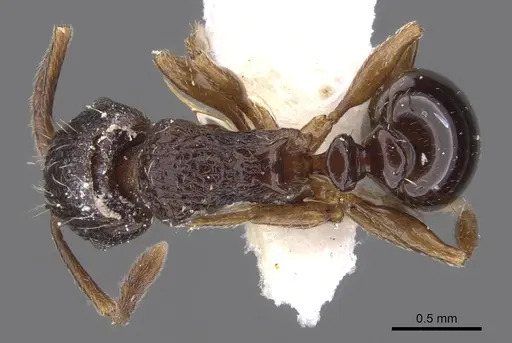
Literature
Loading...Loading products...