

Temnothorax quasimodo
- Scientific Name
- Temnothorax quasimodo
- Tribe
- Crematogastrini
- Subfamily
- Myrmicinae
- Author
- Snelling <i>et al.</i>, 2014
- Distribution
- Found in 1 countries
Temnothorax quasimodo Overview
Temnothorax quasimodo is an ant species of the genus Temnothorax. It is primarily documented in 1 countries , including United States of America. Detailed taxonomic data and occurrence records can be further explored via authoritative databases such as AntWeb or the Global Biodiversity Information Facility (GBIF).
Temnothorax quasimodo
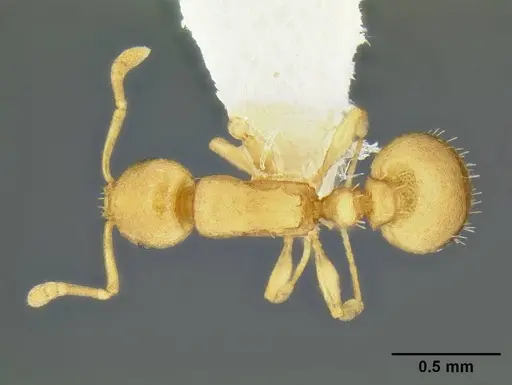
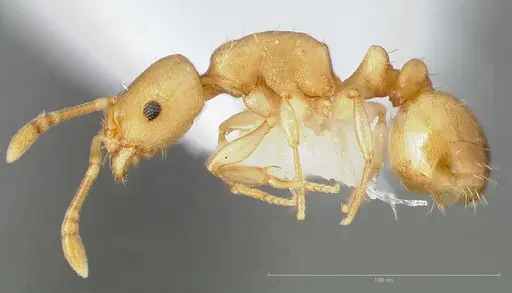
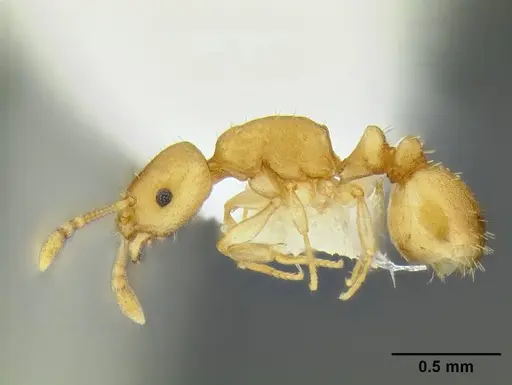
Temnothorax quasimodo is a tiny yellow ant native to California, named after the character Quasimodo from The Hunchback of Notre Dame due to its distinctive hunched appearance [1]. Workers measure only about 2.5mm total length, with a short, deep mesosoma (the middle body section) that gives them a uniquely curved profile unlike most other Temnothorax species [1]. Their body is uniformly yellow, they lack propodeal spines (instead having blunt angles), and they have a 12-segmented antenna with a 3-segmented club [1][2]. This species was only ever collected once, from leaf mold and rotten wood in chaparral habitat at Cold Canyon in Solano County, California [1][2]. The unusual body morphology has led researchers to speculate whether this might be a socially parasitic species (a species that lives in other ant colonies), though this remains unconfirmed [1][2].
What makes T. quasimodo particularly interesting is its extreme rarity, it's one of the most infrequently encountered California ant species known [1]. Whether this reflects true ecological scarcity, highly specialized habitat requirements, or possibly its suspected parasitic lifestyle (which would make finding colonies difficult) remains unknown. The species was found in the same location as the common Temnothorax andrei, which it superficially resembles, but can be distinguished by its distinctive hunched mesosomal profile [2].
Quick Summary
- Difficulty: Unknown, Insufficient Data
- Origin & Habitat: Cold Canyon, Solano County, California, USA. Native to chaparral habitat in the Nearctic region. Collected from sifted leaf mold and rotten wood (litter layer) [1][2].
- Colony Type: Unknown. Only worker caste has been collected. The unusual morphology suggests possible social parasitism, but this is unconfirmed. No colony samples or queen specimens have ever been found [1][2].
- Size & Growth:
- Queen: Unknown, no queen specimens have been collected or described [1]
- Worker: Approximately 2.5mm total length (HL 0.529mm, HW 0.416mm, WL 0.587mm) [1]
- Colony: Unknown, only a single worker has ever been collected [1]
- Growth: Unknown
- Development: Unknown, no development data exists for this species. Based on typical Temnothorax patterns, expect 6-10 weeks at optimal temperature (Development timeline is unconfirmed. Related Temnothorax species typically develop from egg to worker in 6-10 weeks depending on temperature.)
- Antkeeping:
- Temperature: Unknown for this species. Based on typical California chaparral Temnothorax species, aim for roughly 20-24°C with stable conditions. Observe colony activity and adjust.
- Humidity: Unknown. Based on collection from leaf mold and rotten wood in chaparral, they likely prefer moderate humidity with some moisture. Keep the nest substrate lightly moist but not waterlogged.
- Diapause: Unknown. California chaparral ants may have reduced activity in winter but true hibernation requirements are unconfirmed for this species.
- Nesting: No captive nesting data exists. In nature, they were collected from leaf litter (rotten wood and leaf mold), suggesting they likely nest in small cavities in rotting wood or under stones in shaded areas. A small Y-tong or plaster nest with tight chambers scaled to their tiny size would be appropriate.
- Behavior: Behavior is unstudied. Based on genus-level patterns, they are likely peaceful toward conspecifics and may have queen replacement reproductives (ergatoid queens) like many Temnothorax species. Their tiny size means escape prevention must be excellent, they can squeeze through standard test tube barriers. Foraging style is unknown but likely involves tandem-running recruitment to food sources, as is typical for the genus.
- Common Issues: This species has never been kept in captivity, there is no established care protocol or husbandry information, Only a single worker has ever been collected, suggesting extreme rarity or highly specialized habitat requirements, The suspected social parasitic nature (if confirmed) would require a host colony for successful captive keeping, No queen specimens exist in collections, making captive breeding from wild-caught queens impossible, Tiny size (2.5mm) creates significant escape risk, fine mesh barriers are essential
Species Discovery and Rarity
Temnothorax quasimodo was described in 2014 from a single worker collected in Cold Canyon, Solano County, California [1]. Despite intensive sampling in this area by researchers over many years, the species has never been collected again [1]. This extreme rarity is unusual, most ant species are collected multiple times once researchers know where to look. The species was found in the same litter sample as the common Temnothorax andrei, making its absence from other samples even more puzzling [2].
Researchers have proposed two explanations for this rarity. First, the species may simply be genuinely rare, occurring at very low population densities in specialized microhabitats. Second, the unusual body morphology (the hunched mesosoma and broad postpetiole) may indicate this is a socially parasitic or inquiline species that lives in the nests of other Temnothorax species [1][2]. Social parasites are inherently difficult to find because they occur only where their host species occurs, and often in much lower numbers.
The species was named 'quasimodo' after the famous Victor Hugo character due to its distinctive hunched appearance, the short, deep mesosoma with a distinctly convex dorsal profile creates a curved back profile unlike typical ants [1].
Identification and Distinguishing Features
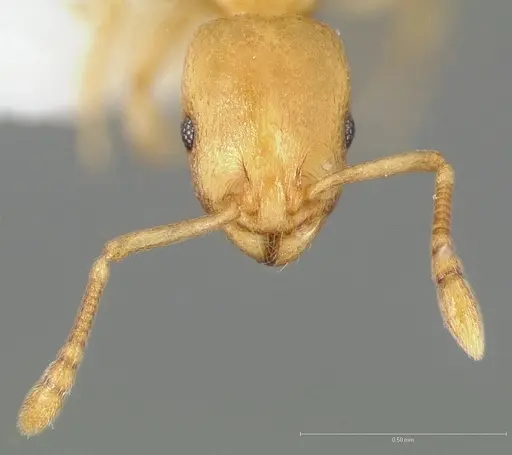
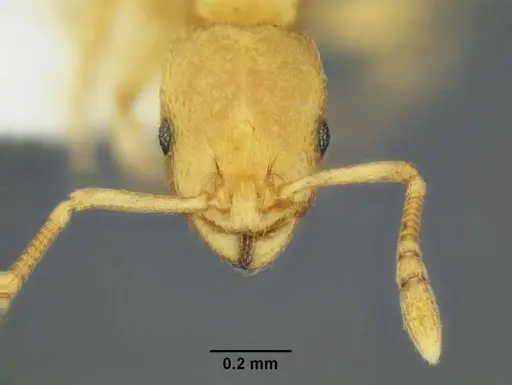
Temnothorax quasimodo workers are tiny, approximately 2.5mm total length, and uniformly yellow in color [1]. The most distinctive feature is the short, deep mesosoma (middle body section) with a distinctly convex dorsum, giving them a hunched appearance unique among California Temnothorax species [1][2]. The propodeum (the rear portion of the mesosoma) lacks spines entirely, instead showing only blunt obtuse angles [1].
The petiole (the narrow waist segment) lacks an anterior peduncle (stalk) and has a robustly triangular node with a rounded summit. The postpetiolar node (the segment after the waist) is high and rounded in profile, appearing trapezoidal when viewed from above, and is notably broader than the petiolar node (1.30 times wider) [1]. The antenna has 12 segments with a distinctly 3-segmented apical club [1].
These features superficially resemble the common species Temnothorax andrei, which was collected in the same litter sample. However, the distinctive mesosomal profile of T. quasimodo readily distinguishes them, T. andrei has a typical straight mesosomal profile while T. quasimodo appears hunched [2].
Natural Habitat and Distribution
Temnothorax quasimodo is known only from a single collection event in Cold Canyon, Solano County, California, at approximately 300m elevation [1]. The collection was made by sifting leaf litter (specifically leaf mold and rotten wood) in chaparral habitat [1][2]. Chaparral is a Mediterranean-type shrubland ecosystem common in California, characterized by dense, evergreen, drought-resistant shrubs.
The species' entire known range consists of this single locality. Cold Canyon is located roughly 19km NNW of Vacaville in the Inner Coast Range of California [1]. The area experiences hot, dry summers and mild, wet winters typical of Mediterranean climates.
Nothing is known about this species' nest structure, colony size, or ecological preferences beyond this single collection. The fact that it was collected in a standard litter sample alongside a common species (T. andrei) suggests it may not require highly specialized microhabitats, or alternatively, that it lives in such low numbers that even intensive sampling fails to detect it [1].
Captive Care Status
Temnothorax quasimodo is NOT a recommended species for antkeeping at this time. No established husbandry protocol exists because the species has never been successfully kept in captivity, in fact, only a single worker has ever been collected by researchers [1]. There are no captive colonies known to exist.
The primary challenges for potential captive keeping include: no known source for founding queens (none have ever been collected or described), uncertain colony structure (the suspected parasitic lifestyle would require maintaining a host colony), and completely unknown dietary and environmental requirements [1].
For antkeepers interested in Temnothorax species, the closely related and common Temnothorax andrei would be a far better choice, it shares similar habitat preferences and has established care protocols. Alternatively, other well-studied North American Temnothorax species like Temnothorax americanus or Temnothorax curvispinosus have documented care requirements and are readily available.
If a wild queen of T. quasimodo were to be found (an extremely unlikely event given the species' rarity), keeping it would require extensive experimentation and careful documentation to establish any successful protocol.
Relationship to Other Species
Temnothorax quasimodo belongs to the Temnothorax andrei-clade, a group of related species defined through modern genetic analysis [3]. Within this clade, it appears most closely related to Temnothorax andrei, a common species throughout California that was collected in the same litter sample [2].
The genus Temnothorax contains over 400 species worldwide, making it one of the most diverse ant genera. These are small ants (typically 2-5mm) that typically nest in small cavities in wood, under stones, or in leaf litter. Many species are known for their sophisticated behaviors including tandem-running recruitment, queen replacement reproductives, and in some cases, social parasitism.
The unusual morphology of T. quasimodo, particularly the hunched mesosoma and broad postpetiole, has drawn comparisons to the former subgenus Macromischa, a group of Caribbean ants known for similar body shapes [1]. However, genetic analysis places T. squarely within the modern Temnothorax genus. The significance of these morphological similarities (whether evolutionary convergence or retained ancestral traits) is not fully understood.
Frequently Asked Questions
Can I keep Temnothorax quasimodo as a pet ant?
No. This species has never been kept in captivity and no established care protocol exists. Only a single worker has ever been collected by researchers, meaning there is no known source for founding queens and no information about their care requirements. Consider instead keeping common Temnothorax species like T. andrei or T. curvispinosus, which have established husbandry protocols [1].
Where does Temnothorax quasimodo live in the wild?
Only known from Cold Canyon in Solano County, California, USA. It was collected from sifted leaf litter (leaf mold and rotten wood) in chaparral habitat at about 300m elevation. This single collection represents the species' entire known global distribution [1][2].
Why is Temnothorax quasimodo so rare?
Researchers don't know. The species has only been collected once despite intensive sampling in its known locality. Possible explanations include genuinely low population densities, highly specialized habitat requirements, or a suspected (but unconfirmed) social parasitic lifestyle that would make finding colonies inherently difficult [1].
What does Temnothorax quasimodo look like?
Workers are tiny (about 2.5mm total), uniformly yellow in color, with a distinctive hunched appearance caused by their short, deep mesosoma with a convex dorsal profile. They lack propodeal spines, having only blunt angles instead. The postpetiole is notably broad, and the antenna has 12 segments with a 3-segmented club [1].
Is Temnothorax quasimodo a social parasite?
Possibly, but this is unconfirmed. Researchers noted that the unusual body morphology (hunched mesosoma and broad postpetiole) may indicate social parasitic or inquiline behavior, similar to species that live in other ant colonies. However, until more specimens are collected and studied, this remains speculative [1][2].
How do I identify Temnothorax quasimodo?
The distinctive feature is the short, deep mesosoma with a distinctly convex dorsum, giving a hunched profile. They lack propodeal spines (only blunt angles), have a broad postpetiole, and are uniformly yellow. The 12-segmented antenna with 3-segmented club is also characteristic. It superficially resembles T. andrei but the hunched profile distinguishes them [1][2].
What is the colony size of Temnothorax quasimodo?
Unknown. Only a single worker has ever been collected, so no information exists about natural colony sizes. Most Temnothorax colonies range from dozens to a few hundred workers, but this species may follow different patterns if it is indeed parasitic [1].
Does Temnothorax quasimodo need hibernation?
Unknown. As a California species from chaparral habitat, it likely experiences mild winters with reduced activity, but specific diapause requirements are unstudied. Related temperate Temnothorax species typically require a cool period (5-10°C) over winter.
What do Temnothorax quasimodo ants eat?
Unknown, no feeding observations exist. Based on typical Temnothorax diet, they likely consume honeydew, small insects, and other arthropods. Their tiny size would require correspondingly small prey items like springtails or fruit flies.
Can I find Temnothorax quasimodo in the wild?
Extremely unlikely. The species has only been collected once despite decades of intensive sampling in its known locality by professional researchers. Even finding the common T. andrei in the same area would not indicate T. quasimodo is present, the single known specimen may represent a rare morphological variant or an exceptionally localized population [1].
References

This caresheet is licensed under CC BY-SA 4.0 .
CASENT0005694
View on AntWeb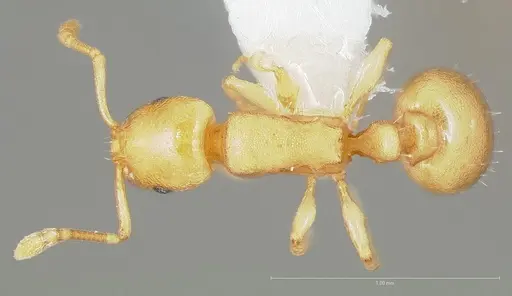
Literature
Loading...Loading products...