

Temnothorax duloticus
- Scientific Name
- Temnothorax duloticus
- Tribe
- Crematogastrini
- Subfamily
- Myrmicinae
- Author
- Wesson, 1937
- Distribution
- Found in 1 countries
Temnothorax duloticus Overview
Temnothorax duloticus is an ant species of the genus Temnothorax. It is primarily documented in 1 countries , including United States of America. Detailed taxonomic data and occurrence records can be further explored via authoritative databases such as AntWeb or the Global Biodiversity Information Facility (GBIF).
Temnothorax duloticus
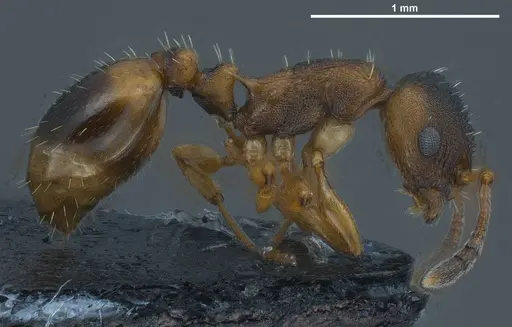
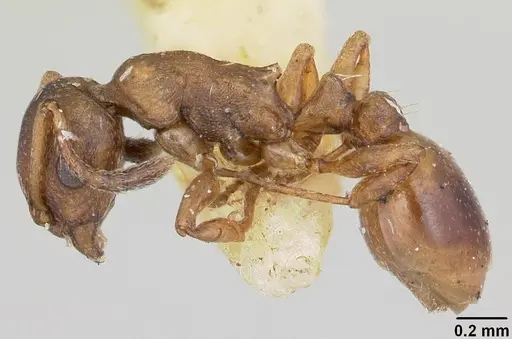
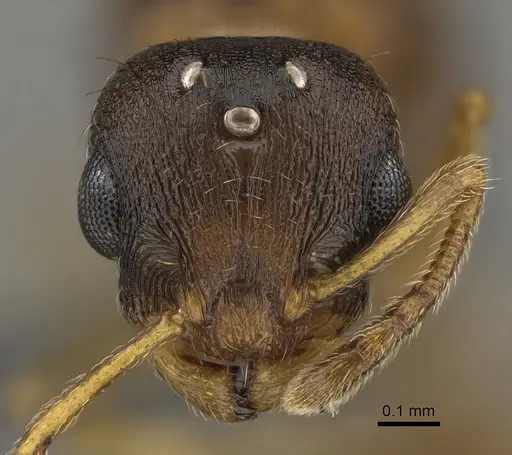
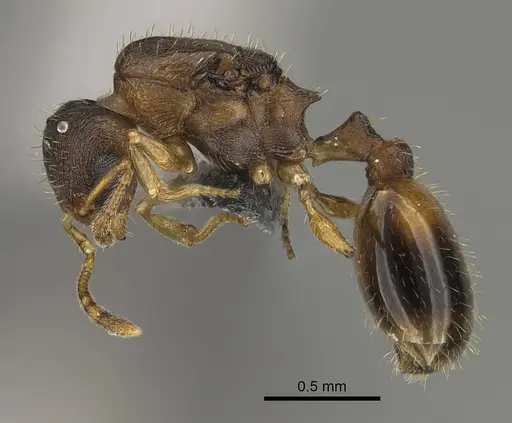
Temnothorax duloticus is a small, yellowish-brown slave-making ant native to the eastern United States and southern Ontario, Canada. Workers measure 2.4-2.6mm with a distinctive 11-segmented antenna and a prominent ventral tooth on the petiole [1]. The species is one of three North American slave-makers in the Temnothorax genus and shows a close phylogenetic relationship to its host T. curvispinosus, suggesting relatively recent evolutionary origin [2]. Colonies are tiny, typically under 70 slave-maker workers accompanied by roughly three times as many enslaved host workers [1]. This species nests primarily in acorns, hollow twigs, and small cavities in dead wood on the ground [1].
Quick Summary
- Difficulty: Expert
- Origin & Habitat: Eastern United States (Ohio, Michigan, Illinois, Indiana) and Ontario, Canada. Found in dry oak woods, gentle slopes of fairly open woods with shallow sandstone soil [1][3].
- Colony Type: Obligate slave-maker, requires host Temnothorax species to survive. Single-queen colonies (monogyne) [3].
- Colony: Monogyne
- Queen: Parasitic
- Special: Slave-making
- Size & Growth:
- Queen: 3.25mm [4]
- Worker: 2.4-2.6mm [1]
- Colony: Up to 70 workers plus host slaves (approximately 3:1 ratio) [1]
- Growth: Slow, small colony size limits growth potential
- Development: Unknown, likely 6-8 weeks based on related Temnothorax species (Development not directly studied, small colony size suggests slower overall growth compared to free-living Temnothorax)
- Antkeeping:
- Temperature: Keep at room temperature (20-24°C). No specific requirements documented, infer from host species preferences [1].
- Humidity: Moderate, typical for eastern US forest floor species. Keep nest substrate slightly moist but not wet [1].
- Diapause: Yes, likely requires winter dormancy like other temperate Temnothorax. Provide 4-6 weeks at 5-10°C [3].
- Nesting: Acorn nests, Y-tong nests with small chambers, or naturalistic setups with hollow twigs. Very small chambers scaled to their tiny size [1].
- Behavior: Highly aggressive raider that conducts organized slave raids on host colonies. Workers are physically specialized for combat, they kill host defenders by stinging them before capturing pupae [5]. Without slaves, workers are nearly helpless, they cannot properly care for brood, forage for food, or maintain the nest [6]. When slaves are present, slave-maker workers are largely inactive and delegate all colony maintenance to enslaved workers [6]. This species conducts processions during raids, moving in coordinated lines [2]. Escape risk is moderate, small ants but not as prone to escaping as some Temnothorax.
- Common Issues: This species CANNOT be kept without a host colony, slave-makers cannot survive alone without enslaved Temnothorax workers to care for them, Maintaining both slavemaker and host colonies doubles the complexity and failure risk of regular ant keeping, Slave-maker colonies are extremely fragile, if the host colony dies, the slavemakers will follow within weeks, Finding legal host species (T. curvispinosus, T. longispinosus, T. ambiguus) may be difficult depending on your location, These ants are rare in the hobby and may not be legal to keep in all jurisdictions
Understanding Slave-Making Ants
Temnothorax duloticus is an OBLIGATE slavemaker, this is perhaps the most important thing to understand before considering this species. Unlike typical ants that build their own colonies, slave-makers survive by invading colonies of other ant species and stealing their pupae. The stolen pupae emerge as adult workers within the slavemaker nest and become involuntary workers that feed, clean, and care for the slavemaker colony as if they were in their own nest [6]. This is not optional behavior, T. duloticus workers are severely impaired without slaves. When slaves are removed, slavemaker workers attempt to perform normal tasks but do so poorly: they feed larvae at wrong intervals, care inadequately for brood, move nest materials incorrectly, and cannot properly collect and share food [6]. Without slaves, they will not even search for dead insects or solid food, ignoring food entirely [6]. This species is considered to have reached only a 'primitive' stage of slave exploitation compared to more advanced slavemakers like Harpagoxenus [7]. The species appears to be of relatively recent evolutionary origin based on genetic analysis, closely related to its host T. curvispinosus [2].
Host Species Requirements
You MUST obtain and maintain a host colony to keep T. duloticus successfully. The preferred hosts are Temnothorax curvispinosus, Temnothorax longispinosus, and occasionally Temnothorax ambiguus [1][2]. Of these, T. curvispinosus appears to be the preferred host in the wild [5]. This means you are essentially committing to keeping TWO ant colonies, the slavemaker colony and at least one host colony. The host colony must be established and healthy before introducing slavemakers. In the wild, slavemaker colonies are always found living alongside host colonies, typically in a ratio of about 1:3 (one slavemaker worker for every three slave workers) [1]. When you collect or obtain a slavemaker colony, you must also collect the associated host colony. If you separate them, both colonies will likely fail. This complexity makes this species suitable ONLY for very experienced antkeepers who are prepared to maintain multiple colonies simultaneously.
Feeding and Nutrition
In the wild, T. duloticus workers are largely fed by their enslaved hosts. The slave workers forage for food, collect honeydew, and capture small insects, then share everything with the slavemakers [6]. In captivity, you will primarily feed the HOST colony, and the slaves will bring food back to share with the slavemakers. Feed the host colony a standard ant diet: sugar water or honey, small live insects like fruit flies or pinhead crickets, and occasional protein sources [6]. The slavemaker workers will accept food brought to them by slaves but will largely ignore food presented directly to them if slaves are present [6]. Without slaves, you would need to feed slavemakers directly, but they perform poorly at self-feeding. The key is maintaining a healthy host colony that will feed both itself and the slavemakers.
Raiding Behavior
One of the most fascinating aspects of T. duloticus is its raiding behavior. Unlike some slavemakers that use stealth, T. duloticus is a fierce and aggressive raider. Workers will actively attack host colonies, stinging opposing workers to kill them before capturing pupae [5]. This results in local eradication of host colonies when raids are successful [5]. They conduct 'processions' during raids, moving in coordinated lines rather than scattered groups [2]. This aggressive raiding behavior is why they are sometimes called 'fierce slavemakers' [5]. In captivity, you should NEVER introduce slavemakers to a host colony you want to preserve, they will destroy it. The slavemaker colony should be kept completely SEPARATE from any host colonies you want to maintain for breeding. If you want to expand your slavemaker colony, you would need to raid additional host colonies (which is neither ethical nor practical in captivity). Instead, slavemaker colonies should be maintained as-is with their original slaves.
Legal and Ethical Considerations
Before obtaining T. duloticus, you must research the legal status of this species in your area. Slave-making ants may be regulated or prohibited in some jurisdictions due to their parasitic nature and potential ecological impact if released. Additionally, you must consider whether it is ethical to maintain a species that inherently depends on exploiting another species. The host species (T. curvispinosus, T. longispinosus) are common in the eastern United States and are not protected, but you should still obtain colonies ethically, only collect from areas where populations are healthy, and never collect more than a small portion of any wild colony. This species is RARE in the hobby and should only be kept by experienced antkeepers who fully understand the biological requirements and ethical implications. [1][3]
Frequently Asked Questions
Can I keep Temnothorax duloticus without a host colony?
No. This is an OBLIGATE slavemaker, it cannot survive without enslaved host workers from species like T. curvispinosus, T. longispinosus, or T. ambiguus. The slavemaker workers are severely impaired without slaves and cannot properly care for brood, forage, or maintain their nest [6]. You must maintain both the slavemaker colony AND a healthy host colony.
What do I feed Temnothorax duloticus?
You feed the HOST colony, not the slavemakers directly. The enslaved workers will forage and bring food back to share with the slavemakers. Feed the host colony sugar water or honey, small live insects, and protein sources. The slavemaker workers will ignore food presented directly to them if slaves are present [6].
How big do Temnothorax duloticus colonies get?
Colonies are small, typically up to 70 slavemaker workers accompanied by roughly three times as many enslaved host workers [1]. This is much smaller than most free-keeping Temnothorax species.
Is Temnothorax duloticus good for beginners?
No. This is an EXPERT-LEVEL species. Keeping slavemakers requires maintaining TWO colonies simultaneously (the slavemaker and at least one host colony), understanding complex host-parasite dynamics, and accepting that the colony is inherently fragile. If the host colony dies, the slavemakers will follow. This species is only suitable for very experienced antkeepers.
Where does Temnothorax duloticus live in the wild?
This species is found in the eastern United States (Ohio, Michigan, Illinois, Indiana) and southern Ontario, Canada. It lives in dry oak woods and gentle slopes of fairly open forests, typically nesting in acorns, hollow twigs, and small cavities in dead wood on the ground [1][3].
How do I set up a nest for Temnothorax duloticus?
Use a setup that accommodates both the slavemakers and their hosts. Acorn-style nests, Y-tong nests with very small chambers, or naturalistic setups with hollow twigs work well. The chambers must be tiny, these are among the smallest North American ants, with workers only 2.4-2.6mm [1]. Keep the nest slightly moist but not wet.
Do Temnothorax duloticus ants sting?
Yes. Unlike many Myrmicinae, Temnothorax ants do have functional stingers. T. duloticus workers are particularly aggressive and use their stings to kill host defenders during raids [5]. The sting is not dangerous to humans but can be painful.
Will Temnothorax duloticus raid my other ant colonies?
Yes, this is a serious concern. T. duloticus will attack and destroy colonies of its host species if given access. Keep slavemaker colonies COMPLETELY SEPARATED from any other Temnothorax colonies you wish to maintain. Never house them in the same enclosure.
How long do alates take to develop in Temnothorax duloticus?
Alate pupae are present from late June through August, with adult alates emerging from July 21 to September 26 in Michigan [3]. The exact development time from egg to adult is not documented but is likely 6-10 weeks like other temperate Temnothorax species.
Can I breed Temnothorax duloticus in captivity?
Breeding is extremely difficult. You would need to successfully maintain both slavemaker and host colonies long-term, then somehow facilitate raids on additional host colonies to expand the slave population. This is neither practical nor ethical in captivity. Most captive colonies are maintained as stable units with their original slaves rather than expanded.
Does Temnothorax duloticus need hibernation?
Yes, likely. As a temperate species from the eastern United States, it probably requires a winter dormancy period like other native Temnothorax. Provide 4-6 weeks at 5-10°C during winter [3].
What makes Temnothorax duloticus different from other slave-makers?
T. duloticus is considered a 'primitive' slavemaker compared to species like Harpagoxenus americanus. It has only slight physical modifications for raiding, conducts processions during raids, and kills many opposing workers during attacks [7][5]. It appears to be of relatively recent evolutionary origin, closely related to its host T. curvispinosus [2].
References

This caresheet is licensed under CC BY-SA 4.0 .
ANTWEB1008479
View on AntWeb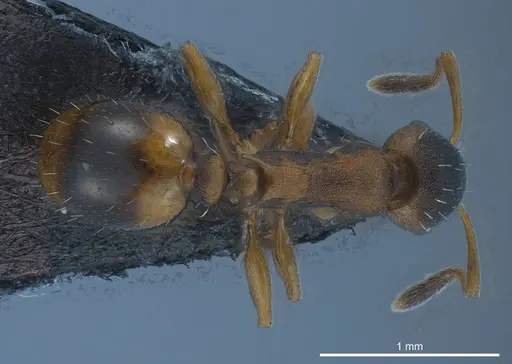
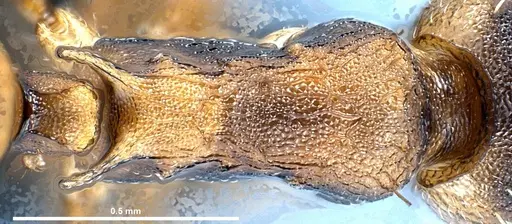
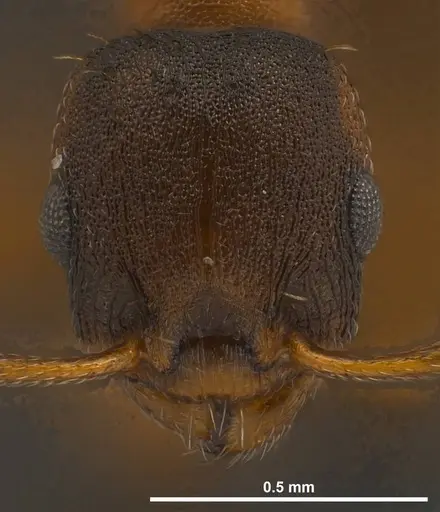
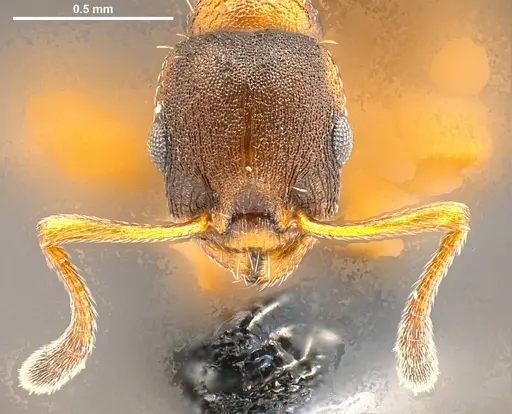
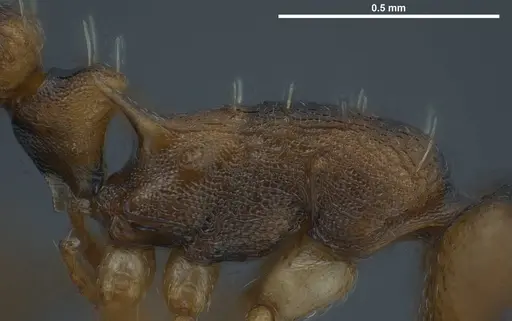
CASENT0103163
View on AntWeb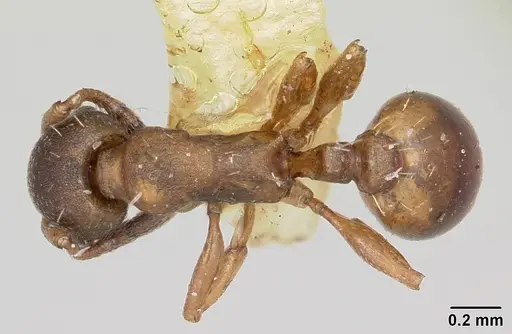
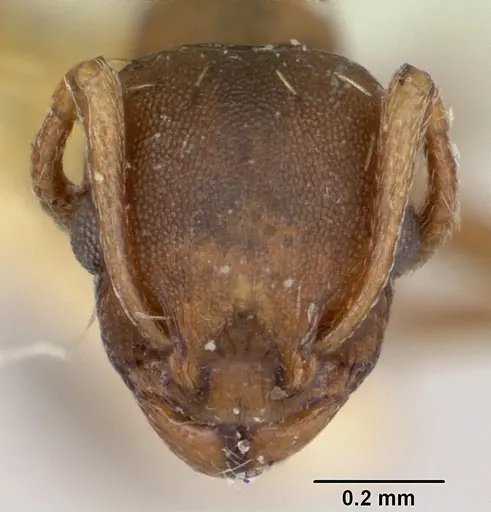
CASENT0105626
View on AntWeb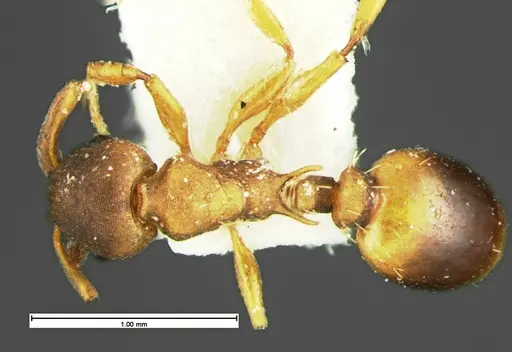
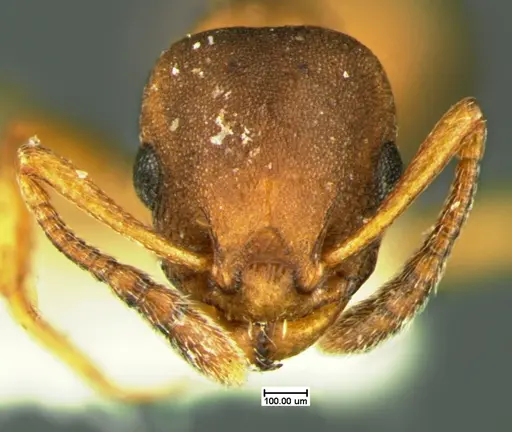
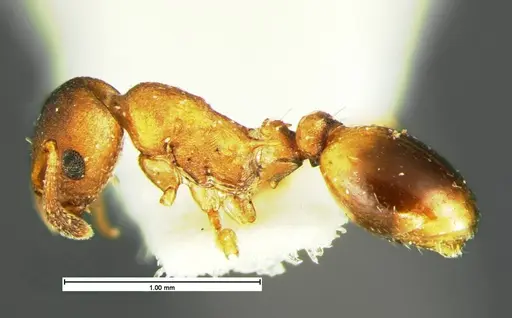
CASENT0923374
View on AntWeb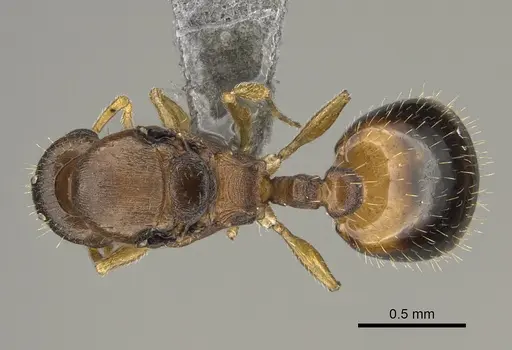
Literature
Loading...Loading products...