

Strumigenys scotti
- Scientific Name
- Strumigenys scotti
- Tribe
- Attini
- Subfamily
- Myrmicinae
- Author
- Forel, 1912
- Distribution
- Found in 3 countries
Strumigenys scotti Overview
Strumigenys scotti is an ant species of the genus Strumigenys. It is primarily documented in 3 countries , including Comoros, Madagascar, Seychelles. Detailed taxonomic data and occurrence records can be further explored via authoritative databases such as AntWeb or the Global Biodiversity Information Facility (GBIF).
Strumigenys scotti
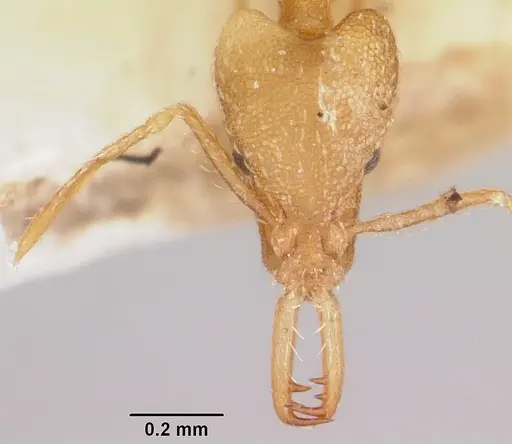
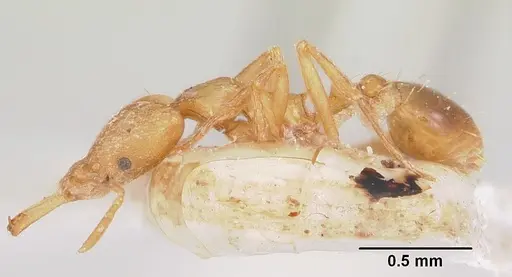
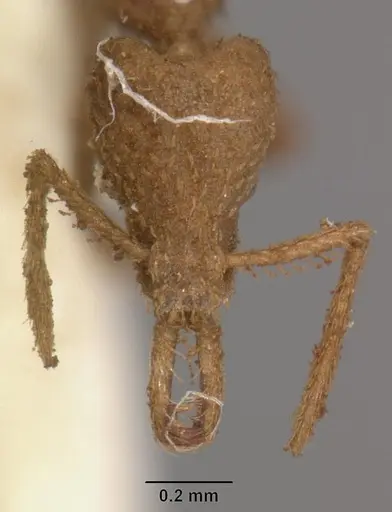
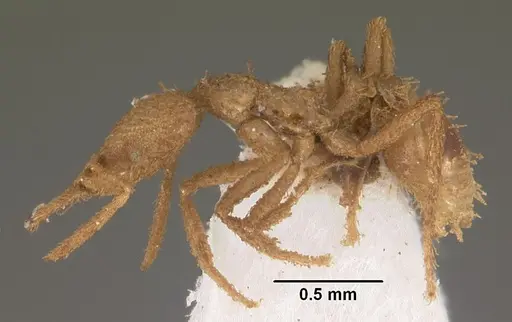
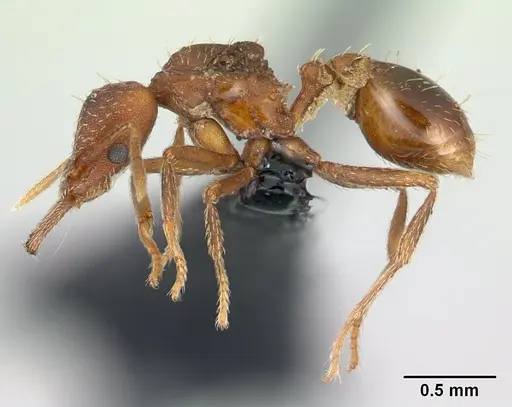
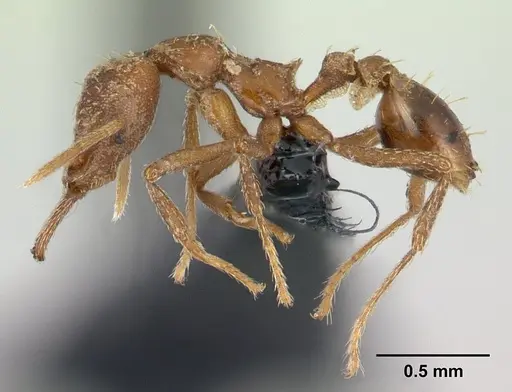
Strumigenys scotti is a tiny predatory ant measuring just 2.4-2.6mm in total length, with workers showing a yellowish-brown to medium brown coloration. This species belongs to the dacetine ant tribe (Attini), a group famous for their specialized trap-jaw mandibles that can strike at incredible speeds to capture prey. The species is widely distributed across island habitats in the Indian Ocean region, found in the Seychelles, Madagascar, Comoros, Nigeria, and Sao Tome & Principe [1]. It was originally described by Forel in 1912 from specimens collected on Silhouette Island in the Seychelles [2].
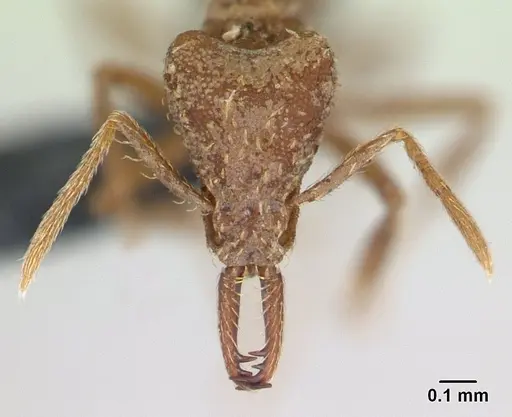
What makes Strumigenys scotti particularly interesting is its specialized predatory lifestyle. Like other dacetines, this species has evolved extremely fast striking mandibles to capture small prey, primarily springtails and other micro-arthropods found in leaf litter and soil [3]. The genus Strumigenys is one of the most diverse ant groups in tropical regions, with hundreds of species worldwide, and S. scotti stands out as a widely distributed but easily recognized member of the scotti-complex within the scotti group.
Quick Summary
- Difficulty: Medium
- Origin & Habitat: Seychelles, Madagascar, Comoros, Nigeria, and Sao Tome & Principe, found in leaf litter at elevations up to 1240m in Madagascar [3][2]. Island and coastal forest habitats.
- Colony Type: Single-queen colonies (monogyne), typical for the genus. Colonies remain small, likely under 100 workers based on related species.
- Colony: Monogyne
- Founding: Claustral
- Size & Growth:
- Queen: Estimated 3-4mm (queens not fully described but larger than workers)
- Worker: 2.4-2.6mm
- Colony: Likely under 100 workers based on typical Strumigenys colony sizes
- Growth: Slow, specialized predators typically develop slowly
- Development: Estimated 8-12 weeks at optimal temperature based on related dacetine species (Development is slow, specialized predators often take longer than generalist ants)
- Antkeeping:
- Temperature: Keep at 24-26°C, tropical species requiring warm conditions
- Humidity: High humidity (70-80%), these are forest floor ants that need moist substrate
- Diapause: No, tropical species does not require hibernation
- Nesting: Prefers moist, naturalistic setups with leaf litter or soil substrate. Test tubes with cotton and a moist chamber work well for founding colonies.
- Behavior: Generally docile and non-aggressive. Workers are slow-moving but possess extremely fast trap-jaw mandibles for capturing prey. Escape prevention is critical due to their tiny 2.4mm size, they can easily slip through standard mesh. Foraging is done individually through leaf litter, hunting micro-arthropods.
- Common Issues: escape prevention is critical, tiny 2.4mm workers squeeze through standard mesh barriers, specialized diet makes them difficult to feed, require live springtails or micro-arthropods, slow growth can frustrate keepers expecting rapid colony development, high humidity requirements can lead to mold if ventilation is poor, wild-caught colonies may have parasites that are difficult to treat
Housing and Nest Setup
Strumigenys scotti is a tiny ant that requires careful attention to escape prevention. Use test tubes for founding colonies, with a water reservoir (cotton ball) providing humidity for 2-4 weeks between refills. The test tube should have a tight-fitting cotton plug and you should use fluon or fine mesh (0.5mm or smaller) on any openings. For established colonies, a naturalistic setup with moist soil/leaf litter works best, these are forest floor ants that naturally live among decomposing material. A small plastic box with moist substrate and a test tube water source can work well. Avoid tall formicarium chambers since they prefer to stay near the ground surface where humidity is highest. Keep the nest area dark or covered, Strumigenys prefer dim conditions similar to their leaf litter habitat. [3][2]
Feeding and Diet
This is the most challenging aspect of keeping Strumigenys scotti. As specialized predators in the dacetine tribe, they require live small prey, primarily springtails (Collembola) which are their natural prey in the wild. You can culture your own springtails in a separate container with moist soil and decaying leaves. Other acceptable prey includes tiny isopods, booklice (Psocoptera), and other micro-arthropods. Do NOT rely on sugar water or honey, dacetine ants are obligate predators and typically do not accept carbohydrate sources. Feed small prey items every 2-3 days, removing any uneaten prey after 24 hours to prevent mold. A well-fed colony will have workers with distended abdomens (physogastric appearance). [2]
Temperature and Humidity
Strumigenys scotti comes from tropical island habitats and requires warm, humid conditions. Keep the colony at 24-26°C, this is ideal for both the ants and their prey (springtails thrive in this range). A small heating cable on one side of the setup can create a gentle temperature gradient. Humidity should be high, around 70-80%. The substrate should feel consistently moist but never waterlogged. Using a moisture gradient (drier edges, moister center) gives the colony options. Avoid placing the setup near air conditioning or heating vents that cause rapid drying. A hygrometer helps monitor conditions, if humidity drops below 60%, mist lightly or add water to the substrate. [3]
Behavior and Temperament
Strumigenys scotti workers are docile and non-territorial toward humans. They possess specialized trap-jaw mandibles (the defining feature of dacetine ants) that can strike at speeds over 200 km/h to capture prey, but this is harmless to humans. Workers move slowly when foraging, methodically searching through leaf litter. They are not aggressive and do not sting. The main concern for keepers is their tiny size: at just 2.4mm, workers can escape through gaps that seem impossibly small. Always use fine mesh and check for any gaps in your setup. Colonies are small and slow-growing, do not expect rapid expansion like you would from Lasius or Camponotus species. [2]
Colony Development
Colony growth is slow compared to many common ant species. A newly mated queen will seal herself in a small chamber (claustral founding) and lay eggs without leaving to forage. She relies entirely on her stored fat reserves to survive and feed the first brood. The first workers (nanitics) are typically smaller than normal workers and may take 8-12 weeks to emerge. After the first workers arrive, the colony grows gradually, expect another 3-6 months to reach 20 workers, and potentially a year or more to reach 50+ workers. This slow growth is normal for specialized predators. Do not overfeed in an attempt to speed growth, excess prey simply creates mold problems. Patience is essential with this species. [2]
Frequently Asked Questions
Can I keep Strumigenys scotti in a test tube?
Yes, test tubes work well for founding colonies. Use a small test tube (15mm or less diameter) with a cotton ball providing water access. Keep the tube horizontal or slightly tilted so the queen can easily move between the water reservoir and the dry chamber. Cover the tube with a dark sleeve to reduce light stress. Maintain humidity by ensuring the water reservoir is adequate but not overflowing.
What do Strumigenys scotti ants eat?
They are specialized predators that require live small prey. Their primary food is springtails (Collembola), which you can culture separately. Other acceptable foods include tiny isopods, booklice, and other micro-arthropods. They do NOT accept sugar water, honey, or dead insect pieces, they need living prey that moves. This makes them one of the more difficult ants to keep food-wise.
How long does it take for Strumigenys scotti to produce first workers?
Expect 8-12 weeks from egg to first worker at optimal temperature (24-26°C). This is slower than many common ant species. The queen seals herself in during founding and raises the first brood alone. The first workers (nanitics) are typically smaller than mature workers. Colony growth remains slow even after workers emerge.
Are Strumigenys scotti ants dangerous?
No, they are not dangerous to humans. While they possess trap-jaw mandibles capable of striking at incredible speeds, these are designed for capturing tiny prey (springtails), not for defense against large threats. They do not sting and are completely harmless to keepers. Their small size (2.4mm) also means they cannot bite humans in any meaningful way.
How big do Strumigenys scotti colonies get?
Colonies remain relatively small, likely under 100 workers at maturity. This is typical for the genus Strumigenys, they are not colony-sized ants like Lasius or Formica. A mature colony may have 50-80 workers. The slow growth rate means reaching this size takes over a year from founding.
Do Strumigenys scotti ants need hibernation?
No, they do not need hibernation. As a tropical species from Seychelles, Madagascar, and other island habitats, they require year-round warm temperatures (24-26°C). Attempting to hibernate them could be fatal. Keep them at room temperature or use gentle heating year-round.
Why are my Strumigenys scotti dying?
Common causes include: escape (tiny size means they slip through standard barriers), starvation (they need live springtails, not dead food), low humidity (they need 70-80% humidity), and mold from overfeeding. Also check for parasites, wild-caught colonies often bring mites or other parasites. Ensure you have fine mesh (0.5mm or smaller) on all openings and are culturing live springtails as their primary food.
Can I keep multiple Strumigenys scotti queens together?
No, this is not recommended. Strumigenys scotti is monogyne (single-queen colonies). Combining unrelated queens will likely result in fighting. Even if queens tolerate each other initially, stress and conflict typically follow. Start with a single mated queen for best success.
When should I move Strumigenys scotti to a formicarium?
You may not need to move them to a traditional formicarium at all. Strumigenys do well in naturalistic setups with moist soil/leaf litter rather than artificial formicaria. If your colony outgrows a test tube (typically over 30 workers), consider a small plastic box with moist substrate rather than a large formicarium. They prefer small, humid spaces similar to their natural leaf litter habitat.
Are Strumigenys scotti good for beginners?
No, this species is not recommended for beginners. Their specialized diet (requiring live springtail cultures), tiny size (escape prevention challenges), high humidity needs, and slow growth make them one of the more difficult ants to keep. Start with easier species like Lasius niger, Tetramorium caespitum, or Camponotus species before attempting Strumigenys.
References

This caresheet is licensed under CC BY-SA 4.0 .
CASENT0101222
View on AntWeb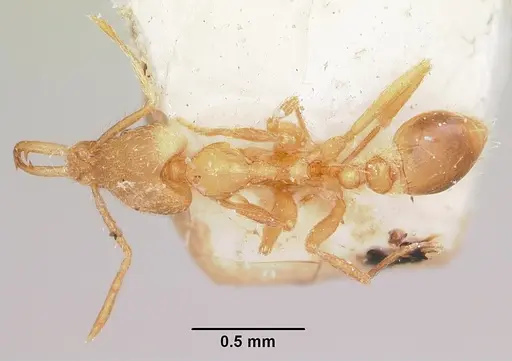
CASENT0101223
View on AntWeb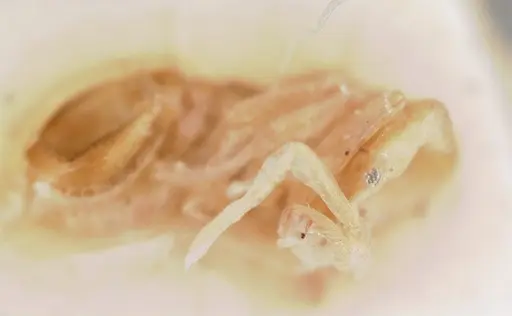
CASENT0102290
View on AntWeb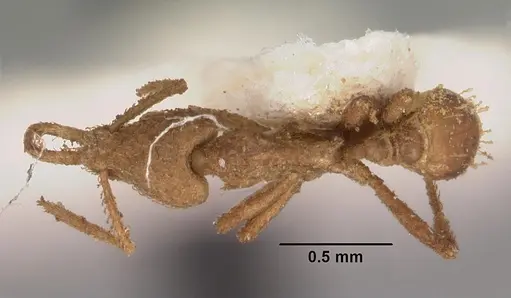
CASENT0102291
View on AntWeb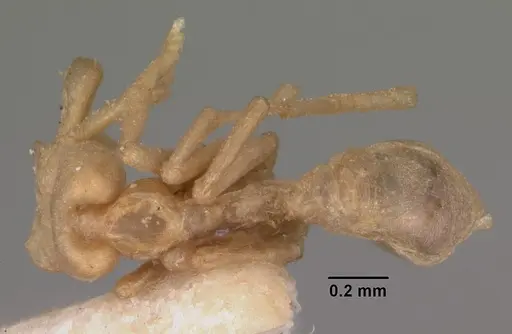
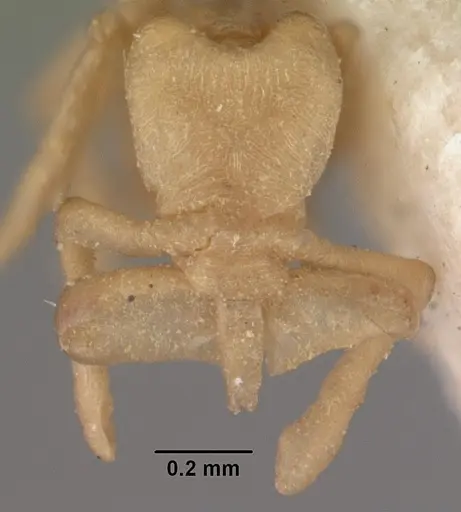
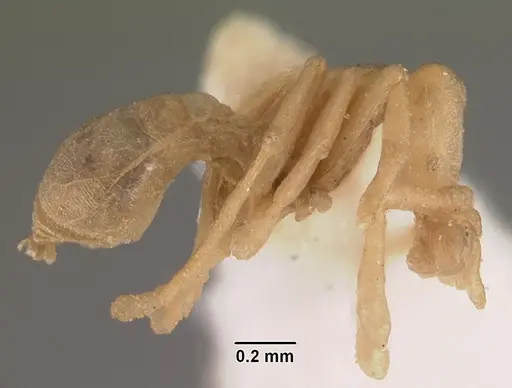
CASENT0137237
View on AntWeb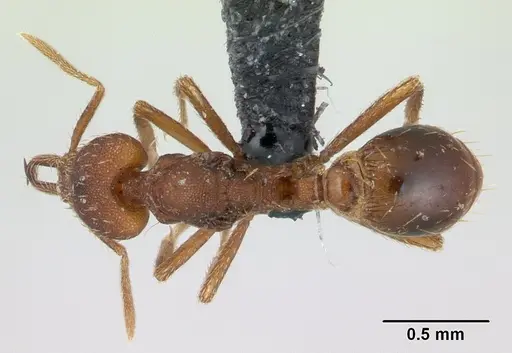
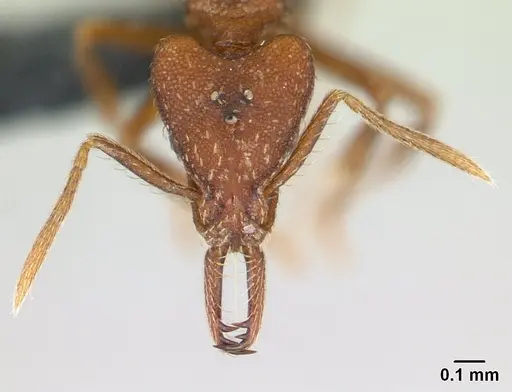
CASENT0137525
View on AntWeb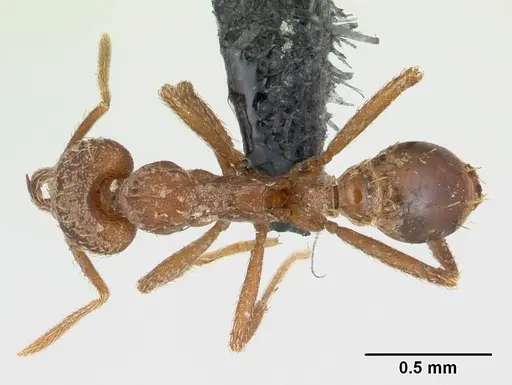
CASENT0137546
View on AntWeb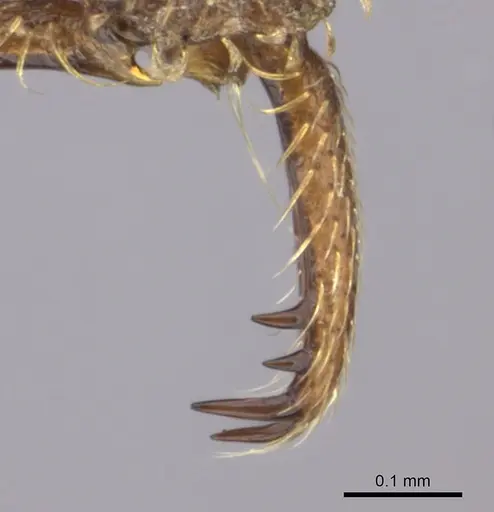
Literature
Loading...Loading products...