

Strumigenys bitheria
- Scientific Name
- Strumigenys bitheria
- Tribe
- Attini
- Subfamily
- Myrmicinae
- Author
- Bolton, 1983
- Distribution
- Found in 1 countries
Strumigenys bitheria Overview
Strumigenys bitheria is an ant species of the genus Strumigenys. It is primarily documented in 1 countries , including Congo, Democratic Republic of the. Detailed taxonomic data and occurrence records can be further explored via authoritative databases such as AntWeb or the Global Biodiversity Information Facility (GBIF).
Strumigenys bitheria
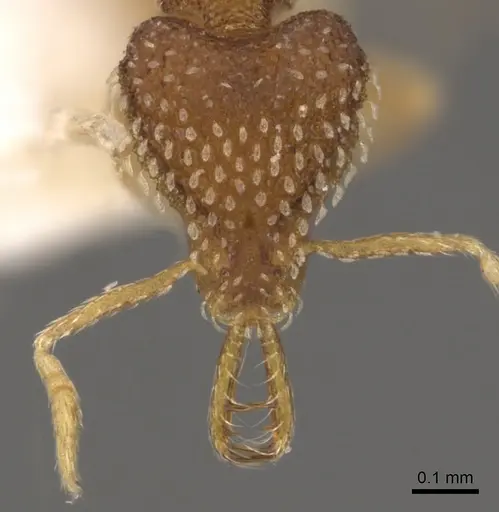
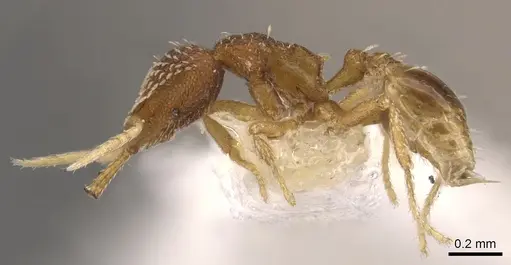
Strumigenys bitheria is an extremely tiny ant, with workers measuring just 1.9mm in total length. They belong to the dacetine ant tribe (Attini), a group known for their specialized snapping mandibles used to catch small prey. Workers have a distinctive appearance with broad, translucent lamellae along the upper scrobe margins, very reduced antennae segments (funicular segments 2 and 3 are vestigial), and light brown coloration. This species is part of the Strumigenys arnoldi group, specifically the nimbrata complex, and is closely related to Strumigenys nimbrata.
The species is found in Central Africa, with confirmed records from Cameroon, the Democratic Republic of Congo, and Gabon [1][2]. Nothing has been documented about their biology in the scientific literature, but like other Strumigenys species, they are likely specialized predators of micro-arthropods like springtails living in forest floor habitats.
Quick Summary
- Difficulty: Hard
- Origin & Habitat: Central Africa (Cameroon, DRC, Gabon), tropical rainforest environments [1][2]. Based on genus patterns, they likely inhabit damp forest floor microhabitats with abundant leaf litter and rotting wood.
- Colony Type: Colony structure is unconfirmed. Based on typical Strumigenys patterns, likely monogyne (single queen) colonies.
- Size & Growth:
- Queen: Unknown, no queen has been described
- Worker: 1.9mm total length
- Colony: Unknown, no colony data exists
- Growth: Unknown, no development data exists
- Development: Unknown, no direct observations exist. Based on typical Strumigenys patterns and their tiny size, development may take 4-8 weeks at optimal temperature, but this is purely estimated. (No scientific data exists on development. Related Strumigenys species typically develop in 4-8 weeks under warm, humid conditions.)
- Antkeeping:
- Temperature: Keep around 24-26°C based on their tropical African distribution. A gentle gradient allowing slight variation is ideal. Related Strumigenys species thrive in warm, stable conditions.
- Humidity: High humidity is essential, aim for 70-85%. These are forest floor ants that need consistently moist substrate. Keep the nest area damp but not waterlogged.
- Diapause: Unknown, no data on overwintering behavior. As a tropical species, they likely do not require a true diapause but may reduce activity during cooler periods.
- Nesting: No captive nesting data exists. In nature, Strumigenys typically nest in rotting wood, leaf litter, or soil. For captivity, a small plaster nest or test tube setup with high humidity works well. Their tiny size means chambers and passages must be very small.
- Behavior: No behavioral observations have been documented for this species. Based on genus patterns, they are likely docile and non-aggressive, focusing on hunting small prey rather than defending territory. Their extremely small size (1.9mm) makes escape prevention critical, they can squeeze through remarkably tiny gaps. They are likely nocturnal or crepuscular foragers.
- Common Issues: their extremely small size makes escape prevention critical, even standard test tube setups may allow escapes without fine mesh barriers, no biological data exists, keepers are essentially pioneering captive care for this species, high humidity requirements create mold risk if ventilation is poor, specialized diet means they likely need live micro-prey, failure to establish proper food sources can lead to colony decline, wild-caught colonies may carry parasites or pathogens that can cause captive failures
Housing and Escape Prevention
Housing Strumigenys bitheria presents unique challenges due to their extremely small size of just 1.9mm. This is one of the smallest ant species in the world, and standard ant keeping equipment may not be suitable. You will need to use fine mesh barriers, even standard cotton wool can be insufficient as they can squeeze through fibers. Fluon applied to the edges of test tube setups is essential.
For nesting, a small test tube setup works well for founding colonies. The water reservoir should be appropriately sized for their tiny chamber, too much water can flood a colony this small. Some keepers use small plaster nests or acrylic nests with very tight chambers. Whatever setup you choose, ensure all connections and seams are sealed against their minute size. A small outworld connected to the nest allows for feeding without disturbing the colony. [1]
Feeding and Diet
Like other Strumigenys species, S. bitheria is almost certainly a specialized predator of micro-arthropods. In the wild, dacetine ants are known for hunting springtails, mites, and other tiny soil invertebrates using their specialized snapping mandibles. You should not expect them to accept sugar water or typical ant baits, their hunting strategy is specifically adapted for catching live, small prey.
Your primary food source should be live springtails (collembola), which are readily available from pet stores or can be cultured at home. Other acceptable prey includes tiny soil mites, booklice (psocids), and other micro-arthropods. Offer prey items that are appropriately sized for their 1.9mm workers, prey should be no larger than their own body size. Feed small amounts every few days, removing any uneaten prey to prevent mold issues in the humid setup they require.
Temperature and Humidity
As a tropical species from Central Africa, Strumigenys bitheria requires warm and humid conditions. Keep the nest area at approximately 24-26°C. You can achieve this using a heating cable on one side of the setup, but always ensure there is an unheated area so ants can regulate their temperature. Avoid placing heat directly on water reservoirs as this can cause condensation problems.
Humidity should be high, aim for 70-85% relative humidity within the nest. This can be achieved by keeping the water reservoir in the test tube filled and ensuring the substrate remains damp. However, balance humidity with adequate ventilation to prevent mold growth, which can be fatal to small colonies. The substrate should feel damp to the touch but never waterlogged.
Colony Establishment
Since nothing is known about the biology of Strumigenys bitheria, establishing a captive colony will require patience and careful observation. If you obtain a founding queen, she should be housed in a small test tube setup with a water reservoir. Based on typical Strumigenys behavior, she will likely seal herself into a chamber and lay eggs without foraging, this is called claustral founding.
Do not disturb the queen during the founding period. She will use her stored fat reserves to survive and raise her first workers (nanitics), which will be even smaller than normal workers. Once the first workers emerge, you can begin offering tiny live prey. Growth will likely be slow given their specialized diet and small size. Monitor the colony closely for any signs of stress or decline.
Frequently Asked Questions
How long does it take for Strumigenys bitheria to raise first workers?
This is unknown as no scientific observations exist. Based on typical Strumigenys patterns and their tiny size, expect 4-8 weeks from egg to worker at optimal temperature (around 24-26°C), but this is purely estimated.
What do Strumigenys bitheria eat?
Like other dacetine ants, they are specialized predators of micro-arthropods. Feed live springtails, tiny soil mites, and other small arthropods. They are unlikely to accept sugar water or dead prey.
Can I keep Strumigenys bitheria in a test tube?
Yes, a test tube setup is appropriate for their small size. However, escape prevention is critical, apply Fluon to all edges and use fine mesh barriers. Their 1.9mm workers can squeeze through remarkably small gaps.
Are Strumigenys bitheria good for beginners?
No. This species is rated as difficult due to their extremely small size, specialized diet requirements (live micro-prey), high humidity needs, and complete lack of documented captive care information. They are not recommended for beginners.
How big do Strumigenys bitheria colonies get?
Unknown, no colony size data exists for this species. Based on their tiny size and typical Strumigenys patterns, colonies are likely small, probably under 100 workers.
Do Strumigenys bitheria need hibernation?
No, as a tropical species from Central Africa, they do not require hibernation. Keep them at warm temperatures year-round (24-26°C).
Why are my Strumigenys bitheria dying?
Common causes include: escape due to inadequate barriers, starvation from lack of appropriate live prey, mold from excessive humidity without ventilation, or temperature stress. Their tiny size makes them vulnerable to many issues that larger ants tolerate.
Can I keep multiple Strumigenys bitheria queens together?
This has not been studied. Based on typical Strumigenys behavior, single-queen colonies are most likely. Combining unrelated queens is not recommended without evidence they can coexist.
What temperature is ideal for Strumigenys bitheria?
Keep them at 24-26°C. This matches their tropical African habitat. Provide a slight temperature gradient so the colony can self-regulate.
References

This caresheet is licensed under CC BY-SA 4.0 .
CASENT0900635
View on AntWeb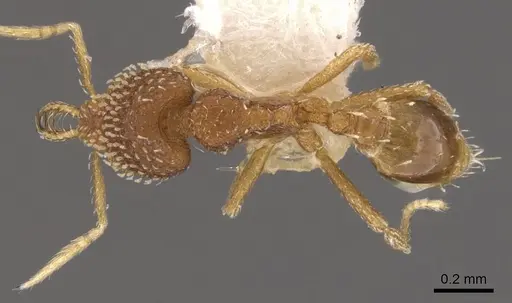
Literature
Loading...Loading products...