

Strumigenys arnoldi
- Scientific Name
- Strumigenys arnoldi
- Tribe
- Attini
- Subfamily
- Myrmicinae
- Author
- Forel, 1913
- Distribution
- Found in 6 countries
Strumigenys arnoldi Overview
Strumigenys arnoldi is an ant species of the genus Strumigenys. It is primarily documented in 6 countries , including Malawi, Mozambique, Saudi Arabia. Detailed taxonomic data and occurrence records can be further explored via authoritative databases such as AntWeb or the Global Biodiversity Information Facility (GBIF).
Strumigenys arnoldi
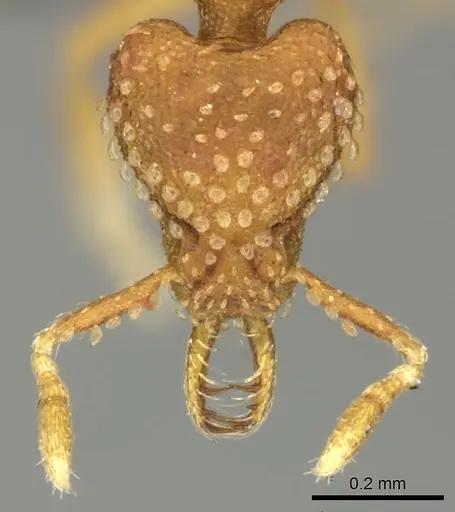
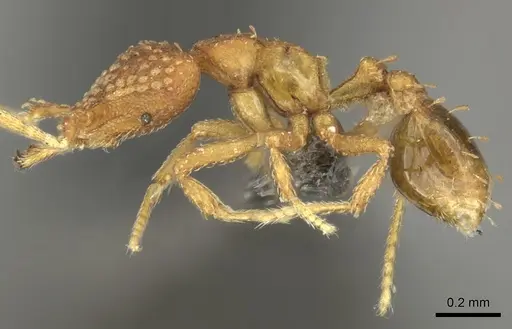
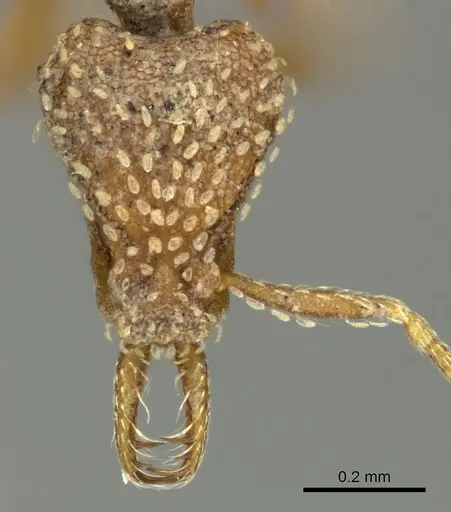
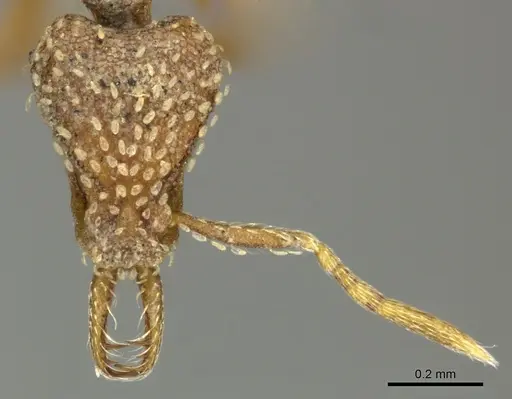
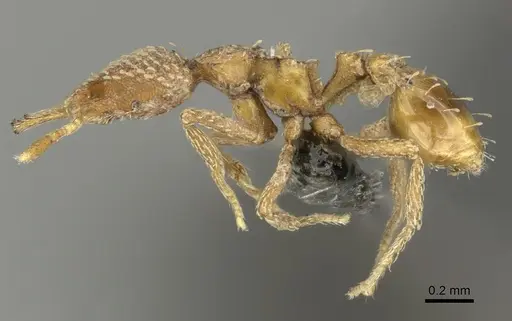
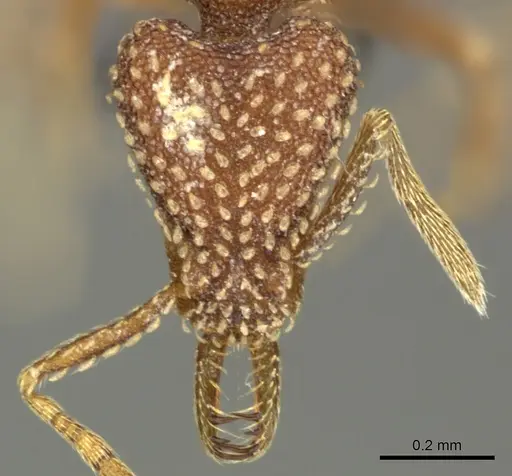
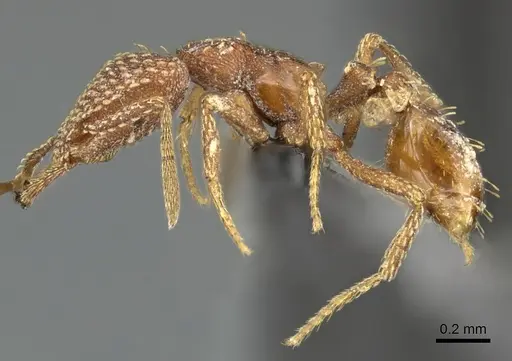
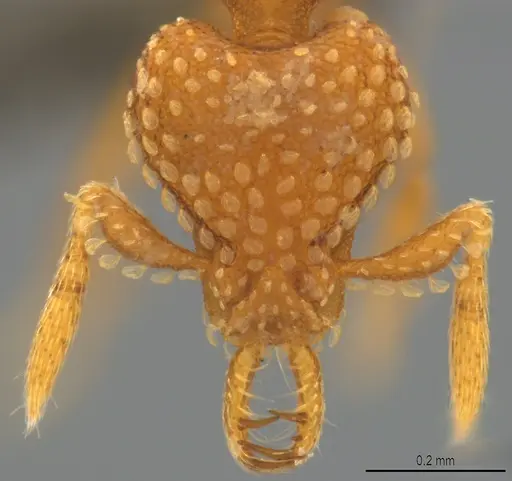
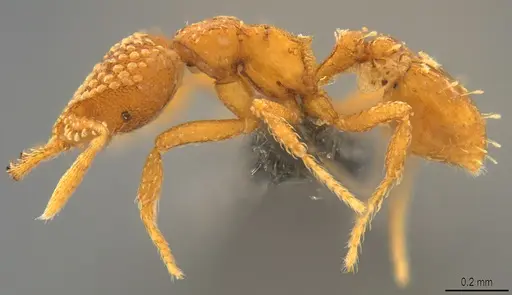
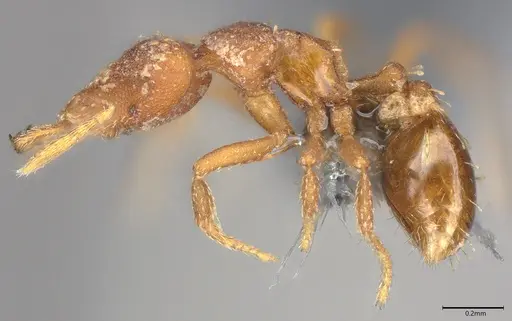
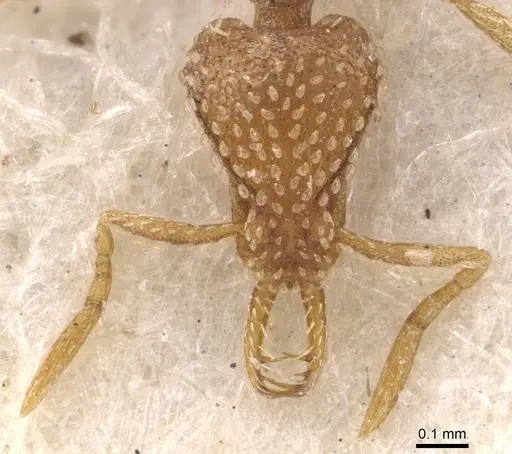
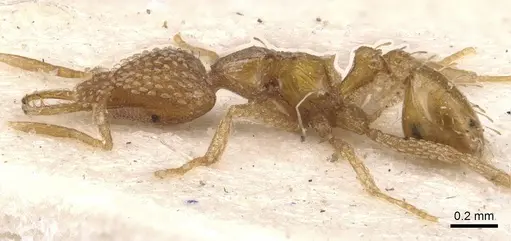
Strumigenys arnoldi is a tiny predatory ant measuring just 2.0-2.1mm in worker length. Workers are dull yellow to light brown with distinctive morphological features including small eyes (their diameter is less than the maximum width of the antenna scape), broadly triangular propodeal teeth, and well-developed spongiform appendages on the petiole and postpetiole [1]. The head and mesosoma are finely reticulate-punctate, with the pronotum showing fine longitudinal rugulation overlaying this sculpture [1]. This species belongs to the Strumigenys arnoldi group within the dacetine ants and is distinguished from related species by the smooth pronotal sides and postpetiolar disc.
These ants are extremely rare in the wild, with specimens rarely collected even during intensive sampling efforts. In Saudi Arabia, five subsequent trips to the same territory where specimens were found yielded no additional individuals, indicating very low population density [1]. Strumigenys arnoldi represents an Afrotropical species whose presence in southwestern Saudi Arabia supports the Afrotropical faunal affinities of that region [1].
Quick Summary
- Difficulty: Hard
- Origin & Habitat: Afrotropical region, originally described from Zimbabwe, with records from Kenya, Tanzania, and recently Saudi Arabia [1]. Found in diverse habitats including grassland, primary forest, and cultivated areas. Specimens have been collected from leaf litter, under stones, and in moist soil next to small water streams [1].
- Colony Type: Single-queen colonies (monogyne) are typical for this genus. Colony size is unknown but likely small given the species' tiny size and rarity.
- Colony: Monogyne
- Founding: Claustral
- Size & Growth:
- Queen: Unconfirmed, estimated 3-4mm based on worker size and typical Strumigenys proportions
- Worker: 2.0-2.1mm
- Colony: Unknown, likely under 100 workers given rarity and small size
- Growth: Moderate, inferred from typical Strumigenys development patterns
- Development: 6-10 weeks, estimated based on related Strumigenys species (Development timeline is estimated, no specific studies on this species)
- Antkeeping:
- Temperature: Keep at 22-26°C, they inhabit warm subtropical to tropical regions. A gentle gradient is recommended.
- Humidity: High humidity is essential, these ants are found in moist soil near water streams. Keep the nest substrate consistently damp but not waterlogged.
- Diapause: Unknown, no specific data on overwintering requirements. Given their Afrotropical distribution, they likely do not require true hibernation but may benefit from a slight cool period.
- Nesting: Natural nesting is under stones in humid soil. In captivity, a small test tube setup or plaster nest with high humidity works well. They prefer tight chambers scaled to their tiny size.
- Behavior: Strumigenys are specialized predators that hunt springtails and other tiny arthropods. They are not aggressive and will flee from threats. Their small size makes them vulnerable and escape prevention is critical, they can squeeze through extremely small gaps. Workers are slow-moving and spend most of their time hunting in leaf litter and soil.
- Common Issues: escape prevention is critical due to their tiny 2mm size, use fine mesh and tight-fitting lids, high humidity requirements can lead to mold problems if ventilation is poor, specialized diet makes them difficult to feed, require live springtails or other micro-prey, colonies remain very small and grow slowly, which can be frustrating for keepers, wild-caught colonies may be stressed or have low survival rates in captivity
Housing and Escape Prevention
Strumigenys arnoldi workers are only 2.0-2.1mm long, making them one of the smallest ants you can keep. This tiny size means escape prevention must be excellent, they can squeeze through gaps that seem impossible. Use test tubes with cotton plugs that are firmly packed, or better yet, use fluon barriers on the rim of any container. If using a formicarium, ensure all connections are sealed and use fine mesh (at least 0.5mm) on any ventilation holes. A small plaster or Y-tong nest works well since it can be kept consistently humid. The nest chambers should be small and tight, these ants feel secure in snug spaces. Keep the outworld simple and easy to clean, with smooth sides they cannot climb [1].
Feeding and Diet
Strumigenys are specialized predators that primarily hunt springtails (Collembola) and other tiny soil arthropods [1]. In captivity, you must provide live prey, they rarely accept dead food. Small springtails cultured specifically for ant feeding are the ideal diet. Other tiny live prey like booklice (psocids), minute soil mites, and fruit fly larvae may be accepted. Do not rely on sugar water or honey, these ants are predators, not sugar-seekers. Feed small prey items every 2-3 days, adjusting based on colony size and consumption. Remove uneaten prey promptly to prevent mold. A well-established springtail culture connected to the nest or placed nearby can provide a sustainable food source [1].
Temperature and Humidity
These ants come from warm, humid habitats in the Afrotropical region and Saudi Arabia, where they nest in moist soil next to water streams [1]. Keep the nest at 22-26°C, avoiding temperature extremes. A small heating cable on one side of the nest can create a gradient if your room temperature is below 22°C. Place the heat source on top of the nest, not underneath, to avoid drying out the substrate. Humidity is critical, keep the nest substrate consistently damp. For test tube setups, ensure the water reservoir is adequate but not so large that it floods. For plaster nests, check moisture levels daily and rehydrate as needed. Mist the nest occasionally but avoid creating standing water. Good ventilation is necessary to prevent mold while maintaining humidity [1].
Colony Founding and Growth
Queens likely seal themselves in a small chamber (claustral founding), living off stored fat reserves until their first workers emerge, this is typical for Strumigenys species. The founding chamber should be small and humid. First workers (nanitics) will be tiny, similar in size to workers. Colony growth is slow, expect several months before you see significant growth even with good feeding. Colonies likely remain small (under 100 workers) even at maturity, which matches the species' rarity in the wild. Be patient and do not overfeed, excess prey can mold and kill the colony. Monitor for mold and maintain clean conditions. Do not disturb the queen during founding, stress can cause her to abandon or eat her brood [1].
Behavior and Observation
Strumigenys arnoldi workers are slow-moving hunters that search through soil and leaf litter for tiny prey. They are not aggressive and will retreat from threats rather than fight. You may observe them using their specialized mandibles to capture springtails, the mandibles have two spiniform teeth at the apex designed for this purpose [1]. Workers have distinctive spongiform appendages on the petiole and postpetiole that help them navigate through soil. The colony will likely remain hidden most of the time, with foragers emerging only to hunt. Observation is best done with a magnifying glass or macro lens since these ants are so small. Avoid disturbing the nest unnecessarily, these tiny ants are sensitive to vibrations and stress [1].
Frequently Asked Questions
Can I keep Strumigenys arnoldi in a test tube?
Yes, a test tube setup works well for this species. Use a small test tube with a well-packed cotton plug and keep it horizontal so the queen can access water. The tube should be kept humid but not flooded. Cover the opening with fine mesh and use fluon barrier to prevent escapes. Since they are only 2mm tall, even small gaps will allow escape.
What do Strumigenys arnoldi eat?
They are specialized predators that need live springtails or other tiny arthropods. They rarely accept dead food or sugar sources. Small springtails cultured for ant feeding are ideal. Other tiny live prey like booklice and minute mites may also be accepted. Do not rely on standard ant foods, these are obligate predators.
How long until first workers in Strumigenys arnoldi?
Estimated 6-10 weeks from egg to first worker at optimal temperature (22-26°C). This is based on typical Strumigenys development patterns since specific timing for this species has not been documented. Growth is slow and colonies remain small.
Are Strumigenys arnoldi good for beginners?
No, this species is difficult to keep. They require high humidity, specialized live prey (springtails), and excellent escape prevention due to their tiny 2mm size. They are also extremely rare in the antkeeping hobby. Beginners should start with easier species like Lasius or Tetramorium.
How big do Strumigenys arnoldi colonies get?
Colony size is unknown but likely remains small, probably under 100 workers at maturity. This matches the species' rarity in the wild, where even intensive sampling rarely finds multiple specimens. Do not expect large, impressive colonies.
Do Strumigenys arnoldi need hibernation?
Unknown, no specific data exists. Given their Afrotropical distribution (Zimbabwe, Kenya, Tanzania, Saudi Arabia), they likely do not require true hibernation. A slight cool period (18-20°C) during winter may be beneficial but is not required.
Why are my Strumigenys arnoldi dying?
Common causes include: escape (they are tiny and will find any gap), mold from overwatering or poor ventilation, starvation (they need live springtails, not dead food), and stress from disturbance. Ensure high humidity without flooding, provide live prey, and minimize nest disturbances. Wild-caught colonies may also carry parasites or be stressed from collection.
When should I move Strumigenys arnoldi to a formicarium?
Only move when the colony is well-established with at least 20-30 workers and the test tube is becoming dirty or moldy. Foraging setup with a small outworld connected to the test tube works well. Do not expand too quickly, they prefer tight spaces. A small plaster nest with humid chambers is a good transition option.
Can I keep multiple queens together?
Not recommended, Strumigenys are typically monogyne (single queen). Combining unrelated queens has not been documented for this species and would likely result in fighting. Keep only one queen per colony.
References

This caresheet is licensed under CC BY-SA 4.0 .
CASENT0235715
View on AntWeb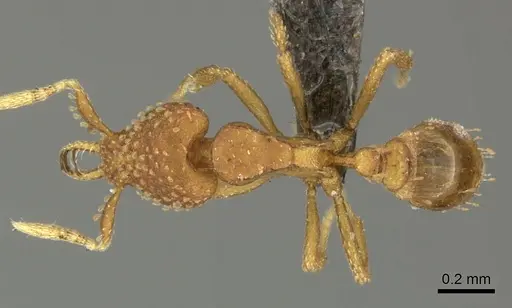
CASENT0249002
View on AntWeb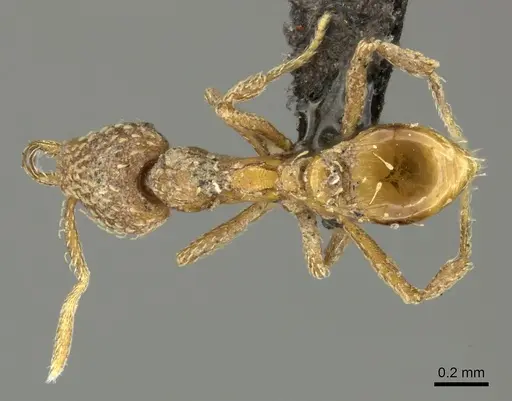
CASENT0260163
View on AntWeb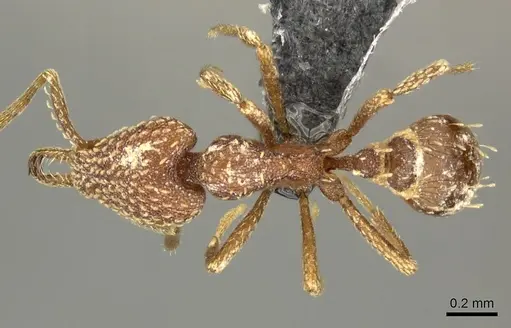
CASENT0784371
View on AntWeb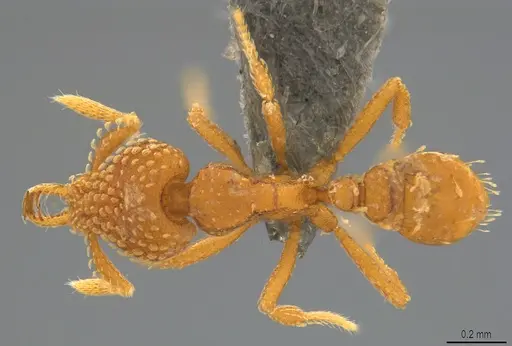
CASENT0786436
View on AntWeb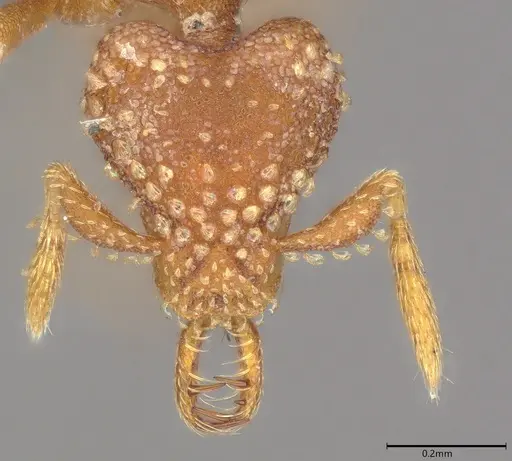
CASENT0909303
View on AntWeb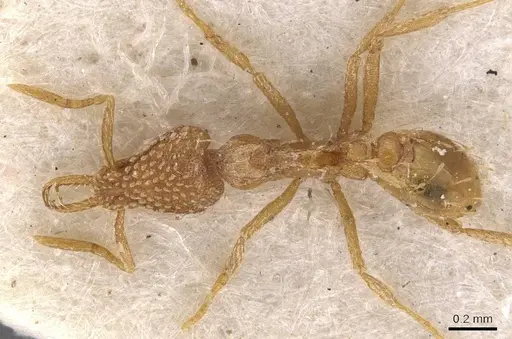
Literature
Loading...Loading products...