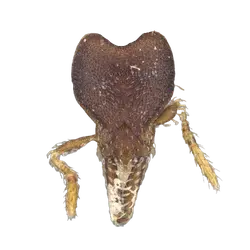
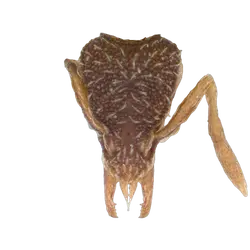
Strumigenys silvestrii - "Trap-Jaw Ant (Strumigenys)"
Strumigenys silvestrii is a minute, reddish-brown ant species known for its distinctive trap-jaw mandibles. Workers are tiny, ranging from 1.6 to 2.0 mm in total length, with a narrow, heart-shaped head and elongated, six-segmented antennae that end in a two-segmented club. Their mandibles are forked at the tip with two long, inwardly directed teeth, often featuring a small denticle in between. These ants are generally slow-moving and cryptic, frequently freezing when disturbed. They are specialized predators, primarily preying on springtails (Collembola) and other small soil arthropods.
- Difficulty: Medium
- Origin & Habitat: South America (Native), Introduced to USA, Mexico, Portugal, and various Caribbean Islands. in Primarily found in leaf litter and humus, decaying wood, or opportunistically in soil cavities. They inhabit coastal hardwood forests, bottomland hardwood forests, prairies, and even vacant urban lots, though they are less commonly found in heavily forested areas in their introduced range..
- Colony Type: Monogyne, claustral founding.
- Size & Growth:
- Queen: 0.48-0.48mm
- Worker: 1.6-2.0mm
- Colony: Small (typically less than 100 individuals, but can reach several hundreds). Slow growth.
- Antkeeping:
- Temperature: Room temperature is generally suitable, but they thrive in warm, moist habitats. A range of 23-28°C would be ideal for active periods..
- Humidity: High humidity is crucial. These ants are extremely sensitive to desiccation, and forgetting to provide sufficient moisture can lead to rapid colony death..
- Diapause: Not required. Not specified at Not specified.
- Nesting: Small, humid setups that mimic their natural leaf litter or soil environments are preferred. Options include small Petri dishes, test tube setups for smaller colonies, or hydrostone nests. They also nest in old nuts and hollow twigs..
- Behavior: Low (towards handler, primarily defensive if handled roughly) aggressiveness.
- Common Issues: Desiccation/low humidity, Lack of appropriate live prey (springtails), Mold in nest (less of an issue with hydrostone), Colony stalling due to stress.
Keeping Strumigenys silvestrii successfully in a formicarium hinges on maintaining very high humidity. These fascinating trap-jaw ants are incredibly moisture-sensitive, and even a few hours without adequate hydration can be fatal for your colony. Many experienced antkeepers swear by hydrostone as a substrate for these tiny predators, as it excels at absorbing and retaining water, providing a consistently moist environment for your brood and workers. Always ensure there's a reliable water source within their nest setup, such as a constantly moist cotton ball or a well-hydrated part of the formicarium.
Feeding these specialized predators requires a consistent supply of their primary prey: springtails (Collembola) and other small soil arthropods. Strumigenys silvestrii are not keen on liquid sugars or other common ant foods; their diet is strictly carnivorous. It's highly recommended to establish a thriving springtail culture before acquiring a Strumigenys colony to ensure a steady food source. Their hunting style is quite unique and mesmerizing to observe, as they slowly stalk their prey and use their trap-jaws for a lightning-fast strike.
Despite their seemingly delicate nature, Strumigenys silvestrii can be surprisingly resilient if their specific needs are met. While starting a colony from a founding queen can be challenging and requires patience, it is certainly achievable. Queens can be found in claustral cells under rocks, or within hollow nuts and twigs in their natural habitat. If collecting, extreme care must be taken due to their fragility. Their cryptic nature means they rarely venture into open spaces, preferring the dark, moist confines of their nest and foraging areas.
These miniature trap-jaw ants, while introduced to various parts of the world, are not considered pests. They remain largely unnoticed by the general public due to their tiny size and secretive habits. For ant enthusiasts, their unique hunting behaviors and specialized care requirements offer a rewarding challenge. They typically do not exceed colony sizes of a few hundred individuals, making them suitable for smaller formicariums and setups that allow for precise environmental control.
User blogs will be displayed here.