

Strongylognathus destefanii
- Scientific Name
- Strongylognathus destefanii
- Tribe
- Crematogastrini
- Subfamily
- Myrmicinae
- Author
- Emery, 1915
- Distribution
- Found in 1 countries
Strongylognathus destefanii Overview
Strongylognathus destefanii is an ant species of the genus Strongylognathus. It is primarily documented in 1 countries , including Italy. Detailed taxonomic data and occurrence records can be further explored via authoritative databases such as AntWeb or the Global Biodiversity Information Facility (GBIF).
Strongylognathus destefanii
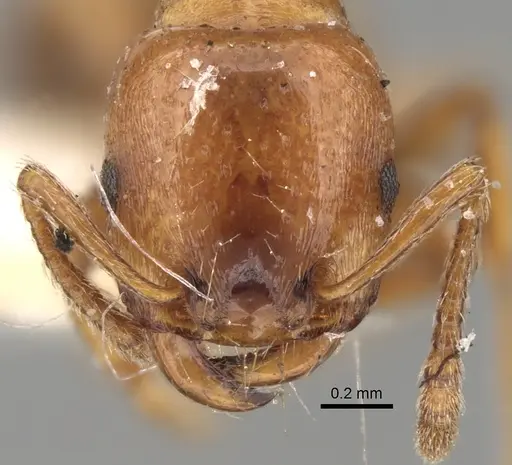
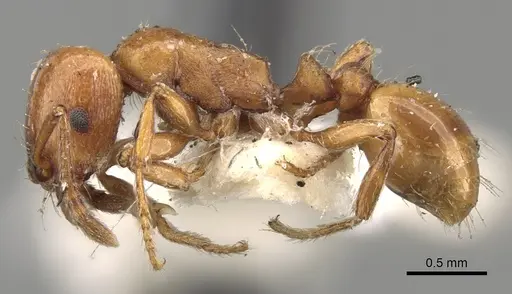
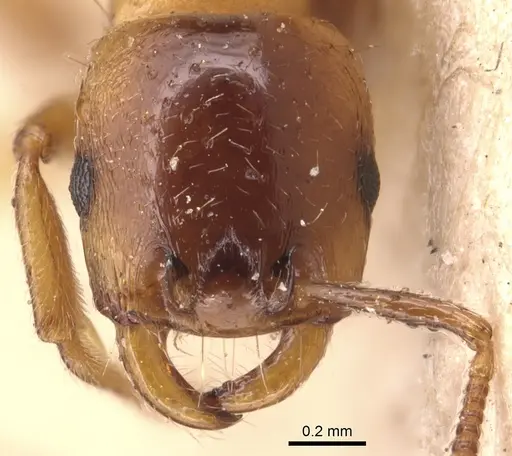
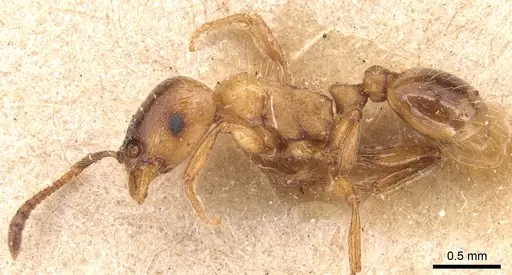
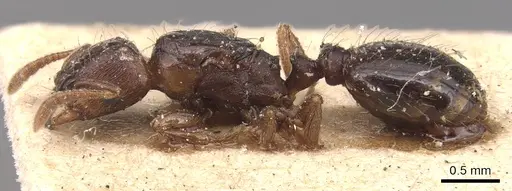
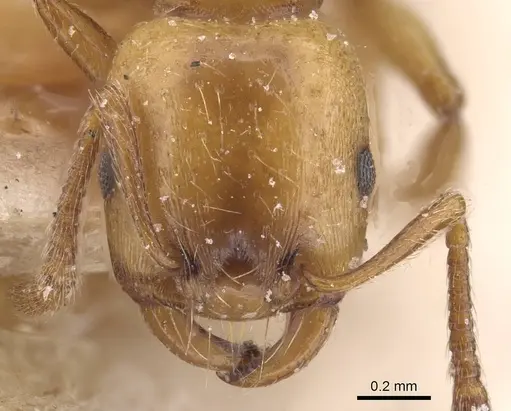
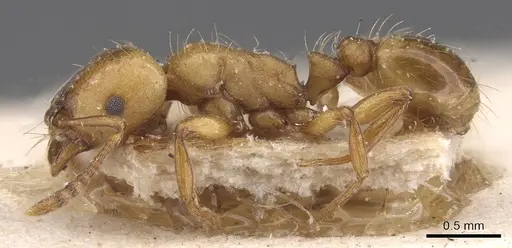
Strongylognathus destefanii is a small to medium-sized ant belonging to the subfamily Myrmicinae. Workers measure approximately 3-4mm, while queens are larger. This species is endemic to southern Italy, particularly Sicily and the surrounding islands [1]. The ant has a dark brown to black coloration typical of many Myrmicinae. This species is an obligate social parasite, a slave-maker that depends entirely on host colonies of Tetramorium species (primarily Tetramorium semilaeve) to survive [1][2]. The parasite raids host colonies to steal brood, which hatch as workers that serve the parasite colony. This is one of the few ant species in Europe that cannot survive without a host.
Quick Summary
- Difficulty: Expert
- Origin & Habitat: Southern Italy, including Sicily and the Aeolian Islands (Vulcano). Found at altitudes from 120-1090m in habitats including maquis, rocky hilltops, olive plantations, and disturbed shrubland [3]. This is a regional endemic with limited distribution.
- Colony Type: Obligate social parasite (slave-maker). Colonies cannot survive without a host Tetramorium colony. The species is part of the S. huberi group and exhibits dulosis behavior [2].
- Colony: Monogyne
- Queen: Socially parasitic
- Special: Slave-making
- Size & Growth:
- Queen: Approximately 5-6mm (estimated based on genus)
- Worker: Approximately 3-4mm [4]
- Colony: Colonies are typically small, likely under 100 workers including host workers
- Growth: Slow, dependent on host colony growth
- Development: Unknown, directly tied to host colony development (Development is tied to the host colony since slave-maker brood must be raised by host workers)
- Antkeeping:
- Temperature: Keep at room temperature (20-24°C) similar to their Mediterranean habitat. A moderate temperature gradient is acceptable.
- Humidity: Moderate humidity (50-60%). These ants inhabit relatively dry Mediterranean regions.
- Diapause: Likely requires a mild winter rest period (6-8 weeks at 10-15°C) matching the temperate climate of their native range.
- Nesting: Cannot be kept independently. Requires a established host colony of Tetramorium semilaeve or T. impurum in the same enclosure. Natural nests are under stones or in leaf litter [3].
- Behavior: This is a slave-maker species. Workers raid neighboring Tetramorium colonies to capture pupae and larvae. The captured brood hatches within the parasite colony and becomes workers that serve the parasite queen. Eudulosis (slave-raiding) behavior has been observed in laboratory settings, though sporadically [4]. Workers are relatively non-aggressive toward humans and cannot sting. Escape risk is low, they are moderate-sized ants that are not particularly escape-prone.
- Common Issues: keeping this species requires maintaining TWO colonies, the parasite AND a host colony, which is extremely challenging, host colony must be healthy and established before introducing the parasite, slave-makers often decline if they exhaust their host colony, very limited availability, this is not a species for beginners and is rarely available in the ant trade, stress from captivity often causes colony decline in social parasites
Understanding Strongylognathus destefanii
Strongylognathus destefanii is one of the most challenging ants to keep in captivity because it is an OBLIGATE SOCIAL PARASITE, specifically a slave-maker (dulotic species). This means the colony cannot survive without a host species [1]. The species is native to southern Italy, particularly Sicily and the Aeolian Islands, making it a regional endemic [3]. Workers are small (3-4mm) and darker in coloration compared to some related species. The species was originally described by Emery in 1915 from Sicily, and has two junior synonyms (S. emeryi and S. cecconii) that were later synonymized [5]. This ant belongs to the S. huberi group and is closely related to other Mediterranean slave-makers [2]. The primary host is Tetramorium semilaeve, with Tetramorium impurum as a secondary host [2][6].
The Challenge of Keeping a Slave-Maker
You cannot keep Strongylognathus destefanii the same way you would keep a normal ant species. This is not a beginner species, it is an expert-level challenge that requires keeping TWO separate colonies simultaneously: the parasite colony AND a healthy host colony of Tetramorium semilaeve or T. impurum [2]. The parasite queen cannot found a colony independently. Instead, she must invade an established host colony, kill or replace the host queen, and use the host workers to raise her own brood. Once established, the slave-maker colony produces workers that conduct raids on OTHER Tetramorium colonies to steal pupae and larvae. These captured individuals hatch and become workers that serve the parasite colony, this is called dulosis or slave-making behavior [2]. In captivity, you must maintain a constant supply of host brood, either by keeping multiple host colonies or by carefully managing raids.
Housing Requirements
Housing Strongylognathus destefanii requires a complex setup. You need at least two formicaria or outworld setups: one for the parasite colony and one or more for the host colony(s). The host colony should be well-established with many workers before introducing the parasite. Both colonies need proper escape prevention, though this species is not particularly escape-prone. Temperature should be kept at room temperature (20-24°C), reflecting their Mediterranean origin. Humidity should be moderate (50-60%). Provide standard nesting setups, test tubes or acrylic nests work well for both species. The key is ensuring the host colony remains healthy enough to support both itself and the parasite's demands.
Feeding and Nutrition
The host workers are responsible for feeding the parasite queen and brood, so nutrition is tied to the host colony's needs. Tetramorium semilaeve is a typical ground-nesting ant that forages for small insects, seeds, and honeydew. Feed the host colony protein sources like small crickets, mealworms, or fruit flies, along with sugar sources such as honey water or sugar water. The parasite workers will also consume these foods but rely on host workers to distribute them within the colony. A healthy, well-fed host colony is essential, if the host colony declines, the parasite colony will follow.
Legal and Ethical Considerations
Before acquiring Strongylognathus destefanii, check your local laws regarding keeping native species. In Italy (their native range), collecting may be regulated. Additionally, consider whether keeping a social parasite is appropriate, these species are difficult to maintain long-term and often decline in captivity. If you are interested in this species for educational purposes or conservation of this regional endemic, ensure you have the expertise and resources to maintain both the parasite and host colonies properly. This species is rarely available in the ant trade due to its specialized requirements.
Frequently Asked Questions
Can I keep Strongylognathus destefanii like a normal ant species?
No. Strongylognathus destefanii is an OBLIGATE SOCIAL PARASITE, a slave-maker that cannot survive without a host colony of Tetramorium semilaeve or T. impurum. You must keep both species to maintain the parasite colony [1][2]. This is not a species for beginners.
How do I start a Strongylognathus destefanii colony?
You cannot start a colony from a single queen. Instead, you need an established host colony (Tetramorium semilaeve or T. impurum) and must introduce a mated parasite queen to it. The parasite queen must kill or replace the host queen to take over the colony. This process is challenging and often fails, even experienced keepers struggle with social parasites [2].
What do Strongylognathus destefanii eat?
The host workers feed both themselves and the parasite colony. Feed the host colony small insects (fruit flies, pinhead crickets, mealworms) for protein and sugar water or honey for carbohydrates. The parasite workers will consume food brought back by host foragers [2].
Do Strongylognathus destefanii ants sting?
Strongylognathus destefanii workers are small (3-4mm) and do not have a functional stinger. As Myrmicinae, they can bite but are not particularly aggressive toward humans. The main concern is their parasitic lifestyle, not their defense [4].
Are Strongylognathus destefanii good for beginners?
No. This is an expert-level species that requires maintaining two colonies simultaneously (the parasite and the host). Even experienced antkeepers struggle with social parasites. You should have significant experience with normal ant species before attempting a slave-maker [2].
Where is Strongylognathus destefanii native to?
This species is endemic to southern Italy, particularly Sicily and the Aeolian Islands (including Vulcano). It is found at altitudes between 120-1090m in Mediterranean habitats [3][1].
How big do Strongylognathus destefanii colonies get?
Colonies remain relatively small, typically under 100 total workers (both parasite and host workers combined). The slave-maker population is always smaller than the host worker population it depends on [2].
Do Strongylognathus destefanii need hibernation?
Likely yes. As a Mediterranean species from temperate Italy, they probably require a mild winter rest period of 6-8 weeks at 10-15°C, similar to other European ants from similar climates.
What is the host species for Strongylognathus destefanii?
The primary host is Tetramorium semilaeve, with Tetramorium impurum as a secondary host [2][6]. You must maintain at least one of these host species to keep the parasite alive.
References

This caresheet is licensed under CC BY-SA 4.0 .
CASENT0280846
View on AntWeb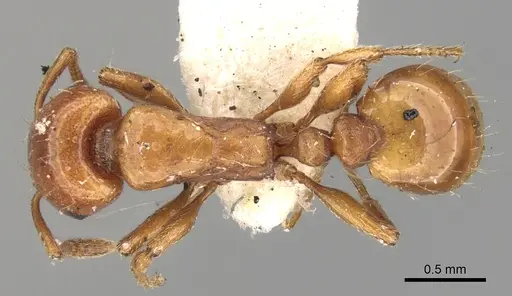
CASENT0904865
View on AntWeb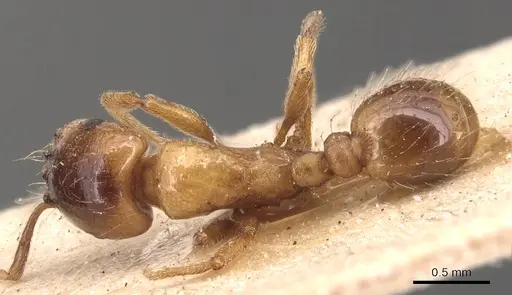
CASENT0904869
View on AntWeb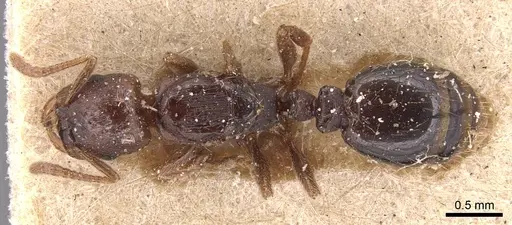
CASENT0913974
View on AntWeb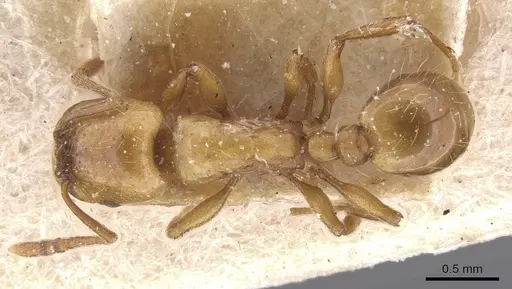
Literature
Loading...Loading products...