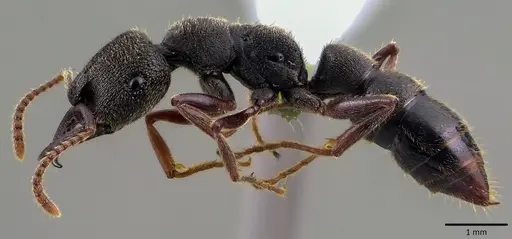
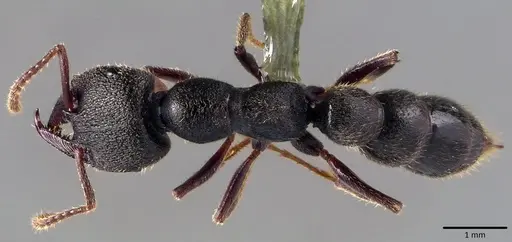
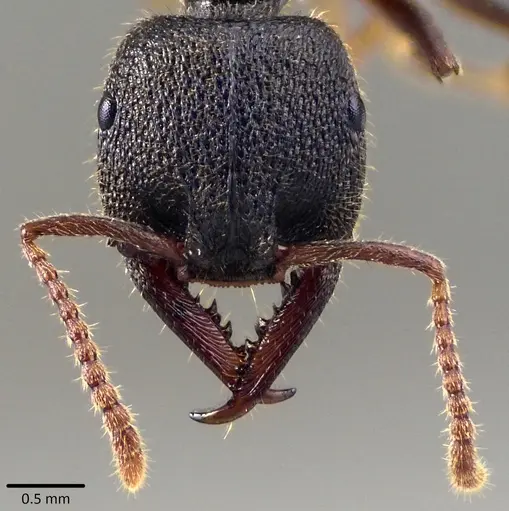
Stigmatomma reclinatum - "Vampire Ant"
Stigmatomma reclinatum, often called the Vampire Ant, is a fascinating subterranean ant species known for its unique feeding behavior. These ants are typically dark brown or black and measure around 4 to 6 mm in length. They are easily identified by their prominent, elongated mandibles, which are adapted for hunting small invertebrates in their underground habitats. A remarkable characteristic of this species is their 'vampire' feeding habit, where adults will gently pierce their own larvae and feed on their bodily fluids (hemolymph) without causing harm.
- Difficulty: Medium
- Origin & Habitat: Asia (specifically tropical and subtropical regions, including South and Southeast Asia, such as Indonesia, Malaysia, and India). in Tropical and subtropical forests, preferring soils rich in organic matter. They build subterranean nests in leaf litter, well-drained soils, or under decaying logs..
- Colony Type: Gamergate (some members of the Stigmatomma reclinatum species-group do not present a morphologically distinct queen, and reproduction is performed by gamergates)., semi-claustral (with feeding). founding.
- Size & Growth:
- Queen: 6-7mm
- Worker: 4-7mm
- Colony: Small (up to a few hundred workers, typically 1-400 workers).. Slow (reproduction is slow). growth.
- Antkeeping:
- Temperature: Maintain a temperature range between 20°C and 26°C, with an ideal range of 22°C to 25°C..
- Humidity: High humidity is crucial, ideally ranging from 70% to 80%..
- Diapause: Not required. Not specified at Not specified.
- Nesting: These ants prefer subterranean nests. In captivity, nests mimicking their natural environment, such as those made of moist moss, coconut fiber, or bioactive setups with cocoa peat and clay, are suitable..
- Behavior: Medium (towards prey, low towards handler unless provoked) aggressiveness.
- Common Issues: Maintaining consistent high humidity, Providing appropriate live feeder insects, Colony stalling due to improper diet or humidity, Escape artists (due to their subterranean nature, ensure secure nest).
One of the most captivating aspects of keeping Stigmatomma reclinatum, the 'Vampire Ant', is their unique feeding behavior known as larval hemolymph feeding (LHF). Workers and gamergates will gently tap into the hemolymph (body fluids) of their own larvae, effectively 'drinking' from them without causing any permanent harm. This fascinating adaptation allows the colony to sustain itself and is a prime example of their specialized predatory nature. Observing this behavior firsthand in your setup can be an incredibly rewarding experience for any antkeeper.
These ants are specialized predators, primarily feeding on small insects and arthropods, with a particular fondness for centipedes in the wild. In a captive environment, a varied diet of small feeder insects like crickets or beetle larvae is essential. They also benefit from small amounts of sugary liquids, such as honey water, offered occasionally. Providing live prey can encourage their natural hunting instincts and contribute to the overall health and vitality of the colony.
Stigmatomma reclinatum thrives in humid, subterranean environments. Replicating this in a formicarium is key to their success. Utilizing substrates like moist coco fiber or moss, and ensuring adequate hydration in your nest setup, will create a comfortable and suitable habitat. Bioactive setups with living mosses and naturalistic elements can further enhance their well-being and provide a more enriching environment for these intriguing ants. Proper humidity levels are critical to prevent desiccation and maintain a healthy brood.
Unlike many ant species, some Stigmatomma reclinatum colonies are led by gamergates, which are fertile workers capable of reproduction, rather than a single, morphologically distinct queen. This unique colony structure means that a colony might consist of a gamergate along with workers and brood. While their colony growth is generally slow, reaching a few hundred workers at most, their unusual social organization and predatory habits make them a truly distinctive addition to any advanced antkeeper's collection.
These ants possess a sting, which they utilize for hunting prey and self-defense. While generally not aggressive towards keepers, caution should always be exercised when handling them. Their long, specialized mandibles are also a distinctive feature, used for ambushing and manipulating prey. Understanding their natural behaviors and respecting their predatory nature will ensure a safe and successful antkeeping experience.
Frequently Asked Questions
What's the best setup for a Stigmatomma reclinatum colony?
For these fascinating Vampire Ants, a nest that mimics their natural subterranean habitat is ideal. Think setups with moist moss, coco fiber, or a custom formicarium designed to hold high humidity, perhaps even a bioactive setup. An outworld with a deep substrate layer can also work well, allowing them to tunnel.
How often should I feed my Vampire Ants, and what do they eat?
Stigmatomma reclinatum are predatory ants, so they primarily need live insects like small crickets, beetle larvae, or other small arthropods. Offer food every few days, adjusting based on colony size and consumption. Don't forget to offer a little sugary liquid, like honey water, occasionally as a supplement, though their main diet is protein-based.
Do Stigmatomma reclinatum sting?
Yes, Stigmatomma reclinatum workers do possess a sting, which they use for subduing prey and defense. While they're generally not aggressive towards antkeepers, it's always wise to exercise caution and avoid direct contact.
Why are they called 'Vampire Ants'?
They earned the nickname 'Vampire Ants' because of their incredibly unique feeding behavior! Adult workers and gamergates will gently puncture their own larvae and drink their hemolymph (body fluids) without harming the brood. It's a truly amazing adaptation to witness in the antkeeping hobby.
What's the ideal temperature and humidity for Stigmatomma reclinatum?
These ants thrive in warm, humid conditions. Aim for temperatures between 20°C and 26°C (70-79°F), with an optimal range around 22-25°C (72-77°F). Humidity levels are crucial, ideally staying high at 70-80% to keep them healthy and prevent their brood from drying out.
Do Stigmatomma reclinatum have a queen or gamergates?
Some members of the Stigmatomma reclinatum species-group are known to reproduce via gamergates, which are fertile workers. This means you might not see a traditional queen with a distinct morphology; instead, reproductive duties are handled by one or more specialized workers.
Are Stigmatomma reclinatum good for beginner antkeepers?
Given their specific humidity needs, specialized diet, and unique colony structure (gamergates), Stigmatomma reclinatum are generally considered more suitable for intermediate to advanced antkeepers who have some experience with exotic ant species. They require a bit more attention to environmental parameters.
How large do Stigmatomma reclinatum colonies get?
These colonies are on the smaller side. You can expect a mature colony to range from around 1 to 400 workers. Their growth rate is typically slow, so don't expect a supercolony!
Do they need diapause (hibernation)?
No, Stigmatomma reclinatum are tropical ants and do not require diapause. Maintaining consistent temperature and humidity year-round is important for their well-being.
What kind of substrate is best for their nest?
For their nest, substrates that retain moisture well are excellent. Think moist moss, coco fiber, or a mix of soil and clay. These materials help maintain the high humidity levels these subterranean ants prefer.
Are they escape artists?
Like many subterranean ants, Stigmatomma reclinatum are adept at finding small openings. Ensuring your formicarium is securely sealed is important to prevent escapes, especially given their tendency to tunnel.
Can I keep them in a test tube setup permanently?
While a colony might start in a test tube, their need for consistent humidity and a foraging area means they will eventually need to be moved into a more suitable formicarium. A test tube setup is primarily for initial founding and small starter colonies.