

Stigmatomma luyiae
- Scientific Name
- Stigmatomma luyiae
- Tribe
- Amblyoponini
- Subfamily
- Amblyoponinae
- Author
- Hsu <i>et al.</i>, 2017
- Distribution
- Found in 1 countries
Stigmatomma luyiae Overview
Stigmatomma luyiae is an ant species of the genus Stigmatomma. It is primarily documented in 1 countries , including Taiwan, Province of China. Detailed taxonomic data and occurrence records can be further explored via authoritative databases such as AntWeb or the Global Biodiversity Information Facility (GBIF).
Stigmatomma luyiae
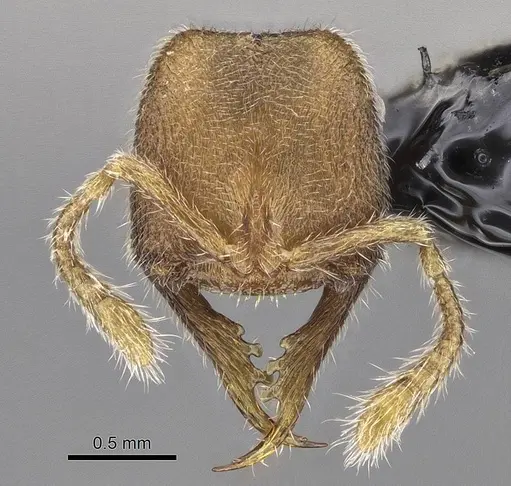
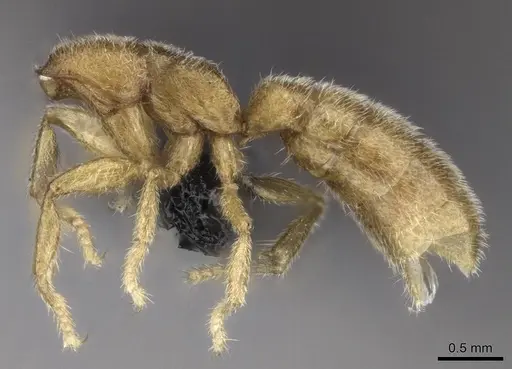
Stigmatomma luyiae is a tiny, pale ant species native to East and Southeast Asia, including Taiwan, Hong Kong, southern China, and the Eastern Himalayas of India [1][2]. Workers measure just 2.43-2.45 mm in total length, making them one of the smaller ant species you'll encounter [1]. They have a distinctive appearance with an 11-segmented antenna, square-shaped head, and unusually long mandibles that stretch the full length of their head, a feature that sets them apart from most other Stigmatomma species [1]. Their body is yellow-brown with an orange-brown head, and they lack compound eyes entirely, indicating a fully subterranean lifestyle [1][2].
This species is remarkable for its extreme rarity in the wild. Despite intensive ant surveys in Hong Kong using thousands of Winkler extractors and pitfall traps over nearly 30 years, only a single worker has ever been recorded [2]. This, combined with their pale coloration and absence of eyes, strongly suggests they live almost entirely underground in small colonies [2]. The species was only described in 2017 and many aspects of their biology remain completely unknown [1].
Quick Summary
- Difficulty: Expert
- Origin & Habitat: Subtropical evergreen broad-leaved forests in the Machilus-Castanopsis vegetation zone at around 770m elevation in Taiwan. Also found in Hong Kong and the Eastern Himalayas of India [1][2].
- Colony Type: Unknown, colony structure has not been documented. Based on extreme rarity and single-queen colony patterns in related Amblyoponinae, likely single-queen colonies with very small colony size (possibly under 50 workers) [2].
- Size & Growth:
- Queen: Unknown, queen caste has not been described [1]
- Worker: 2.43-2.45 mm [1]
- Colony: Likely very small, possibly under 50 workers based on scarcity in sampling [2]
- Growth: Unknown
- Development: Unknown, no development data exists for this species. Based on related Amblyoponinae and subtropical climate, estimated 6-10 weeks at warm temperatures. (Development timeline is unconfirmed. Related Stigmatomma species typically develop in 6-8 weeks under optimal conditions.)
- Antkeeping:
- Temperature: Keep at 22-26°C, they come from subtropical Taiwan where temperatures stay warm year-round. A gentle gradient allowing cooler areas is advisable.
- Humidity: Keep substrate consistently moist but not waterlogged. They live in soil in subtropical forests, so aim for damp conditions with some drier areas available.
- Diapause: Unknown, no data on overwintering requirements. Given their subtropical origin, they likely do not require true hibernation but may reduce activity in cooler months.
- Nesting: Soil-dwelling species that nests in sifted soil in nature. In captivity, a naturalistic setup with moist soil or a plaster/acrylic nest with soil chamber works best. They avoid light and will nest in dark, humid areas.
- Behavior: Completely subterranean and likely predaceous like other Amblyoponinae. Workers are blind and probably forage underground. No aggression data exists, but related species are typically docile. Escape risk is low given their tiny size and lack of eyes, they are not strong climbers. However, their small size means standard escape prevention is still necessary.
- Common Issues: extreme difficulty in establishing colonies, only known from wild soil samples, no captive colonies documented, completely unknown biology makes care challenging, everything must be inferred from related species, subterranean lifestyle means they rarely emerge to feed, making observation difficult, likely requires live prey since Amblyoponinae are typically predators, very small colony size means any losses have major impact on colony survival
Housing and Nest Setup
Stigmatomma luyiae is a soil-dwelling species that was collected from sifted soil samples using Winkler extractors [1]. This means they need a naturalistic setup with a deep soil layer or a nest that allows them to burrow and remain hidden. A naturalistic terrarium with moist soil (at least 5-7 cm deep) works well, or you can use a plaster/acrylic nest with a soil chamber attached. These ants are completely blind and strongly photophobic, they will avoid any area with light and will only forage in darkness [1][2]. Keep the outworld dim or use red film to observe them. The nest should be completely dark when not being checked. Use a water tube to maintain humidity, and mist the soil occasionally to keep it damp but not soggy.
Feeding and Diet
The diet of Stigmatomma luyiae has not been documented, but other Amblyoponinae are primarily predatory, hunting small soil invertebrates like springtails, mites, and other micro-arthropods [1]. Based on related species, you should offer small live prey items. Fruit flies, pinhead crickets, and small mealworms may be accepted, but their tiny size (workers are only 2.4 mm) means prey must be very small. Since they are subterranean, they likely hunt underground and may not readily accept prey in an open foraging area. Place prey directly on the soil surface near nest entrances. Sugar sources are unlikely to be accepted, Amblyoponinae are not typically honeydew feeders. Focus on providing a constant supply of small live prey.
Temperature and Seasonal Care
This species comes from subtropical Taiwan where temperatures remain warm throughout the year. Keep the nest at 22-26°C, with a slight gradient allowing workers to move to cooler areas if needed. Heating is likely beneficial since they come from a warm climate. Do not let temperatures drop below 18°C for extended periods. Whether they require a winter dormancy period is unknown, their subtropical origin suggests they may not need true hibernation, but activity will likely slow during cooler months. Monitor colony behavior and reduce feeding during periods of low activity. The high elevation of their Taiwan locality (770m) suggests they can tolerate some temperature variation. [1]
Understanding Their Extreme Rarity
One of the most important things to understand about Stigmatomma luyiae is just how rarely they are encountered in the wild. In nearly 30 years of ant sampling in Hong Kong, using thousands of Winkler extractors and pitfall traps across hundreds of sites, only a single worker has ever been recorded [2]. This extreme scarcity suggests several things: their colonies are likely very small (possibly under 50 workers), they live almost entirely underground, and they may have very specific habitat requirements [2]. This species is not one that you will find readily, obtaining founding colonies will be extremely difficult. If you do obtain a colony, every individual is precious and losses are difficult to replace. This is truly an expert-level species that pushes the boundaries of what we know about ant biology.
Morphology and Identification
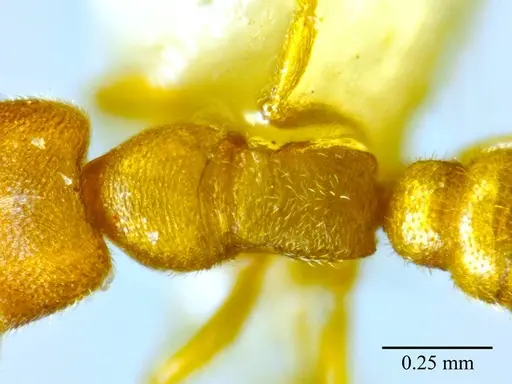
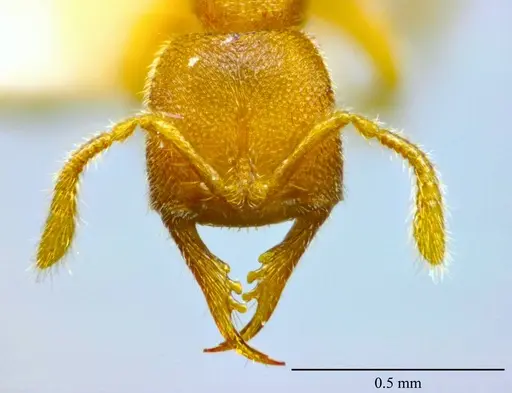
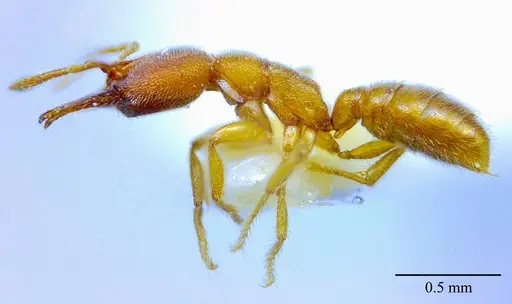
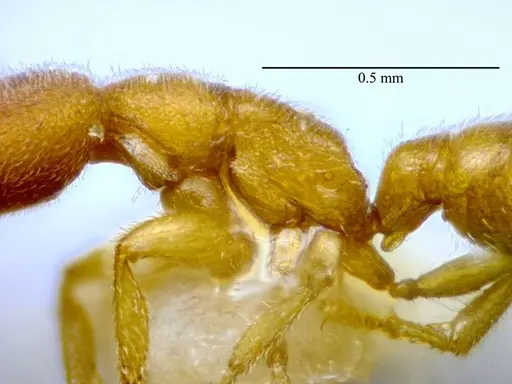
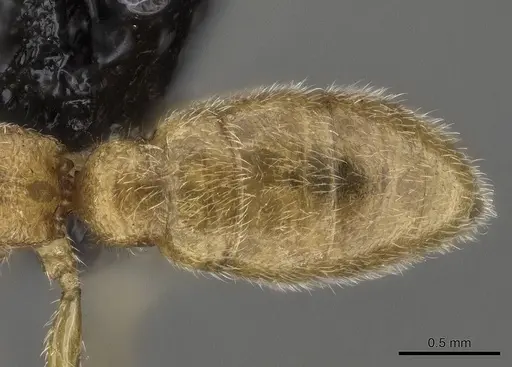
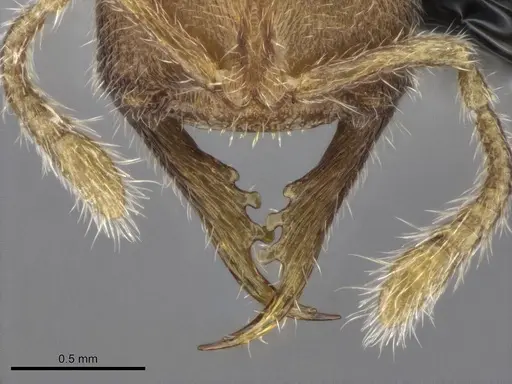
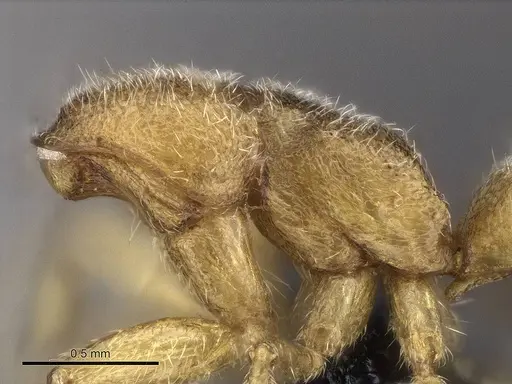
Workers of Stigmatomma luyiae have several distinctive features that set them apart from other Stigmatomma species. They have exactly 11 antennomeres (antenna segments), which is unusual in the genus [1]. Their mandibles are uniquely shaped, they are as long as the head itself (MI: 100) and have teeth arranged in a single row, rather than the typical double row seen in most other Stigmatomma [1]. The median mandibular teeth have a distinctive jigsaw-tab shape that is shared only with S. mulanae [1]. Most notably, they completely lack compound eyes, a clear adaptation to their subterranean lifestyle [1][2]. The head is square (CI: 100), not rectangular like many related species. Their body is pale yellow-brown with an orange-brown head, and they are covered in fine hairs.
Distribution and Habitat
Stigmatomma luyiae was originally described from Taiwan, specifically from the Lienhuachih Forest Dynamics Plot in Nantou County at 770m elevation [1]. The type specimens were collected from soil samples in a subtropical evergreen broad-leaved forest in the Machilus-Castanopsis vegetation zone [1]. Since then, they have been recorded from Hong Kong (a single worker collected from The Peak in 1994), mainland China, and the Eastern Himalayas in India [2]. Their presence across such a wide but scattered range, combined with extreme rarity in sampling, suggests they may be more widespread but overlooked due to their subterranean habits. The pale coloration and absence of eyes are characteristic features of subterranean ant species that rarely come to the surface.
Frequently Asked Questions
Is Stigmatomma luyiae suitable for beginners?
No. This is an expert-level species with almost completely unknown biology. No captive colonies have been documented, and they are among the rarest ants in Asia despite extensive sampling. Only experienced antkeepers comfortable with species that require inference-based care should attempt this species.
How big do Stigmatomma luyiae colonies get?
Colony size is unknown but likely very small. Based on their extreme rarity in sampling (only a single worker collected in Hong Kong despite decades of intensive surveying), colonies probably contain under 50 workers [2]. This makes them one of the smallest colony-forming ant species.
What do Stigmatomma luyiae ants eat?
Their diet is unconfirmed, but like other Amblyoponinae, they are likely predatory on small soil invertebrates. Based on related species, offer small live prey such as springtails, fruit flies, and tiny crickets. They are probably not interested in sugar sources. Their tiny worker size (2.4 mm) means prey must be very small.
Do Stigmatomma luyiae ants have queens?
The queen caste has not been described. Only workers are known from scientific collections [1]. This is common for rare, subterranean species that are rarely encountered. The colony structure (single queen vs. multiple queens) is completely unknown.
Can I keep Stigmatomma luyiae in a test tube?
A test tube setup may work for founding colonies, but given their soil-dwelling nature, a naturalistic setup with deep, moist soil is more appropriate. They are blind and will not do well in exposed, lit environments. If using a test tube, provide a dark cover and keep the substrate moist.
Do Stigmatomma luyiae ants sting?
Amblyoponinae have functional stingers, but Stigmatomma are not known for aggressive behavior. Given their tiny size and subterranean habits, they are unlikely to be a stinging concern. However, they should be handled with care as a general precaution.
What temperature should I keep Stigmatomma luyiae at?
Keep nest temperatures at 22-26°C. They come from subtropical Taiwan where year-round temperatures are warm. A slight gradient allowing cooler areas is advisable. Do not allow temperatures to drop below 18°C for extended periods.
How long does it take for Stigmatomma luyiae to develop from egg to worker?
The development timeline is completely unconfirmed for this species. Based on related Amblyoponinae and their subtropical origin, estimate roughly 6-10 weeks at optimal warm temperatures. This is a rough guess, actual development time may differ significantly.
Do Stigmatomma luyiae need hibernation?
Diapause requirements are unknown. Given their subtropical origin in Taiwan, they likely do not require a true hibernation period, but may reduce activity during cooler months. Monitor your colony and adjust feeding accordingly.
References

This caresheet is licensed under CC BY-SA 4.0 .
ANTWEB1032000
View on AntWeb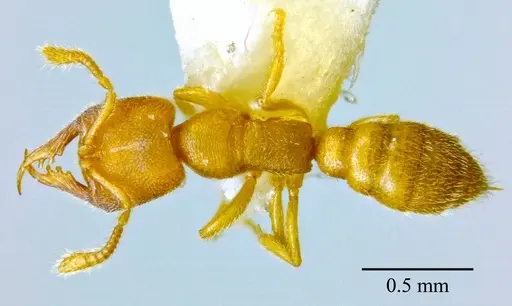
CASENT0922349
View on AntWeb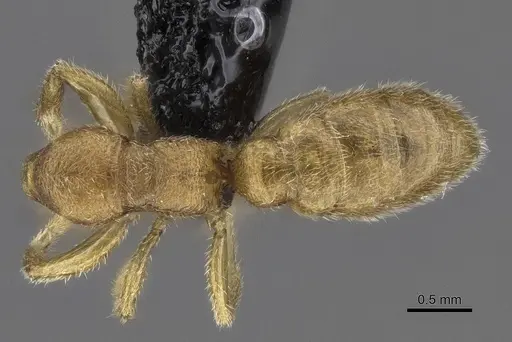
Literature
Loading...Loading products...