

Solenopsis pythia
- Scientific Name
- Solenopsis pythia
- Tribe
- Solenopsidini
- Subfamily
- Myrmicinae
- Author
- Santschi, 1934
- Distribution
- Found in 1 countries
Solenopsis pythia Overview
Solenopsis pythia is an ant species of the genus Solenopsis. It is primarily documented in 1 countries , including Argentina. Detailed taxonomic data and occurrence records can be further explored via authoritative databases such as AntWeb or the Global Biodiversity Information Facility (GBIF).
Solenopsis pythia
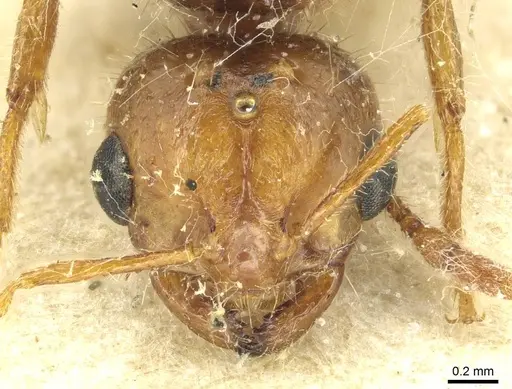
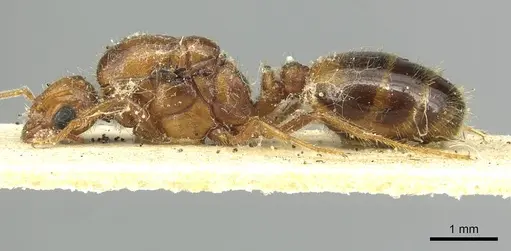
Solenopsis pythia is a small fire ant species belonging to the Solenopsis saevissima species-group, found in northern Argentina and southern Brazil [1]. Workers are small at around 2-3mm, with an orange-brown body and yellow-brown coloration on the frons, clypeus, and underside. Queens measure 5.3-6.2mm and have distinctive morphological features including large piligerous foveolae (tiny pit-like structures), a quadrate head, and notably, they lack the bidentate metasternal process found in other fire ants in this group [1]. This species is considered one of the rarest fire ants, with a distribution that abuts or slightly overlaps with the more common S. saevissima [2].
What makes S. pythia particularly intriguing is the strong suspicion, based on morphological evidence, that it may be a social parasite [1][3]. Several wingless (dealated) gynes have been collected from a single nest, suggesting polygyny may occur in this species [1]. However, unlike typical inquiline parasites, queens of S. pythia lack the reductions in sculpture and wing venation usually seen in such species [3]. This combination of traits makes S. pythia one of the most unusual and poorly understood fire ants in the Americas.
Quick Summary
- Difficulty: Expert
- Origin & Habitat: Northern Argentina (Misiones province) and southern Brazil (Mato Grosso do Sul, São Paulo) in tropical/subtropical regions [1][4]
- Colony Type: Possibly polygynous (multiple queens per colony) based on dealated gynes found in single nest, but this is unconfirmed [1]. Social parasitism suspected but not proven [1][3].
- Size & Growth:
- Queen: 5.3-6.2mm [1]
- Worker: Approximately 2-3mm (closely resembles small S. saevissima workers) [1][3]
- Colony: Unknown, this is a much rarer fire ant species [2]
- Growth: Unknown
- Development: Unknown, estimated 5-8 weeks based on typical fire ant development at warm temperatures (No specific development data exists for this species. Estimates based on related Solenopsis species.)
- Antkeeping:
- Temperature: Likely 24-30°C based on tropical distribution and related fire ant species. Provide a warm gradient.
- Humidity: Moderate to high, prefer humid conditions typical of their Misiones/Brazil habitat. Keep substrate moist but not waterlogged.
- Diapause: Unlikely, being a tropical species, they probably do not require hibernation. However, slight seasonal slowing may occur.
- Nesting: Nesting preferences unknown. Likely similar to other fire ants, shallow soil nests or under objects. In captivity, standard test tubes or formicaria should work once colony establishes.
- Behavior: Behavior is largely unstudied. As a fire ant, they likely have typical Solenopsis traits: opportunistic foraging, potential for stings, and colony defense. Workers are small, which may make them less aggressive than larger fire ants. Escape prevention should be excellent regardless, all Solenopsis species can climb and small ants squeeze through tiny gaps. The suspected social parasitic nature means founding and colony establishment may be unusual compared to typical fire ants.
- Common Issues: Social parasitism suspected but unconfirmed, colony founding may fail if queens require host workers, No documented captive breeding success, this species may be extremely difficult to establish in captivity, Tropical origin means they likely need warm, humid conditions year-round, Small worker size makes escape prevention critical, use fine mesh and barrier gel, Almost nothing is known about their diet, experimental feeding may be necessary
Identification and Distinguishing Features
Solenopsis pythia belongs to the Solenopsis saevissima species-group, making it a true fire ant closely related to the notorious S. saevissima and S. geminata [1]. Workers closely resemble small workers of S. saevissima and are often impossible to distinguish using worker characters alone [3]. The most reliable identification comes from the queen caste: S. pythia is the only species in the saevissima group that lacks the bidentate (two-pointed) metasternal process found on the underside of the thorax [1][3]. Queens also have distinctive large piligerous foveolae (tiny pitted structures) measuring 0.010-0.020mm in diameter, and a short, nearly square petiolar node [1]. The coloration is yellow-orange with brown markings on the mesonotum, parapsidal lines, and abdominal segments [1].
Distribution and Habitat
This species has a limited distribution in the Neotropical region, found in northern Argentina (specifically Misiones province) and southern Brazil (Mato Grosso do Sul and São Paulo states) [1]. The type locality is Loreto in Misiones Province, Argentina [1]. It has been recorded in Argentina's Mesopotamia region, which is assigned to the Tropical Climate Specialists (TCS) functional group [4]. The distribution abuts or slightly overlaps with the more widespread S. saevissima [2]. Unlike many fire ants that thrive in disturbed areas, this species appears to be quite rare and specialized in its habitat preferences.
The Social Parasite Question
Solenopsis pythia has been suggested by multiple researchers (including Trager 1991 and Pitts et al. 2018) to be a social parasite based on morphological evidence [1][3]. Several characteristics raise this suspicion: queens have large piligerous foveolae, coarse mandible sculpturing, and a thick petiolar node, features that resemble the thief ant species-group (Solenopsis molesta group) rather than typical saevissima-group fire ants [1]. Additionally, several dealated (wingless) gynes have been collected from a single nest, which would suggest polygyny (multiple queens) [1]. However, unlike true inquiline parasites like S. daguerrei, queens of S. pythia lack the typical reductions in sculpture and wing venation [3]. This makes its parasitic status uncertain, it may be a facultative social parasite, a temporary parasite, or simply an unusual polygynous species. This uncertainty is the primary reason S. pythia is recommended only for expert antkeepers.
Care Recommendations
Since almost nothing is known about the biology of S. pythia in captivity, care recommendations must be inferred from related fire ants and the species' tropical distribution. Keep colonies warm, ideally in the 24-30°C range with a slight gradient. Humidity should be moderate to high, their natural habitat in Misiones and southern Brazil is subtropical humid. Use standard formicarium setups but ensure escape prevention is excellent, as small Solenopsis can squeeze through remarkably tiny gaps.
Feeding is speculative but should follow typical fire ant diets: offer protein sources (small insects, mealworms) and sugar water or honey. The suspected social parasitic nature means colony founding may be problematic, if queens require host workers from another species, founding attempts may fail. If you obtain a colony, document your observations carefully as any captive data would be scientifically valuable. Do not release any specimens in North America or Europe, Solenopsis species are major invasive pests.
Research Gaps and What We Don't Know
Solenopsis pythia is one of the most poorly studied fire ant species. Almost nothing is documented about: colony founding behavior (whether queens seal themselves in like typical fire ants, or require a host), nuptial flight timing and behavior, exact colony size and growth rates, worker behavior and foraging patterns, sting potency, or successful captive husbandry. The molecular phylogeny study by Shoemaker et al. (2006) could not even obtain DNA sequences for this species [5]. This represents both a challenge and an opportunity, dedicated antkeepers who successfully breed this species would contribute genuinely new knowledge to science. Approach keeping S. pythia as an experimental endeavor with realistic expectations for difficulty.
Frequently Asked Questions
Is Solenopsis pythia a good species for beginners?
No. Solenopsis pythia is recommended only for expert antkeepers. Almost nothing is known about its biology in captivity, it may be a social parasite requiring host colonies to establish, and it is one of the rarest fire ant species with no documented captive breeding success. Related fire ants like S. invicta or S. geminata are far more suitable for beginners.
Can I keep multiple queens of Solenopsis pythia together?
Possibly. Several dealated (wingless) gynes have been collected from a single nest, suggesting polygyny may occur naturally in this species [1]. However, this is unconfirmed and the reason for multiple queens (true polygyny vs. social parasitism) is unknown. Without documented captive success, combining unrelated queens is not recommended.
How long does it take for Solenopsis pythia to develop from egg to worker?
Unknown. No specific development data exists for this species. Based on typical fire ant development at warm temperatures (around 27°C), estimates would be 5-8 weeks from egg to first worker. This is a rough estimate based on related species, not documented data.
What do Solenopsis pythia ants eat?
Undocumented. As a fire ant, they likely accept typical fire ant foods: small live or dead insects, sugar water, and honey. Their small worker size suggests they may prefer very small prey items. The suspected social parasitic nature may also affect dietary requirements, experimental feeding may be necessary to determine acceptance.
Do I need to hibernate Solenopsis pythia colonies?
Probably not. Being a tropical/subtropical species from Argentina and Brazil, they likely do not require hibernation. Maintain warm temperatures year-round (24-30°C). Some seasonal slowing during cooler months may occur naturally, but full diapause is unlikely needed.
Is Solenopsis pythia invasive?
Not in the typical sense. This species has a limited natural distribution in Argentina and Brazil and has not been documented as an invasive species elsewhere. However, like all Solenopsis species, it should never be released outside its native range, fire ants in general are major invasive pests globally.
Why is Solenopsis pythia suspected to be a social parasite?
Researchers noticed unusual morphological features in queens that resemble thief ants (Solenopsis molesta group) rather than typical fire ants: large foveolae, coarse mandible sculpturing, and a thick petiolar node [1]. Additionally, multiple dealated gynes found in one nest suggest unusual colony structure [6]. However, unlike true inquiline parasites, queens lack the typical reductions in body structures [3]. The parasitic status remains unproven but suspected.
When do Solenopsis pythia nuptial flights occur?
Unknown. No documentation exists for nuptial flight timing in this species. Being from a tropical/subtropical region, flights likely occur during warm, humid months but specific timing is unrecorded.
How big do Solenopsis pythia colonies get?
Unknown. This is considered a much rarer fire ant species with no documented colony size in scientific literature [2]. Related fire ants can form colonies of thousands, but S. pythia may be different given its suspected parasitic nature and limited distribution.
References

This caresheet is licensed under CC BY-SA 4.0 .
CASENT0913926
View on AntWeb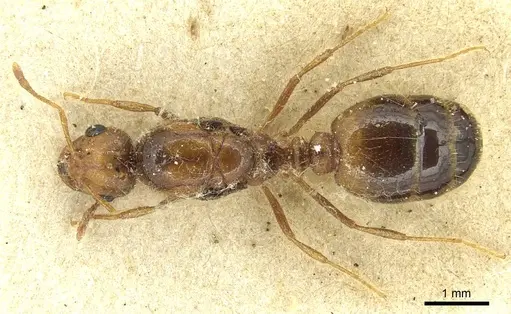
Literature
Loading...Loading products...