

Solenopsis pusillignis
- Scientific Name
- Solenopsis pusillignis
- Tribe
- Solenopsidini
- Subfamily
- Myrmicinae
- Author
- Trager, 1991
- Distribution
- Found in 1 countries
Solenopsis pusillignis Overview
Solenopsis pusillignis is an ant species of the genus Solenopsis. It is primarily documented in 1 countries , including Brazil. Detailed taxonomic data and occurrence records can be further explored via authoritative databases such as AntWeb or the Global Biodiversity Information Facility (GBIF).
Solenopsis pusillignis
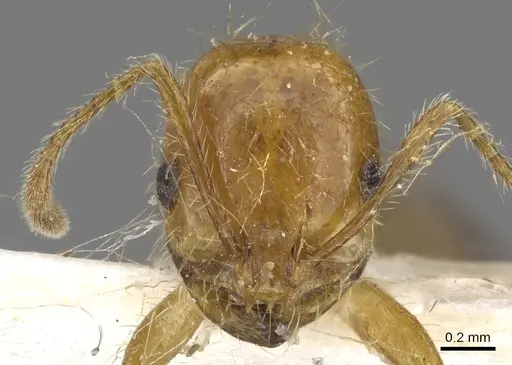
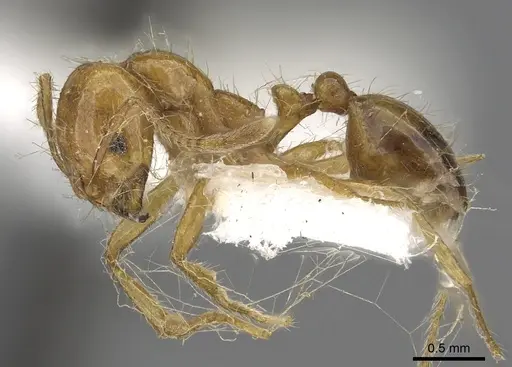
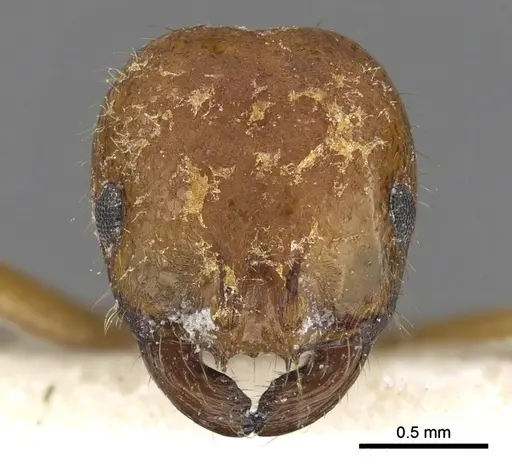
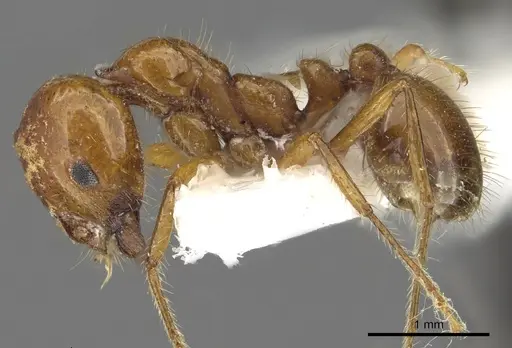
Solenopsis pusillignis is a small fire ant species native to the tropical savanna regions of central-western Brazil, specifically the states of Mato Grosso and Mato Grosso do Sul [1]. Workers are yellowish to yellow-brown with a darker brown gaster, making them one of the smallest species in the fire ant genus, they are noticeably smaller than their close relative Solenopsis macdonaghi [2][1]. Queens are orange with brown markings on their abdomen. A distinctive feature is that the largest workers have heads that are deeply notched at the back, and the area around the propodeal spiracle has a granulate texture [1]. Males have unusually large ocelli (the three simple eyes on top of the head), which suggests they may be active at night [1]. This species is a sister species to Solenopsis electra, and their ranges are separated by approximately 500 km [3].
What makes S. pusillignis particularly interesting is how little we know about its biology, it's one of the rarest fire ants in the saevissima group, collected so infrequently that its true range remains unclear [2]. The larvae are also unique among fire ants, having 10-12 setae (bristles) on their head capsule instead of the typical 8 or fewer found in related species [1]. This species represents a basally diverging lineage within the fire ant phylogeny, making it an interesting choice for antkeepers who want something truly unusual [4].
Quick Summary
- Difficulty: Expert
- Origin & Habitat: Tropical savanna regions of central-western Brazil, specifically the Cuiabá area in Mato Grosso and the Corumba vicinity in Mato Grosso do Sul [1]. The region features hot, humid conditions with distinct wet and dry seasons.
- Colony Type: Colony structure is unconfirmed. Based on related species in the saevissima group, likely monogyne (single queen) but this requires verification for this specific species.
- Size & Growth:
- Queen: Small, exact measurements not specified in available literature [1]. Signal: estimated based on related species.
- Worker: Among the smallest in the genus, one of the fire ant species with smallest workers [2]. Signal: estimated.
- Colony: Unknown, the species has been collected so infrequently that colony size data is not available [2]. Signal: estimated.
- Growth: Unknown. Signal: estimated based on related fire ants, expect moderate growth.
- Development: 6-10 weeks at optimal temperature. Signal: inferred from related Solenopsis species. (Development timeline has not been directly studied for this species. Related fire ants in the saevissima group typically take 6-10 weeks from egg to worker at tropical temperatures.)
- Antkeeping:
- Temperature: Keep at 24-28°C, they are a tropical Brazilian species adapted to warm conditions. A gentle gradient allowing workers to self-regulate is ideal. Signal: inferred from habitat and related species.
- Humidity: High humidity, think tropical forest floor conditions. Keep the nest substrate consistently moist but not waterlogged, with some drier areas available. Signal: inferred from habitat.
- Diapause: Unlikely, as a tropical species from central Brazil, they probably do not require a true hibernation period. However, a slight cool period during the dry season may be beneficial if it occurs naturally. Signal: inferred.
- Nesting: In the wild, they likely nest in soil or under objects in open savanna areas. In captivity, a test tube setup works well for founding colonies. For established colonies, a naturalistic setup with moist substrate or a Y-tong/plaster nest provides appropriate conditions. Signal: inferred from related species.
- Behavior: Fire ants are known for their painful sting, and S. pusillignis likely retains this defensive capability despite its small size. They are probably aggressive when disturbed and will readily sting. Workers are small and may be more cryptic than larger fire ant species. Their small size means excellent escape prevention is essential, they can squeeze through tiny gaps. Signal: inferred from genus behavior.
- Common Issues: escape prevention is critical due to their tiny worker size, use fine mesh and tight-fitting barriers, biology is poorly documented so care is largely inferential from related species, slow growth and small colony sizes may frustrate keepers expecting rapid development, tropical humidity requirements can lead to mold issues if ventilation is poor, sting capability means handling requires caution despite small size
Housing and Nest Setup
For founding colonies, a standard test tube setup works well. Fill the tube with water and plug with cotton, then provide a dark cover to simulate the claustral chamber queens would create in the wild. The tube should be positioned horizontally or at a slight angle so the queen can retreat from any condensation. For established colonies, you have several options: a Y-tong (AAC) nest with narrow chambers scaled to their small size, a plaster nest that holds humidity well, or a naturalistic setup with moist soil substrate. Whatever you choose, ensure there are no gaps larger than about 1mm, these tiny ants are excellent escape artists. Include a water tube or moisture source to maintain humidity, and cover any ventilation holes with fine mesh. Avoid tall, open spaces, these are small ants that prefer tight, enclosed spaces similar to what they would find in soil cavities. [1][2]
Temperature and Heating
Solenopsis pusillignis comes from tropical Brazil, so they need warm conditions. Aim for 24-28°C in the nest area. You can achieve this with a heating cable or heating mat placed on one side of the nest to create a temperature gradient, this lets workers move between warmer and cooler areas as needed. Room temperature may be sufficient if your home stays in the low-to-mid 20s°C, but monitor with a thermometer. Avoid temperatures above 32°C as this can stress the colony. Unlike temperate species, they do not need a true hibernation period, but they may experience reduced activity during the cooler dry season in their native range. If you notice decreased activity in winter, a slight reduction to around 20-22°C may be appropriate, but do not attempt full hibernation for this tropical species. [1]
Feeding and Diet
Like other fire ants, S. pusillignis is likely an omnivore that accepts both protein and sugar sources. Offer sugar water, honey, or diluted maple syrup as a constant carbohydrate source. For protein, provide small insects like fruit flies, small crickets, mealworms, or other appropriately-sized prey. Fire ants are generalist feeders, but their small size means prey items should be tiny, what would be a normal meal for a larger species may be overwhelming for these tiny workers. Feed protein 2-3 times per week, and keep sugar water available at all times. Remove uneaten prey after 24-48 hours to prevent mold. Some keepers report that fire ants also accept seeds, but this varies by species.
Humidity and Water
These are tropical ants that need high humidity. Keep the nest substrate consistently moist, it should feel damp to the touch but not be soggy or have standing water. A good indicator is light condensation occasionally visible on the nest walls. You can achieve this with a water tube attached to the nest or by misting the substrate periodically. However, avoid creating stagnant, overly wet conditions as this promotes mold and can drown the colony. If you see persistent condensation or water pooling, increase ventilation. The outworld can be kept drier than the nest area, allowing the ants to choose their preferred humidity by moving between areas. [1]
Handling and Safety
All Solenopsis species can sting, and S. pusillignis is no exception despite its small size. The sting is reportedly painful (fire ants are named for this characteristic), so always use caution when working with the colony. Never handle ants with bare hands, and use tools like soft brushes or plastic sheets for moving workers. If you need to move the colony to a new nest, wait until most workers are in the outworld rather than disturbing the nest directly. Keep the formicarium in a location where accidental escapes won't result in the ants colonizing unwanted areas. Have a spray bottle with water and a clean cloth ready for any escaped workers.
Colony Establishment and Growth
Starting a colony of this rare species can be challenging since foundress queens are rarely available in the antkeeping hobby. If you obtain a newly mated queen, she should be placed in a claustrated test tube setup, queen seals herself in a chamber and lives off her stored fat reserves while raising the first brood. The founding period may take 4-8 weeks before the first workers (nanitics) emerge. Once workers are established, you can connect the test tube to an outworld for foraging. Growth is likely slower than larger fire ant species given their smaller size. Be patient, colonies may take many months to reach significant numbers, and maximum colony size is unknown for this species. [1][2]
Frequently Asked Questions
How long does it take for Solenopsis pusillignis to produce first workers?
The time from egg to first worker is estimated at 6-10 weeks based on related fire ant species, though this has not been directly studied for S. pusillignis. The exact timeline depends on temperature, warmer conditions within the acceptable range tend to speed development.
Can I keep multiple Solenopsis pusillignis queens together?
This has not been studied for this specific species. Related fire ants in the saevissima group are typically monogyne (single queen), but some species can form multi-queen colonies. Until more data is available, it is not recommended to combine unrelated foundress queens as fighting is likely.
What do Solenopsis pusillignis eat?
They are omnivores like other fire ants. Offer sugar water, honey, or maple syrup as a constant carbohydrate source. For protein, provide small insects like fruit flies, small crickets, or mealworms. Feed protein 2-3 times per week and keep sugar available at all times.
Are Solenopsis pusillignis good for beginners?
No. This species is rated Expert difficulty because their biology is poorly documented, they are rarely available in the hobby, and their small size makes them challenging to house and maintain. Related larger fire ants like Solenopsis geminata or Solenopsis invicta are better choices for beginners.
What temperature do Solenopsis pusillignis need?
Keep them at 24-28°C. They are a tropical Brazilian species adapted to warm conditions. A heating cable or mat on one side of the nest can create a gradient if room temperature is insufficient. Avoid temperatures above 32°C.
Do Solenopsis pusillignis need hibernation?
Probably not. As a tropical species from central Brazil, they likely do not require a true hibernation period. However, a slight cool period during the dry season may occur naturally in their habitat. Do not attempt full hibernation.
How big do Solenopsis pusillignis colonies get?
The maximum colony size is unknown, this species has been collected so infrequently that colony size data does not exist [2]. Based on related species, they likely reach several hundred to a few thousand workers at most, but this is an estimate.
Why are my Solenopsis pusillignis escaping?
Their tiny worker size means they are excellent escape artists. Use fine mesh (at least 0.5mm or smaller), tight-fitting lids, and apply barrier tape or fluon to all edges. Check for any gaps larger than about 1mm, these small ants can squeeze through surprisingly small openings.
Where is Solenopsis pusillignis found in the wild?
They are native to the tropical savanna regions of central-western Brazil, specifically the states of Mato Grosso and Mato Grosso do Sul, around the cities of Cuiabá and Corumba [1].
References

This caresheet is licensed under CC BY-SA 4.0 .
CASENT0902354
View on AntWeb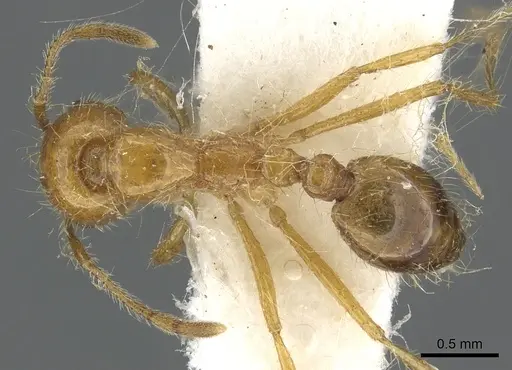
CASENT0902355
View on AntWeb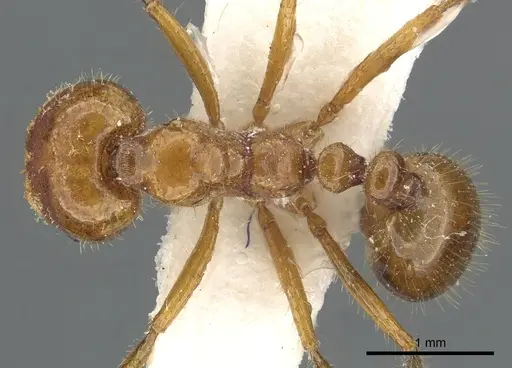
Literature
Loading...Loading products...