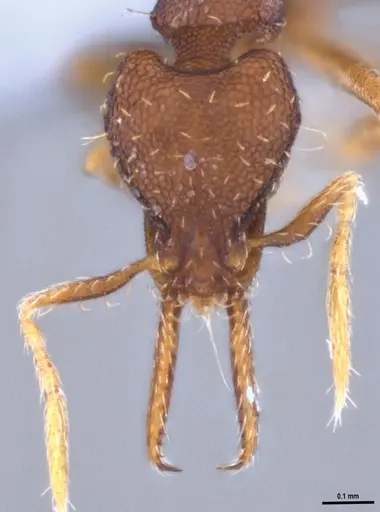
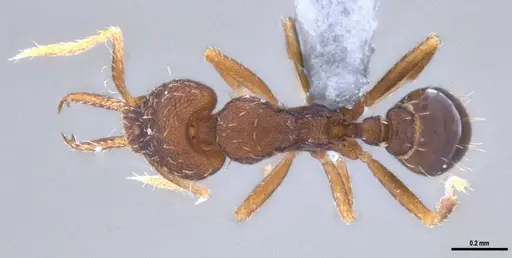
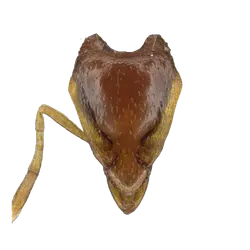
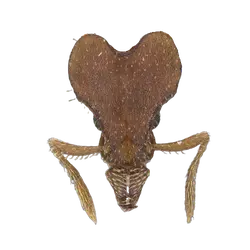
Strumigenys gundlachi - "Gundlach's Trap-Jaw Ant"
Strumigenys gundlachi is a fascinating, tiny ant species known for its specialized trap-jaw mandibles. These mandibles, which are linear and armed with small denticles, are used for capturing their preferred prey. Workers are very small, typically ranging from 1.7 to 2.2 mm in total length, and are usually dull yellow to yellowish-brown in color, though some can be darker. A distinguishing feature of this species, when compared to similar ants like Strumigenys eggersi, is the presence of distinct spongiform tissue on the postpetiole and a smooth, shining first gastral tergum. These ants are cryptic, meaning they live a hidden lifestyle, primarily in leaf litter and soil, where they are predatory on small arthropods.
- Difficulty: Medium
- Origin & Habitat: Neotropical and Nearctic regions (primarily Central America and northern South America, with established populations in the West Indies and Florida). in Primarily moist to wet lowland tropical forests, including intact primary forests, but also found in second-growth forests, thickets, and cacao plantations..
- Colony Type: Monogyne, claustral founding.
- Size & Growth:
- Queen: Not specified
- Worker: 1.7-2.2mm
- Colony: Small (tens to a few hundred workers). Slow, with colonies typically reaching 15-400 individuals. growth.
- Antkeeping:
- Temperature: Maintain temperatures between 24-28°C (75-82°F) to mimic their tropical habitat. Consistency is key for their well-being and brood development..
- Humidity: High humidity is crucial, ideally between 80-90%. Their natural habitat is moist leaf litter, so maintaining a damp environment without stagnant water is essential..
- Diapause: Not required. Not specified at Not specified.
- Nesting: Prefers naturalistic setups that mimic their leaf litter and soil environment. Plaster or Ytong nests with good humidity gradients, or even natural soil/substrate setups in a container, are suitable. They are hypogaeic, nesting in soil or rotten wood..
- Behavior: Low (towards handler, primarily defensive against prey) aggressiveness.
- Common Issues: Lack of suitable prey (springtails), Low humidity leading to desiccation, Escape due to small size, Mold in nest from excessive humidity/poor ventilation, Colony stalling due to incorrect environmental parameters.
One of the most remarkable aspects of Strumigenys gundlachi is their unique feeding strategy. These ants are highly specialized predators, primarily hunting springtails (Collembola) and other small, soft-bodied arthropods found in the leaf litter. Their distinctive trap-jaw mandibles are an incredible adaptation, allowing them to snap shut with incredible speed to capture fast-moving prey. Observing this hunting behavior in an outworld can be a truly captivating experience for any ant enthusiast.
Given their dietary specialization, feeding Strumigenys gundlachi can be a bit more challenging than generalist ant species. Ensuring a consistent supply of appropriately sized springtails is paramount for the health and growth of your colony. Culturing your own springtail population is highly recommended, as commercially available feeder insects may not always be small enough or readily accepted. Experiment with various species of springtails to find what your colony prefers.
Due to their cryptic nature and small size, these ants are prone to escaping from nests that are not adequately sealed. Fine mesh or extremely small ventilation holes are essential to prevent escapes. Consider using nests designed specifically for very small ant species, such as those with fine acrylic or glass surfaces that offer minimal gaps. Double-checking your setup regularly for any potential escape routes is a must for successful long-term keeping.
Strumigenys gundlachi are quite sensitive to environmental changes, particularly fluctuations in humidity. Maintaining consistently high humidity, mimicking their natural moist forest floor habitat, is critical to prevent desiccation and stress for the colony. Using a substrate that holds moisture well, like a mix of peat and sand, and incorporating a reliable humidification system within the nest, will contribute significantly to their well-being. Avoid sudden drops in humidity, as this can quickly lead to colony stress and decline.
These ants exhibit a relatively slow colony growth rate, and their colonies are typically small, usually ranging from a few dozen to a few hundred workers. This slower development means that patience is key when keeping Strumigenys gundlachi. Don't expect rapid population explosions; instead, focus on providing stable and optimal conditions for gradual, healthy growth. This slow pace also allows for more detailed observation of their unique behaviors.
Frequently Asked Questions
What do Strumigenys gundlachi eat?
These tiny trap-jaw ants are specialist predators, primarily feasting on springtails (Collembola) and other minute, soft-bodied arthropods found in the leaf litter. Supplying a consistent source of small live prey is crucial for their ant care.
How big do Strumigenys gundlachi colonies get?
Strumigenys gundlachi colonies are on the smaller side. You can expect a mature colony to range from a few dozen up to about 400 workers. They're definitely not supercolony builders, so don't anticipate massive numbers in your formicarium.
What type of nest is best for Strumigenys gundlachi?
Given their preference for moist leaf litter and soil, a plaster or Ytong nest with excellent humidity control is ideal. Natural setups with substrate, like a terrarium or deep container filled with a suitable loam and sand mix, can also work well, allowing them to tunnel naturally. The key is maintaining high humidity.
Do Strumigenys gundlachi sting?
Yes, Strumigenys gundlachi workers do possess a sting. While they're generally not aggressive towards keepers, they will use it defensively, especially when hunting or feeling threatened. Their small size means any sting would likely be imperceptible to humans, but it's good to be aware.
Are Strumigenys gundlachi hard to keep?
They are considered a medium difficulty species. Their specialized diet and strict humidity requirements make them a bit more challenging than common beginner ants. However, with consistent springtail supply and proper humidity, they can thrive for dedicated antkeepers.
Do Strumigenys gundlachi need diapause?
No, Strumigenys gundlachi do not typically require a diapause period. They originate from tropical and subtropical regions where temperatures remain relatively stable year-round, so continuous warmth and humidity are important for their development and colony health.
What is the natural habitat of Strumigenys gundlachi?
These fascinating ants are native to the Neotropical and Nearctic regions, commonly found in Central America, northern South America, parts of the West Indies, and Florida. They thrive in moist to wet lowland tropical forests, usually residing within the leaf litter and soil.
How fast do Strumigenys gundlachi colonies grow?
Strumigenys gundlachi colonies have a relatively slow growth rate. Don't expect them to expand rapidly like some larger, more common ant species. Patience is essential, as their growth is a steady, gradual process, reflecting their small colony size in nature.
What are those unique mandibles for?
The trap-jaw mandibles of Strumigenys gundlachi are a truly remarkable adaptation for predation. These elongated mandibles can snap shut incredibly fast, ambushing and capturing their tiny, quick-moving prey like springtails. It's a prime example of specialized ant behavior!
How do I prevent escapes with such small ants?
Preventing escapes with tiny ant species like Strumigenys gundlachi requires meticulous attention to detail. Ensure your formicarium has no gaps larger than a millimeter. Fine mesh on ventilation holes and tightly sealed lids are a must. Many antkeepers opt for specialized nests designed for dwarf species to minimize this risk.
Can I keep multiple queens (pleometrosis) with Strumigenys gundlachi?
No, Strumigenys gundlachi are typically monogyne, meaning colonies naturally feature a single queen. Attempting pleometrosis (keeping multiple queens together) is not recommended and will likely lead to conflict and the eventual death of all but one queen, if not the entire founding group.
What are common issues when keeping Strumigenys gundlachi?
The most common challenges include sourcing enough appropriate live prey, maintaining consistently high humidity to prevent desiccation, and preventing escapes due to their small size. Mold can also be an issue if humidity is high but ventilation is poor. Colony stalling can occur if environmental conditions aren't met.
What is 'spongiform tissue' on their body?
Strumigenys gundlachi, like many 'Dacetini' ants, have distinct spongiform tissue, especially on their postpetiole. While its exact function is not fully understood, it's a unique morphological feature. It's thought to potentially aid in absorbing excess moisture, or perhaps in carrying specific environmental materials. It also helps distinguish them from similar species.