

Solenopsis oculata
- Scientific Name
- Solenopsis oculata
- Tribe
- Solenopsidini
- Subfamily
- Myrmicinae
- Author
- Santschi, 1925
- Distribution
- Found in 1 countries
Solenopsis oculata Overview
Solenopsis oculata is an ant species of the genus Solenopsis. It is primarily documented in 1 countries , including United States of America. Detailed taxonomic data and occurrence records can be further explored via authoritative databases such as AntWeb or the Global Biodiversity Information Facility (GBIF).
Solenopsis oculata
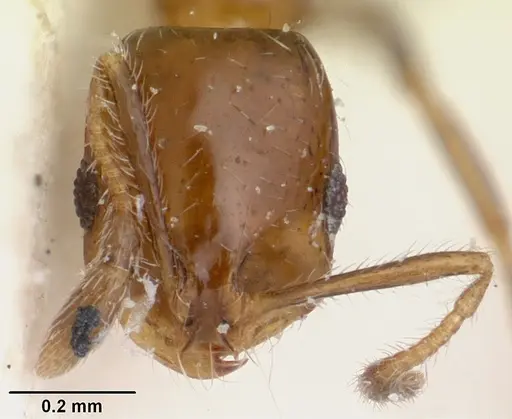
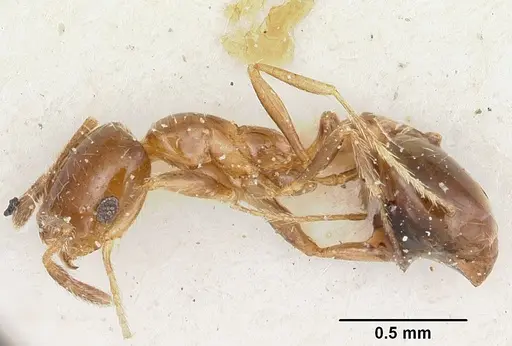
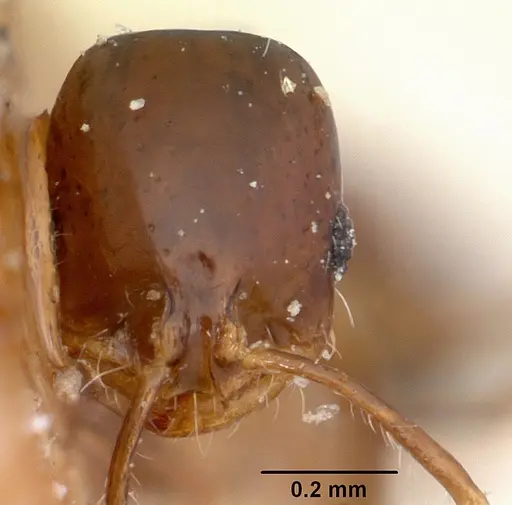
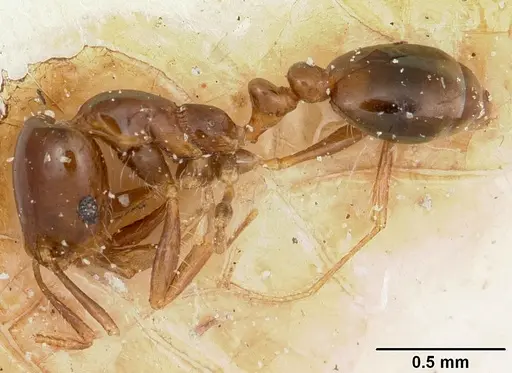
Solenopsis oculata is a tiny thief ant belonging to the Solenopsis nigella species complex. Workers measure just 1.8-2.0mm in total length, making them one of the smaller ant species you'll encounter. They are uniformly dark brown with a distinctive quadrate head that is longer than wide, and they possess notably large eyes with about 30-35 ommatidia. This species lacks a tooth on the subpeduncular process, which distinguishes it from other members of the nigella complex [1].
These ants are found across northern South America, from their type locality in Argentina (Catamarca) through much of Venezuela. They inhabit humid tropical forest zones at elevations up to 1200m, typically living in ground microhabitats and forest litter [2][3]. Like other thief ants, they are likely predatory and will exploit small arthropod prey. They deliver a painful sting, so handle with care.
Quick Summary
- Difficulty: Medium
- Origin & Habitat: Native to northern South America, Argentina and Venezuela. Found in humid tropical forest zones at elevations from sea level to 1200m. They live in ground microhabitats and forest litter [2][3].
- Colony Type: Colony structure is unconfirmed. Like other Solenopsis species, they likely start as single-queen colonies (monogyne), though this has not been directly studied for this specific species.
- Colony: Monogyne
- Founding: Claustral
- Size & Growth:
- Queen: Unknown, queen caste has not been described [1]
- Worker: 1.8-2.04mm total length [1]
- Colony: Unknown, likely small colonies typical of the nigella complex, possibly under 500 workers
- Growth: Unknown, estimated moderate based on related species
- Development: 6-10 weeks (estimated based on typical Solenopsis development) (Development timeline is unconfirmed for this species. Estimates based on related Solenopsis species suggest 6-10 weeks from egg to worker at optimal temperatures.)
- Antkeeping:
- Temperature: Keep at 24-28°C, they inhabit humid tropical forests so warmth is important. A heating cable on one side of the nest creates a suitable gradient. Avoid temperatures below 20°C.
- Humidity: High humidity is essential, think damp forest floor. Keep the nest substrate consistently moist but not waterlogged. Provide a water tube for drinking access.
- Diapause: Unknown, as a tropical species, they likely do not require true hibernation, but may experience reduced activity during cooler periods.
- Nesting: Use a small, tight-fitting nest scaled to their tiny size. Y-tong (AAC) nests or small test tube setups work well. They prefer dark, humid chambers. Avoid large open spaces.
- Behavior: Thief ants are named for their habit of nesting near other ant species and stealing brood and food. They are predatory on small arthropods and have a painful sting. Workers are tiny but feisty, they will defend the colony aggressively. Escape prevention is critical due to their small size, they can squeeze through remarkably tiny gaps. Use fine mesh and tight-fitting barriers.
- Common Issues: escape prevention is critical, they are tiny and will find any gap, tropical humidity requirements can be challenging to maintain consistently, wild-caught colonies may have parasites that kill them in captivity, small size makes them difficult to contain, even standard barriers may need reinforcement, limited biological data means care is largely inferential rather than species-specific
Housing and Nest Setup
Solenopsis oculata is a tiny ant, so your housing needs to reflect their small size. Use test tubes with cotton stoppers for founding colonies, or a Y-tong (AAC) nest with narrow chambers scaled to their 2mm body length. They prefer dark, humid conditions, these ants naturally live in forest floor microhabitats where light is minimal and moisture is high [2]. Avoid naturalistic setups with large open spaces, tight, cozy chambers work best. A water tube attached to the nest provides drinking access, which is important for maintaining colony health. Escape prevention cannot be overstated, these ants will squeeze through gaps you didn't know existed. Use fine mesh (at least 0.5mm) on any ventilation holes and check all connections regularly.
Feeding and Diet
Like other thief ants in the genus Solenopsis, Solenopsis oculata is predatory and will hunt small arthropods. Offer small live prey such as fruit flies, pinhead crickets, and small mealworms. They likely accept protein-rich foods readily given their small size and predatory nature. Sugar sources may also be accepted, try offering a drop of diluted honey or sugar water occasionally, though protein should be the primary food source. Feed every 2-3 days, removing any uneaten prey after 24 hours to prevent mold. Given their tiny size, portion control is important, a single fruit fly is a substantial meal for these ants.
Temperature and Humidity
These ants come from humid tropical forests in Venezuela and Argentina, so they need warm, humid conditions to thrive. Maintain temperatures between 24-28°C, this is warmer than many temperate species require. A heating cable placed on one side of the nest creates a temperature gradient that allows the colony to self-regulate. Humidity should be high, with the nest substrate kept consistently moist but not flooded. These conditions mimic the damp forest floor environment where they naturally live [2][3]. A water tube provides a constant humidity source through evaporation. Avoid cold drafts and temperatures below 20°C, as this species is not adapted to cool conditions.
Behavior and Defense
Solenopsis oculata has a painful sting, this was specifically noted in field observations in Venezuela where workers were collected while tending coccids on Dahlia plants [2]. Despite their tiny size, they are aggressive defenders of their colony and will sting if threatened. Their small size actually makes them more likely to escape, as they can access spaces that larger ants cannot. When keeping this species, assume they can escape through any gap larger than 0.5mm. They are likely nocturnal or crepuscular in their activity patterns, typical of forest floor species. Thief ants get their name from their behavior of nesting near other ant species and raiding their colonies for brood, you may observe this predatory behavior if housing them near other ant colonies.
Colony Development
The biology of Solenopsis oculata is poorly documented in scientific literature, in fact, AntWiki explicitly states 'Nothing is known about the biology of this species' [1]. The queen caste has never been described, and colony size estimates are not available. What we know comes from related species in the Solenopsis nigella complex and general genus patterns. Based on this, expect relatively slow colony growth initially, with founding queens likely sealing themselves in (claustral founding) and raising the first workers alone. Development from egg to worker probably takes 6-10 weeks at optimal temperatures, similar to other small Solenopsis species. Colonies likely remain small, probably under a few hundred workers, which is typical for thief ants.
Frequently Asked Questions
How long does it take for Solenopsis oculata to produce first workers?
The exact timeline is unconfirmed for this species, but based on related Solenopsis species, expect 6-10 weeks from egg to first worker at optimal temperatures (24-28°C). The queen will seal herself in a chamber and raise the first brood alone using stored energy reserves.
What do Solenopsis oculata ants eat?
They are predatory ants that hunt small arthropods. Feed small live prey like fruit flies, small mealworms, and pinhead crickets. They may also accept sugar sources like diluted honey or sugar water, though protein should be their primary food.
Are Solenopsis oculata good for beginners?
They are rated Medium difficulty. While their small size and humidity requirements present challenges, they are not as demanding as some tropical species. The main challenges are escape prevention (they are tiny) and maintaining consistent humidity. If you can handle small ants carefully, they can be rewarding.
How big do Solenopsis oculata colonies get?
Colony size is unconfirmed for this species, but based on similar thief ants in the nigella complex, colonies likely reach a few hundred workers at most. They are not large colony formers like some Solenopsis species (fire ants).
What temperature do Solenopsis oculata need?
Keep them at 24-28°C. They come from humid tropical forests in Venezuela and Argentina, so they need warm conditions. A heating cable on one side of the nest creates a gradient. Avoid temperatures below 20°C.
Can I keep multiple Solenopsis oculata queens together?
This has not been studied for this species. Based on typical Solenopsis patterns, single-queen colonies are most common. Combining unrelated queens is not recommended as it may result in aggression.
Why are my Solenopsis oculata escaping?
Their tiny size (under 2mm) means they can squeeze through incredibly small gaps. Use fine mesh (0.5mm or smaller) on all ventilation, check lid seals regularly, and consider using barrier tape (fluon) on nest edges. Even standard test tube stoppers may need additional modification.
Do Solenopsis oculata need hibernation?
Unknown, as a tropical species from Argentina and Venezuela, they likely do not require true hibernation. They may experience reduced activity during cooler periods, but a full diapause is probably not necessary. Keep them warm year-round.
Where is Solenopsis oculata found in the wild?
They are native to northern South America, Argentina (type locality: Catamarca, Cerro Colorado) and widely distributed across Venezuela. They live in humid tropical forest zones at elevations up to 1200m, typically in ground microhabitats and forest litter [2][3].
Is Solenopsis oculata invasive anywhere?
There is no documentation of this species being invasive. Its range is limited to Argentina and Venezuela in South America. However, like all ants, you should never release captive colonies into non-native areas.
References

This caresheet is licensed under CC BY-SA 4.0 .
CASENT0103205
View on AntWeb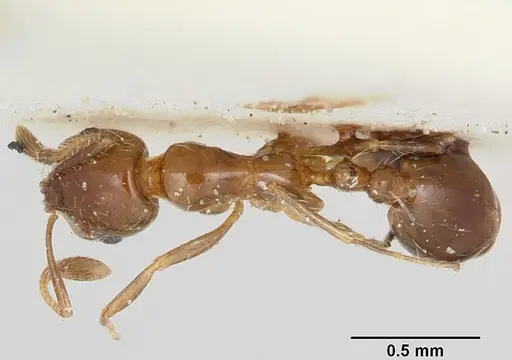
CASENT0103216
View on AntWeb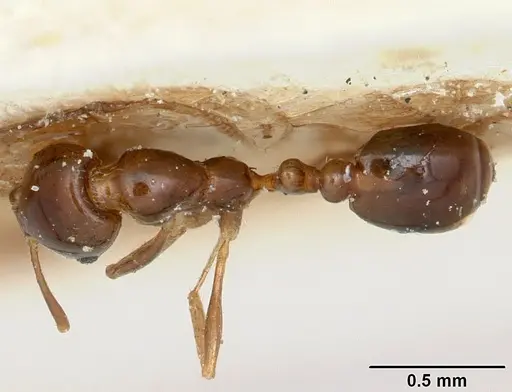
Literature
Loading...Loading products...