

Solenopsis japonica
- Scientific Name
- Solenopsis japonica
- Tribe
- Solenopsidini
- Subfamily
- Myrmicinae
- Author
- Wheeler, 1928
- Distribution
- Found in 2 countries
Solenopsis japonica Overview
Solenopsis japonica is an ant species of the genus Solenopsis. It is primarily documented in 2 countries , including Japan, Korea, Republic of. Detailed taxonomic data and occurrence records can be further explored via authoritative databases such as AntWeb or the Global Biodiversity Information Facility (GBIF).
Solenopsis japonica
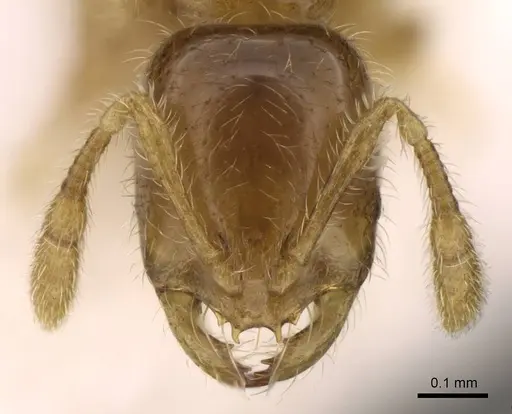
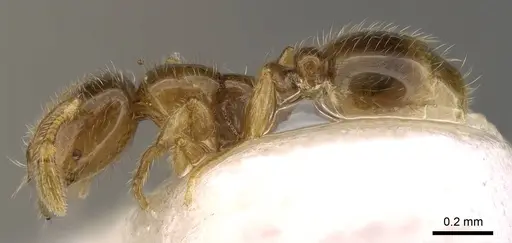
Solenopsis japonica is a tiny yellow to yellowish-brown ant, measuring only about 1.5mm in worker size [1]. This small fire ant species is native to East Asia, found across Japan (from Hokkaido to Kyushu), the Korean Peninsula, and Russia's Far East [2]. Unlike its more famous relative the red imported fire ant (Solenopsis invicta), this species is a thief ant that lives in close association with other ant colonies, building narrow underground tunnels that connect to host nests so workers can steal food [1][3]. This subterranean lifestyle makes them fascinating but challenging to keep, as they prefer hunting and foraging underground rather than in open spaces.
Quick Summary
- Difficulty: Medium
- Origin & Habitat: Native to East Asia: Japan, Korea, and Russia's Far East (Primorsky Krai, Kuril Islands). Found in diverse habitats from urban areas to forests, typically nesting in soil and connecting to host ant colonies [2][4].
- Colony Type: Polygyne, field colonies contain multiple queens working together [3]. This is a thief ant (kleptoparasite) that builds subterranean tunnels connecting to nests of other ant species to steal food [1].
- Colony: Optionally polygyne
- Founding: Claustral
- Size & Growth:
- Queen: Likely 4-5mm based on genus patterns (estimated)
- Worker: 1.5mm (dimorphic,0.41-0.68mm range) [1][5]
- Colony: Unknown maximum, but colonies contain dealate mated queens, alate queens, males, brood, and workers [3]
- Growth: Moderate, inferred from related Solenopsis species
- Development: 6-8 weeks (estimated based on genus patterns for small Myrmicinae at optimal temperature) (Direct development data unavailable, estimate based on typical Solenopsis growth patterns)
- Antkeeping:
- Temperature: Keep nest area at 20-24°C. Workers show good cold tolerance, 56.6% survival at 10°C after 24h, and 33.3% survival at 5°C [5]. Avoid temperatures below 10°C for extended periods as larvae and pupae are more vulnerable. A gentle gradient allows ants to self-regulate.
- Humidity: Moderate to high, they prefer damp soil conditions typical of subterranean environments. Keep substrate consistently moist but not waterlogged.
- Diapause: Yes, this species shows cold adaptation and likely requires a cool period during winter months in temperate regions. Workers can survive at 5-10°C better than brood stages [5]. Consider a mild hibernation around 10-15°C for 2-3 months.
- Nesting: Y-tong or plaster nests work well given their small size. Provide soil-filled setups or hybrid nests that allow for tunneling behavior. They need connection to or proximity to other ant colonies in captivity to express natural kleptoparasitic behavior, though this is difficult to replicate.
- Behavior: This is a shy, subterranean species that rarely forages in the open. Workers are tiny (1.5mm) and can squeeze through very small gaps, excellent escape prevention is essential [1]. They are predatory, hunting earthworms, woodlice, and larvae of other ant species by tunneling into neighboring colonies [3]. Unlike aggressive fire ants, they are stealthy hunters rather than confrontational. They are attracted to honey baits but primarily hunt live prey underground [6].
- Common Issues: tiny size makes escape likely without fine mesh barriers and tight-fitting lids, subterranean lifestyle means you may rarely see workers, they stay hidden in tunnels, difficult to establish in captivity due to dependence on host ant colonies for food, slow growth compared to larger ant species, beginners may lose patience, cold sensitivity of brood, keep at stable warm temperatures, avoid temperature drops
Housing and Nest Setup
Solenopsis japonica requires careful housing due to their tiny 1.5mm size. Use Y-tong (AAC) nests with very small chambers or plaster nests that can accommodate their small size. Test tube setups work for founding colonies but may need upgrading as the colony grows. Escape prevention is critical, these ants can squeeze through gaps that seem impossible. Apply fluon or use fine mesh on all openings. Because they are subterranean, provide a soil layer or substrate they can tunnel through. Hybrid nests combining a small nest chamber with a foraging area work well. Keep the nest area dark or dimly lit as they prefer darkness. [1][3]
Feeding and Diet
This species is primarily predatory, hunting soil invertebrates like earthworms, woodlice, and the larvae of other ant species [3]. In captivity, offer small live prey such as springtails, fruit flies, and tiny crickets. They are also attracted to honey baits [6], so you can supplement with diluted honey or sugar water, but protein-rich live prey should be the primary food. Feed small amounts 2-3 times per week, removing uneaten prey after 24 hours to prevent mold. Their predatory nature means they rarely scavenge, they prefer hunting live prey.
Temperature and Seasonal Care
Keep the nest at 20-24°C for optimal colony development. This species shows remarkable cold tolerance compared to many ants, workers survive better at cool temperatures (5-10°C) than larvae and pupae do [5]. However, brood development requires warmer conditions. Provide a temperature gradient so ants can choose their preferred zone. During winter, a mild hibernation period at 10-15°C for 2-3 months matches their natural seasonal cycle in temperate East Asia. Avoid sudden temperature drops as this harms brood more than adults. Research shows rapid cold hardening (gradually lowering temperature over 12+ hours) significantly improves survival at cold temperatures [5].
Understanding Their Unique Lifestyle
Solenopsis japonica is a thief ant that builds narrow underground tunnels connecting to the nests of other ant species like Pheidole fervida, Lasius flavus, and Lasius niger [3]. They use these tunnels to sneak in and steal food from their hosts, a behavior called kleptoparasitism. This makes them challenging to keep because they evolved to live in close association with other ants. In captivity, you cannot easily replicate this relationship, so focus on providing rich hunting opportunities in their substrate. They are primarily subterranean foragers [6], meaning you will see them less often than surface-foraging ants. Their small size and hidden lifestyle make them a 'watch-from-a-distance' species rather than an interactive one.
Colony Growth and Development
Colonies are polygynous, meaning they contain multiple queens that all reproduce [3]. A colony includes dealate mated queens, alate queens, males, brood (eggs, larvae, pupae), and workers. Growth is likely moderate, expect 6-8 weeks from egg to first worker based on similar small Solenopsis species. The first workers (nanitics) will be very small. Colonies grow gradually over months rather than explosively. Be patient with these tiny ants, they will not reach large numbers quickly. Focus on maintaining stable conditions and providing consistent food.
Frequently Asked Questions
Can I keep Solenopsis japonica in a test tube?
Yes, test tubes work for founding colonies. Use a small diameter tube since these ants are only 1.5mm. Ensure excellent escape prevention, apply fluon to the inside of the cotton and use tight-fitting barriers. Upgrade to a larger setup (Y-tong or plaster nest) once the colony reaches 20-30 workers.
How long does it take for first workers to appear?
Expect 6-8 weeks from egg to first worker at optimal temperature (around 22-24°C). This is an estimate based on related Solenopsis species since specific development data for S. japonica is not available. First workers (nanitics) will be very small, around 1.5mm.
What do Solenopsis japonica eat?
They are predatory hunters that primarily eat live prey including earthworms, woodlice, and larvae of other ant species [3]. In captivity, feed small live prey like springtails and fruit flies. They also accept honey baits [6], so you can offer diluted honey or sugar water as a supplement, but protein-rich live food should be the main diet.
Are Solenopsis japonica good for beginners?
This species is rated Medium difficulty. They are not ideal for complete beginners because their tiny size requires excellent escape prevention, and their subterranean lifestyle means you won't see much activity. However, they are hardy once established and tolerate cold better than many ants. They require more patience than showy species.
Do Solenopsis japonica need hibernation?
Yes, they benefit from a mild winter rest. In their native East Asian habitat, they experience cold winters. Keep them at 10-15°C for 2-3 months during winter. Workers can survive at these cool temperatures better than brood can [5]. Do not hibernate below 5°C as this causes high mortality.
Why are my Solenopsis japonica not coming out?
This is normal behavior, they are primarily subterranean foragers that prefer to stay hidden in tunnels [6]. You will see more activity in the foraging area at night or when hunting. Make sure the nest is connected to a moist soil area where they can exhibit natural tunneling behavior. Low activity is not a sign of problems.
How big do Solenopsis japonica colonies get?
Colony size data is limited, but as a small thief ant with multiple queens, colonies likely reach hundreds to low thousands of workers. Growth is moderate and gradual, they will not explode in numbers like some larger ant species. Expect slow, steady growth over many months.
Can I keep multiple queens together?
Yes, this is natural for this species. Solenopsis japonica is polygynous, meaning field colonies naturally contain multiple queens working together [3]. You can keep multiple founding queens in one setup, though some aggression is possible during establishment. They are not territorial toward their own species like monogyne ants would be.
References

This caresheet is licensed under CC BY-SA 4.0 .
CASENT0914169
View on AntWeb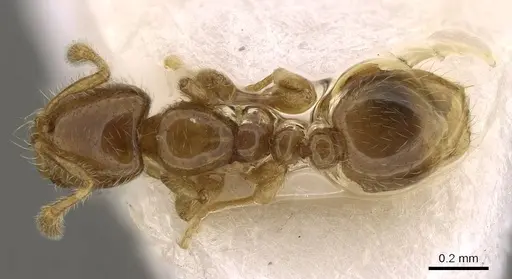
Literature
Loading...Loading products...