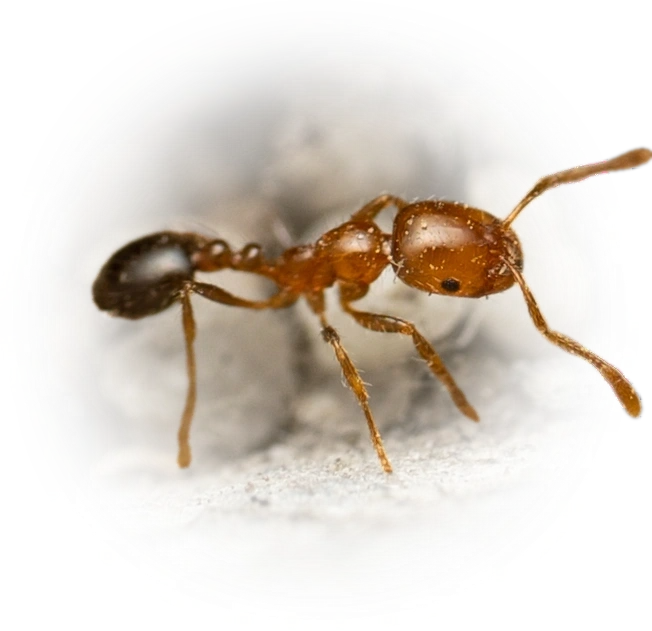
Solenopsis daguerrei - "Daguerre's Thief Ant (Parasitic)"
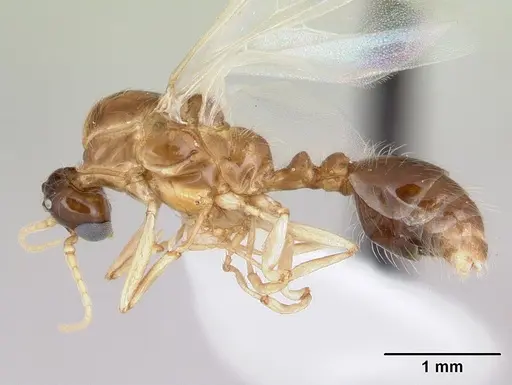
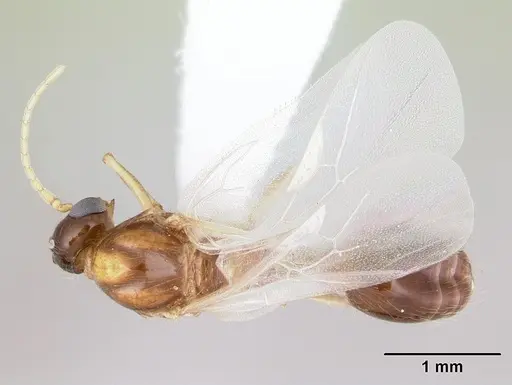
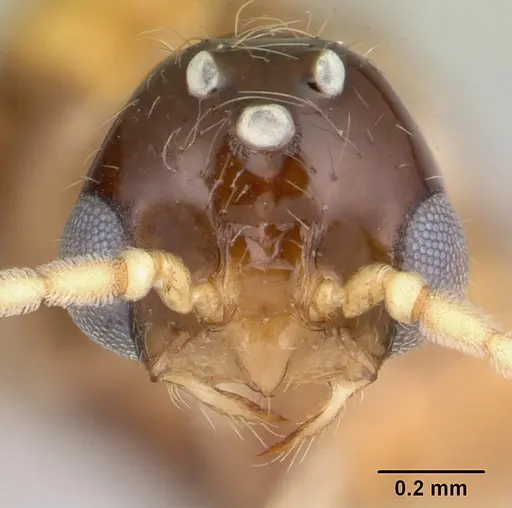
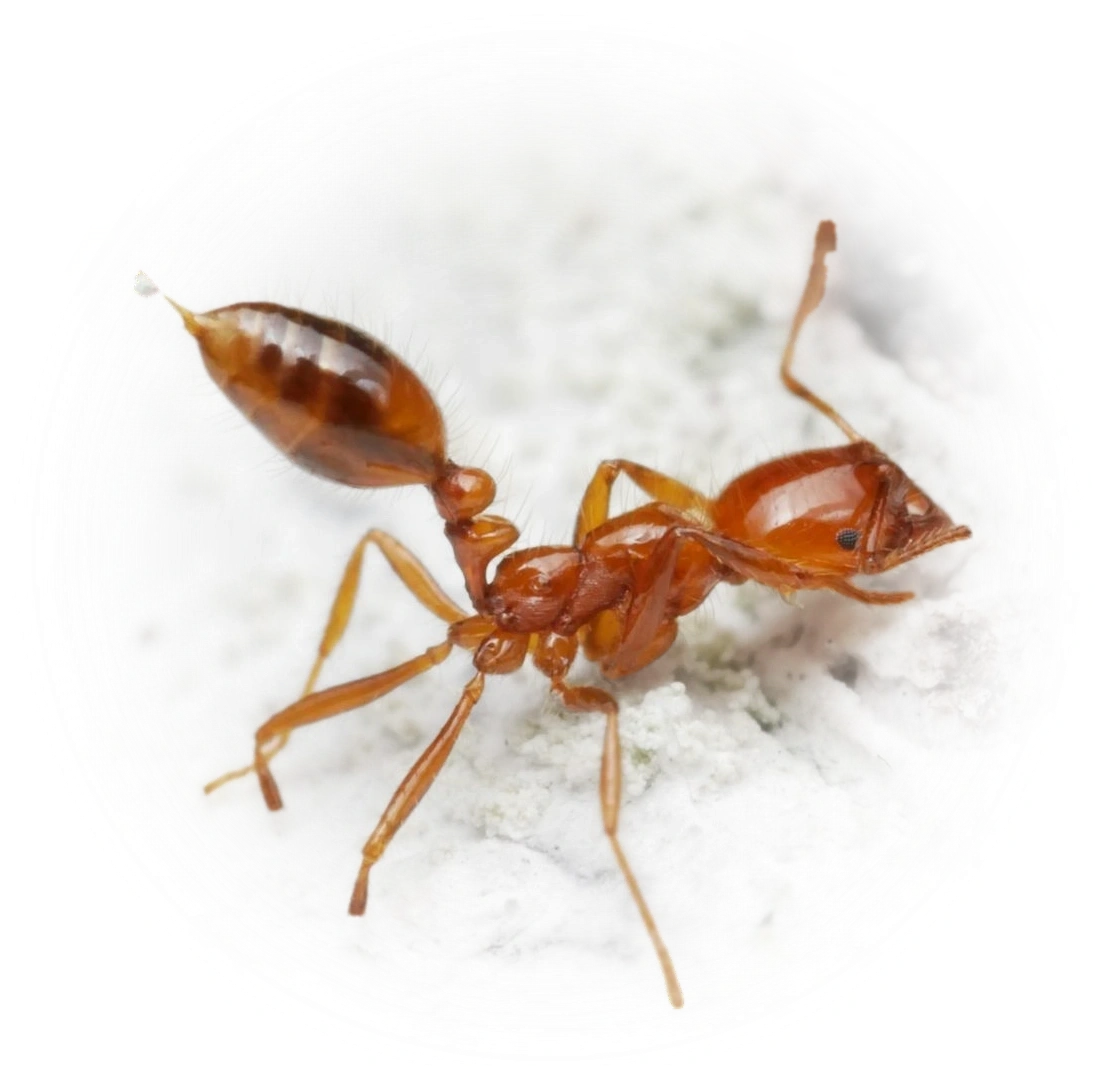
A highly specialized, workerless parasitic ant species, Solenopsis daguerrei is remarkable for its complete reliance on host Solenopsis colonies, typically fire ants like S. invicta and S. richteri. The parasitic queen, distinct in its reduced size, sculpturing, and wing venation compared to non-parasitic Solenopsis, infiltrates a host nest, often attaching directly to the host queen. The host workers then, remarkably, care for the S. daguerrei brood as if it were their own, allowing the parasitic colony to produce only new queens and males.
- Difficulty: Expert
- Origin & Habitat: South America (Argentina, Uruguay, Brazil) in Found in diverse environments (dry, wet, various soil types, topography, plant communities), but exclusively within nests of host Solenopsis species (fire ants)..
- Colony Type: Parasitic (Workerless Inquiline), temporary parasitic (can kill host queen) or permanent parasitic (inquiline, host queen may live); queen invades existing host nest. founding.
- Size & Growth:
- Queen: Not specified
- Worker: Not specified
- Colony: Dependent on host colony size, as S. daguerrei do not produce workers or form independent colonies. The number of parasitic queens can vary within a host nest. The parasite's presence can reduce host worker brood and host queen numbers.. Slow growth.
- Antkeeping:
- Temperature: As Solenopsis daguerrei relies entirely on its fire ant hosts, their temperature requirements are intrinsically linked to those of their host species, which prefer temperatures typically between 22-32°C. Brood development in host fire ants is dependent on temperature, completing in 22-37 days. Maintaining a stable temperature within this range for the host colony is crucial for the parasitic ants to thrive..
- Humidity: High humidity is critical, especially for the host colony's brood, which the parasitic S. daguerrei brood relies upon. Host fire ant workers show a strong preference for saturated atmospheres, near 100% relative humidity, when tending to their brood. Therefore, maintaining very high humidity in the nest area is essential..
- Diapause: Not required. Not specified at Not specified.
- Nesting: Requires a living host Solenopsis colony (e.g., Solenopsis invicta, Solenopsis richteri). They do not construct their own nests. Housing would involve providing an appropriate setup for the host species, such as a large formicarium with ample substrate..
- Behavior: Low (towards handler) aggressiveness.
- Common Issues: Difficulty in sourcing and establishing host colonies, Host colony rejection or death of parasitic queen, Maintaining suitable host colony health and size, Challenges in introducing newly mated parasitic queens.
Solenopsis daguerrei presents an extraordinary challenge for antkeepers, primarily because it's an obligate social parasite. Unlike most species, you won't be raising a colony of workers directly; rather, you're tasked with maintaining a robust host colony-typically a fire ant species-that will unwittingly care for your parasitic queens and their brood. This unique dynamic makes sourcing and integrating a S. daguerrei queen into an existing host setup an advanced undertaking that often proves difficult even for seasoned hobbyists.
The founding stage of S. daguerrei is particularly fascinating and complex. A newly mated parasitic queen must successfully infiltrate a host Solenopsis colony. She possesses chemical mimicry, producing pheromones very similar to the host queen's, which allows her to evade detection. Once inside, she often latches onto the host queen, effectively siphoning resources intended for the original queen, which can lead to the host queen's decline or death over time. This delicate balance means the survival of your parasitic colony is directly tied to the health and acceptance by the host.
Maintaining a host colony robust enough to support S. daguerrei brood while also being impacted by the parasite's presence is a delicate act. Studies show that parasitized host colonies experience reduced worker brood production and a lower number of their own queens, which can eventually weaken the host. For the antkeeper, this translates to closely monitoring the host colony's vitality, ensuring consistent food sources, and managing the overall health of the entire symbiotic setup.
Given that S. daguerrei does not produce a worker caste, all brood raised by the host workers will mature into winged virgin queens and males. These alates are the only visible S. daguerrei ants you'll see emerging from the host nest, and their appearance signifies a successful parasitic cycle within the host colony. Observing these unique reproductive forms is a testament to the intricate and often unseen world of social parasitism in ants.
Frequently Asked Questions
Can I keep Solenopsis daguerrei without a host colony?
No, Solenopsis daguerrei is an obligate social parasite, meaning it cannot survive or reproduce without a host Solenopsis colony to care for its brood and provide resources. They are workerless and entirely reliant on host workers.
What kind of host ant species do Solenopsis daguerrei parasitize?
Solenopsis daguerrei primarily parasitizes other Solenopsis species, particularly fire ants such as the Red Imported Fire Ant (Solenopsis invicta) and the Black Imported Fire Ant (Solenopsis richteri).
Do Solenopsis daguerrei queens kill the host queen?
The interaction can vary. Some reports suggest the parasitic queen may slowly kill the host queen by consuming resources intended for her. Other observations indicate they can coexist in a permanent parasitic relationship, where the host queen continues to live while the parasitic queen lays eggs.
How do Solenopsis daguerrei queens get accepted into a host colony?
The parasitic queens produce pheromones very similar to those of their host queens, allowing them to infiltrate the host nest without being detected and attacked. This chemical mimicry is crucial for their survival and integration.
What kind of ants will I actually see in a Solenopsis daguerrei setup?
You will primarily see the host colony's workers, as Solenopsis daguerrei itself does not produce workers. The S. daguerrei you will observe are the winged virgin queens and males, which are produced by the parasite within the host colony.
Is Solenopsis daguerrei a good species for beginner antkeepers?
Absolutely not. Solenopsis daguerrei is an expert-level species due to its complex parasitic nature, the necessity of maintaining a healthy host colony, and the inherent difficulties in successfully integrating the parasitic queen.
Do Solenopsis daguerrei queens sting?
No, Solenopsis daguerrei queens are not known to sting. However, their host species, like fire ants, possess a painful sting, which is a significant consideration when keeping such a setup.
What are the effects of Solenopsis daguerrei on its host colony?
The presence of Solenopsis daguerrei can have detrimental effects on the host colony, including a reduction in the host's worker brood production, a decrease in the number of host queens in polygynous colonies, and a delay in the host colony's production of its own sexual reproductives.
Why is Solenopsis daguerrei considered for biological control?
Because of its detrimental impact on fire ant colonies in its native range, Solenopsis daguerrei has been investigated as a potential biological control agent to manage invasive fire ant populations in other parts of the world.
What are the biggest challenges in keeping Solenopsis daguerrei?
The primary challenges include successfully introducing a parasitic queen into a host colony, ensuring the host colony remains healthy enough to support both itself and the parasite, and the general difficulty in culturing this highly specialized species in captivity.