

Solenopsis terricola
- Scientific Name
- Solenopsis terricola
- Tribe
- Solenopsidini
- Subfamily
- Myrmicinae
- Author
- Menozzi, 1931
- Distribution
- Found in 6 countries
Solenopsis terricola Overview
Solenopsis terricola is an ant species of the genus Solenopsis. It is primarily documented in 6 countries , including Costa Rica, Dominican Republic, Guadeloupe. Detailed taxonomic data and occurrence records can be further explored via authoritative databases such as AntWeb or the Global Biodiversity Information Facility (GBIF).
Solenopsis terricola
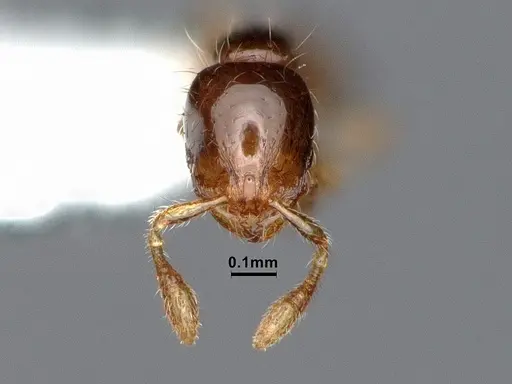
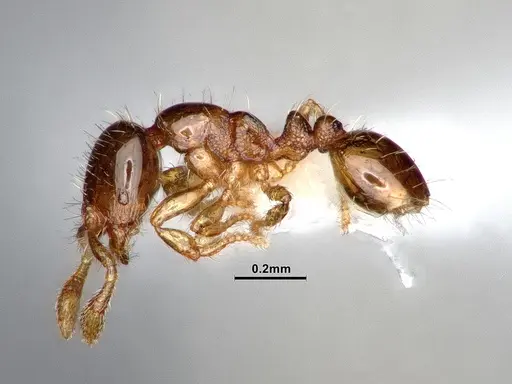
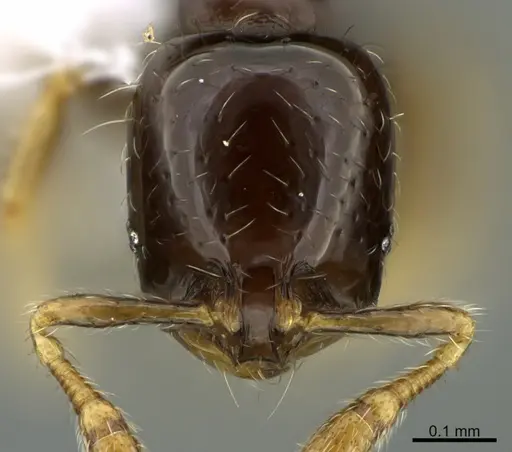
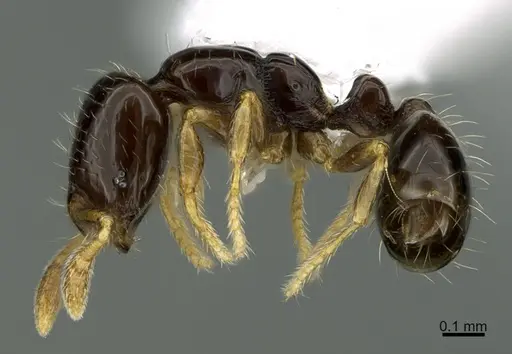
Solenopsis terricola is a tiny thief ant measuring just 1.20-1.32mm for workers and 2.28-3.18mm for queens [1]. This bicolored species has a dark brown to black body that strongly contrasts with its yellow legs and antennae in Central American populations [1]. The head is elongated with straight sides, and the mesopleuron and metapleuron feature distinctive punctations [1]. This species belongs to the Solenopsis brevicornis species complex and is found across the Neotropical region including Costa Rica, Dominican Republic, Guatemala, Panama, and the Caribbean islands of Dominica and Saint Lucia [1]. These ants live in leaf litter at higher elevations ranging from 600-4000m in Central America, though they have been collected as low as 126m in the Dominican Republic [2][3]. They are considered native to the Caribbean and Central America, though one related species (Solenopsis abdita) has recently established outside its native range [4].
Quick Summary
- Difficulty: Medium
- Origin & Habitat: Native to the Neotropical region, Costa Rica, Dominican Republic, Guatemala, Panama, Mexico, Dominica, and Saint Lucia [1]. Found in leaf litter across diverse forest types including dry tropical forest, mountain hardwood, bamboo/cloud forest, wet cloud forest, and wet montane forest at elevations from 126m to 4000m [1][2].
- Colony Type: Colony structure is unconfirmed, the number of queens per colony has not been documented in scientific literature.
- Size & Growth:
- Queen: 2.28-3.18mm (average 2.65mm) [1]
- Worker: 1.20-1.32mm (average 1.23mm) [1]
- Colony: Unknown, no colony size data available
- Growth: Unknown, growth rate has not been documented
- Development: 6-10 weeks (estimated based on typical Solenopsis development) (Development time is unconfirmed for this species. Estimates based on related Solenopsis species suggest 6-10 weeks from egg to first worker at optimal temperatures.)
- Antkeeping:
- Temperature: Keep at 22-26°C, this species occurs in tropical to subtropical forests and higher elevations where temperatures are moderate. Avoid temperatures below 18°C or above 30°C.
- Humidity: High humidity required, these ants live in leaf litter in cloud forests and wet montane forests. Keep the nest substrate consistently moist but not waterlogged. Provide a water tube or moisture source.
- Diapause: No, this is a tropical species that does not require hibernation. Maintain year-round warm conditions.
- Nesting: Use a test tube setup or small formicarium with fine, moist substrate. These are tiny litter-dwelling ants that prefer tight chambers and narrow passages. A Y-tong (AAC) nest with small chambers or a naturalistic setup with moist soil works well. Keep the nest humid and dark.
- Behavior: As a thief ant, this species is likely predatory on small invertebrates and may raid other ant colonies for brood. Workers are tiny (1.23mm) and can squeeze through very small gaps, excellent escape prevention is critical. They are likely shy and non-aggressive toward humans but will defend their nest. The sting is minor due to their tiny size.
- Common Issues: escape prevention is critical, they are extremely tiny and can squeeze through standard barrier gaps, wild-caught colonies may have parasites that kill them in captivity, slow growth can lead to overfeeding and mold problems, test tube setups can flood if water reservoirs are too large for this tiny species, high humidity requirements can lead to mold if ventilation is inadequate
Housing and Setup
Solenopsis terricola requires careful housing due to its extremely small size. Workers measure only 1.20-1.32mm, making them one of the smallest ant species commonly kept [1]. Use a test tube setup with a small water reservoir, or a Y-tong (AAC) nest with the smallest available chamber sizes. The nest material should be kept consistently moist but never waterlogged. Because they are litter-dwelling ants, they prefer tight chambers that mimic the compressed spaces between decaying leaves in their natural habitat [1]. Place the nest in a dark location and minimize disturbances during the founding stage. The outworld should be small and escape-proof, these ants can squeeze through gaps that seem impossible for their size. Apply Fluon or similar barrier to all edges of the formicarium lid.
Temperature and Humidity
Maintain temperatures between 22-26°C year-round. This species occurs in tropical forests and higher elevation cloud forests where temperatures are moderate but stable [2]. Avoid temperature drops below 18°C, as this is a tropical species that does not tolerate cold. Humidity is critical, these ants live in wet cloud forests and wet montane forests in the wild [1]. Keep the nest substrate consistently moist, similar to damp forest floor conditions. Provide a water tube in the test tube setup and mist the nest area occasionally. However, balance humidity with adequate ventilation to prevent mold growth, which can quickly kill small colonies.
Feeding and Diet
Solenopsis terricola is a thief ant, meaning it likely preys on small invertebrates and may steal brood from other ant colonies. Feed small live prey such as springtails, fruit flies, and other tiny insects. Due to their minute size, prey items should be appropriately sized, even small mealworm pieces may be too large. Offer a sugar source occasionally in the form of diluted honey or sugar water, though protein-rich foods are more important for this predatory species. Feed small amounts every 2-3 days and remove any uneaten prey to prevent mold. Remove any sugar sources that are not consumed within 24 hours. [2]
Behavior and Temperament
This is a shy, non-aggressive species that prefers to avoid confrontation. Workers are tiny and likely forage individually or in small groups through leaf litter. As a thief ant, they may attempt to raid neighboring ant colonies for brood if kept in a naturalistic setup. The sting is present but very mild due to the ant's minute size, most keepers report minimal sensation. Escape prevention is absolutely critical, these ants are so small they can escape through standard barrier gaps. Always use fine mesh on any ventilation holes and apply Fluon to all lid edges. They are most active at night and prefer dark, humid environments. [2]
Colony Development
Queens measure 2.28-3.18mm and are small compared to many Solenopsis species [1]. The colony growth rate is unknown, but given the tiny worker size, colonies likely develop slowly at first. Expect 6-10 weeks from egg to first worker based on related Solenopsis species, though this is unconfirmed for this specific species. The first workers (nanitics) will be very small. Do not disturb the colony during founding, queens are likely claustral (seal themselves in) based on genus patterns, though this is unconfirmed. Once workers emerge, add small prey items to the foraging area. Growth will be gradual, and patience is required, small litter-dwelling species typically grow slower than larger ants.
Seasonal Care
Solenopsis terricola does not require hibernation as it is a tropical species [2]. Maintain warm, humid conditions year-round. The elevation range of 600-4000m in Central America suggests they can tolerate cooler temperatures than pure lowland tropical ants, but they still need consistent warmth. Do not expose them to temperatures below 18°C. If your room temperature drops in winter, use a small heating cable on one side of the nest to maintain warmth. Keep humidity stable, dry conditions are more dangerous than cool conditions for this species.
Frequently Asked Questions
How long does it take for Solenopsis terricola to have first workers?
The exact development time is unconfirmed for this species. Based on related Solenopsis species, expect 6-10 weeks from egg to first worker at optimal temperatures (22-26°C). The first workers will be very small nanitics.
What do Solenopsis terricola ants eat?
As thief ants, they are predatory on small invertebrates. Feed small live prey like springtails, fruit flies, and tiny insects. Offer small pieces of protein (like crushed mealworms) and occasionally a sugar source like diluted honey or sugar water.
Can I keep Solenopsis terricola in a test tube?
Yes, test tubes work well for this species. Use a small test tube with a modest water reservoir, too much water can flood the chamber. Keep the cotton consistently moist but not soaking wet. Transfer to a small formicarium once the colony reaches 20-30 workers.
Are Solenopsis terricola good for beginners?
This species is rated as Medium difficulty. While rewarding, they require excellent escape prevention due to their extremely small size, and they need specific humidity and temperature conditions. Beginners should master easier species first before attempting this tiny thief ant.
How big do Solenopsis terricola colonies get?
Colony size data is not available for this species. Based on their tiny size and litter-dwelling habits, colonies likely reach several hundred workers at most, possibly under 100 workers. Growth is slow compared to larger ant species.
Do Solenopsis terricola need hibernation?
No, this is a tropical species that does not require hibernation. Maintain year-round temperatures of 22-26°C. They are native to Caribbean and Central American forests where temperatures remain warm.
Why are my Solenopsis terricola escaping?
This species is extremely tiny, workers are only about 1.2mm. They can squeeze through gaps that seem impossible. Apply Fluon to all lid edges, use fine mesh on any ventilation, and check for any tiny cracks around connections. Escape prevention must be excellent.
What temperature is best for Solenopsis terricola?
Keep them at 22-26°C. This species occurs in tropical forests and higher elevation cloud forests. Avoid temperatures below 18°C or above 30°C. Use a heating cable on one side of the nest if room temperature is below 22°C.
Can I keep multiple queens together?
Colony structure is unconfirmed for this species. Combining unrelated queens is not recommended as it has not been documented. It is best to house each queen separately until she establishes a colony.
Is Solenopsis terricola invasive?
This species is native to the Caribbean and Central America. While one related species (Solenopsis abdita) has recently established outside its native range in Britain, S. terricola has not been documented as invasive. Never release ant colonies into the wild outside their native range.
References

This caresheet is licensed under CC BY-SA 4.0 .
CASENT0884411
View on AntWeb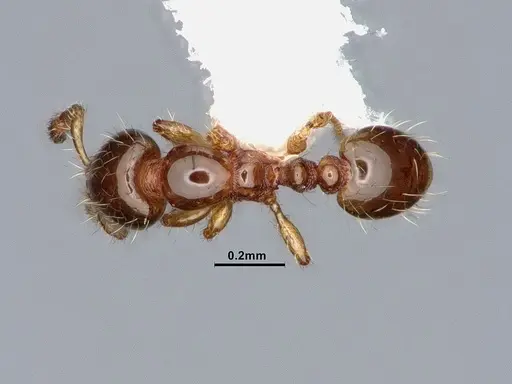
CASENT0923590
View on AntWeb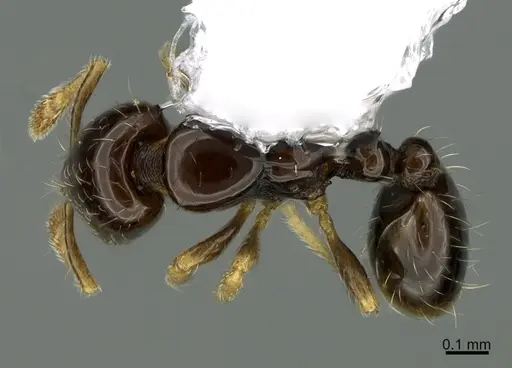
Literature
Loading...Loading products...