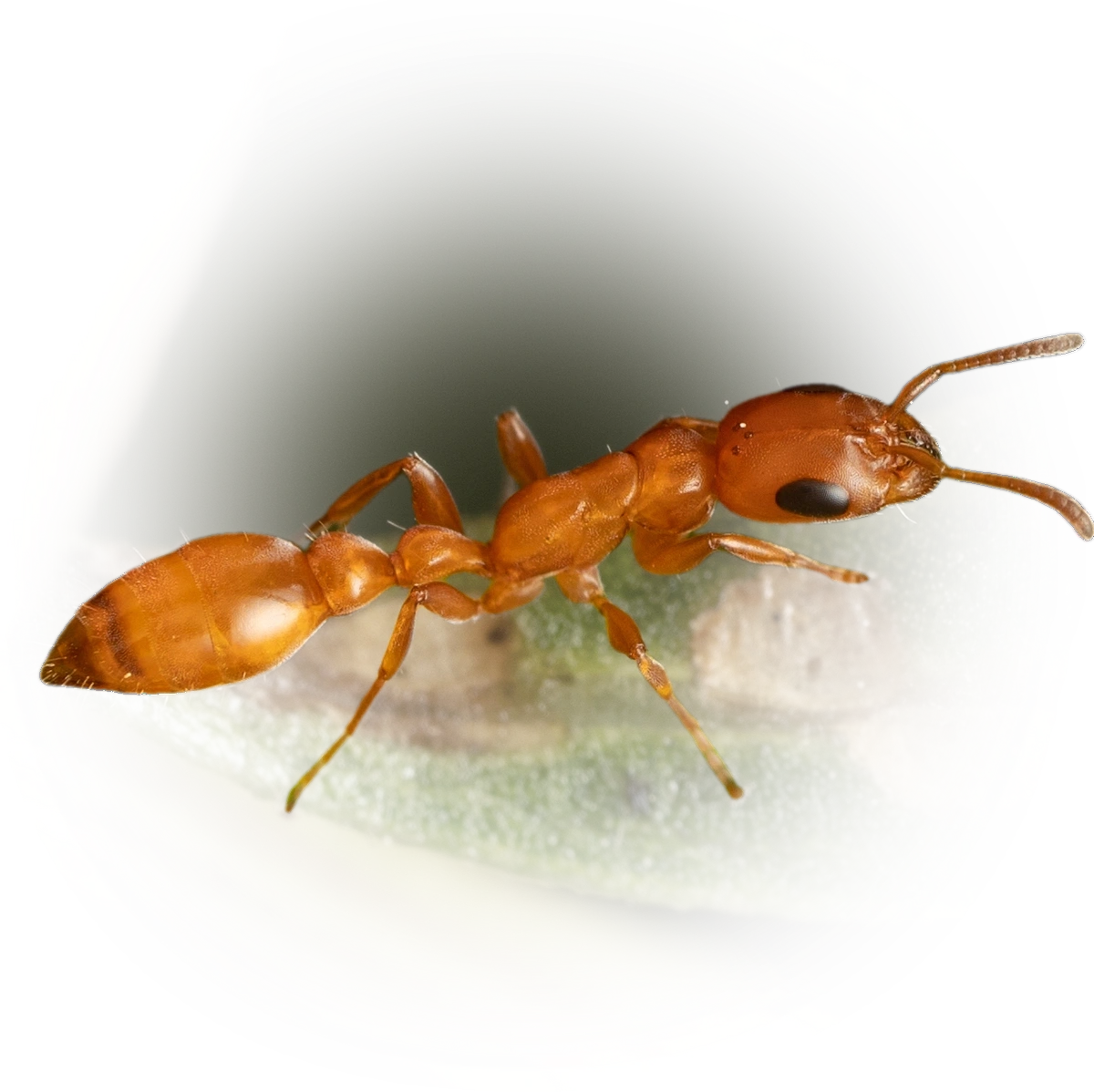
Pseudomyrmex vinneni - "Vinnen's Twig Ant"
Pseudomyrmex vinneni is a fascinating small ant species known for its slender, wasp-like appearance and quick movements. Workers typically measure between 0.81-1.03 mm in head width, while queens are slightly larger at 0.96-1.06 mm head width. These ants are generally dark brown to brownish black, often with lighter appendages and a distinctive rounded petiolar profile. They are arboreal specialists, naturally forming nests within the hollow stems of specific plants, particularly Tachigali species, showcasing a unique ecological niche.
- Difficulty: Expert
- Origin & Habitat: Neotropical Region (Brazil, Colombia, French Guiana, Peru, Venezuela) in Tropical forests, specifically nesting in the hollow stems of Tachigali plants..
- Colony Type: Monogyne (single queen), claustral (queen seals herself in) founding.
- Size & Growth:
- Queen: 5-7mm
- Worker: 4-5mm
- Colony: Small (hundreds). Medium growth.
- Antkeeping:
- Temperature: Maintain a warm environment, ideally between 24-28°C (75-82°F). Stable temperatures are crucial for healthy brood development and colony activity..
- Humidity: High humidity is preferred, ranging from 60-80%. This can be achieved through regular hydration of the nest and maintaining a humid outworld..
- Diapause: Not required. Not specified at Not specified.
- Nesting: Requires an arboreal setup, ideally mimicking their natural hollow stem nests. Options include bamboo tubes, specialized acrylic or plaster arboreal nests, or even small, hollowed-out wooden branches. The nest entrance should be small enough for a single worker to block..
- Behavior: Medium (towards handler if provoked), High (towards competing ants or pests) aggressiveness.
- Common Issues: Humidity fluctuations, Mold in nest, Lack of appropriate arboreal nesting space, Difficulty establishing a young colony.
One of the most defining aspects of Pseudomyrmex vinneni is their obligate arboreal lifestyle, especially their strong association with Tachigali plants in their native range. This means recreating their natural habitat in a formicarium is paramount. Instead of traditional flat setups, consider vertical setups with hollow tubes or specifically designed arboreal nests to cater to their unique nesting preferences. Successfully replicating this niche is a key challenge for any antkeeper aiming to house this species.
When it comes to diet, Vinnen's Twig Ants are quite versatile. They thrive on a combination of sugar-rich foods, such as diluted honey or sugar water, and a consistent supply of insect protein. In the wild, they consume nectar and honeydew, and also actively hunt small insects. Ensure a diverse diet of small feeder insects like fruit flies, roaches, or very small crickets to provide all necessary nutrients for a flourishing colony. Providing varied food sources encourages healthy growth and activity within your ant colony.
These ants are remarkably slender and possess a distinctly 'wasp-like' appearance, making them quite striking to observe. Their movements are swift and agile, which is a joy to behold in an outworld setting as they forage. However, it's crucial for antkeepers to remember that like many Pseudomyrmex species, P. vinneni workers do possess a potent sting. While generally not aggressive unless provoked or trapped, caution should always be exercised during maintenance or when interacting with their setup to avoid painful encounters.
Colony dynamics for Pseudomyrmex vinneni typically involve a single queen (monogyne) leading the entire colony, with workers being monomorphic, meaning there are no distinct size castes beyond the standard worker. An interesting behavioral note is the potential for worker policing if the colony unexpectedly loses its queen. In such queenless scenarios, some workers may develop the ability to lay eggs, but these are often unfertilized male eggs. In a healthy, queen-right colony, workers generally refrain from laying, ensuring the queen's reproductive monopoly and colony stability.
Frequently Asked Questions
How do I start a Pseudomyrmex vinneni colony?
Starting a Vinnen's Twig Ant colony typically begins with a single founding queen. She’s claustral, meaning she’ll seal herself off and raise her first generation of workers alone. You’ll need a specialized setup that mimics a hollow twig, like a test tube placed within a small, humid arboreal setup, or a specially designed arboreal formicarium from the start. Patience is key during this founding stage of your antkeeping journey.
What kind of nest is best for Pseudomyrmex vinneni?
Since these ants naturally nest in hollow plant stems, the ideal formicarium for Pseudomyrmex vinneni should replicate this. Look for arboreal setups such as bamboo tubes, specialized acrylic arboreal nests with narrow chambers, or even carved wood nests that offer horizontal or vertical tunnels. Traditional flat formicaria aren't suitable for these unique twig ants. Ensuring proper ventilation while maintaining high humidity is crucial for the health of your ant colony.
What do Pseudomyrmex vinneni eat?
Vinnen's Twig Ants have a diverse palate. Offer them sugary liquids like honey-water or sugar-water for carbohydrates. For protein, which is essential for brood development, provide small feeder insects such as fruit flies, small roaches, or tiny crickets. Remember to remove uneaten food to prevent mold, a common ant care challenge. A balanced diet is vital for a thriving ant colony.
Are Pseudomyrmex vinneni difficult to keep?
Pseudomyrmex vinneni are considered an 'Expert' level species for antkeepers. Their specific requirements for arboreal nesting, high humidity, and stable warm temperatures can be challenging to meet. They also possess a sting, which requires careful handling. This isn't a species recommended for beginners, but experienced ant enthusiasts will find them a rewarding ant species to keep.
Do Pseudomyrmex vinneni sting, and is it painful?
Yes, Pseudomyrmex vinneni workers do have a sting, and it can be quite painful. While they aren't inherently aggressive towards humans, they will sting if they feel threatened, are squashed, or trapped. Always exercise caution when performing ant care tasks or opening their outworld. Using long tweezers or gloves can help prevent accidental stings during your antkeeping activities.
How large do Pseudomyrmex vinneni colonies get?
Pseudomyrmex vinneni colonies are typically small, usually housing only a few hundred individuals. Their colony size is often limited by the available nesting space within their host plants or artificial formicarium. Don't expect supercolony sizes with this ant species; they prefer a more compact living arrangement.
Do I need to hibernate Pseudomyrmex vinneni?
No, Pseudomyrmex vinneni are tropical ants, native to warm regions like Brazil and Colombia. Therefore, they do not require a diapause (hibernation period). Maintaining consistent warm temperatures and high humidity year-round is important for their well-being and continuous brood production, ensuring your ant colony stays active.
What is their natural habitat like?
In their natural range across the Neotropics, Vinnen's Twig Ants are found in tropical forests. They are highly specialized arboreal ants, meaning they live in trees. Their primary nesting sites are within the hollow stems of Tachigali plants, often forming a mutualistic relationship where the ants protect the plant from herbivores. Replicating aspects of this unique ant habitat is key for successful ant care.
Are Pseudomyrmex vinneni polymorphic?
No, Pseudomyrmex vinneni workers are monomorphic. This means that all the worker ants in the colony are roughly the same size and do not have specialized 'major' or 'minor' castes with distinct sizes or roles. This uniform worker size is a common trait among many Pseudomyrmex species.
How fast do Pseudomyrmex vinneni colonies grow?
Pseudomyrmex vinneni colonies typically exhibit a medium growth rate. While not as explosively fast as some highly prolific species, with consistent feeding, optimal temperature, and humidity, you can expect a steady increase in your ant colony's numbers. Brood development from egg to worker usually takes between 6 to 10 weeks under ideal conditions, making their life cycle observable for ant enthusiasts.