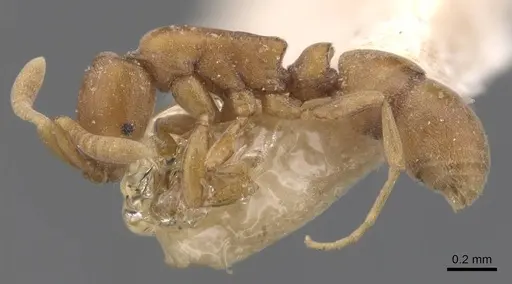
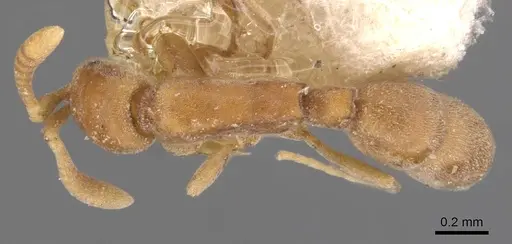
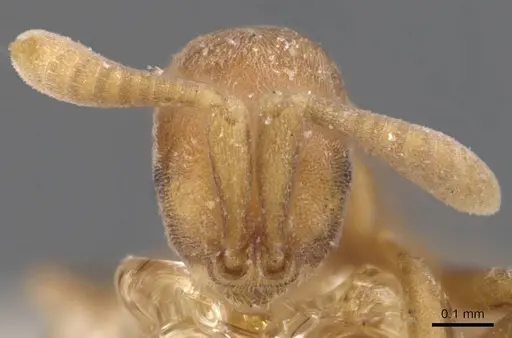
Probolomyrmex brevirostris - "Short-nosed Probolomyrmex Ant"
Probolomyrmex brevirostris is a rarely encountered, small, reddish-brown ponerine ant species. Unique among its genus, the worker caste of P. brevirostris possesses well-developed compound eyes with about 14 facets, a feature typically absent in other Probolomyrmex species. Their bodies are slender, with an almost complete lack of pilosity, and they feature a long sting. These ants are cryptic, typically found foraging and nesting below ground in leaf litter or rotten wood. Little is known about their specific diet, though other species in the genus are specialized predators, with some Asian species observed feeding on polyxenid millipedes.
- Difficulty: Hard
- Origin & Habitat: Africa (Eritrea, Ethiopia, Uganda, Yemen) in Rainforests, dry forests, grasslands, lowland and montane rainforests, in leaf mould, rotten logs, empty snail shells, natural cavities in soil, and under rocks/wood..
- Colony Type: Monogyne, claustral founding.
- Size & Growth:
- Queen: 0.67mm+
- Worker: 0.51-0.59mm
- Colony: Small (a few to about 20 workers). Slow - Colonies are very small, typically containing around 14 workers on average, ranging from 8 to 21 workers. growth.
- Antkeeping:
- Temperature: Specific temperature ranges are not well-documented, but given their tropical and subtropical distribution, a stable warm environment is likely preferred. Aim for typical tropical ant temperatures, likely around 24-28°C..
- Humidity: High humidity is essential, reflecting their natural habitat in leaf litter and decaying wood. Maintain a good humidity gradient within the nest. Specific percentages are not available, but likely above 70%..
- Diapause: Not required. Not specified at Not specified.
- Nesting: Prefers natural cavities in soil, leaf litter, or rotten wood. For artificial setups, deep formicariums with fine substrates or test tubes with ample substrate mimicking their natural environment would be suitable. They are cryptic and largely subterranean..
- Behavior: Low (towards handler, primarily defensive) aggressiveness.
- Common Issues: Highly specialized diet, Difficulty in sourcing live prey, Extremely small colony size making observation difficult, Maintaining specific environmental conditions (humidity, substrate), Lack of detailed care information.
Keeping Probolomyrmex brevirostris is considered exceptionally challenging due to their cryptic nature and highly specialized dietary needs. Information on their exact prey in the wild is scarce, though some related species are known to be obligate predators of polyxenid millipedes. This dietary specialization means providing a consistent and suitable food source will be the primary hurdle for any antkeeper attempting to raise this species. Success often hinges on replicating their natural prey items, which can be difficult to source or culture.
Their colony sizes are remarkably small, typically just a dozen or so workers with a single queen. This tiny colony size, combined with their subterranean and cryptic foraging habits, makes them incredibly difficult to observe and manage in a captive setup. Antkeepers should be prepared for a species that will rarely be seen actively foraging in an outworld, preferring to remain hidden within their nest. Providing a nest with plenty of small, interconnected chambers and a rich substrate will be crucial.
Unlike most other ants in their genus, the workers of Probolomyrmex brevirostris possess well-developed compound eyes. While this is a unique identifying feature, their overall biology remains largely a mystery, with very few observations of live colonies. This lack of information means that antkeepers attempting to keep them will be venturing into uncharted territory, requiring significant experimentation and patience to figure out their precise care requirements. Any setup should aim to replicate the humidity and substrate of their natural leaf litter and rotten wood habitats.
Successful antkeeping with Probolomyrmex brevirostris will demand an advanced level of dedication and research. These aren't your typical beginner ants that thrive on sugar water and common insects. Prospective keepers should be ready to delve deep into the available scientific literature, and potentially even attempt to culture specialized prey items, making them a project for only the most experienced and determined hobbyists. Their rarity in collections speaks volumes about the challenges involved in their maintenance.
User blogs will be displayed here.