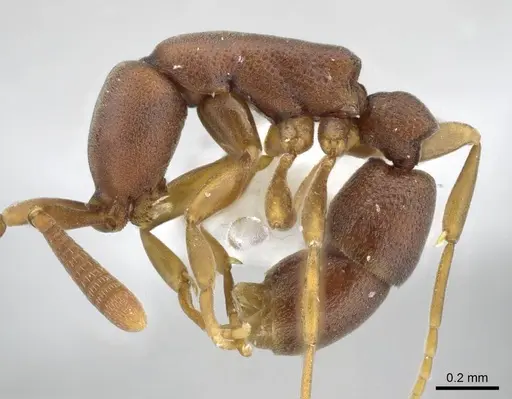
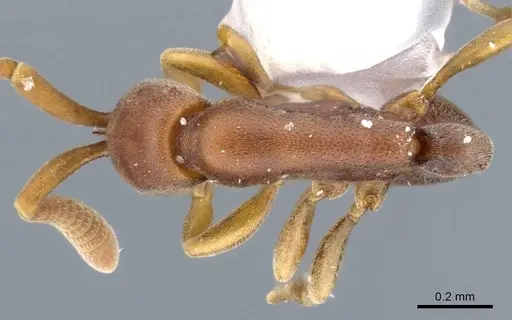
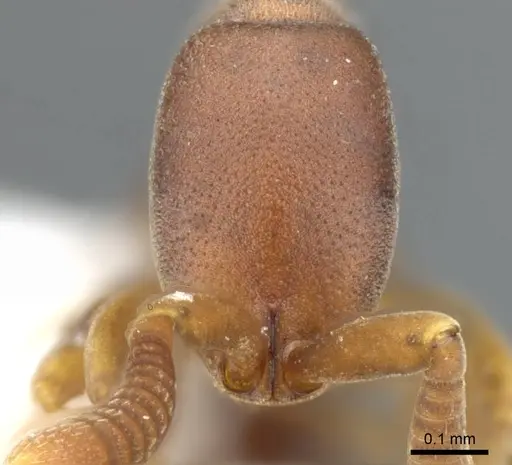
Probolomyrmex vieti - "Viet's Cryptic Ant"
Probolomyrmex vieti is a small, rarely encountered ant species belonging to the subfamily Proceratiinae. These ants are known for their cryptic, subterranean lifestyle, often found in soil and leaf litter. Workers are monomorphic and typically have a ferruginous brown body. They are specialist predators, with Asian species, including P. vieti, believed to primarily hunt polyxenid millipedes. Queens are alate (winged) and similar in size to workers, possessing well-developed eyes and three ocelli. Due to their hidden habits and small colony sizes, much of their biology remains a mystery.
- Difficulty: Expert
- Origin & Habitat: Southeast Asia (Indo-Chinese Peninsula, Java, Thailand, Vietnam, Indonesia, Singapore) in Forests, typically found foraging within the soil and leaf litter; also discovered in decaying wood remnants of mature forests. They can be found in lowland areas, xeric habitats, dry forests, grasslands, and montane rainforests, at elevations ranging from 180m to 2150m..
- Colony Type: Monogyne, claustral founding.
- Size & Growth:
- Queen: 0.51-0.51mm
- Worker: 0.51-0.57mm
- Colony: Small (less than 20 workers, often one to two dozen). Slow growth.
- Antkeeping:
- Temperature: Due to their tropical and subtropical origin, a stable temperature between 24-28°C is likely suitable. Avoid extreme fluctuations..
- Humidity: High humidity is crucial, ideally around 80-90%, replicating their forest floor and subterranean habitat..
- Diapause: Not required. Not specified at Not specified.
- Nesting: As hypogaeic (subterranean) ants that live in soil and leaf litter, they prefer nests that allow for digging, such as naturalistic setups with soil or plaster nests with deep chambers. Small nests are essential due to their tiny colony size..
- Behavior: Low (towards handler, primarily used for prey immobilization) aggressiveness.
- Common Issues: Inability to source specific prey (polyxenid millipedes), Maintaining high and stable humidity, Colony stalling due to stress or improper conditions, Lack of visible activity, Mold in nest due to high humidity without proper ventilation.
Keeping Probolomyrmex vieti is a significant challenge, even for seasoned antkeepers. Their extremely specialized diet, consisting primarily of polyxenid millipedes, makes sourcing food incredibly difficult. Unlike many ant species that accept a wide range of insects or sugar water, these tiny predators are highly selective. Ensuring a consistent and healthy supply of their natural prey is paramount to their survival in captivity and is often the biggest hurdle.
Their cryptic, subterranean lifestyle means that observation will be limited. These ants rarely venture above ground, preferring to forage within the soil and leaf litter. Providing a naturalistic setup with ample substrate is crucial for their well-being, but be prepared for a species that spends most of its time out of sight. This makes monitoring their health and colony development quite tricky, requiring patience and a good understanding of subtle cues.
Colony sizes for Probolomyrmex vieti are exceptionally small, typically consisting of fewer than twenty workers. This further complicates their care, as small colonies are inherently more fragile and susceptible to environmental changes. Any significant stressor, such as improper humidity, temperature fluctuations, or lack of appropriate food, can quickly lead to a colony's demise. Maintaining stable conditions in a very small setup is a delicate balance.
Given their rarity and specialized needs, Probolomyrmex vieti is not suitable for beginner antkeepers. Only experienced hobbyists with a dedicated commitment to researching and replicating their specific natural conditions, particularly their dietary requirements, should consider attempting to keep this fascinating but demanding species. Their conservation status and the limited information available on their care in captivity also add to the complexity.
User blogs will be displayed here.