

Probolomyrmex longiscapus
- Scientific Name
- Probolomyrmex longiscapus
- Tribe
- Probolomyrmecini
- Subfamily
- Proceratiinae
- Author
- Xu & Zeng, 2000
- Distribution
- Found in 1 countries
Probolomyrmex longiscapus Overview
Probolomyrmex longiscapus is an ant species of the genus Probolomyrmex. It is primarily documented in 1 countries , including China. Detailed taxonomic data and occurrence records can be further explored via authoritative databases such as AntWeb or the Global Biodiversity Information Facility (GBIF).
Probolomyrmex longiscapus
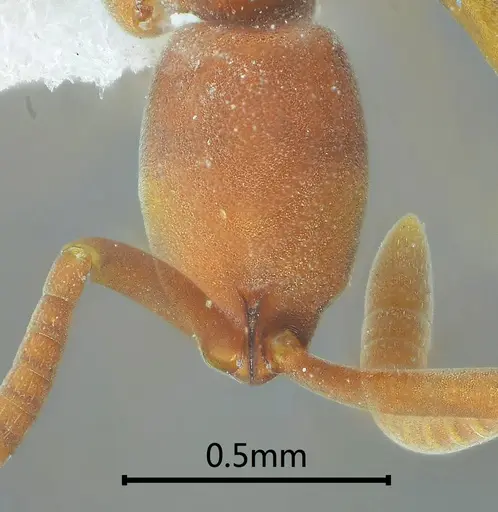
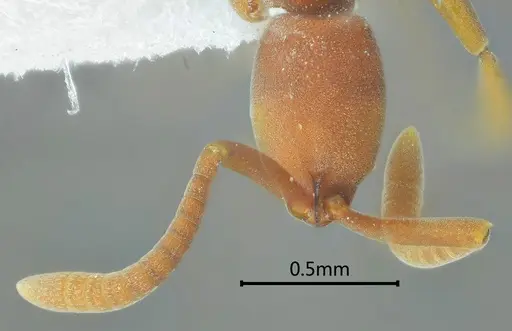
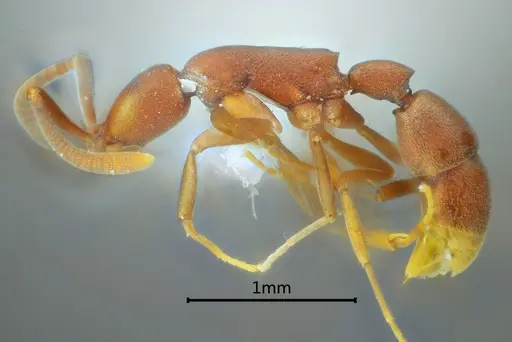
Probolomyrmex longiscapus is an extremely rare ant species belonging to the subfamily Proceratiinae. Workers are tiny, measuring just 0.77-0.79mm in head length with a distinctive elongate head, no eyes, and a long scape that nearly reaches the occipital margin. The body is reddish-brown with a characteristically long petiole that is longer than it is high. This species is found in southern China (Yunnan), northern Vietnam, and Laos, where it nests in soil or dead wood on the forest floor [1]. The genus Probolomyrmex is known for its cryptic, ground-dwelling habits and unusual morphology, with workers lacking eyes entirely. This species is most similar to P. longinodus and P. watanabei but can be distinguished by the posterodorsal margin of the petiole not being produced medially and antennal segment III being slightly longer than segment IV [1].
Quick Summary
- Difficulty: Expert
- Origin & Habitat: Southern China (Yunnan), northern Vietnam, and Laos. Found in lowland forest habitats, nesting in soil or dead wood on the forest floor [1][2][3].
- Colony Type: Colony structure is unconfirmed. A single collected colony contained 1 dealate queen and 12 workers with 2 males [2]. Nothing else is known about their colony organization.
- Size & Growth:
- Queen: 0.75-0.76 mm head length [1], estimated total around 3.5-4mm
- Worker: 0.77-0.79 mm head length, total approximately 3mm [1]
- Colony: Unknown, only one colony ever collected with 12 workers [2]
- Growth: Unknown
- Development: Unknown, no development data exists for this or related species (Development timeline has not been documented in scientific literature)
- Antkeeping:
- Temperature: Unknown, no thermal studies exist. Based on the tropical to subtropical distribution in Yunnan and northern Vietnam, aim for roughly 22-26°C with a gentle gradient. Observe colony activity for guidance.
- Humidity: Likely requires moderate to high humidity given forest floor nesting habits. Keep the nest substrate consistently moist but not waterlogged. Provide a gradient from damp to slightly drier areas.
- Diapause: Unknown, no seasonal data exists. The Yunnan and Vietnam range suggests they may experience cooler winters in higher elevations but this has not been studied.
- Nesting: In the wild, they nest in soil or dead wood on the forest floor [2][3]. In captivity, a small naturalistic setup with moist substrate (like a digging setup or plaster nest) would be most appropriate. Given their tiny size, tight chambers and narrow passages scaled to their minute dimensions are essential.
- Behavior: Nothing is known about the behavior of this species. Based on related Probolomyrmex species, they are likely cryptic, slow-moving, and ground-dwelling. Workers lack eyes entirely, suggesting they rely on chemical and tactile cues rather than vision. Their tiny size and rare occurrence in ant surveys suggests they are secretive and may have specialized foraging habits. Escape prevention is critical due to their minute size, they can squeeze through the tiniest gaps.
- Common Issues: this species has never been kept in captivity, no husbandry information exists, their extreme rarity means virtually no wild colonies are available, nothing known about their diet, what do they eat in the wild is a complete mystery, no data on founding behavior, claustral or semi-claustrl is unknown, no information on overwintering requirements or seasonal behavior, tiny size makes escape prevention extremely difficult
Species Overview and Identification
Probolomyrmex longiscapus is an exceptionally rare ant species described in 2000 from Yunnan, China. Workers are among the smallest ants in the subfamily Proceratiinae, measuring approximately 3mm in total length with a distinctive elongate head that lacks eyes entirely. The scape (the basal antennal segment) is notably long, reaching almost to the back of the head, which is reflected in the species name 'longiscapus' meaning long scape. The body is reddish-brown, and the petiole (the narrow waist segment) is characteristically longer than it is high, giving them an elongated appearance compared to many other ants [1]. This species can be distinguished from similar species like P. longinodus and P. watanabei by the posterodorsal margin of the petiole not being produced medially and antennal segment III being slightly longer than segment IV [1].
Distribution and Habitat
Probolomyrmex longiscapus is known from a remarkably small range in southern China (Yunnan province), northern Vietnam, and Laos (Vientiane province). The species was originally described from Yunnan, China, where it was collected at an elevation of 820m in Nanqian Village, Mengla County. Subsequent records from northern Vietnam and Laos confirm a disjunct distribution across the region [1][4][5][3]. The original description mentions a soil sample collection, while more recent collections from Vietnam and Laos indicate they nest in dead wood on the forest floor or directly in soil [2][3]. This distribution pattern across multiple countries with few records suggests they are extremely cryptic and rarely encountered, possibly occupying very specific microhabitats within forest ecosystems.
Known Biology
Almost nothing is known about the biology of Probolomyrmex longiscapus. This is one of the most poorly documented ant species in existence. The only colony ever scientifically collected contained 1 dealate queen (one that has shed its wings),12 workers, and 2 males, this was from northern Vietnam in March 2015 [2]. No observations exist on their founding behavior, diet, development, or any aspect of their daily lives. The related species P. okinawaensis has been studied more, showing similar nesting habits in dead wood on the forest floor, but even this provides only basic ecological data [2]. Based on their morphology (workers lack eyes entirely), they are likely nocturnal or cryptically diurnal, using chemical trails and vibrations rather than visual cues to navigate. Their extremely small size and rare occurrence in ant surveys (only a handful of specimens have ever been documented) suggests they may have specialized microhabitat requirements or very limited populations.
Keeping This Species - Challenges and Considerations
Probolomyrmex longiscapus is NOT a species for captive keeping. This is not a matter of difficulty, it is simply that no information exists on how to keep them alive. No antkeeper has ever successfully maintained a colony of this species, no research has documented their dietary needs, and no husbandry protocols exist. The species is so rare that even professional myrmecologists have only encountered it a handful of times across decades of fieldwork. If you somehow obtained specimens (which would require field collection in remote Yunnan or northern Vietnam), you would be essentially experimenting blindly. There are no care guides, no success stories, and no baseline data to work from. For antkeepers interested in Probolomyrmex, the related P. okinawaensis or other better-studied Proceratiinae species like Discothyrea would be far more appropriate choices. This species represents an exciting opportunity for scientific discovery rather than captive husbandry.
Frequently Asked Questions
Can I keep Probolomyrmex longiscapus as a pet ant?
No. This species has never been kept in captivity and no husbandry information exists. There are no care guides, no documented successful colonies, and no baseline data on their requirements. Even expert antkeepers would be completely guessing at how to care for them. This is a species for scientific study in the wild, not captive keeping.
Where does Probolomyrmex longiscapus live?
They are found in southern China (Yunnan), northern Vietnam, and Laos. They nest in soil or dead wood on the forest floor at elevations around 800m [1][2][3].
How big are Probolomyrmex longiscapus ants?
Workers are tiny, about 3mm total length with a head length of 0.77-0.79mm. Queens are similarly small at 0.75-0.76mm head length. These are among the smallest ants in the Proceratiinae subfamily [1].
What do Probolomyrmex longiscapus eat?
Unknown. No research has documented their diet. Related Probolomyrmex species are thought to be predators or scavengers like most Proceratiinae, but specific prey items, feeding frequency, or sugar acceptance is completely unstudied [2].
How do Probolomyrmex longiscapus form colonies?
Unknown. Founding behavior has never been documented. The only colony ever collected had 1 dealate queen and 12 workers, but this tells us nothing about whether they are monogyne (single queen), how queens found new colonies, or how colonies develop [2].
Do Probolomyrmex longiscapus have eyes?
No. Workers completely lack eyes, which is characteristic of the genus Probolomyrmex. They navigate using chemical cues and vibrations rather than vision [1].
Are Probolomyrmex longiscapus dangerous?
At 3mm in length, they pose no threat to humans. Their tiny mandibles cannot penetrate human skin, and no sting has been documented. Given their extreme rarity, encountering them would be remarkable in itself.
Why is Probolomyrmex longiscapus so rarely found?
They appear to have extremely small, localized populations and cryptic habits. They nest in hidden microhabitats in forest floors and are not attracted to common ant baits or survey methods. Despite decades of ant research in the region, only a handful of specimens have ever been documented [1][2].
What temperature do Probolomyrmex longiscapus need?
Unknown. No thermal studies exist. Based on their distribution in Yunnan and northern Vietnam (tropical to subtropical highlands), they likely tolerate 20-28°C, but this is purely an estimate with no supporting data.
Do Probolomyrmex longiscapus need hibernation?
Unknown. No seasonal data exists. The Yunnan distribution includes higher elevations that experience cool winters, but whether the ants enter any form of dormancy is completely unstudied.
How fast do Probolomyrmex longiscapus colonies grow?
Unknown. No development data exists for this or any related species in sufficient detail. The one collected colony had only 12 workers, suggesting colonies may naturally remain small, but this is speculative.
Is Probolomyrmex longiscapus a good species for beginners?
Absolutely not. This is an expert-level species in the sense that no information exists to guide care at all. Even experienced antkeepers would have no framework for keeping them. If you're interested in Probolomyrmex, consider better-studied related species or more common ants entirely.
References

This caresheet is licensed under CC BY-SA 4.0 .
ANTWEB1060526
View on AntWeb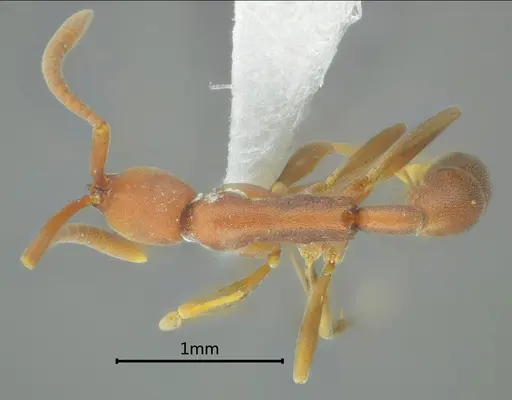
Literature
Loading...Loading products...