

Pogonomyrmex anergismus
- Scientific Name
- Pogonomyrmex anergismus
- Tribe
- Pogonomyrmecini
- Subfamily
- Myrmicinae
- Author
- Cole, 1954
- Distribution
- Found in 1 countries
Pogonomyrmex anergismus Overview
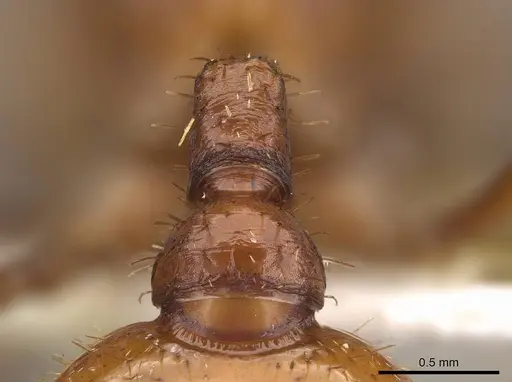
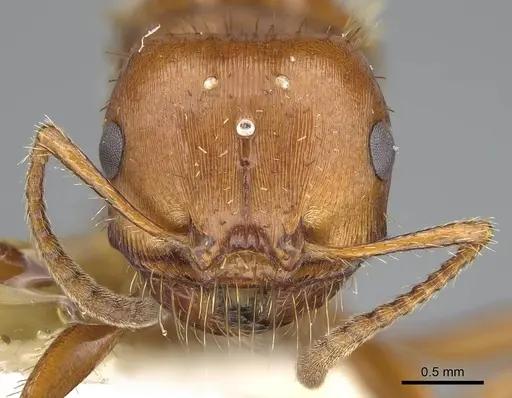
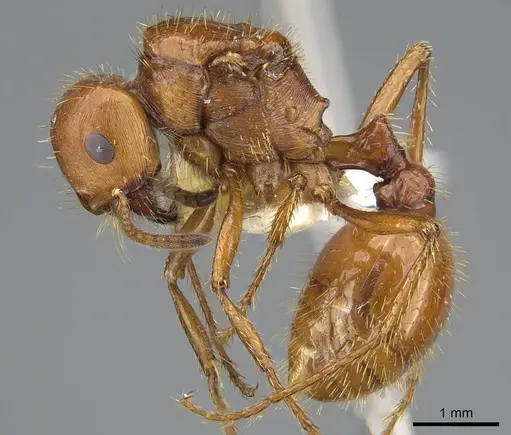
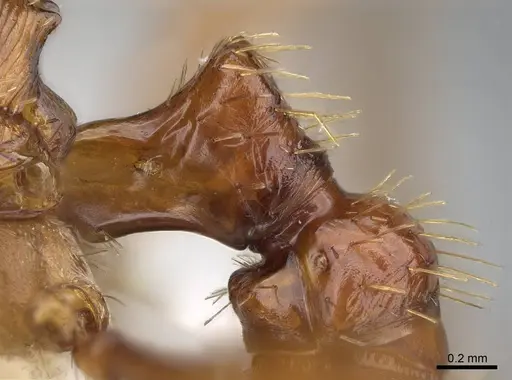
Pogonomyrmex anergismus is an ant species of the genus Pogonomyrmex. It is primarily documented in 1 countries , including United States of America. Detailed taxonomic data and occurrence records can be further explored via authoritative databases such as AntWeb or the Global Biodiversity Information Facility (GBIF).
Pogonomyrmex anergismus
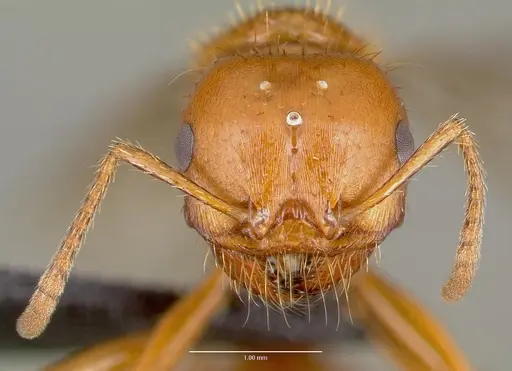
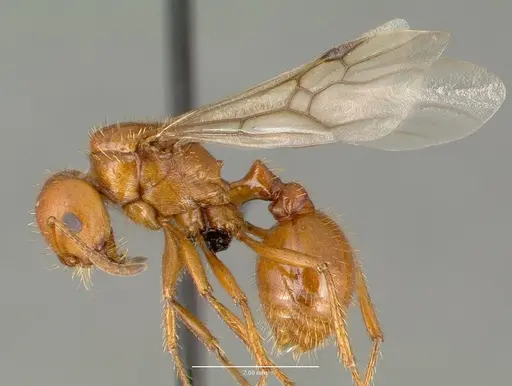
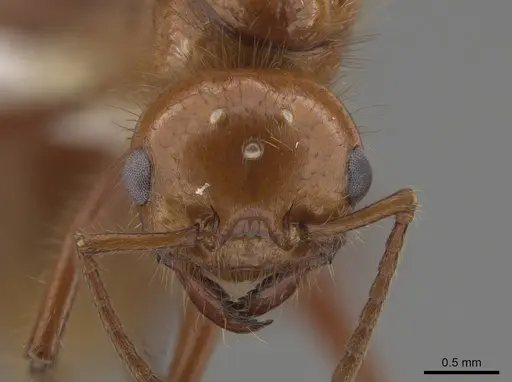
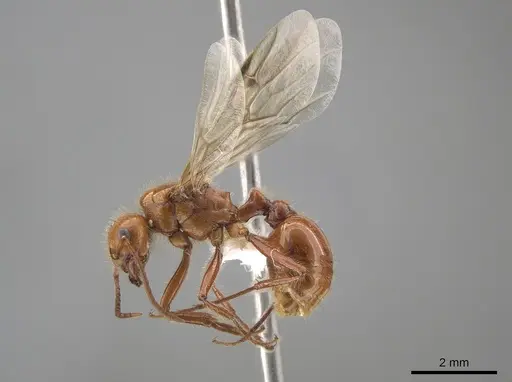
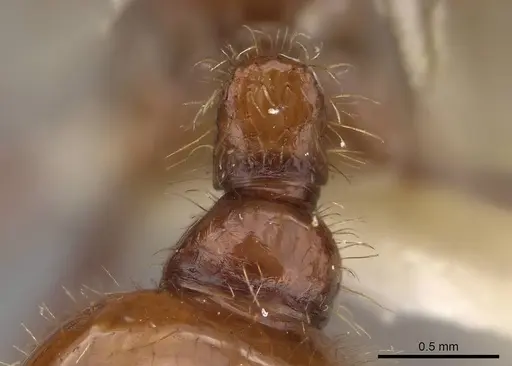
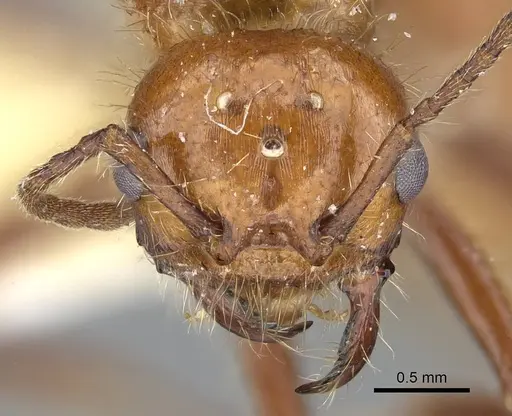
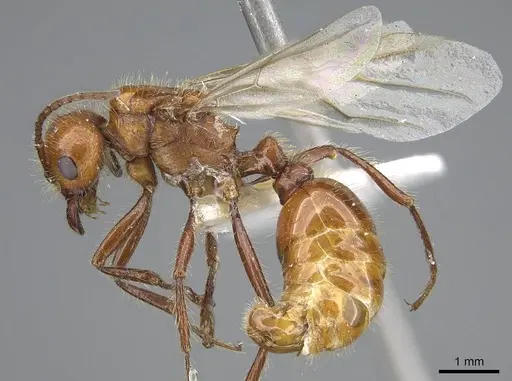
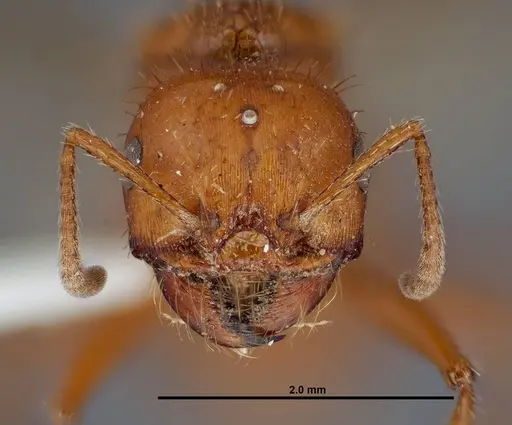
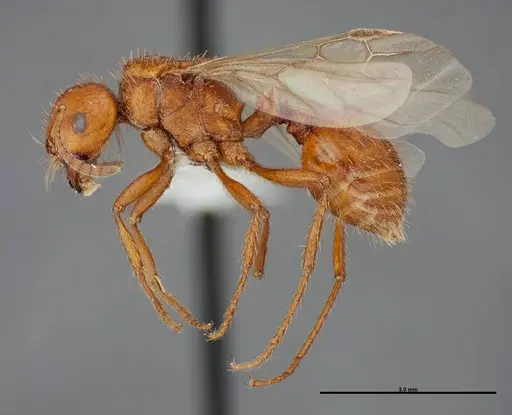
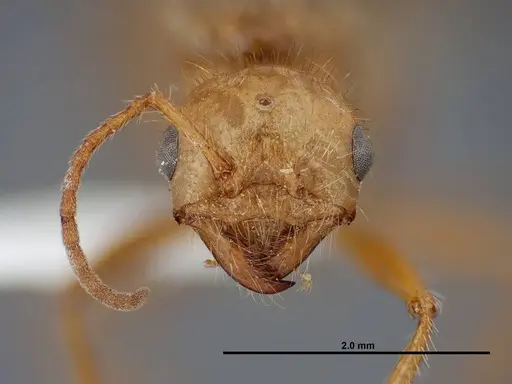
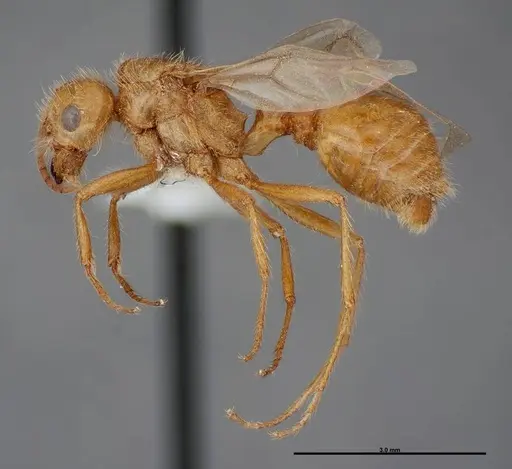
Pogonomyrmex anergismus is one of the most unusual ants you could ever keep, it's a workerless social parasite that has completely lost the ability to produce its own workers. Instead, it lives permanently inside the nests of two host species: Pogonomyrmex barbatus and Pogonomyrmex rugosus. The parasitic queens produce only new queens and males, relying entirely on host workers to care for their brood and maintain the colony. These pale yellowish-red ants are roughly 1.5mm in size and occur in only about 1% of potential host colonies across their range in the American Southwest [1]. This species represents an evolutionary dead end for the worker caste, it survives by exploiting the workforce of its host species.
Quick Summary
- Difficulty: Expert
- Origin & Habitat: Chihuahuan Desert grasslands of Arizona, New Mexico, and Texas in the United States, extending into northern Mexico [2]. The species inhabits relatively cooler and wetter southeastern climates composed of Madrean evergreen woodlands and semi-desert or prairie grasslands in or around the Chihuahuan Desert [3].
- Colony Type: Workerless social parasite (inquiline). Colonies produce only sexual offspring (new queens and males), never workers. The parasitic queen lives alongside the host queen and relies entirely on host workers for all colony maintenance tasks. Multiple parasitic queens can coexist in a single host nest [1].
- Colony: Polygyne, Oligogyne
- Queen: Socially parasitic
- Size & Growth:
- Queen: 1.52-1.56mm head length [2]
- Worker: Workerless, this species produces no workers [1]
- Colony: Unknown maximum, but host colonies can support multiple parasitic queens. The species produces only sexuals, not workers [1]
- Growth: Unknown, growth is tied to host colony resources
- Development: N/A, no workers produced (This species produces no workers at all. All eggs develop into either new queens or males [1])
- Antkeeping:
- Temperature: Keep host colony at 24-30°C, typical for Pogonomyrmex species. The parasite tolerates the conditions preferred by its hosts [2].
- Humidity: Dry to moderate humidity, Chihuahuan Desert habitat. Keep nest substrate relatively dry, similar to standard Pogonomyrmex setups [2].
- Diapause: Likely, host species undergoes winter dormancy. Reduce temperatures to 15-18°C for 2-3 months during winter [2].
- Nesting: Cannot be kept independently. Requires an established host colony of P. barbatus or P. rugosus. In the wild, they inhabit the underground galleries of host nests [1].
- Behavior: Extremely docile and defenseless, they have no workers to defend them and no sting. Queens are accepted into host colonies through a remarkable process: initial aggression from host workers is replaced by intensive grooming once the parasite makes contact with the host queen or brood. After acceptance, the parasitic queen is fully integrated into the colony and does not harm the host queen. Females mate with nestmates inside the host colony, then disperse to find new hosts. Males do not fly, they remain in the nest [1].
- Common Issues: This species cannot be kept without a host colony, it is a permanent social parasite that cannot survive independently, Finding a host colony (P. barbatus or P. rugosus) to pair with is extremely difficult and may be illegal in some areas, The species is rare in the wild (~1% of host colonies infected), making wild collection ethically questionable, Multiple parasitic queens can live in one host nest, but balancing parasite-to-host ratios is challenging, Host workers may reject or kill parasitic queens if acceptance is not complete
The Workerless Lifestyle
Pogonomyrmex anergismus represents one of the most extreme examples of social parasitism in the ant world. Unlike typical ants that produce workers first to build up the colony, this species has completely lost the ability to produce workers. The queens and males that emerge from the nest are the only castes, there are no workers whatsoever. This makes the species entirely dependent on host colonies for survival from the moment a new queen attempts to establish herself [1]. The parasitic queen lives in peaceful coexistence with the host queen, and both lay eggs. Host workers care for all brood indiscriminately, raising the offspring of both species equally. This arrangement benefits the parasite enormously but represents a significant cost to the host, resources that would otherwise produce host workers are diverted to raise parasitic sexuals [3].
How Parasitic Queens Enter Host Nests
The process by which a parasitic queen gains entry to a host colony is remarkable. Dispersing queens do not fly far from their natal nest before attempting intrusion into a host colony, some newly mated queens even quickly reenter their own colony of hosts [3]. Queens locate potential host colonies by following foraging trails, probably by responding to recruitment pheromones used by host species [1]. When the queen first makes contact with host workers, she faces aggression. However, once she makes contact with the host queen or brood, something remarkable happens, hostile behavior is replaced by intensive grooming by the host workers. Thereafter she is completely accepted by the nest and does not kill the host queen [1]. This acceptance mechanism is critical, without it, the queen would be killed by host workers. Multiple parasitic queens can coexist in a single host nest, with queens spending the majority of their time in proximity to the host queen [3].
Reproduction and Mating
Reproduction in P. anergismus differs dramatically from typical ants. Females mate with nestmates (males do not fly), usually within the host nest itself [1]. High levels of within-colony mating occur, which is unusual but predicted for workerless social parasites [5]. The spermathecae (sperm storage organ) of females contain only about 8000 sperm, roughly 1/20 that of other Pogonomyrmex species. This suggests that females must replenish the sperm in the spermatheca during later mating flights, as they cannot store enough sperm for a lifetime of reproduction in a single mating event [2]. Mating dispersal flights occur 2-3 days following summer and fall rains, typically during the afternoon [1]. Pouring about 8 liters of water on a parasitized colony can sometimes stimulate flights [2].
Why This Species Cannot Be Kept by Hobbyists
This is the most critical section: Pogonomyrmex anergismus cannot be maintained as a typical ant colony. As a permanent social parasite (inquiline), it requires a living host colony of Pogonomyrmex barbatus or Pogonomyrmex rugosus to survive. The parasitic queen cannot found a colony independently, she must enter an established host nest and be accepted by host workers. Without host workers to care for her and her brood, the colony will die. This makes keeping P. anergismus essentially impossible for hobbyists. You would need to: (1) obtain or establish a healthy host colony, (2) successfully introduce the parasitic queen, (3) ensure acceptance by host workers, and (4) maintain both species long-term. Additionally, the species is extremely rare in the wild (approximately 1% of potential colonies infected), and collecting it would likely harm wild populations [1]. For these reasons, this species should be appreciated in the wild or studied through scientific literature rather than kept in captivity.
Host Species Requirements
If you were to attempt keeping this species (which is not recommended), you would need to maintain a healthy colony of either Pogonomyrmex barbatus or Pogonomyrmex rugosus as the host. These are large, aggressive harvester ants that require typical Pogonomyrmex care: dry to moderate humidity, temperatures around 24-30°C, and a diet of seeds with some protein supplementation. Both host species have painful stings, P. barbatus workers are particularly aggressive during mating flights [2]. The hosts occur in less-desiccating conditions at higher elevations or in less-xeric conditions [3]. Maintaining a host colony is a significant undertaking on its own, and introducing a parasitic queen adds enormous complexity. The host species themselves are challenging to keep, they require large spaces, escape prevention, and proper hibernation. Given these challenges, most antkeepers should appreciate this fascinating species from afar.
Frequently Asked Questions
Can I keep Pogonomyrmex anergismus in a formicarium?
No. This species is a permanent social parasite that cannot survive without a host colony of Pogonomyrmex barbatus or P. rugosus. It produces no workers and cannot care for itself. Keeping it would require maintaining both the host species and successfully introducing the parasite, an extremely difficult and likely unsuccessful endeavor [1].
How do Pogonomyrmex anergismus queens found new colonies?
Parasitic queens cannot found colonies independently. A newly mated queen must locate and enter an established host colony. She follows host foraging trails, probably using recruitment pheromones to find the nest. Upon entry, she faces initial aggression, but once she contacts the host queen or brood, host workers begin grooming her and fully accept her into the colony [1].
Do Pogonomyrmex anergismus ants have workers?
No. This is a workerless species, it has completely lost the ability to produce workers. Colonies consist only of the parasitic queen(s), host workers, and the sexual offspring (new queens and males) produced by the parasite [1].
What do Pogonomyrmex anergismus eat?
They eat whatever the host workers provide. The parasitic queen does not forage, she is fed by host workers through trophallaxis (mouth-to-mouth food sharing). The larvae are fed by host workers just like host brood [1].
Are Pogonomyrmex anergismus dangerous?
No. This species has no workers to defend the colony and no sting. They are completely defenseless, relying on host workers for protection. However, the host species (P. barbatus and P. rugosus) have painful stings and should be handled with extreme caution [2].
How rare is Pogonomyrmex anergismus?
Extremely rare. Only approximately 1% of potential host colonies are infected in wild populations [1]. The species occurs in very low densities, infecting only a few nests out of several hundred [2]. This rarity makes wild collection both difficult and ethically questionable.
What is the difference between P. anergismus and P. colei?
Both are workerless social parasites of Pogonomyrmex hosts, but they are sister species with different distributions. P. anergismus is found in southwestern New Mexico and northern Texas, while P. colei has an eastern parapatric range. P. anergismus has a much broader geographic range than P. colei and can infect multiple host lineages, while P. colei is more specialized [1][3].
Do Pogonomyrmex anergismus queens kill host queens?
No. Unlike some social parasites that kill the host queen and take over the colony, P. anergismus queens coexist peacefully with the host queen. After being accepted through grooming, the parasite queen lives alongside the host queen without harming her [1].
How many queens can live in one host nest?
Multiple parasitic queens can coexist in a single host nest. Nests may contain more than one parasitic queen, and these queens spend the majority of their time in proximity to the host queen [2][3].
References

This caresheet is licensed under CC BY-SA 4.0 .
CASENT0006292
View on AntWeb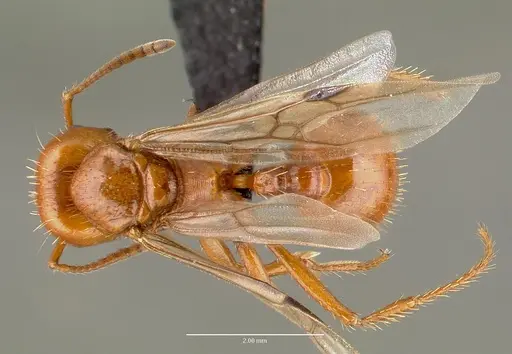
CASENT0637395
View on AntWeb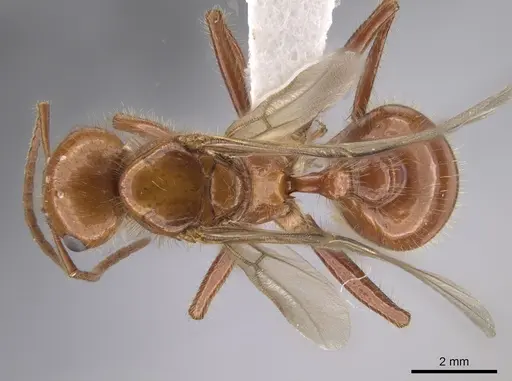
CASENT0914092
View on AntWeb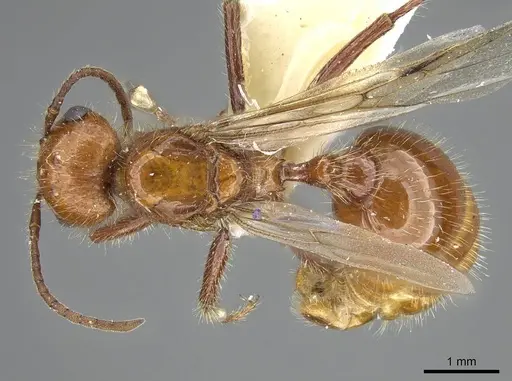
CASENT0914093
View on AntWeb
FMNHINS0000083123
View on AntWeb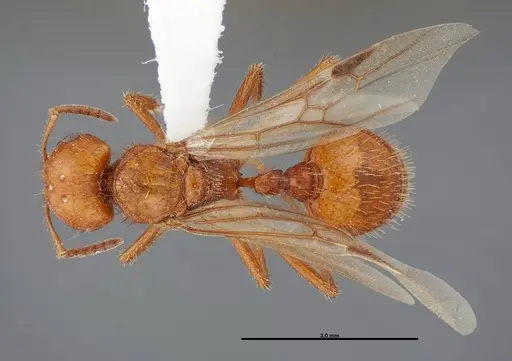
FMNHINS0000083124
View on AntWeb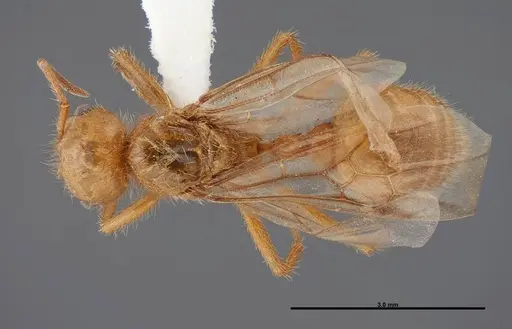
Literature
Loading...Loading products...