

Pheidole tenuis
- Scientific Name
- Pheidole tenuis
- Tribe
- Attini
- Subfamily
- Myrmicinae
- Author
- Wilson, 2003
- Distribution
- Found in 1 countries
Pheidole tenuis Overview
Pheidole tenuis is an ant species of the genus Pheidole. It is primarily documented in 1 countries , including Colombia. Detailed taxonomic data and occurrence records can be further explored via authoritative databases such as AntWeb or the Global Biodiversity Information Facility (GBIF).
Pheidole tenuis
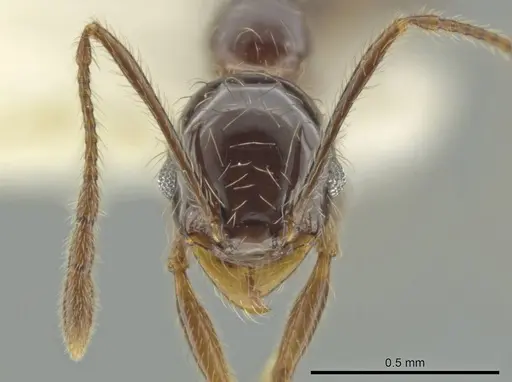
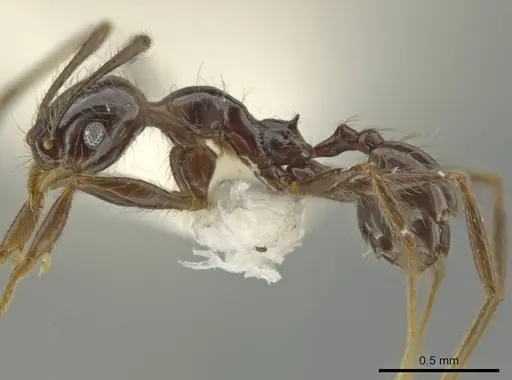
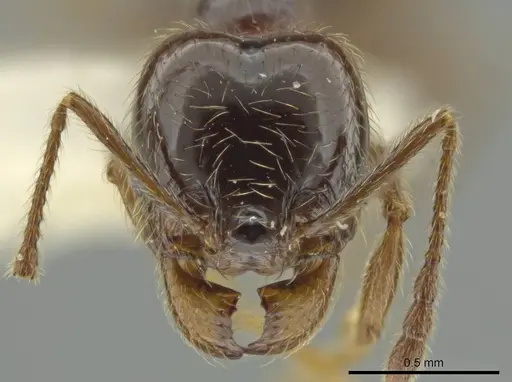
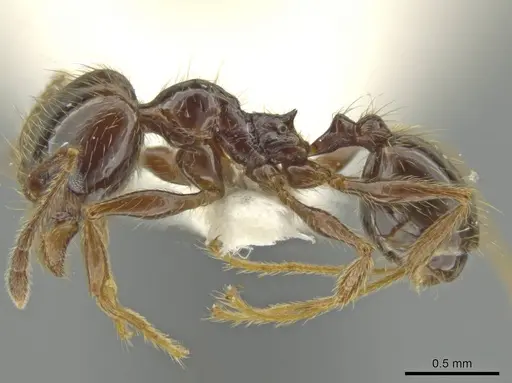
Pheidole tenuis is a tiny Neotropical ant species described from a single location in Colombia's Chocó region. Majors measure just 0.80mm in head width, making them one of the smaller Pheidole species. The species gets its name from 'tenuis' meaning thin, referring to its slender body shape. The head is bicolorous, a narrow strip on the clypeus and genae is yellowish brown while the rest is dark brown. The body is uniformly dark brown in majors and blackish brown in minors. This species belongs to the diligens group and is known only from the type locality at 760m elevation in the Chocó biogeographic region, collected from a slope covered in spiny bamboo [1][2][3].
Quick Summary
- Difficulty: Unknown, data limited
- Origin & Habitat: Chocó region of Colombia, South America. Collected from a slope covered in spiny bamboo (Guadua) at 760m elevation. The Chocó is a biodiversity hotspot with high rainfall and humid forest conditions [1][2].
- Colony Type: Unknown, colony structure has not been documented. Most Pheidole species are monogyne (single queen colonies), but this species' specific colony structure is unconfirmed.
- Size & Growth:
- Queen: Undescribed, queens have not been documented in scientific literature
- Worker: Major: 0.80mm head width, Minor: 0.44mm head width [3]
- Colony: Unknown, no colony size data available
- Growth: Unknown, no development data available
- Development: Unknown, no direct measurements exist. Based on typical Pheidole patterns in tropical regions, estimate 4-8 weeks at warm temperatures, but this is a rough guess. (No specific development data exists for this species. Estimates based on genus-level patterns only.)
- Antkeeping:
- Temperature: Likely 22-28°C based on Chocó's warm, tropical climate. Start in the mid-range and observe colony activity.
- Humidity: High humidity expected, the Chocó is one of the wettest regions on Earth. Keep nest substrate consistently moist but not waterlogged.
- Diapause: Unknown, no seasonal data available. Given the tropical origin, diapause may not be required, but this is unconfirmed.
- Nesting: No specific nesting data exists. The collection location (bambia slope) suggests they may nest in soil or rotting wood. Standard Pheidole setups (test tubes, Y-tong nests, or plaster nests) would likely work. Provide damp substrate.
- Behavior: Behavior is unstudied. Pheidole species are generally non-aggressive, colony-focused ants with minor workers that forage for food and major workers that defend the nest and process larger food items. Escape risk is low given their small size, standard barriers should be adequate. No stingers are reported in this genus, making them safe to handle.
- Common Issues: No biological data exists, this is one of the least studied ant species in captivity, Colony founding may be difficult since no one has documented how queens establish nests, Growth rate is unknown so keepers cannot benchmark their colony's progress, Humidity requirements are inferred rather than confirmed, observe colony behavior, Limited availability, this species is rarely available in the antkeeping hobby
Species Overview and Identification
Pheidole tenuis is a diminutive ant species described by E.O. Wilson in 2003 from specimens collected in Colombia's Chocó region. It belongs to the diligens group, a collection of closely related Pheidole species. The species name 'tenuis' means thin in Latin, referring to the ant's slender body form. Majors are tiny at only 0.80mm head width, while minors are even smaller at 0.44mm. The major's most distinctive feature is its bicolored head, a narrow strip along the clypeus and genae is yellowish brown while the rest of the head is dark brown. The body is uniformly dark brown. Propodeal spines are stout, about one-quarter the length of the basal propodeal face. This species is known only from its type locality, making it extremely rare in both the wild and in antkeeping collections [1][3].
Natural Habitat and Distribution
Pheidole tenuis is known only from the Chocó region of Colombia, one of the most biodiverse areas in the world. The type locality is Finca Los Guadales,10 km south of San José del Palmar, along the Rio Torito at 760m elevation. The collection site was on a slope covered in spiny bamboo (Guadua). The Chocó region experiences high rainfall and maintains consistently warm temperatures year-round. This habitat information suggests the species prefers humid, shaded forest floor environments. However, since only the type specimens have ever been recorded, we know almost nothing about this species' actual ecological preferences or behavior in the wild [1][2][3].
Keeping Pheidole tenuis in Captivity
Since this species has never been documented in the antkeeping hobby, all care recommendations are educated guesses based on typical Pheidole requirements and what we know about the Chocó's climate. Expect to keep them warm (22-28°C) and humid (consistent moisture in the substrate). A test tube setup works well for founding colonies, while established colonies can be moved to a Y-tong or plaster nest with damp substrate. Feed standard ant foods, protein sources like small insects and sugar sources like honey water or sugar water. Pheidole species typically have major workers that help process food and defend the nest, though the majors of this species are very small. There is no documented information on this species' aggression, but Pheidole generally are calm colony defenders rather than aggressive foragers. Standard escape prevention should work fine given their small but not tiny size.
Challenges and Limitations
Prospective keepers should understand that absolutely no captive care data exists for this species. Everything about keeping P. tenuis would be experimental. You would essentially be pioneering the husbandry of a species that scientists have barely studied in the wild. This makes it both exciting (you could discover things no one knows) and risky (the colony may fail for reasons no one can explain). Availability is extremely limited since the species is only known from one location in Colombia and has never been cultured in captivity. If you do obtain this species, document your observations carefully, any information you gather would be scientifically valuable. The lack of data also means we cannot confirm whether this species has any special requirements that differ from typical Pheidole care.
Frequently Asked Questions
How do I keep Pheidole tenuis ants?
No captive care protocol exists for this species. Based on typical Pheidole care and the species' tropical origin, provide warm temperatures (22-28°C), high humidity with consistently moist substrate, and standard ant foods. Start with a test tube setup for founding colonies.
What do Pheidole tenuis eat?
No feeding data exists for this species. Offer standard ant foods: small protein sources (fruit flies, small crickets, mealworms) and sugar sources (honey water, sugar water). Pheidole species are generalist feeders.
How long does it take for Pheidole tenuis to develop from egg to worker?
Unknown, no development data exists for this species. Based on typical Pheidole patterns in tropical regions, estimate 4-8 weeks at warm temperatures, but this is a rough guess with low confidence.
Are Pheidole tenuis good for beginners?
No. This species is not recommended for beginners due to the complete lack of any captive care data. You would be experimenting with no reference points. Choose a more established species like Pheidole pallidula or Pheidole megacephala for beginner success.
How big do Pheidole tenuis colonies get?
Unknown, no colony size data exists. Most Pheidole colonies reach several hundred to a few thousand workers. This species' maximum size is unconfirmed.
Where is Pheidole tenuis found?
Only known from the Chocó region of Colombia, South America, at 760m elevation. The type locality is Finca Los Guadales,10 km south of San José del Palmar.
Can I keep multiple Pheidole tenuis queens together?
Unknown, colony structure has not been documented. Most Pheidole are monogyne (single queen), but this species' queen arrangement is unconfirmed. Do not attempt combining unrelated queens without data.
Does Pheidole tenuis need hibernation?
Unknown, no seasonal data exists. Given the tropical Chocó origin, hibernation is likely not required, but this is unconfirmed.
Is Pheidole tenuis available in the antkeeping hobby?
Extremely rare if at all. This species is known only from its type locality in Colombia and has never been documented in commercial ant trade. It would be a exceptional find if available.
References

This caresheet is licensed under CC BY-SA 4.0 .
CASENT0645879
View on AntWeb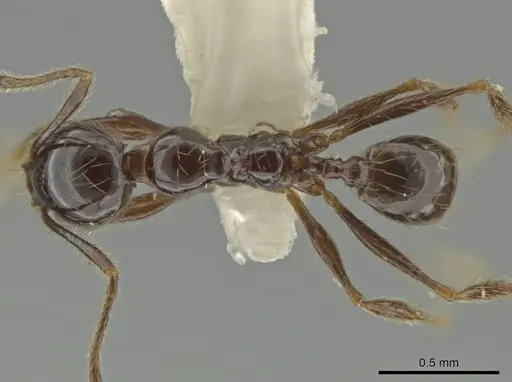
JTLC000016552
View on AntWeb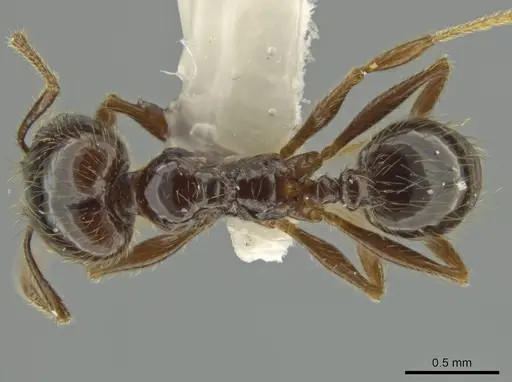
Literature
Loading...Loading products...