

Pheidole cornicula
- Scientific Name
- Pheidole cornicula
- Tribe
- Attini
- Subfamily
- Myrmicinae
- Author
- Wilson, 2003
- Distribution
- Found in 2 countries
Pheidole cornicula Overview
Pheidole cornicula is an ant species of the genus Pheidole. It is primarily documented in 2 countries , including Bolivia, Plurinational State of, Paraguay. Detailed taxonomic data and occurrence records can be further explored via authoritative databases such as AntWeb or the Global Biodiversity Information Facility (GBIF).
Pheidole cornicula
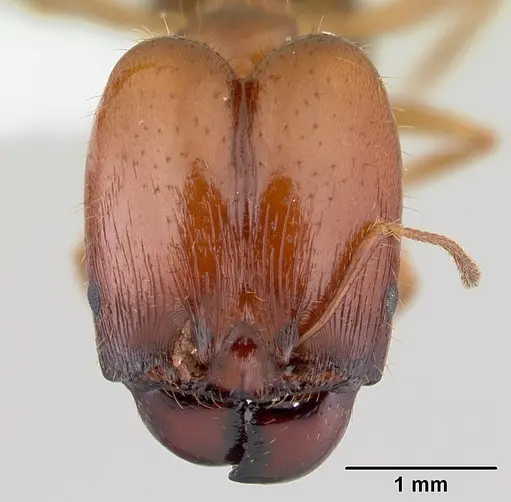
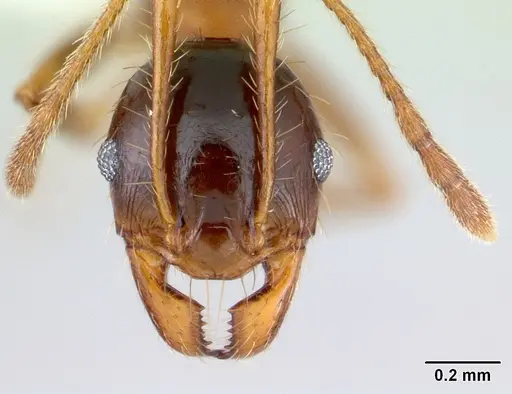
Pheidole cornicula is a small Neotropical ant species described by Wilson in 2003. Major workers measure about 1.7mm in head width and have a distinctive small horn-like protrusion on the mid-clypeus (the etymology 'cornicula' means little horn). The species belongs to the 'carapuna complex', a group of similar Pheidole species including P. boltoni, P. carapuna, P. cuprina, P. jivaro, P. manuana and P. celaena. Major workers have a reddish-brown head and mandibles with a yellowish-brown body, while minor workers are entirely yellowish-brown with dark yellow appendages. This species is known only from Bolivia, with records also from Argentina and Paraguay [1].
What makes this species particularly interesting is how little we know about its biology despite its relatively recent description. It has been found in agricultural areas, including soybean crops in the Atlantic forest region, suggesting it can adapt to human-modified landscapes. Like all Pheidole species, it has distinct major and minor worker castes, the majors serve as specialized foragers and food processors with their enlarged heads and mandibles.
Quick Summary
- Difficulty: Unknown
- Origin & Habitat: Neotropical region, Bolivia (type locality: Club Las Palmas, Santa Cruz), also recorded from Argentina and Paraguay. Found in agricultural areas including soybean crops in the Atlantic forest [2][3].
- Colony Type: Unconfirmed, Pheidole species are typically single-queen (monogyne) colonies, but colony structure for P. cornicula has not been studied.
- Size & Growth:
- Queen: Unknown, not described in original species description [1]
- Worker: Major: HW 1.70mm, Minor: HW 0.54mm [1]
- Colony: Unknown, no colony size data available
- Growth: Unknown
- Development: Unknown, no development data available (Based on typical Pheidole patterns, expect 6-10 weeks at warm tropical temperatures, but this is an estimate.)
- Antkeeping:
- Temperature: Unconfirmed, as a Neotropical species from Bolivia/Argentina, likely prefers warm conditions around 24-28°C. Start in this range and observe colony activity.
- Humidity: Unconfirmed, likely prefers moderate to high humidity like other Neotropical Pheidole species. Keep nest substrate moist but not waterlogged.
- Diapause: Unknown, Neotropical species may not require strong diapause, but winter rest period may be needed if kept in temperate climates.
- Nesting: Unconfirmed, Pheidole species typically nest in soil, under stones, or in rotting wood. A test tube setup or Y-tong nest with moist substrate works as a starting point.
- Behavior: Unconfirmed, Pheidole species are generally non-aggressive but will defend their nest. Major workers use their enlarged mandibles to process seeds and hard prey. As a small species, escape prevention should be moderate. Expect typical Pheidole behavior: active foragers with major/minor caste division of labor.
- Common Issues: lack of biological data makes proper care challenging, proceed with genus-level assumptions, no confirmed information on founding behavior or colony development timeline, wild-caught colonies may carry parasites or diseases since nothing is known about this species, agricultural origin suggests tolerance to some disturbance, but captive conditions differ significantly
Identification and Distinguishing Features
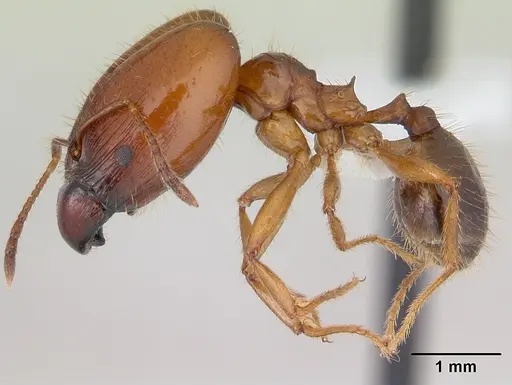
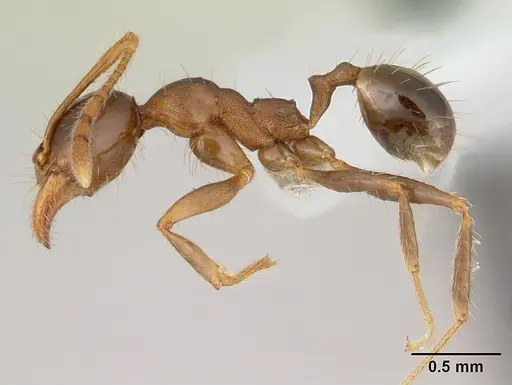
Pheidole cornicula is a small ant species belonging to the 'carapuna complex', a group of closely related species. The most distinctive feature is the small horn-like protrusion on the mid-clypeus of major workers, this is where the species name 'cornicula' (meaning little horn) comes from. Major workers measure approximately 1.7mm in head width with reddish-brown heads and mandibles, while the body is medium yellowish-brown. Minor workers are smaller at 0.54mm head width and are entirely yellowish-brown. In side view, the propodeal spines are reduced to small teeth. The species may be synonymous with P. celaena, and distinguishing it from other members of the complex requires careful examination of the clypeal structure and sculpturing [1].
Distribution and Habitat
This species is known from the Neotropical region, specifically Bolivia (type locality: Club Las Palmas, Santa Cruz), Argentina, and Paraguay. It has been found in agricultural settings, including soybean crops in the Atlantic forest ecoregion [2][3]. This suggests the species can tolerate some degree of habitat disturbance and may be found in more open, modified landscapes rather than pristine forest. The type specimen was collected from Club Las Palmas in Santa Cruz, Bolivia by James C. Trager [1].
Care Recommendations Based on Genus Patterns
Since nothing is known about the biology of Pheidole cornicula specifically, care recommendations must be based on typical Pheidole genus behavior. These ants are omnivorous, accepting both protein sources (insects) and carbohydrates (honey, sugar water). They have distinct major and minor worker castes, majors are specialized for processing hard foods like seeds. For nesting, use a moist substrate (like a test tube setup or Y-tong nest) since Neotropical species typically prefer humid conditions. Temperature should be warm, around 24-28°C. Start with these baseline conditions and adjust based on your colony's activity and health. This species is quite rare in the antkeeping hobby, so you may be pioneering captive husbandry for this species.
Challenges and Considerations
Pheidole cornicula presents unique challenges because it is one of the least-studied ant species in the hobby. There is no data on colony development, founding behavior, nuptial flight timing, or specific temperature and humidity requirements. This means you will be essentially pioneering captive care for this species. Keep detailed records of your observations, what foods they accept, how they respond to different temperatures, how quickly the colony grows. This information would be valuable for the antkeeping community. Expect to use trial and error to establish optimal care conditions, and don't be afraid to adjust based on what you observe from your colony's behavior.
Frequently Asked Questions
How long does it take for Pheidole cornicula to produce first workers?
Unknown, no development data exists for this species. Based on typical Pheidole genus patterns, expect 6-10 weeks from egg to first worker at warm temperatures (around 26°C), but this is an estimate.
What do Pheidole cornicula ants eat?
Unconfirmed for this species specifically, but Pheidole ants are omnivorous. They likely accept small insects, seeds, and honeydew. Offer a varied diet including small live prey (fruit flies, pinhead crickets), protein paste, and sugar water or honey.
Can I keep multiple queens of Pheidole cornicula together?
Not recommended, colony structure has not been studied for this species, and combining unrelated queens of most Pheidole species typically results in aggression.
What temperature should I keep Pheidole cornicula at?
Unconfirmed, as a Neotropical species from Bolivia/Argentina, start around 24-28°C and observe colony behavior. Adjust based on activity levels, workers should be active and foraging.
Is Pheidole cornicula good for beginners?
No, this is not a recommended species for beginners due to the complete lack of biological data. There is no information on proper care requirements, making successful cultivation very challenging. Consider starting with more established species like Pheidole pallidula or Pheidole megacephala.
How big do Pheidole cornicula colonies get?
Unknown, no colony size data is available for this species. Most Pheidole species produce colonies of several hundred to a few thousand workers.
Does Pheidole cornicula need hibernation?
Unknown, as a Neotropical species, it likely does not require strong hibernation. If kept in a temperate climate, a slight reduction in temperature during winter months (to around 18-20°C) may be appropriate, but this is an estimate.
What type of nest should I use for Pheidole cornicula?
Unconfirmed, based on typical Pheidole preferences, use a moist nest setup like a test tube or Y-tong with chambers scaled to their small size. The species has been found in agricultural areas, suggesting some tolerance to modified habitats.
Where can I get Pheidole cornicula ants?
This species is extremely rare in the antkeeping hobby. It is only known from a few specimens collected in Bolivia, Argentina, and Paraguay. You would likely need to locate a specialized breeder or collector working with rare South American Pheidole species.
References

This caresheet is licensed under CC BY-SA 4.0 .
CASENT0178012
View on AntWeb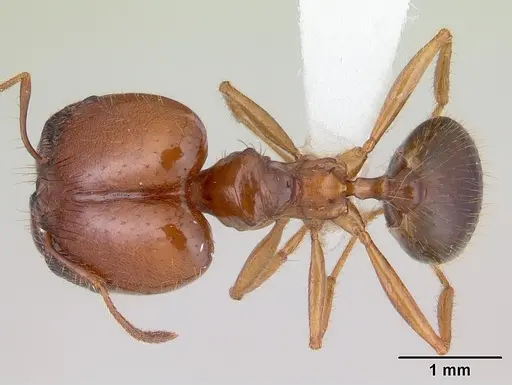
CASENT0178013
View on AntWeb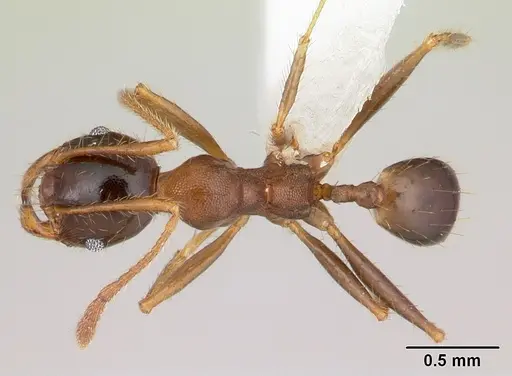
Literature
Loading...Loading products...