

Pheidole acutidens
- Scientific Name
- Pheidole acutidens
- Tribe
- Attini
- Subfamily
- Myrmicinae
- Author
- Santschi, 1922
- Distribution
- Found in 1 countries
Pheidole acutidens Overview
Pheidole acutidens is an ant species of the genus Pheidole. It is primarily documented in 1 countries , including Argentina. Detailed taxonomic data and occurrence records can be further explored via authoritative databases such as AntWeb or the Global Biodiversity Information Facility (GBIF).
Pheidole acutidens
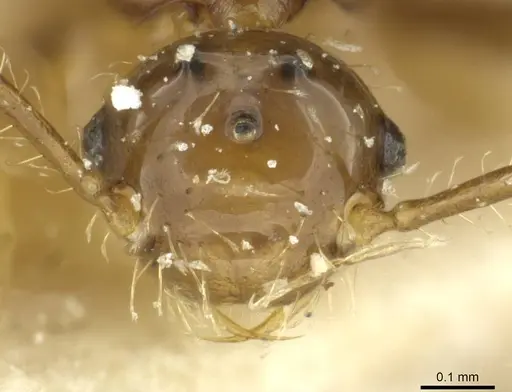
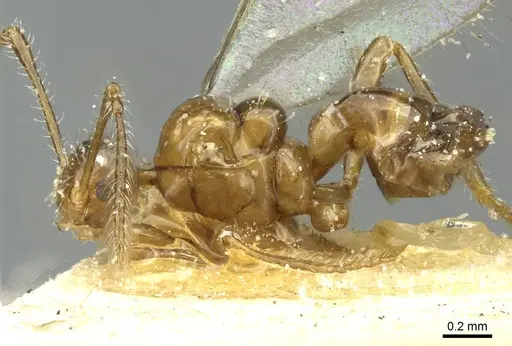
Pheidole acutidens is one of the most remarkable ants in the world, it's a workerless social parasite that cannot survive without its host, Pheidole nitidula. Queens are tiny at only 0.40mm head width, with a distinctive rounded head, extremely elongated antennae with 9-11 segments, and reduced mandibles that taper to needle-sharp points [1]. Their bodies are yellowish-brown and smooth with a broadened postpetiole [1]. Males are even more unusual, they're pupiform (caterpillar-shaped) with vestigial or absent mandibles and reduced wings [1]. This species was first described from Argentina and has recently been found in southern Brazil, where it lives in the same areas as its host [1]. The entire colony consists only of the parasitic queen and host workers, there are no worker ants of its own species [1].
Quick Summary
- Difficulty: Expert
- Origin & Habitat: Native to the Neotropical region, Argentina (Buenos Aires and Córdoba provinces) and southern Brazil (Rio Grande do Sul and Santa Catarina). Found in grasslands and subtropical environments at elevations in the Santa Catarina Plateau region [1][2].
- Colony Type: Permanent workerless social parasite (inquiline). The species consists only of a parasitic queen that lives entirely within host P. nitidula colonies. No workers of its own species exist, host workers care for the parasite's brood [1].
- Queen: Socially parasitic
- Size & Growth:
- Queen: 0.40mm HW (head width),0.42mm HL [1]
- Worker: Workerless, no workers exist in this species [1]
- Colony: The parasitic queen can produce approximately 300 eggs, but all care is performed by host workers [1]
- Growth: Moderate, life cycle completes in about three months [1]
- Development: N/A, workerless species. Host workers care for brood. (The parasitic queen relies entirely on host P. nitidula workers for all brood care, including removing cocoons and unfolding wings of newly hatched queens [1])
- Antkeeping:
- Temperature: Unknown, not applicable for captive keeping
- Humidity: Unknown, not applicable for captive keeping
- Diapause: Unknown, not studied in captivity
- Nesting: This species does not construct nests. The parasitic queen lives within the nest structure of its host P. nitidula [1].
- Behavior: This species is completely dependent on its host. Queens can only be accepted by P. nitidula workers when introduced into queenless host nests [1]. The parasitic queen has lost all worker-like behaviors, she cannot forage, cannot care for brood, and cannot even remove her own wings after the nuptial flight. Host workers perform all these functions [1]. Queens have extremely limited flight capability due to their enlarged mesosoma and reduced wings, making dispersal very slow [1]. This species is peaceful toward humans, it cannot sting and poses no threat.
- Common Issues: This species cannot be kept, it is a permanent social parasite requiring a live P. nitidula host colony, Queens cannot found colonies independently, they must invade established host colonies, Even with both species, establishing a parasitic colony requires advanced research techniques, The species has extremely limited dispersal ability, making wild collection nearly impossible, Captive propagation has never been documented and would require specialized knowledge
Why This Species Cannot Be Kept
Pheidole acutidens is NOT a species that can be kept in captivity. This is a permanent workerless social parasite, the queen cannot survive without a host colony of Pheidole nitidula. Unlike typical ants where the queen founds a colony alone, P. acutidens queens must invade an established P. nitidula colony and rely entirely on host workers for survival [1]. The queen cannot care for her own brood, cannot forage for food, and cannot even remove her own wings after mating. Host workers do everything [1]. There are no worker ants of this species, only the parasitic queen exists within the host colony. This makes captive keeping impossible under normal antkeeping conditions. Even if you obtained both species, establishing a parasitic relationship requires advanced entomological knowledge and has never been documented in captivity.
The Parasitic Relationship
P. acutidens is an extreme example of social parasitism within the ant genus Pheidole. The queen exhibits a suite of morphological adaptations including reduced size, elongated antennae, greatly reduced mandibles, a smooth body surface, and a broadened postpetiole [1]. These changes represent the 'parasitic syndrome', adaptations for life inside another colony rather than founding one. The queen produces approximately 300 eggs, but host P. nitidula workers perform all brood care [1]. Newly hatched queens depend on host workers to remove cocoons and unfold their rudimentary wings [1]. This extreme specialization means the parasite has lost nearly all independent abilities.
Distribution and Discovery
This species was first discovered in Argentina by Carlos Bruch in 1931,who provided extensive notes on its anatomy, ecology, behavior, and life cycle. It was known only from two Argentine locations: Las Flores in Buenos Aires province and Alta Gracia in Córdoba province [1]. The first Brazilian records came much later, an alate queen collected in Caxias do Sul, Rio Grande do Sul in 1988,and a dealate queen found in Otacílio Costa, Santa Catarina in 2011-2012 [1]. The species probably occurs throughout the range of P. nitidula, from Argentina to Rio de Janeiro in southeastern Brazil, but its limited dispersal ability makes it rare and hard to find [1].
Unique Morphology
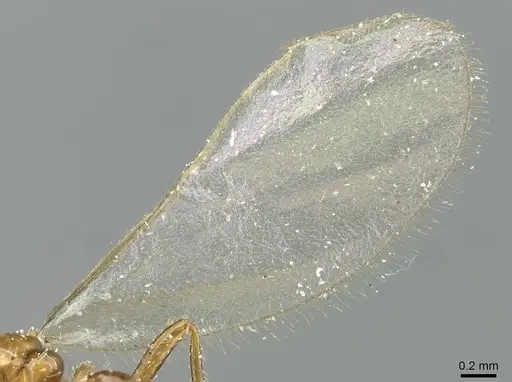
The queen's most striking feature is her extremely reduced, falcate (curved like a scythe) mandibles that end in needle-sharp points, this is where the species name 'acutidens' (sharp-toothed) comes from. She has 9- to 11-segmented antennae, unusually long for a Pheidole queen, and a single pair of wings without venation [1]. The gaster is globose (rounded) and the overall body is smooth and shining [1]. Males are even more bizarre, they're pupiform (caterpillar-shaped) with vestigial or absent mandibles and reduced wings (brachypterous) [1]. This morphology makes flight extremely limited, which explains why the species has such restricted distribution [1].
Frequently Asked Questions
Can I keep Pheidole acutidens as a pet ant?
No. This species cannot be kept in captivity. It is a workerless social parasite that requires a live host colony of Pheidole nitidula to survive. The queen cannot care for herself or her brood, she relies entirely on host workers. There are no documented cases of anyone successfully keeping this species, and it would require advanced research techniques to attempt.
How do I start a Pheidole acutidens colony?
You cannot. Unlike normal ants, P. acutidens queens cannot found colonies independently. They must be introduced into an established, queenless P. nitidula host colony, and even then acceptance is not guaranteed [1]. This level of colony manipulation has never been documented in captivity and would require specialized entomological knowledge.
What does Pheidole acutidens eat?
The parasitic queen does not forage for herself. She is fed trophallaxis (mouth-to-mouth food sharing) by host P. nitidula workers. The host workers also feed and care for all the parasite's brood [1]. The species has no independent feeding ability.
Does Pheidole acutidens have workers?
No. This is a workerless species, there are no workers of P. acutidens. The colony consists only of the parasitic queen and the host P. nitidula workers that care for her [1]. This is why it's called a 'permanent social parasite', the queen cannot survive without the host workers.
How do I find Pheidole acutidens in the wild?
This would be extremely difficult. The species has extremely limited dispersal ability due to the queen's enlarged mesosoma, lost hindwings, and reduced wing size in males [1]. It has only been collected using pitfall traps in specific locations in Argentina and southern Brazil [1][2]. Additionally, you would need to locate P. nitidula colonies and check for the presence of the parasite, which requires expert identification skills.
Is Pheidole acutidens dangerous?
No. This species poses no danger to humans. The queen has greatly reduced mandibles that are not functional for biting, and the species has no workers that could defend the colony. Even if you could keep it, there would be no sting risk.
What is the closest species I can keep instead?
If you're interested in Pheidole ants, many species in this genus are commonly kept by antkeepers. Pheidole are small ants known for their major workers (soldiers) with enlarged heads. Look into Pheidole pallidula, Pheidole nodus, or other commonly available Pheidole species. These are normal ants that can be kept in test tubes and formicariums, unlike the parasitic P. acutidens.
References

This caresheet is licensed under CC BY-SA 4.0 .
CASENT0913258
View on AntWeb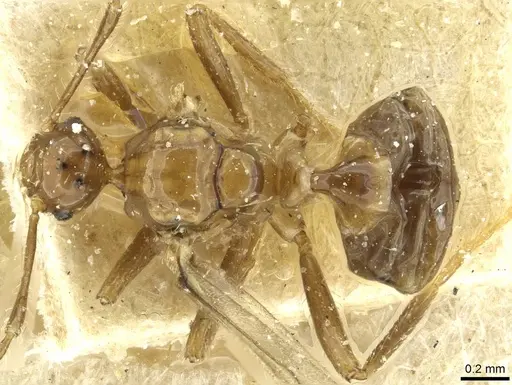
Literature
Loading...Loading products...