

Perissomyrmex fissus
- Scientific Name
- Perissomyrmex fissus
- Tribe
- Crematogastrini
- Subfamily
- Myrmicinae
- Author
- Xu & Wang, 2004
- Distribution
- Found in 1 countries
Perissomyrmex fissus Overview
Perissomyrmex fissus is an ant species of the genus Perissomyrmex. It is primarily documented in 1 countries , including China. Detailed taxonomic data and occurrence records can be further explored via authoritative databases such as AntWeb or the Global Biodiversity Information Facility (GBIF).
Perissomyrmex fissus
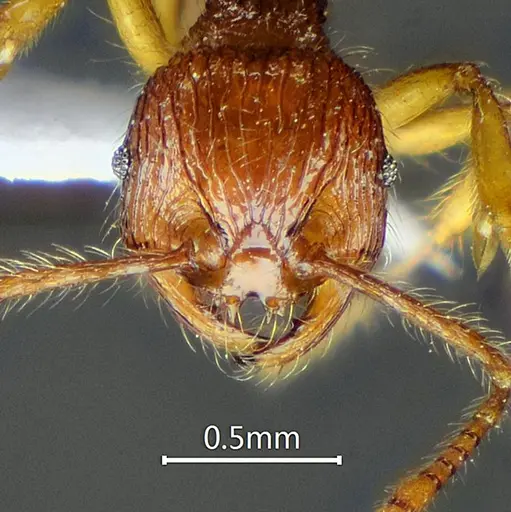
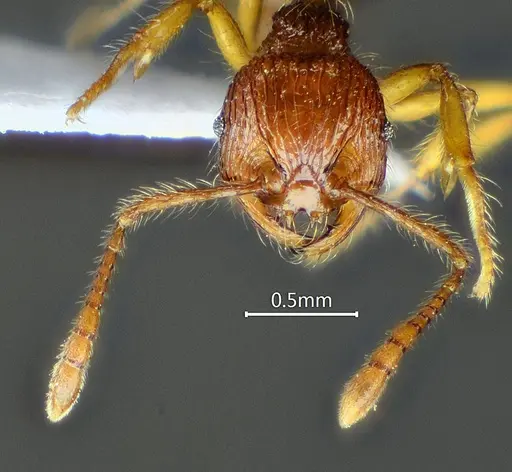
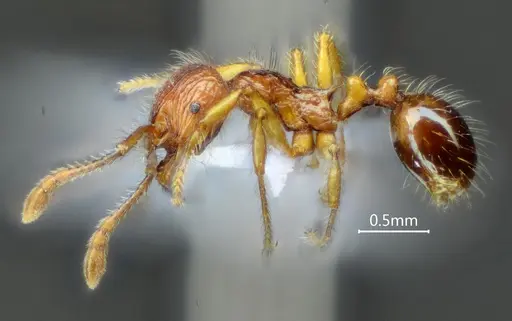
Perissomyrmex fissus is a tiny myrmicine ant from the Crematogastrini tribe, newly described from Yunnan Province, China in 2004. Workers measure just 3.1mm in total length, making them one of the smaller ant species in the hobby. They have a distinctive appearance with a nearly square head,9-segmented antennae (unusual for Myrmicinae), strong propodeal spines, and a striking black gaster contrasting with a brown head and alitrunk. The species was discovered at 2500m elevation in the Ailao Mountain Nature Reserve, living in a primary sub-alpine moist evergreen broadleaf forest. This is only the third known species in the genus Perissomyrmex, making it a rare and unusual addition to antkeeping.
Quick Summary
- Difficulty: Expert
- Origin & Habitat: Yunnan Province, China at 2500m elevation in primary sub-alpine moist evergreen broadleaf forest [1]. The high-altitude location suggests a cool, damp mountain habitat.
- Colony Type: Colony structure is completely unknown, this species was described from a single worker specimen in 2004 and has no published biological studies.
- Size & Growth:
- Queen: Unknown, only worker caste has been described [1]
- Worker: 3.1mm total length (TL 3.1mm, HL 0.83mm, HW 0.80mm) [1]
- Colony: Unknown, only one specimen has ever been collected
- Growth: Unknown
- Development: Unknown, no development data exists for this species (Development timeline cannot be estimated due to complete lack of biological data. Related Perissomyrmex species have not been studied.)
- Antkeeping:
- Temperature: Inferred from high-altitude habitat to prefer cool conditions, roughly 15-22°C. Start at room temperature (around 20°C) and observe colony activity. Avoid overheating.
- Humidity: Inferred from 'moist evergreen broadleaf forest' habitat, requires high humidity, likely 70-85%. Keep substrate consistently damp but not waterlogged.
- Diapause: Unknown, likely required given temperate mountain location at 2500m, but no direct studies exist.
- Nesting: Ground-nesting species collected from soil sample. In captivity, a test tube setup with moist substrate or a small acrylic/plaster nest with high humidity would be appropriate. Their tiny size means chambers should be small and tight.
- Behavior: Behavior is completely unstudied. Based on their small size and mountain habitat, they are likely docile and may be shy foragers. Their tiny 3.1mm size means escape prevention is critical, they can squeeze through standard mesh. Use fine mesh or fluon barriers. No information on sting potency exists, but given their size, any sting would be negligible.
- Common Issues: complete lack of biological data makes captive care extremely challenging, only known from a single specimen, no captive colonies exist in the hobby, hibernation requirements are unknown but likely needed given altitude, tiny size creates significant escape risk through standard barriers, no information on diet acceptance, feeding strategy is entirely speculative
Discovery and Rarity
Perissomyrmex fissus represents one of the rarest ants in the world to keep, having been described only in 2004 from a single worker specimen collected in China's Yunnan Province. The genus Perissomyrmex contains only four known species worldwide, making it one of the least studied ant groups in existence. This species was found at 2500m elevation in the Ailao Mountain Nature Reserve, in a primary sub-alpine moist evergreen broadleaf forest, a cool, damp mountain environment. No biological studies have ever been published on this species, meaning everything about their colony structure, diet, development, and behavior remains completely unknown. This is not a species for beginners or even intermediate antkeepers, it represents a genuine frontier in antkeeping where keepers may need to pioneer entirely new care approaches. [1]
Housing and Escape Prevention
Given their tiny 3.1mm worker size, Perissomyrmex fissus presents extreme escape prevention challenges. Standard ant keeping mesh will not contain them, you must use fine mesh (at least 0.5mm or smaller) or apply fluon barriers to all enclosure edges. A test tube setup with a small water reservoir works well for founding colonies, as this mimics their natural ground-nesting behavior. The test tube should be kept in a dark location to reduce stress, as these are likely subterranean or cryptic foragers. For established colonies, a small acrylic nest with tight chambers scaled to their tiny size would be appropriate. The nest should maintain consistently high humidity to match their moist forest habitat. [1]
Temperature and Humidity Management
The high-altitude origin of this species (2500m in Yunnan) strongly suggests they prefer cool, stable conditions. Avoid any heating elements unless the colony shows clear signs of being too cold (inactivity, failure to forage). Target room temperature around 18-22°C as a starting point, then adjust based on colony behavior. Humidity should be kept high, think damp forest floor rather than dry conditions. The substrate should feel consistently moist but never waterlogged. Provide a gradient by placing the water reservoir at one end of the test tube so ants can choose their preferred moisture level. Given the complete lack of data, these are educated guesses based on habitat rather than proven requirements. [1]
Feeding Strategy
No published information exists on what Perissomyrmex fissus eats in the wild or in captivity. Their small size and membership in the Myrmicinae suggests they likely forage for tiny prey items and may tend aphids for honeydew, but this is entirely speculative. For a newly acquired colony, start with the safest options: tiny live prey like springtails or fruit flies, and a sugar source like honey or sugar water offered on a cotton wick. Observe carefully for any acceptance. Given their mountain forest origin, they may be predaceous on small invertebrates. Do not overfeed, remove any uneaten prey after 24-48 hours to prevent mold. This species should be considered experimental in terms of diet, and keepers may need to discover their preferences through careful trial and error.
Legal and Ethical Considerations
Perissomyrmex fissus has never been exported from China for the antkeeping hobby, and no captive breeding populations exist anywhere in the world. Any specimens would need to be collected from the wild in Yunnan Province, which raises significant concerns. The species was described from a single specimen collected in 2003,suggesting wild populations are extremely small or localized. Collecting from the type locality could potentially harm or even eliminate the only known population. Additionally, China's export regulations on native insects are strict, and permits for scientific collection are typically required. This species should be considered a candidate for conservation rather than collection, there are likely fewer than a dozen known specimens of this ant in existence. [1]
Frequently Asked Questions
Can I keep Perissomyrmex fissus as a pet ant?
No, this species is essentially unavailable in the antkeeping hobby. It was described in 2004 from a single specimen, and no captive breeding populations exist anywhere in the world. Any collection would require access to the Ailao Mountain Nature Reserve in Yunnan, China, which raises serious conservation concerns given how rare this species appears to be.
How big do Perissomyrmex fissus colonies get?
Unknown, colony size has never been documented. Only a single worker specimen has ever been collected. Related species in the genus suggest colonies are likely small (under 100 workers) based on the cryptic nature of the genus, but this is purely speculative.
What do Perissomyrmex fissus eat?
Diet is completely unconfirmed. Based on their small size and Myrmicinae classification, they likely eat tiny invertebrates and may collect honeydew from aphids. In captivity, you could try offering springtails, fruit flies, and sugar water, but acceptance is entirely speculative.
Do Perissomyrmex fissus ants sting?
Unknown, sting potency has never been studied. Given their tiny 3.1mm size, any sting would likely be negligible to humans, similar to other small Myrmicinae. However, no documented cases exist.
What temperature do Perissomyrmex fissus need?
Inferred from their high-altitude habitat (2500m in Yunnan) to prefer cool conditions around 18-22°C. This is an estimate based on habitat, not proven requirements. Avoid heating unless the colony is clearly struggling with cold.
Do Perissomyrmex fissus need hibernation?
Likely yes given their temperate mountain origin at 2500m elevation, but this is unconfirmed. The sub-alpine forest habitat experiences cold winters, so a winter rest period is probable. However, no studies exist on their overwintering behavior.
How long does it take for Perissomyrmex fissus to develop from egg to worker?
Unknown, no development data exists for this or any Perissomyrmex species. This is one of many aspects of their biology that remains completely unstudied.
Are Perissomyrmex fissus good for beginners?
Absolutely not. This is an expert-only species that has never been kept in captivity. There is no care information, no established protocols, and no captive breeding stock. The species is so rare that even most ant researchers have never seen it. Consider starting with well-documented species like Lasius niger, Camponotus floridanus, or Messor barbarus instead.
Can I keep multiple Perissomyrmex fissus queens together?
Unknown, colony structure has never been studied. The genus Perissomyrmex shows no documented colony structure data. Without any information on whether they are single-queen or multi-queen species, combining unrelated queens would be extremely risky.
Where does Perissomyrmex fissus live in the wild?
Only known from the Ailao Mountain Nature Reserve in Yunnan Province, China, at 2500m elevation. The single known specimen was collected in March 2003 from a ground sample in primary sub-alpine moist evergreen broadleaf forest. This is a cool, damp, high-altitude mountain environment.
References

This caresheet is licensed under CC BY-SA 4.0 .
ANTWEB1060566
View on AntWeb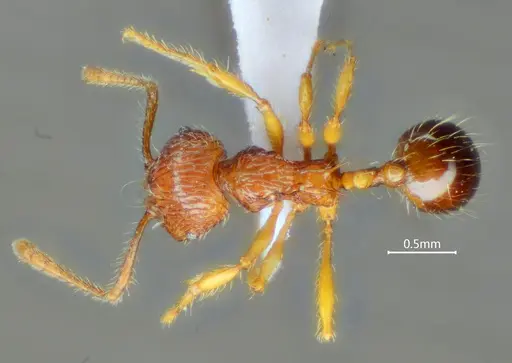
Literature
Loading...Loading products...