

Pachycondyla purpurascens
- Scientific Name
- Pachycondyla purpurascens
- Tribe
- Ponerini
- Subfamily
- Ponerinae
- Author
- Forel, 1899
- Distribution
- Found in 4 countries
Pachycondyla purpurascens Overview
Pachycondyla purpurascens is an ant species of the genus Pachycondyla. It is primarily documented in 4 countries , including Costa Rica, Guatemala, Honduras. Detailed taxonomic data and occurrence records can be further explored via authoritative databases such as AntWeb or the Global Biodiversity Information Facility (GBIF).
Pachycondyla purpurascens
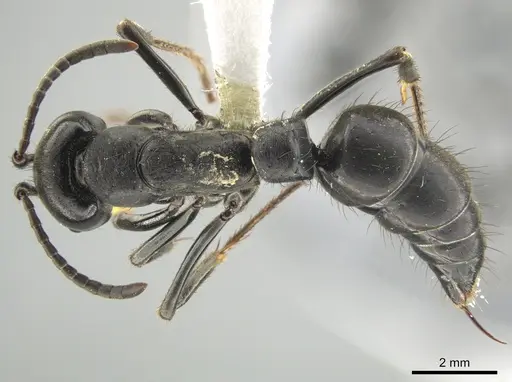
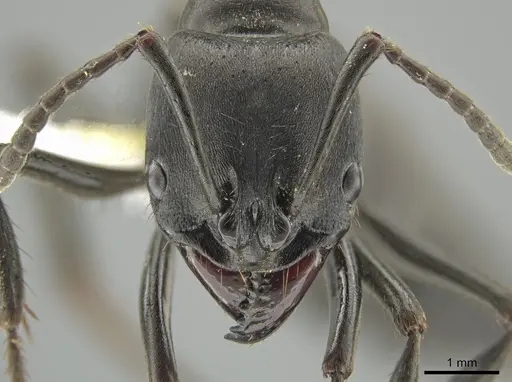
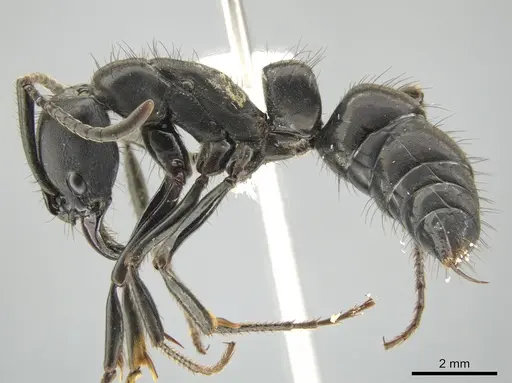
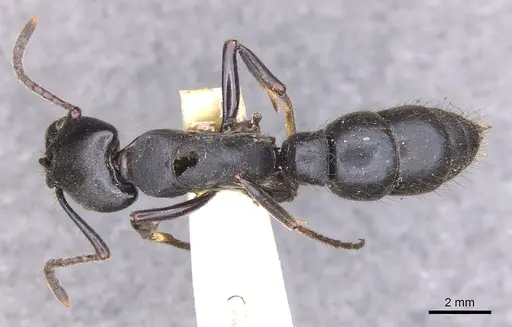
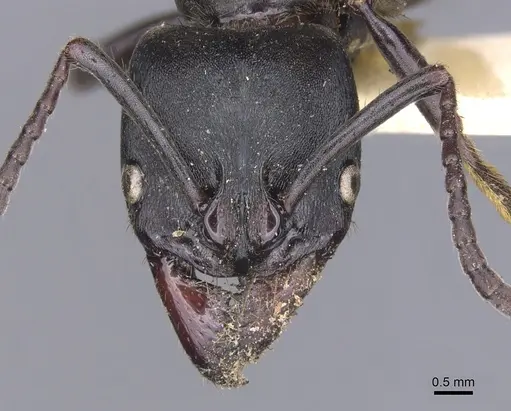
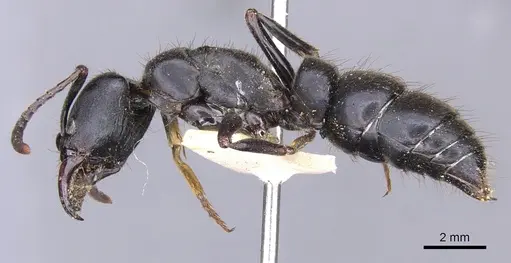
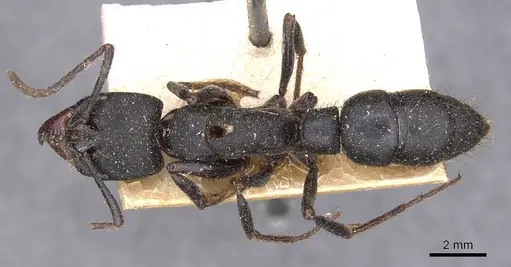
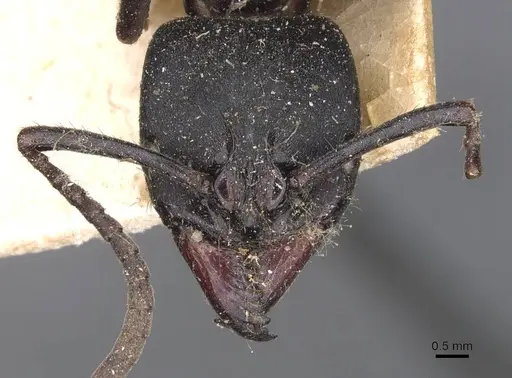
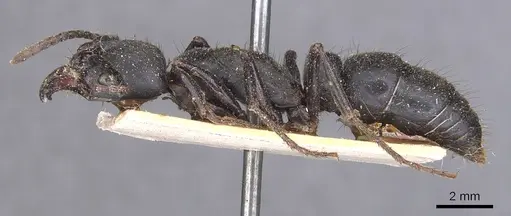
Pachycondyla purpurascens is a large, striking ant species native to the Neotropical region, ranging from Costa Rica through Panama, Colombia, Peru, Venezuela, and Bolivia [1][2]. Workers reach an impressive 16-17mm in length, making them one of the larger Ponerine ants you'll encounter [3]. They are predominantly black with beautiful dark purple metallic reflections on their integument, a feature that inspired their scientific name (from the Latin 'purpureus' meaning purple) [3]. Their mandibles have approximately nine teeth, and they possess a distinctly elongated clypeus that helps distinguish them from similar species like Pachycondyla impressa and Pachycondyla striata [4].
These ants are confirmed predators, researchers observed a worker capturing and carrying a worker from the genus Gnamptogenys, demonstrating their predatory nature [5]. They nest in the ground, typically in steep banks along trails or in natural cavities, with one colony found in a cave made of guano fragments in Trinidad [4]. This combination of large size, striking appearance, and active predation makes them an interesting species for experienced antkeepers.
Quick Summary
- Difficulty: Medium
- Origin & Habitat: Wet mountain forest and mountain hardwood cloud forest in Central and South America, at elevations of 800-1500 meters [4]. Found in Costa Rica, Panama, Colombia, Peru, Venezuela, Trinidad, and Bolivia [1][2].
- Colony Type: Likely monogyne (single queen) based on typical Pachycondyla patterns, though colony structure has not been specifically documented for this species.
- Colony: Monogyne
- Founding: Semi-claustral
- Size & Growth:
- Queen: Approximately 3.2mm head length (queen described by Mackay & Mackay 2010), estimated 14-16mm total length
- Worker: 16-17mm total length [3][4]
- Colony: Colony size data is limited, but related Pachycondyla species typically reach several hundred workers
- Growth: Moderate, Ponerine development is typically slower than many Myrmicines
- Development: Estimated 8-12 weeks at optimal temperature based on typical Ponerinae development patterns (Development times are not specifically documented for this species, estimates based on genus-level data for related Pachycondyla)
- Antkeeping:
- Temperature: Keep around 22-26°C. Being a cloud forest species from 800-1500m elevation, they prefer moderate temperatures with stable humidity. Avoid overheating, a gentle gradient with a heating cable on one side of the nest works well [4].
- Humidity: High humidity preferred, think damp forest floor conditions. Keep the nest substrate consistently moist but not waterlogged. Provide a water tube for drinking access.
- Diapause: Unlikely, as a tropical/cloud forest species from consistent elevations, they probably do not require a true hibernation diapause. However, a slight reduction in temperature during winter months may be appropriate.
- Nesting: Ground-nesting species that naturally excavates nests in soil banks or uses pre-existing cavities [4]. In captivity, a naturalistic setup with soil or a Y-tong/plaster nest with moist substrate works well. They prefer tight, enclosed spaces rather than open areas.
- Behavior: These are active, predatory ants with a functional stinger. Workers forage individually and can be aggressive when defending the colony. They are ground-nesting and likely nocturnal or crepuscular in their natural activity patterns. Their large size and potent sting make escape prevention less critical than for tiny ants, but they are still capable climbers, standard barrier methods are recommended. The sting is functional and can penetrate human skin, causing moderate pain.
- Common Issues: Predatory nature means they need live prey, cannot survive on sugar water alone like many formicines, Slow colony growth compared to common hobby species may frustrate beginners, High humidity requirements can lead to mold if ventilation is inadequate, Wild-caught colonies may be difficult to establish in captivity, Queens may be semi-claustral and require hunting during founding, more complex than claustral species
Housing and Nest Setup
Pachycondyla purpurascens is a ground-nesting species that naturally excavates nests in soil banks or occupies pre-existing cavities in rotting wood or under stones [4]. For captivity, a naturalistic setup with a deep soil layer (at least 5-7cm) works well, allowing them to excavate their own tunnels. Alternatively, a Y-tong (AAC) or plaster nest with moist substrate provides good humidity control. These ants prefer tight, enclosed chambers rather than open spaces, avoid large, airy formicaria. A water tube should always be available, and the nest substrate should remain consistently damp but never waterlogged. Because they come from cloud forest environments with stable, high humidity, maintaining proper moisture levels is critical.
Feeding and Diet
This species is confirmed predatory, researchers observed a worker capturing and carrying a Gnamptogenys ant worker, demonstrating active hunting behavior [5]. In captivity, their primary food should be live prey items appropriate to their size: mealworms, small crickets, roach nymphs, and other arthropods. They are large enough to take down prey significantly larger than what tiny ants can handle. Unlike many ant species, they cannot survive on sugar water or honey alone, protein from prey is essential for brood development. Offer prey items 2-3 times per week, removing any uneaten prey within 24 hours to prevent mold. Occasional sugar water can be offered as a supplement, but protein remains the primary dietary requirement.
Temperature and Humidity
Being a cloud forest species from elevations of 800-1500 meters, Pachycondyla purpurascens prefers moderate, stable temperatures around 22-26°C [4]. Avoid high temperatures, they are not heat-tolerant and may become sluggish or die in overly warm conditions. A heating cable placed on one side of the nest can create a gentle temperature gradient, allowing the ants to self-regulate. Humidity should be high, aim for consistently moist nest substrate that feels damp to the touch. This species is not tolerant of dry conditions. Poor ventilation combined with high humidity can lead to mold problems, so ensure adequate airflow while maintaining moisture. Room temperature (around 22-24°C) is often suitable without additional heating in most homes.
Behavior and Temperament
These are active, defensive ants with a functional stinger capable of penetrating human skin. Workers forage individually rather than in groups, searching for prey across the forest floor. When threatened, they can deliver a painful sting, handle with care. They are not aggressive toward humans unless provoked, but will vigorously defend their nest. Their large size (16-17mm workers) makes them impressive display ants, and their dark purple coloration adds visual appeal. They are primarily nocturnal or crepuscular, becoming more active during dim light conditions. Colony size remains moderate, expect several hundred workers at maturity rather than the thousands seen in some Myrmicine species. [3][4]
Colony Founding
The founding behavior of Pachycondyla purpurascens has not been directly documented in scientific literature. However, based on typical Pachycondyla genus patterns, queens are likely semi-claustral, meaning they must leave the nest to hunt for food during the founding stage, unlike claustral species that survive entirely on stored fat reserves [5]. This makes founding more challenging in captivity than for claustral ants. Dealate (wingless, mated) females have been collected in February (Costa Rica) and April (Colombia), suggesting nuptial flights occur during the dry-to-wet season transition in their native range [4]. If you obtain a founding queen, provide her with a moist founding chamber and offer small live prey items she can subdue.
Frequently Asked Questions
How long does it take for Pachycondyla purpurascens to produce first workers?
Egg-to-worker development likely takes 8-12 weeks at optimal temperature (around 24°C). This is an estimate based on typical Pachycondyla development patterns, as specific timing has not been documented for this species.
Can I keep Pachycondyla purpurascens in a test tube?
Test tubes are not ideal for this species. They are large, ground-nesting ants that prefer to excavate their own tunnels in soil. A naturalistic setup with deep substrate or a Y-tong/plaster nest works much better.
Do Pachycondyla purpurascens ants sting?
Yes, they have a functional stinger and can deliver a painful sting. These are among the larger ants in the hobby, and their sting is capable of penetrating human skin. Handle with care and use standard escape prevention.
What do Pachycondyla purpurascens eat?
They are confirmed predators that hunt live prey. Feed them appropriately sized insects like mealworms, small crickets, and roach nymphs. Sugar water can be offered as a supplement but should not replace protein-rich prey.
Are Pachycondyla purpurascens good for beginners?
No, this is a medium-difficulty species. Their semi-claustral founding (requiring hunting), high humidity needs, and predatory diet make them more challenging than common claustral species like Lasius or Camponotus.
How big do Pachycondyla purpurascens colonies get?
Colony size is not well documented, but related Pachycondyla species typically reach several hundred workers. They are not supercolony formers like some invasive species.
Do Pachycondyla purpurascens need hibernation?
Probably not. As a tropical/cloud forest species from consistent elevations, they likely do not require a true diapause. A slight temperature reduction during winter months may be appropriate, but full hibernation is not necessary.
When should I move Pachycondyla purpurascens to a formicarium?
Wait until the colony has at least 20-30 workers and is actively foraging. This species prefers to excavate, so a naturalistic setup with diggable substrate is ideal once the colony is established.
Can I keep multiple Pachycondyla purpurascens queens together?
Not recommended. While colony structure is not fully documented, Pachycondyla species are typically monogyne (single queen). Combining unrelated queens has not been studied and could result in fighting.
Why is my Pachycondyla purpurascens colony dying?
Common causes include: too dry conditions (they need high humidity), lack of live prey (they cannot survive on sugar alone), temperatures that are too high or too low, and stress from wild-caught origins. Ensure proper humidity, provide varied live prey, and maintain stable moderate temperatures.
What temperature range is best for Pachycondyla purpurascens?
Keep them around 22-26°C. They are from cloud forests and prefer moderate, stable temperatures. Avoid overheating, they are not heat tolerant and may become sluggish or die in warm conditions.
Is Pachycondyla purpurascens invasive anywhere?
No, this is a native Neotropical species with no documented invasive populations. Their range is limited to Central and South American countries where they occur naturally.
References

This caresheet is licensed under CC BY-SA 4.0 .
Literature
Loading...Loading products...