

Oxyepoecus daguerrei
- Scientific Name
- Oxyepoecus daguerrei
- Tribe
- Solenopsidini
- Subfamily
- Myrmicinae
- Author
- Santschi, 1933
- Distribution
- Found in 1 countries
Oxyepoecus daguerrei Overview
Oxyepoecus daguerrei is an ant species of the genus Oxyepoecus. It is primarily documented in 1 countries , including Argentina. Detailed taxonomic data and occurrence records can be further explored via authoritative databases such as AntWeb or the Global Biodiversity Information Facility (GBIF).
Oxyepoecus daguerrei
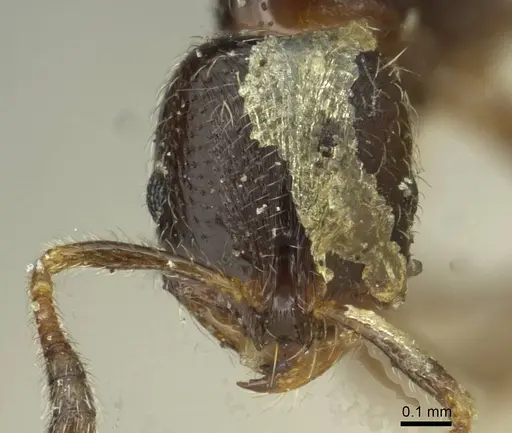
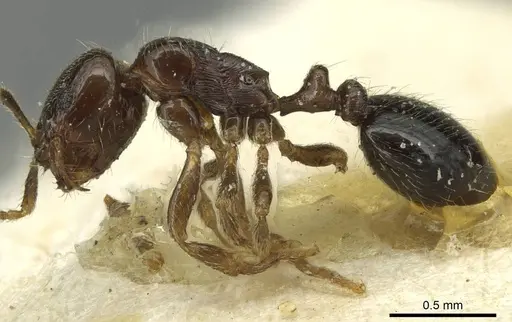
Oxyepoecus daguerrei is an extremely rare Neotropical ant species known only from three worker specimens collected in Rosas, Buenos Aires Province, Argentina [1]. Workers are tiny at just 2.6mm total length, with a dark fuscous brown to black coloration and reddish-brown mandibles and legs [1]. The species is distinguished by its unique straight costulae (ridges) on the frontal carinae that extend to the vertexal margin but do not reach the compound eyes laterally [1]. This ant belongs to the Solenopsidini tribe, making it a relative of fire ants (Solenopsis), though much smaller and far less studied. Nothing is known about this species' biology, colony structure, or behavior in the wild, it remains one of the most poorly documented ant species in the Americas.
Quick Summary
- Difficulty: Expert
- Origin & Habitat: Only known from Rosas, Buenos Aires Province, Argentina (35°57'S,58°56'W) [1][2]. The region has a temperate to subtropical climate with distinct seasons. No specific habitat information exists beyond collection data.
- Colony Type: Unknown, no queens, males, or established colonies have ever been collected [3]. The colony structure (single-queen vs multi-queen) is completely unconfirmed.
- Size & Growth:
- Queen: Unknown, no queens have been collected [3]
- Worker: 2.6mm total length (workers measured at 2.60mm) [1]
- Colony: Unknown, only three worker specimens exist [1]
- Growth: Unknown
- Development: Unknown, no development data exists for this species (No observations of founding, brood, or colony development have ever been documented)
- Antkeeping:
- Temperature: Unknown, no captive observations exist. Based on the Buenos Aires location (temperate subtropical), a range of 18-26°C would be a reasonable starting point, but this is entirely speculative.
- Humidity: Unknown, no habitat data available. Standard Myrmicinae humidity levels (moderate to high) would be a cautious starting point.
- Diapause: Unknown, no seasonal data exists. Buenos Aires experiences winter temperatures that could suggest a diapause requirement, but this is unconfirmed.
- Nesting: Unknown, no natural nesting observations exist. The related Solenopsidini typically nest in soil or under stones.
- Behavior: Completely unobserved. No behavioral data exists for this species in scientific literature [3]. Any descriptions of temperament, foraging, or aggression would be pure speculation.
- Common Issues: This species has never been kept in captivity, no husbandry information exists, Only three specimens have ever been collected, making wild colonies essentially unobservable, No queens or males have been described, so captive breeding would be impossible even if found, The species may be extremely rare or potentially extinct in the wild, No diet, temperature preferences, or nesting requirements are known
Why This Species Is Not Recommended for Keepers
Oxyepoecus daguerrei is one of the least known ant species in the world. Only three worker specimens have ever been collected, all from the same locality in Argentina in the early 1900s [1][2]. No queens, males, or established colonies have ever been observed or described [3]. There is zero scientific literature on this species' biology, behavior, diet, nesting preferences, temperature requirements, or any other aspect of its care. Even the most basic questions, what do they eat? how do they found colonies? do they sting?, cannot be answered. This is not a species that can be responsibly kept in captivity because no specimens exist in the hobby, no wild colonies have been found to study, and the species may be extremely rare or potentially extinct.
Taxonomic Background
This species was originally described as Oxyepoecus daguerrei by Santschi in 1933,then transferred to the genus Oxyepoecus by Ettershank in 1966 [2]. The genus Oxyepoecus belongs to the Solenopsidini tribe within the Myrmicinae subfamily, making it related to fire ants (Solenopsis) and thief ants [1]. The species was revised taxonomically by Albuquerque and Brandão in 2009,who provided detailed measurements and morphological descriptions [1]. The lectotype (designated by Kempf in 1974) is housed in the Museu de Zoologia da Universidade de São Paulo, Brazil [2]. The distinctive worker identification features include straight costulae on the frontal carinae that extend to the vertexal margin but do not reach the compound eyes laterally, and a relatively narrow postpetiole compared to other Oxyepoecus species [1].
What We Know About the Worker
From the three known specimens, we have detailed morphological measurements: workers measure 2.6mm total length with a head length of 0.63mm and head width of 0.52mm (cephalic index of 83) [1]. The body is fuscous brown to black, with the antennal scapes, thorax, and pedicelar segments slightly lighter, and the mandibles and legs reddish brown [1]. The integument is mostly smooth and shining, with longitudinal costulae (ridges) on the frontal carinae extending to the vertexal margin [1]. The compound eyes are small, with fewer than 25 ommatidia (approximately 20 total) [1]. The antennal scape fails to reach the vertexal margin by a distance equal to its maximum width [1]. Workers have abundant erect to suberect hairs of variable length on the thorax, pedicelar segments, and gaster [1].
Distribution and Rarity
This species is known from only a single locality: Rosas, Buenos Aires Province, Argentina (35°57'S,58°56'W) [1][2]. All three type specimens were collected by Juan B. Daguerre, with collection numbers 1904 and 666,sometime in the early 1900s [2]. One worker (collection #1904) was originally mounted on the same pin as Solenopsis metanotalis, and another worker (collection #666) with Solenopsis tetracantha Emery, suggesting to Santschi that they might have been living in a symbiotic relationship [1]. This is the only known locality for the species, and no additional specimens have been collected despite over a century of entomological work in the region. The species may be extremely localized, seasonally active only at certain times, or potentially extinct.
Frequently Asked Questions
Can I keep Oxyepoecus daguerrei as a pet ant?
No. This species has never been kept in captivity and no specimens are available. Only three worker specimens have ever been collected, all in the early 1900s in Argentina. There is zero information about how to care for this ant, and no established colonies exist in the antkeeping hobby or scientific collections that could be used to start a captive breeding program.
Where can I find Oxyepoecus daguerrei colonies?
This species has only been recorded from Rosas, Buenos Aires Province, Argentina. However, no colonies have ever been found, only three isolated workers were collected over a century ago. The species may be extremely rare, localized to microhabitats not easily sampled, or potentially extinct.
What do Oxyepoecus daguerrei ants eat?
Unknown. No observations of feeding behavior or gut contents exist for this species. As a member of the Solenopsidini tribe, they may be generalist feeders or predators like their Solenopsis relatives, but this is entirely speculative.
How big do Oxyepoecus daguerrei colonies get?
Unknown. No colony has ever been observed. Related Solenopsis species can have colonies ranging from dozens to hundreds of thousands of workers, but there is no data for this species.
What temperature and humidity do Oxyepoecus daguerrei need?
Unknown. No captive observations exist. Based on the Buenos Aires location (temperate subtropical with seasonal variation), they might tolerate temperatures from 15-28°C and moderate humidity, but this is pure speculation and should not be used for husbandry.
Do Oxyepoecus daguerrei queens have wings?
Unknown. No queens have ever been collected or described [3]. The species' reproductive biology is completely undocumented.
Is Oxyepoecus daguerrei endangered?
Unknown. The IUCN Red List status has not been assessed. With only three specimens known from a single locality over 100 years ago, the species could be extremely rare, locally extinct, or simply undiscovered due to cryptic behavior or seasonal activity patterns.
When do Oxyepoecus daguerrei have nuptial flights?
Unknown. No males or reproductive alates have ever been collected. The timing and behavior of nuptial flights is completely undocumented.
Are there any close relatives of Oxyepoecus daguerrei that are kept as pets?
Yes. Other Solenopsidini genera like Solenopsis (fire ants and thief ants) and Monomorium (smaller ants) are commonly kept. However, Oxyepoecus daguerrei specifically has never been in the hobby. If you're interested in small Solenopsidini, consider starting with better-documented species like Solenopsis fugax or Monomorium pharaonis.
References

This caresheet is licensed under CC BY-SA 4.0 .
CASENT0913870
View on AntWeb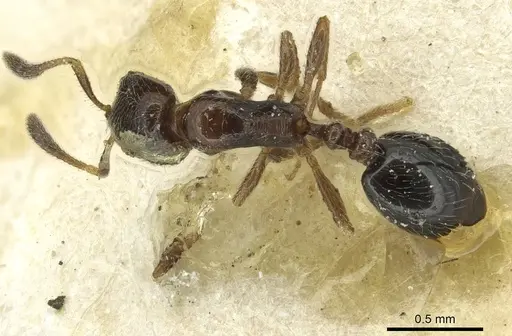
Literature
Loading...Loading products...