

Overbeckia papuana
- Scientific Name
- Overbeckia papuana
- Tribe
- Camponotini
- Subfamily
- Formicinae
- Author
- Klimeš, 2022
- Distribution
- Found in 1 countries
Overbeckia papuana Overview
Overbeckia papuana is an ant species of the genus Overbeckia. It is primarily documented in 1 countries , including Australia. Detailed taxonomic data and occurrence records can be further explored via authoritative databases such as AntWeb or the Global Biodiversity Information Facility (GBIF).
Overbeckia papuana
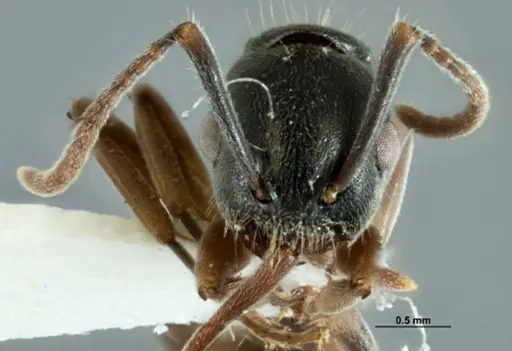
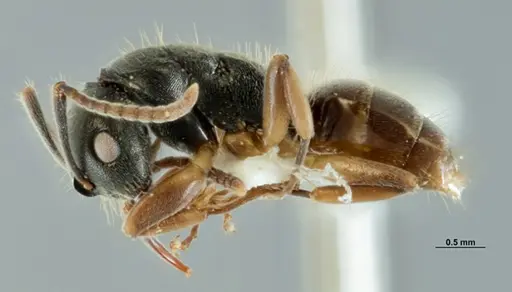
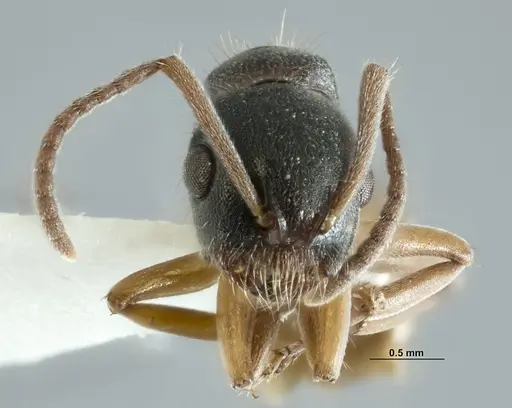
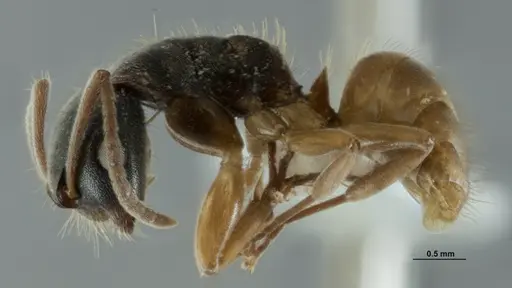
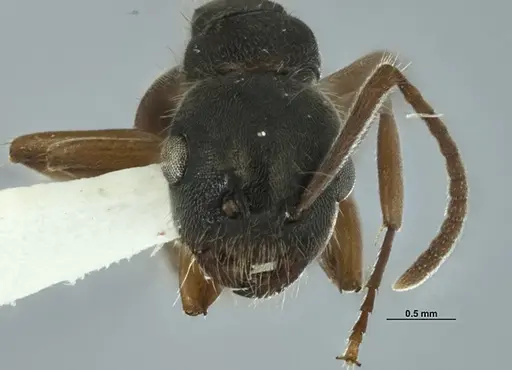
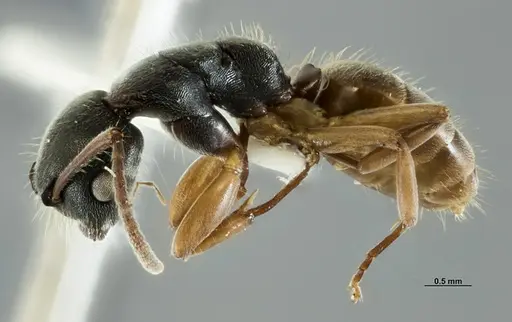
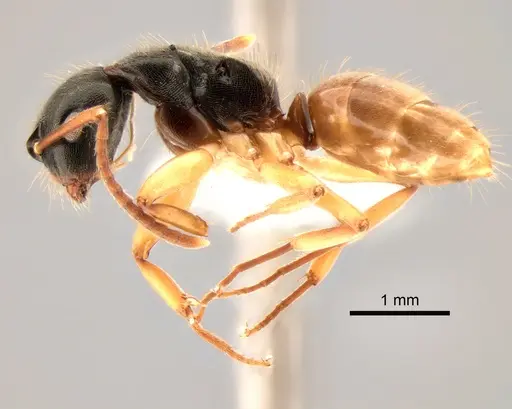
Overbeckia papuana is a small, hairy ant species from the Camponotini tribe, recently described in 2022 from Papua New Guinea and also found in Queensland, Australia. Workers measure 1.5-2mm in total body length, with a distinctive fuzzy appearance due to erect hairs on the head, thorax, petiole, and abdomen. The species was previously misidentified as Camponotus janeti until genetic and morphological analysis revealed it as a new genus entirely. Colonies are small, with fewer than 100 workers, and feature a unique wingless queen (ergatoid) rather than the typical winged reproductive found in most ant species. This arboreal ant nests high in dead vines and branches in tropical rainforest canopies.
Quick Summary
- Difficulty: Unknown, no captive breeding records exist
- Origin & Habitat: Papua New Guinea and Queensland, Australia in tropical rainforest secondary forests. Nests in dead vines (lianas) high in trees, at 16.4m height on Trichospermum pleiostigma trees [1].
- Colony Type: Small colonies with a single wingless queen (ergatoid gyne), fewer than 100 workers [1]. Colony structure appears to be monogyne with ergatoid replacement reproductives.
- Colony: Monogyne
- Size & Growth:
- Queen: 1.56mm head length,2.51mm Weber's length [1], wingless ergatoid queen
- Worker: 1.04-1.41mm head length,1.52-2.02mm Weber's length [1]
- Colony: Less than 100 workers [1]
- Growth: Unknown, no captive data available
- Development: Unknown, no captive breeding records exist (Development timeline has not been studied. Related Camponotini species typically develop in 6-10 weeks at optimal temperatures.)
- Antkeeping:
- Temperature: Likely 24-27°C based on tropical rainforest origin. Provide a gentle gradient and monitor colony activity.
- Humidity: High humidity required, think tropical canopy conditions. Keep nest substrate consistently moist but not waterlogged.
- Diapause: Unlikely, being a tropical species from PNG lowlands, they probably do not require hibernation. Maintain warm conditions year-round.
- Nesting: Arboreal specialist, in captivity they would likely do best in a vertical or naturalistic setup that allows for elevated nesting. Y-tong nests with narrow chambers or a cork bark/branch setup may work. Avoid standard horizontal soil nests.
- Behavior: Behavior is unstudied in captivity. Based on genus placement in Camponotini, they are likely generalist foragers that hunt small prey and may tend honeydew-producing insects, though no trophobionts were observed in the one documented wild nest. Their small size and arboreal lifestyle suggest they are active and agile. Escape prevention should be excellent given their tiny size, they can easily slip through standard test tube barriers.
- Common Issues: no captive breeding records exist, this species has never been kept in captivity, tiny size makes escape prevention critical, use fine mesh and tight-fitting barriers, small colony size means any losses have significant impact on the colony, tropical humidity requirements may be challenging to maintain consistently, ergatoid queen (wingless) may have different founding behavior than typical winged queens
Species Discovery and Identification
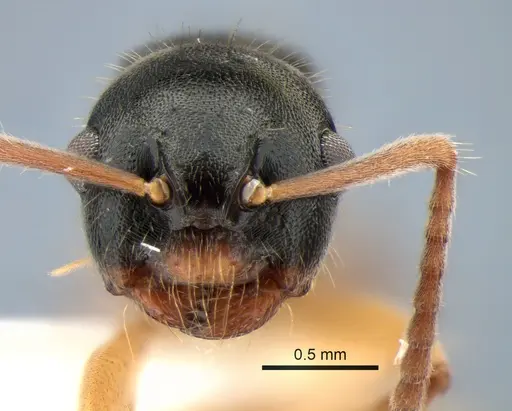
Overbeckia papuana was only described as a distinct species in 2022,making it one of the newest ant species to enter the scientific literature. For years, specimens from Papua New Guinea and Australia were misidentified as Camponotus janeti, a completely different genus. The confusion persisted until genetic analysis revealed these ants belonged to an entirely new genus, Overbeckia, which is now recognized as the sister group to the massive Camponotus genus. The species name 'papuana' honors the people of Papua New Guinea where it was discovered. The most distinctive features are the erect hairs covering the head, thorax, petiole, and abdomen, plus the unique shape of the frontal carinae (the ridges between the antennae) which approach each other very closely at the front of the head [1].
Natural Nesting Behavior
In the wild, Overbeckia papuana is strictly arboreal, meaning it nests in elevated locations in trees rather than on the ground. The only documented colony was found 16.4 meters high in a dead vine (liana) wrapped around a Trichospermum pleiostigma tree in secondary forest. This is quite different from most ant species that nest in soil or rotting wood near ground level. The nest chamber contained fewer than 100 workers, one wingless queen (ergatoid gyne), three males, and developing brood in cocoons. Notably, no honeydew-producing insects (trophobionts) were found in the nest chamber, suggesting this species may not tend aphids or scale insects like some related ants do [1]. The small colony size and elevated nesting suggest this species prefers stable, humid microclimates in the forest canopy.
The Wingless Ergatoid Queen
One of the most unusual features of Overbeckia papuana is its wingless queen, known as an ergatoid. In most ant species, queens have wings and fly away to start new colonies after mating. Ergatoid queens are born without wings and typically remain in or near the nest where they hatched. This is a rare trait in most ant genera but appears to be the normal reproductive form in Overbeckia. The documented colony had a single ergatoid gyne, suggesting monogyne (single-queen) colony structure. Ergatoid queens often serve as replacement reproductives, if the primary queen dies, an ergatoid can take over egg-laying duties without the colony needing to produce new winged queens. This may be an adaptation to the stable, high-canopy environment where dispersal opportunities are limited [1].
Housing and Captive Care
Since this species has never been kept in captivity, all care recommendations are speculative and based on related Camponotini ants and the species' natural history. The arboreal nesting preference suggests they would do best in a setup that allows for elevated, vertical nesting, perhaps a cork bark or branch-based naturalistic formicarium, or a Y-tong nest oriented vertically. The tropical rainforest origin indicates they need warm, humid conditions, aim for 24-27°C with high humidity around 70-80%. The tiny worker size (under 2mm) means escape prevention must be excellent, standard test tube barriers may not be adequate. For feeding, offer small live prey like fruit flies, springtails, or other micro-arthropods. Sugar water or honey may be accepted but should not be relied upon given no trophobionts were observed in wild nests. Start with very small prey items and observe acceptance. [1]
Geographic Distribution
Overbeckia papuana is known from two geographically separated populations: Papua New Guinea (the type locality near Wanang village in Madang Province) and Queensland, Australia. In PNG, the species has been recorded from 5 sites, while Australian populations are known from 3 sites in Queensland. Interestingly, there appears to be a size difference between populations, Australian specimens tend to be slightly larger than PNG specimens, though genetic analysis confirms they are the same species. The PNG populations occur at low elevation in tropical rainforest, while the Queensland populations are in similar subtropical forest habitats. This distribution across the Torres Strait suggests the species has been established in both regions for a significant time, though it was only scientifically recognized recently [1].
Frequently Asked Questions
Can I keep Overbeckia papuana as a pet ant?
This species has never been documented in the antkeeping hobby. It was only described in 2022 and is only known from a handful of wild colonies. There are no captive breeding records, so keeping this species would be entirely experimental. Unless you obtain a colony from an established breeder, wild collection would require permits and is not recommended.
How big do Overbeckia papuana colonies get?
The only documented wild colony had fewer than 100 workers. This appears to be the natural colony size for this species, they are small colonies compared to most ants. Do not expect the large colonies typical of species like Camponotus or Formica.
What do Overbeckia papuana ants eat?
Their diet is unstudied in captivity. Based on related Camponotini ants, they likely accept small live prey (micro-arthropods, fruit flies, springtails) and may occasionally feed on nectar or honeydew. No trophobionts were found in their wild nest, so they may not be regular honeydew feeders. Offer small live prey as a primary food source.
What temperature do Overbeckia papuana ants need?
Being a tropical species from Papua New Guinea and Queensland, they likely require warm conditions around 24-27°C. Provide a temperature gradient so the ants can choose their preferred spot. Avoid temperatures below 20°C.
Do Overbeckia papuana need hibernation?
No, hibernation is unlikely. As a tropical lowland species from PNG, they probably remain active year-round in warm, humid conditions. Maintain stable temperatures throughout the year.
How long does it take for Overbeckia papuana to develop from egg to worker?
This has never been studied. There are no captive breeding records for this species. Related Camponotini species typically take 6-10 weeks for complete development, but this is just an estimate with no data specific to O. papuana.
What makes Overbeckia papuana different from other ants?
Several things set this species apart: it was only described in 2022 after being misidentified for decades, it has a wingless ergatoid queen instead of a typical winged queen, it nests high in trees rather than on the ground, and it belongs to an entirely new genus (Overbeckia) that is the sister group to Camponotus. The very hairy body and unique head structure also distinguish it.
Are Overbeckia papuana good for beginners?
No. This species has never been kept in captivity and there is no care information available. It would be an expert-only experimental species at best. For beginners, established species like Lasius niger, Camponotus species, or Temnothorax are much better choices with well-documented care requirements.
Can I keep multiple Overbeckia papuana queens together?
The one documented wild colony had a single ergatoid queen. While the colony structure appears to be monogyne (single queen), we have no information about whether multiple foundress queens could be combined. Given the ergatoid queen system and small colony size, combining unrelated queens is not recommended without evidence it would work.
References

This caresheet is licensed under CC BY-SA 4.0 .
CASENT0872736
View on AntWeb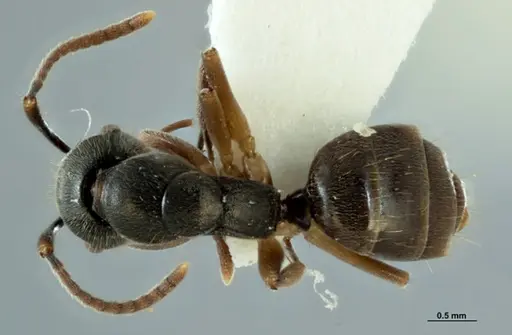
CASENT0872753
View on AntWeb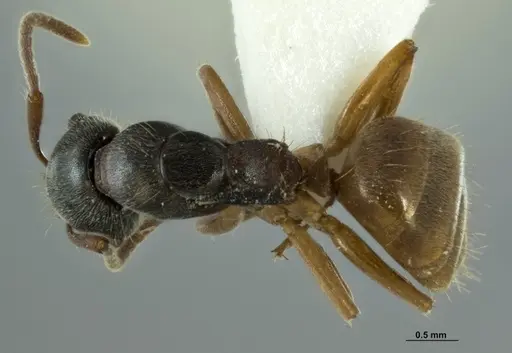
CASENT0872754
View on AntWeb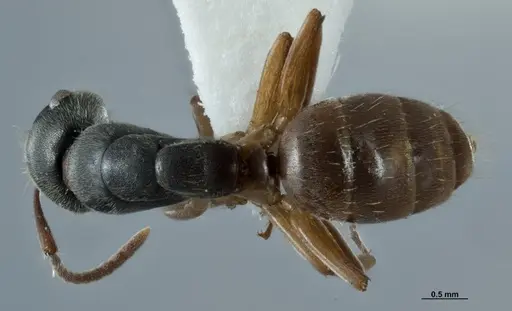
CASENT0882197
View on AntWeb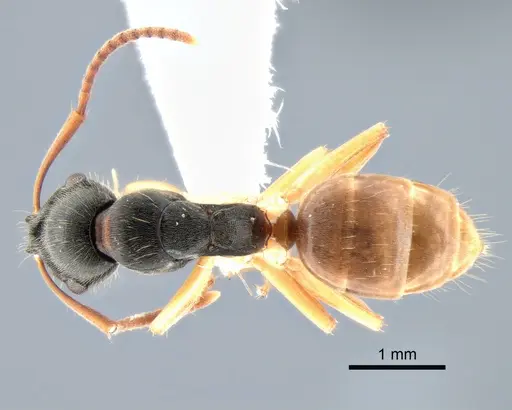
CASENT0887749
View on AntWeb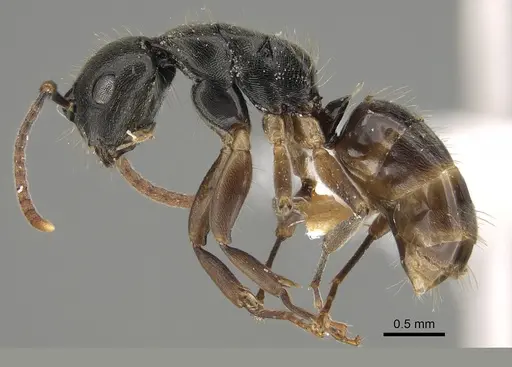
Literature
Loading...Loading products...