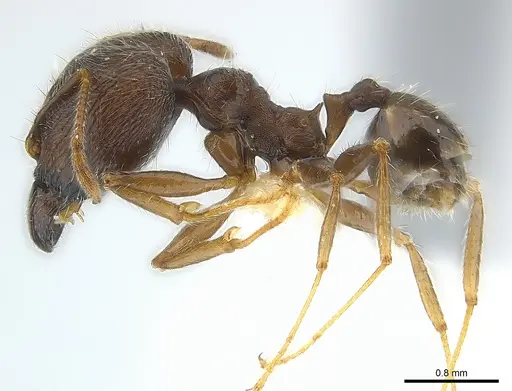
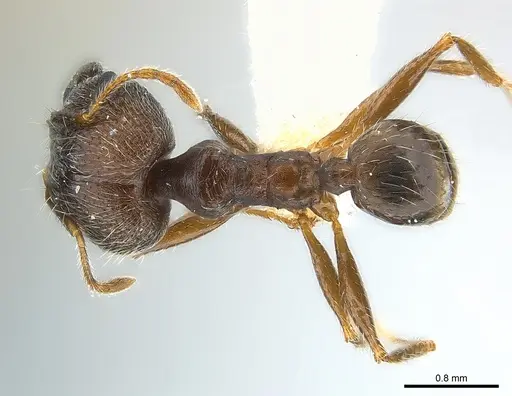
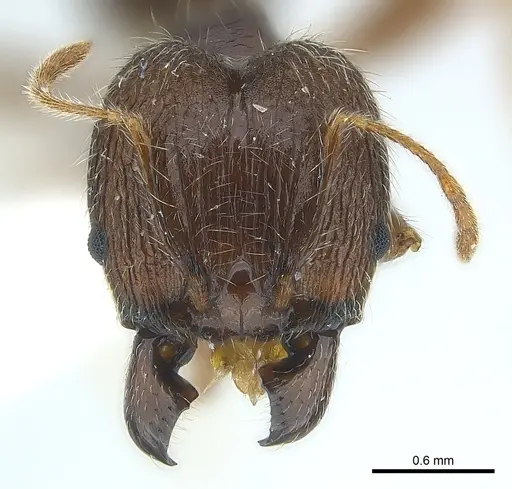
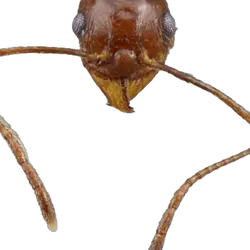
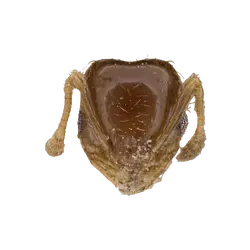
Pheidole aurivillii - "African Big-Headed Ant"
Pheidole aurivillii is a fascinating ant species hailing from the diverse landscapes of Africa. As a member of the widespread Pheidole genus, these ants are easily recognized by their distinct worker castes: smaller, agile minor workers and significantly larger-headed major workers, often called 'soldiers'. Minor workers typically measure around 3mm in length, sporting a brownish coloration with lighter mandibles and clay-colored leg joints and funiculi. Their heads are smooth and shiny, with subtle striations. The formidable major workers, while not specifically measured for this species, generally possess much larger heads and mandibles, often reaching lengths comparable to or even exceeding the queen's gaster. These ants exhibit a highly organized social structure, with a clear division of labor between their castes, and are known to be active foragers.
- Difficulty: Medium
- Origin & Habitat: Afrotropical Region (Benin, Cameroun, Democratic Republic of Congo, Guinea, Kenya, Uganda) in Tropical environments, often ground-nesting in areas like mango orchards, generally preferring soil and leaf litter in warmer climates..
- Colony Type: Monogyne (single queen, though pleometrosis possible at founding), claustral (queen seals herself in) founding.
- Size & Growth:
- Queen: 7-8mm
- Worker: 2-6mm
- Colony: Large (tens of thousands). Fast, with established colonies showing exponential growth. growth.
- Antkeeping:
- Temperature: Maintain temperatures between 26-30°C for optimal activity and brood development. A slight drop at night is acceptable but avoid prolonged cool periods..
- Humidity: High humidity is crucial for Pheidole aurivillii, especially for the brood. Aim for 60-80% in the nest, with stable moisture levels. They do not tolerate dry conditions well..
- Diapause: Not required. Not specified at Not specified.
- Nesting: These ants are ground-nesting in their natural environment, so a formicarium that allows for deep digging is ideal. Sand or loam-based setups are suitable. Given their size and tendency to explore, a secure nest with good escape prevention is essential..
- Behavior: Medium (towards handler, High towards food or other ants) aggressiveness.
- Common Issues: Mold in nest from uneaten food, Humidity fluctuations leading to desiccation, Colony stalling due to inadequate protein, Escape attempts due to small size and persistent nature.
One of the most captivating features of Pheidole aurivillii, typical of the Pheidole genus, is their impressive worker polymorphism. You'll observe two distinct worker castes: the small, quick minor workers responsible for most foraging and brood care, and the imposing major workers, often dubbed 'soldiers' due to their remarkably large heads and powerful mandibles. These majors aren't just for show; they play crucial roles in colony defense, breaking down tougher food items like seeds, and even acting as living blockades for the nest entrance against invaders. Observing this specialized division of labor within your colony is truly a highlight of keeping this species.
Feeding your Pheidole aurivillii colony will be a dynamic experience, as these ants are generalist omnivores with a voracious appetite. They thrive on a diverse diet that includes both protein and carbohydrates. For protein, think small insects like crickets, mealworms, or fruit flies – ensure they're freshly killed to prevent injury to your ants. Carbohydrates can be offered as sugar water or honey solutions. It’s worth noting that providing a high-quality protein diet can influence the production of new major workers, allowing you to witness the fascinating development of these 'big-headed' specialists.
Humidity management is paramount for the health and rapid growth of Pheidole aurivillii colonies. Hailing from tropical regions, these ants require consistently high humidity levels within their nesting areas, particularly where the brood is kept. If the nest dries out too quickly, it can severely impact larval and pupal development, potentially leading to a colony stall. Consider using formicariums with good moisture retention capabilities, like those made from plaster or Ytong, or ensure a reliable hydration system is in place in acrylic setups. Regular misting of the outworld or providing a moist substrate can help maintain ambient humidity.
Be prepared for a fast-growing colony once Pheidole aurivillii gets established. Queens of this species are quite prolific, and once the initial worker count is reached, the colony can expand exponentially. This rapid growth is exciting for ant keepers, but it also means you'll need to plan for nest upgrades sooner rather than later. Having a larger formicarium ready for expansion, or a modular setup that allows for easy additions, will prevent your ants from becoming overcrowded and stressed. Their active nature means they'll quickly fill their space, creating a bustling display of ant activity.
Pheidole species, including Pheidole aurivillii, are renowned for their incredible escape artist abilities. Their small minor workers can squeeze through incredibly tiny gaps, and their persistent nature means they will actively search for any weakness in your setup. Investing in a truly escape-proof formicarium is non-negotiable for this species. Double-check all seals, use barriers like PTFE (Fluon) or talcum powder around the outworld edges, and ensure any tubing connections are tightly secured. A small oversight can quickly lead to a large number of ants exploring your home!
While Pheidole aurivillii are not known to possess a potent sting that would be medically significant to humans, their aggressive foraging behavior towards prey and other ant species is notable. In a captive setting, this translates to confident hunting and a willingness to defend their food sources. This aggression makes them engaging to observe during feeding times but also means care should be taken when introducing new food items or performing maintenance to avoid unnecessary stress to the colony or accidental bites from larger majors.
Frequently Asked Questions
What do Pheidole aurivillii ants eat?
Pheidole aurivillii are omnivores! For their protein needs, offer them small, freshly killed insects like crickets, mealworms, or fruit flies. For carbohydrates, sugar water or honey solutions work great. A balanced diet is key to a thriving colony.
Are Pheidole aurivillii a good species for beginner ant keepers?
While Pheidole species are often recommended for beginners due to their fast growth and active nature, Pheidole aurivillii, being a tropical species, requires consistent temperature and humidity. Their escape artist tendencies also mean beginners need to be extra diligent about security. We'd rate them as a 'Medium' difficulty, suitable for beginners ready to commit to careful husbandry.
How fast do Pheidole aurivillii colonies grow?
These ants are known for their impressive growth rate! Once a queen has her initial cohort of minor workers, the colony can grow exponentially. You can expect them to reach thousands of workers relatively quickly, making them a very rewarding species to observe.
Do Pheidole aurivillii ants sting?
Pheidole aurivillii are not known to have a medically significant sting. While they might bite if they feel threatened, especially the larger major workers with their strong mandibles, it's generally not painful to humans. They rely more on their numbers and biting for defense.
What kind of nest is best for Pheidole aurivillii?
Given their natural ground-nesting habits, a formicarium that allows for deep tunneling is ideal. This could be a sand or loam-based setup. For artificial nests, plaster or Ytong designs are often preferred due to their excellent humidity retention. The most important factor, regardless of material, is robust escape prevention due to their small size and persistent nature.
Do Pheidole aurivillii need hibernation?
No, Pheidole aurivillii originates from tropical regions of Africa, which means they do not require a diapause (hibernation) period. Maintaining stable warm temperatures and consistent humidity year-round is crucial for their continuous activity and development.
What are the ideal temperature and humidity levels for Pheidole aurivillii?
Aim for a consistent temperature range of 26-30°C in their nesting area. For humidity, these ants thrive in high moisture environments, so keep the nest humidity between 60-80%. Providing a humidity gradient within the nest can allow them to choose their preferred spot.
How big do Pheidole aurivillii workers and queens get?
Minor workers are quite small, typically around 3mm. The impressive major workers (soldiers) have much larger heads and can reach up to 6mm in length. Queens are larger than all workers, usually measuring between 7-8mm, making them quite easy to spot in the colony.
Are Pheidole aurivillii known to be escape artists?
Absolutely! Like many Pheidole species, Pheidole aurivillii are notorious escape artists. Their minor workers are tiny and resourceful, constantly seeking out vulnerabilities in enclosures. Always ensure your formicarium has robust escape barriers, such as a secure lid, a well-applied PTFE (Fluon) or talcum powder barrier on the outworld walls, and no gaps for them to exploit.
Can Pheidole aurivillii colonies have multiple queens?
While Pheidole aurivillii are primarily considered monogyne (single queen) species once established, it's possible for multiple queens to initiate a colony together during the founding stage, a behavior known as pleometrosis. However, typically only one queen survives to lead the mature colony.
What is the role of the large-headed major workers (soldiers) in Pheidole aurivillii colonies?
The major workers, often called soldiers, are indispensable to a Pheidole aurivillii colony. Their powerful, disproportionately large heads and mandibles are used for defense against predators, crushing tough seeds to extract nutrients, and sometimes even physically blocking nest entrances to protect the colony. They are a true marvel of ant caste polymorphism!