

Octostruma stenognatha
- Scientific Name
- Octostruma stenognatha
- Tribe
- Attini
- Subfamily
- Myrmicinae
- Author
- Brown & Kempf, 1960
- Distribution
- Found in 1 countries
Octostruma stenognatha Overview
Octostruma stenognatha is an ant species of the genus Octostruma. It is primarily documented in 1 countries , including Brazil. Detailed taxonomic data and occurrence records can be further explored via authoritative databases such as AntWeb or the Global Biodiversity Information Facility (GBIF).
Octostruma stenognatha
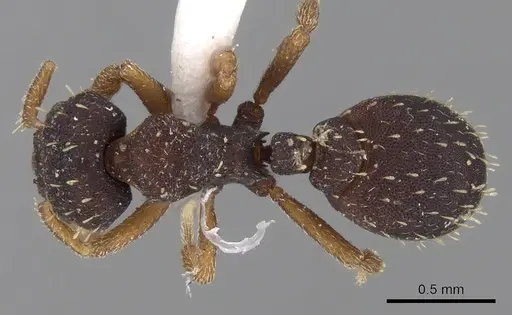
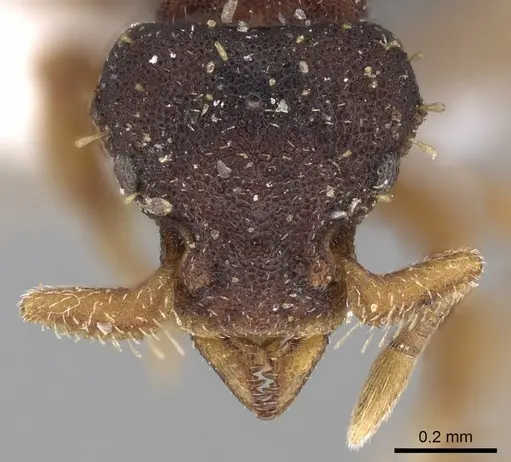
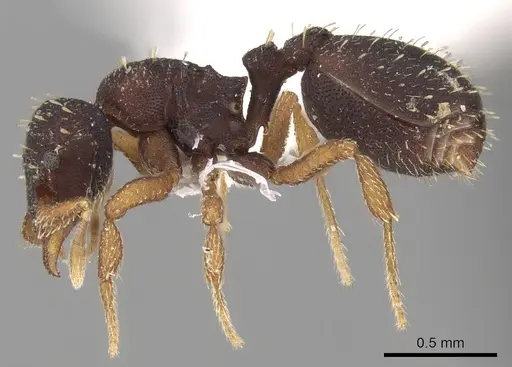
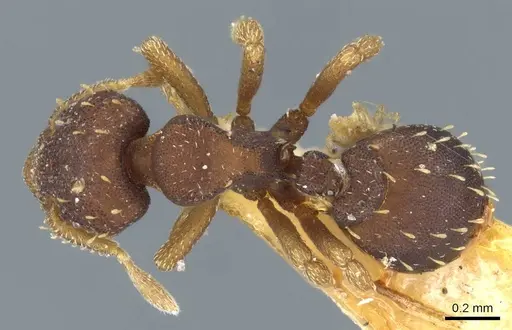
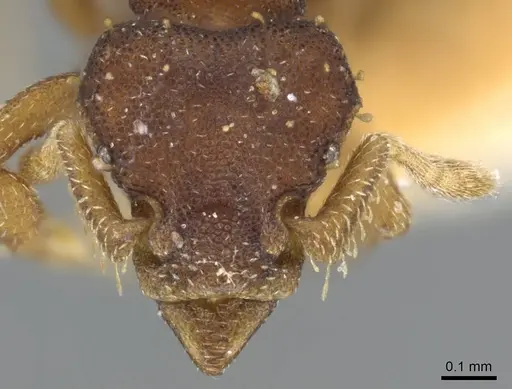
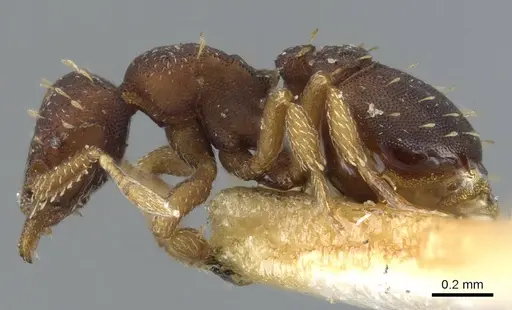
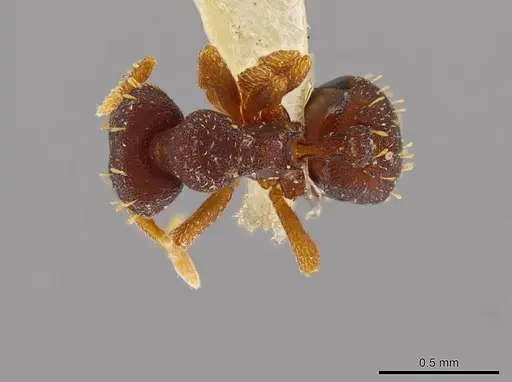
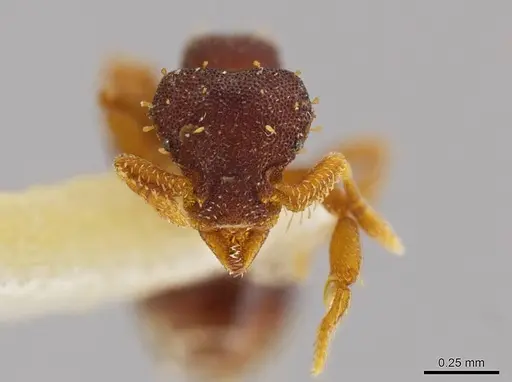
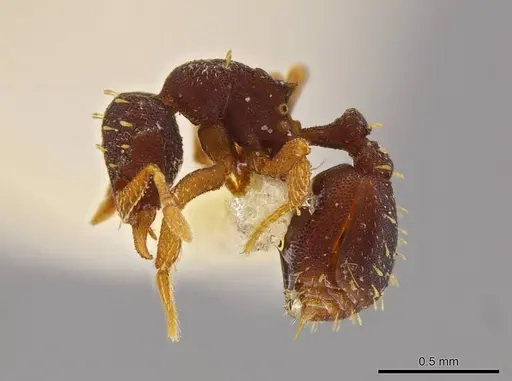
Octostruma stenognatha is a tiny leaf-litter ant belonging to the tribe Attini (fungus-growing ants). Workers measure just 2.0-2.3mm with a head width of 0.50-0.56mm, making them one of the smaller ant species you can keep [1]. They are native to southern Brazil, particularly the Atlantic Forest region, where they live in moist forest floor habitats [1]. These ants are part of a species complex that includes Octostruma balzani, O. batesi, and O. betschi, which form a replacement series across South America [2]. Unlike many Attini that cultivate fungi, Octostruma species are thought to be predators of small invertebrates in the leaf litter. They have distinctive spatulate (spoon-shaped) hairs on their body and relatively narrow mandibles, which gives them their name 'stenognatha' meaning narrow jaw [2].
Quick Summary
- Difficulty: Medium
- Origin & Habitat: Southern Brazil, specifically the Atlantic Forest region. They are habitat specialists strongly associated with primary (old-growth) forest systems and are rarely found in secondary forest or disturbed areas [3][4]. In the wild, they nest between decayed leaves in the humus layer of very moist forest floors [5].
- Colony Type: Small colonies. This species forms small colonies, with ergatoid (wingless reproductive) females documented alongside regular workers [6]. The colony structure appears to be monogyne with replacement reproductives possible.
- Colony: Monogyne
- Founding: Claustral
- Size & Growth:
- Queen: 2.7mm (dealate queen) [2]
- Worker: 2.0-2.3mm total length, HW 0.50-0.56mm [1][2]
- Colony: Small colonies, likely under 100 workers based on similar leaf-litter ants [5]
- Growth: Moderate, inferred from small colony size
- Development: 6-10 weeks (estimated based on related Attini patterns) (Development time is estimated as no specific data exists for this species. Related Attini species typically take 6-10 weeks from egg to worker at optimal temperatures.)
- Antkeeping:
- Temperature: Keep around 22-26°C. This species comes from the warm, humid Atlantic Forest of southern Brazil, so aim for room temperature in the low-to-mid 20s Celsius. A gentle temperature gradient allows ants to choose their preferred spot.
- Humidity: High humidity is essential. These ants live in the leaf-litter layer of moist forests, so keep the nest substrate consistently damp but not waterlogged. The substrate should feel moist to the touch with some condensation visible on the nest walls. Mist occasionally and provide a water tube.
- Diapause: No, this is a tropical/subtropical species from southern Brazil and does not require hibernation. However, they may show reduced activity during cooler periods.
- Nesting: Because they nest in leaf-litter and humus layers, they do best in naturalistic setups with a deep layer of moist substrate (soil, coco fiber, or a mix) that holds moisture well. A Y-tong or acrylic nest with a soil chamber also works. They prefer tight, enclosed spaces scaled to their tiny size. Avoid tall, open chambers.
- Behavior: These are shy, cryptic ants that spend most of their time hidden in the substrate. They are not aggressive and will flee rather than fight. Workers are small and slow-moving, foraging through leaf litter for tiny prey. They are not escape artists in the traditional sense, but their tiny size means they can slip through small gaps, use fine mesh and tight-fitting lids. They do not have a painful sting.
- Common Issues: high humidity needs make them prone to mold if ventilation is poor, tiny size means escape prevention must be excellent, they can squeeze through standard mesh, sensitive to drying out, substrate must stay moist, slow growth means colonies develop slowly and may appear stagnant for weeks, habitat specialist, wild-caught colonies may struggle if conditions don't match their moist forest floor preferences
Natural History and Habitat
Octostruma stenognatha is a leaf-litter ant endemic to the Atlantic Forest of southern Brazil [1]. It was first described by Brown and Kempf in 1960 from specimens collected in São Paulo state [2]. This species is strongly associated with primary (old-growth) forest systems, studies show they are much more common in preserved forests (frequency 0.6) than in secondary forests (frequency 0.1-0.2) [3]. They are considered a habitat specialist restricted to primary forest and are not found in rubber plantations or disturbed areas [4]. In the wild, they nest between decayed leaves deposited in the humus layer of very moist forest floors [5]. The species is part of a clade with O. balzani, O. batesi, and O. betschi, which form an allopatric or parapatric replacement series across South America [2].
Housing and Nest Setup
Because they naturally nest in leaf-litter and humus layers, these ants do best in setups that mimic the forest floor. A naturalistic terrarium with a deep layer (at least 5-8cm) of moist substrate works well, use a mix of soil, sand, and coco fiber that holds moisture without becoming waterlogged. You can add leaf litter, small pieces of bark, and moss to create micro-habitats. Alternatively, a Y-tong or acrylic nest with a soil chamber filled with moist substrate also works. The key is providing a tight, enclosed space that stays damp, these tiny ants feel exposed in large, open chambers. Use a water tube for humidity and mist the outworld occasionally. Escape prevention is critical because of their very small size, standard test tube cotton can be an escape route, use fine mesh barriers on any openings. [5]
Feeding and Diet
As members of the tribe Attini, these ants may have some relationship with fungi, but Octostruma species are primarily predators of small invertebrates in the leaf litter. Feed them tiny live prey like springtails, fruit flies, and small pinhead crickets. They will likely accept small pieces of mealworms and other soft-bodied insects. Sugar sources like honey or sugar water may be accepted but are not a primary food source. Feed small amounts of protein 2-3 times per week and remove any uneaten prey after 24 hours to prevent mold. Because they are so small, prey items should be appropriately sized, anything larger than their head is difficult for them to handle.
Temperature and Humidity
Keep these ants warm and humid. They come from the Atlantic Forest of southern Brazil, which is a warm, moist subtropical environment. Target temperatures in the range of 22-26°C, room temperature is usually suitable. Avoid temperatures below 20°C or above 30°C. Humidity is more critical than with many other species, the nest substrate should feel consistently moist, similar to a damp forest floor. Some condensation on the nest walls is ideal. However, balance this with adequate ventilation to prevent mold growth. A water tube connected to the nest helps maintain humidity. If you see mold appearing, improve ventilation and reduce misting.
Colony Structure and Development
Octostruma stenognatha forms small colonies. The type series includes workers, ergatoid (wingless reproductive) females, and a dealate queen [6]. Ergatoids are slightly larger than workers (2.6-2.8mm vs 2.0-2.3mm) and have larger eyes and small ocelli [2]. This suggests the colony has a single queen with potential replacement reproductives (ergatoids) that can take over if the queen dies, a common pattern in small leaf-litter ants. Colony growth is likely slow to moderate. Expect the first workers (nanitics) to emerge 6-10 weeks after founding, based on patterns from related Attini species. Colonies probably max out at under 100 workers given their cryptic lifestyle.
Frequently Asked Questions
How long does it take for Octostruma stenognatha to produce first workers?
Expect 6-10 weeks from egg to first worker at optimal temperature (22-26°C). This is an estimate based on related Attini species, as specific development data for this species is not available.
What do Octostruma stenognatha ants eat?
They are predators of small invertebrates. Feed tiny live prey like springtails, fruit flies, and small insects. They may accept small pieces of mealworms and other soft-bodied insects. Sugar sources may be accepted but are not essential.
Are Octostruma stenognatha ants aggressive?
No, they are very shy and non-aggressive. These tiny leaf-litter ants will flee rather than fight. They do not have a painful sting.
Do Octostruma stenognatha ants need hibernation?
No, they are a tropical/subtropical species from southern Brazil and do not require hibernation. They may show reduced activity in cooler conditions but should be kept warm year-round.
What size colony does Octostruma stenognatha reach?
They form small colonies, likely under 100 workers. This is typical for leaf-litter ants in the genus Octostruma.
What humidity do Octostruma stenognatha ants need?
High humidity is essential. Keep the nest substrate consistently moist like a damp forest floor. Some condensation on nest walls is ideal, but balance with ventilation to prevent mold.
Can I keep Octostruma stenognatha in a test tube?
Test tubes can work for founding colonies, but these ants prefer more space and substrate than typical test tube setups. A naturalistic setup with moist substrate or a small formicarium with a soil chamber is more suitable for established colonies.
Are Octostruma stenognatha ants good for beginners?
They are rated as medium difficulty. While not aggressive, their small size and high humidity requirements make them more challenging than hardy species like Lasius or Camponotus. They are best suited for keepers who have some experience with humidity-sensitive species.
What temperature should I keep Octostruma stenognatha at?
Keep them at 22-26°C. This is typical room temperature in many homes. Avoid temperatures below 20°C or above 30°C.
Why are my Octostruma stenognatha dying?
The most common causes are: drying out (substrate too dry), mold (poor ventilation or over-misting), escape (tiny size allows them to slip through gaps), and stress from incorrect humidity. Check that the substrate stays moist and that escape prevention is tight.
References

This caresheet is licensed under CC BY-SA 4.0 .
Literature
Loading...Loading products...