

Octostruma cyrtinotum
- Scientific Name
- Octostruma cyrtinotum
- Tribe
- Attini
- Subfamily
- Myrmicinae
- Author
- Longino, 2013
- Distribution
- Found in 2 countries
Octostruma cyrtinotum Overview
Octostruma cyrtinotum is an ant species of the genus Octostruma. It is primarily documented in 2 countries , including Honduras, Nicaragua. Detailed taxonomic data and occurrence records can be further explored via authoritative databases such as AntWeb or the Global Biodiversity Information Facility (GBIF).
Octostruma cyrtinotum
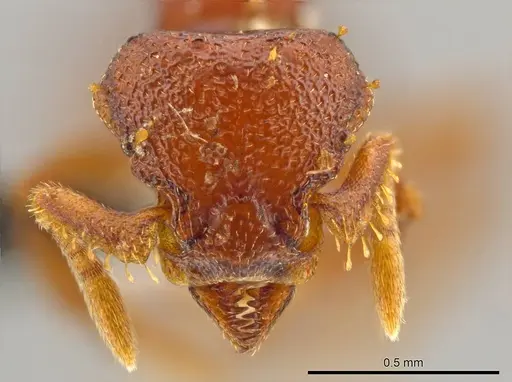
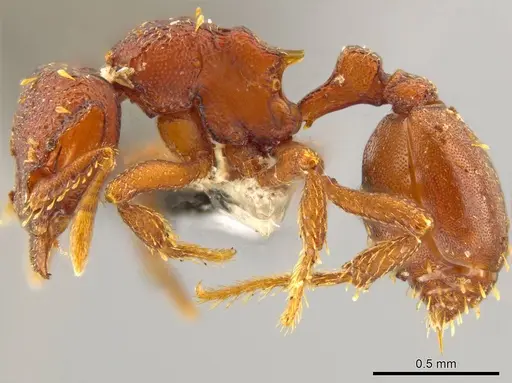
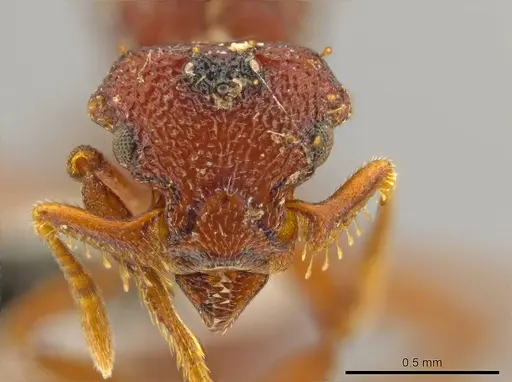
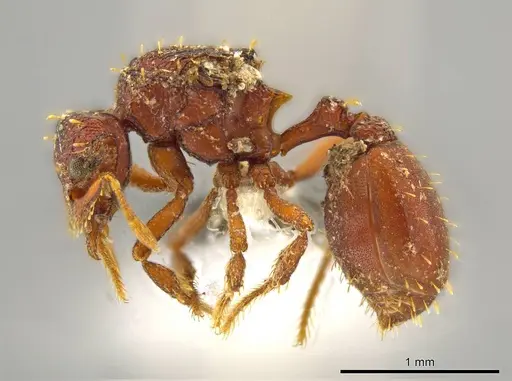
Octostruma cyrtinotum is a tiny, cryptic ant species native to the cloud forests of Honduras and Guatemala. Workers measure just 0.70-0.80mm, making them among the smaller ants you'll encounter. They have a distinctive reddish-brown coloration and sport unusual spatulate (spoon-shaped) setae on their face and mesonotum, these stiff, upright hairs are a key identifying feature [1]. Queens are slightly larger at 0.89-0.91mm and occasionally appear alongside workers in litter samples, suggesting they may not found colonies entirely alone [1]. This species is closely related to Octostruma montanis and Octostruma planities, forming a small clade of montane and lowland species that differ mainly in elevation preferences and setae count [1].
What makes O. cyrtinotum interesting is its elevational specialization, it's strictly a cloud forest species found between 1300-1700m elevation, where temperatures are cool and humidity is constantly high [1]. Like other Octostruma, they're cryptic ants that forage in the leaf litter and rotting wood of the forest floor, well away from the sunlight. They represent a poorly studied group where even basic behaviors like founding and colony structure remain undocumented in the scientific literature.
Quick Summary
- Difficulty: Medium
- Origin & Habitat: Honduras and Guatemala, montane cloud forests at 1300-1700m elevation, in mesophyll cloud forest and montane forests with pine, oak, and Liquidambar [1][2]
- Colony Type: Colony structure is unconfirmed. Dealate queens have been found together with workers in litter samples, suggesting possible multi-queen colonies or colony adoption behavior, but this needs confirmation.
- Size & Growth:
- Queen: 0.89-0.91mm [1]
- Worker: 0.70-0.80mm [1]
- Colony: Unknown, no colony size data exists in scientific literature
- Growth: Unknown, no development data exists for this species
- Development: Unknown, no direct measurements exist. Based on typical small Myrmicinae patterns, estimate 6-10 weeks at optimal temperature, but this is a rough guess. (No development studies exist for this species. Estimates based on genus-level patterns for small cryptic Myrmicinae.)
- Antkeeping:
- Temperature: Cool conditions required, aim for 18-22°C. This species comes from cool cloud forest elevations, so avoid warmth. Room temperature (around 20°C) is likely ideal.
- Humidity: High humidity essential, these ants live in cloud forest leaf litter. Keep nest substrate consistently moist but not waterlogged. Think damp forest floor conditions.
- Diapause: Unknown, no seasonal studies exist. Given their high-elevation cloud forest origin, they likely experience reduced activity during cooler months but formal hibernation requirements are unconfirmed.
- Nesting: In nature they live in sifted leaf litter and rotting wood on the forest floor. In captivity, a small test tube setup or Y-tong nest with fine, moist substrate works well. They need tight chambers scaled to their tiny size.
- Behavior: These are extremely cryptic, slow-moving ants that spend most of their time in the substrate. They are not aggressive and have no functional sting. Their tiny size (under 1mm) means escape prevention is critical, they can squeeze through gaps that larger ants cannot. They likely forage individually through leaf litter rather than forming visible foraging trails. Expect low activity levels compared to more common ant species.
- Common Issues: escape prevention is critical due to their tiny size, use fine mesh and tight-fitting lids, high humidity requirements can lead to mold if ventilation is poor, slow growth and cryptic behavior make it hard to assess colony health, virtually no captive breeding data exists, establishing successful colonies may be challenging, wild-caught colonies may not adapt to captivity due to their specialized forest floor habitat
Natural History and Distribution
Octostruma cyrtinotum is a montane cloud forest specialist known only from Honduras and Guatemala at elevations between 1300-1700 meters [1]. All specimens have been collected from sifted leaf litter and rotting wood using Berlese and Winkler extraction methods, these are classic techniques for sampling tiny, cryptic ants that live deep in the forest floor litter layer. The species can be locally abundant, appearing in up to 28% of quantitative 1m² litter plot samples in appropriate habitat [1].
The species was formally described by John Longino in 2013 and is part of a small group of closely related Octostruma species that differ mainly in elevation and geographic range. O. cyrtinotum occupies middle elevations, while the similar O. montanis is found in southern Nicaragua and northern Costa Rica montane sites, and O. planities is a lowland species. This pattern of related species replacing each other across elevation zones is called elevational parapatry and is common in cloud forest organisms [1].
The genus Octostruma belongs to the tribe Attini, which includes the famous leaf-cutting ants (Atta and Acromyrmex), but Octostruma itself is part of the 'basicerotine' group, small, cryptic ants that do not cultivate fungus. Instead, they likely feed on small invertebrates and honeydew in the leaf litter.
Housing and Nest Setup
Given their tiny size and leaf litter habitat, you'll need to think small when housing O. cyrtinotum. A standard test tube setup works well, use a small diameter tube (10-12mm) filled with water and backed with a cotton plug. The ants are small enough that they can escape through standard test tube gaps if the cotton isn't packed tightly.
Because they're cryptic substrate-dwellers, these ants spend most of their time in the nest material rather than out in the open. A Y-tong (acrylic) nest with narrow chambers scaled to their tiny size works better than wooden formicariums where they might get lost in large chambers. Fill any outworld space with damp substrate like coco fiber or fine soil to give them a proper leaf-litter environment to explore.
Escape prevention is non-negotiable, workers are under 1mm in size. Use fine mesh (at least 0.5mm) on any ventilation holes, and apply fluon or barrier gel to any surfaces they might climb. Check for gaps around lid edges that seem insignificant to you but are huge highways for ants this small.
Temperature and Humidity
This is where captive care gets tricky. O. cyrtinotum comes from cool, perpetually damp cloud forests at 1300-1700m elevation. Unlike many tropical ants that want warm conditions, these prefer it cool, think high-elevation tropical forest, not lowland jungle.
Aim for temperatures in the 18-22°C range. This is cooler than typical room temperature in many homes, so you may need to avoid placing their nest near heat sources or use a small fan to prevent overheating. If your room runs warm (above 24°C), consider moving them to a cooler location or using a small thermoelectric cooler in extreme cases.
Humidity should be high, cloud forest conditions mean constant moisture. Keep the nest substrate consistently damp but not sitting in standing water. A water reservoir connected to the nest (like in a test tube setup) helps maintain humidity through evaporation. Mist the outworld occasionally but avoid creating wet patches where mold can grow. Good ventilation prevents mold while maintaining humidity, aim for airflow that keeps the air moving without drying things out.
Feeding and Diet
The feeding biology of O. cyrtinotum has not been studied, but we can make educated guesses based on related Octostruma and other small cryptic Myrmicinae. These ants are likely generalist foragers in the leaf litter, hunting tiny prey like springtails, mites, and other micro-arthropods. They probably also consume honeydew from root aphids and small amounts of nectar.
In captivity, offer small live prey items like springtails, fruit flies, and tiny crickets. Because workers are so small (under 1mm), even small fruit flies are substantial prey. You can also offer a drop of sugar water or honey occasionally, but don't expect enthusiastic acceptance, these are primarily predatory ants.
Feed sparingly, small amounts every few days, removing any uneaten prey after 24 hours. Overfeeding leads to mold problems in the humid setup they require. A small prey item every 2-3 days is probably sufficient for a growing colony.
Colony Structure and Development
This is one of the least documented aspects of O. cyrtinotum. The scientific literature provides no information on founding behavior, colony size, or development timeline. Queens have been found with workers in litter samples, which could indicate either polygynous (multi-queen) colonies or simply that dealate queens remain in the colony after founding, this is common in many ant species.
Without any captive breeding data, it's impossible to give reliable timelines. Based on typical small Myrmicinae patterns, you might expect 6-10 weeks from egg to first worker at optimal temperature, but this is purely speculative. The first workers (nanitics) will likely be smaller than normal workers.
If you obtain a wild-caught queen, treat her as potentially claustral (able to found a colony alone without foraging) but monitor closely. Keep her in a small, humid setup and offer a tiny prey item occasionally, if she accepts it, that suggests semi-claustral behavior. If she seals herself in and ignores food, she's likely claustral.
Frequently Asked Questions
How long does it take for Octostruma cyrtinotum to produce first workers?
Unknown, no development data exists for this species. Based on typical small Myrmicinae patterns, expect roughly 6-10 weeks from egg to first worker at optimal temperature (around 20°C), but this is a rough estimate.
What size colony does Octostruma cyrtinotum reach?
Unknown, no colony size data exists in scientific literature. Related Octostruma species typically have small colonies of a few dozen to a few hundred workers.
Can I keep multiple Octostruma cyrtinotum queens together?
Not documented, the colony structure of this species is unconfirmed. Queens have been found with workers in litter samples, but this doesn't confirm polygyny. Combining unrelated queens is not recommended without evidence they tolerate each other.
What temperature should I keep Octostruma cyrtinotum at?
Keep them cool, 18-22°C is ideal. These are cloud forest ants from 1300-1700m elevation and prefer cool, stable temperatures. Avoid warmth above 24°C.
Are Octostruma cyrtinotum good for beginners?
No, this is not a recommended species for beginners. They require very specific cool, humid conditions, have no captive breeding data, and their tiny size makes escape prevention challenging. Start with more documented species like Lasius, Tetramorium, or Camponotus.
What do Octostruma cyrtinotum eat?
Likely small live prey like springtails, mites, and tiny insects. They probably accept sugar sources occasionally but are primarily predatory. Feed small live prey items every few days.
Do Octostruma cyrtinotum need hibernation?
Unknown, no seasonal studies exist. Given their high-elevation cloud forest origin, they likely experience reduced activity in cooler months but formal diapause requirements are unconfirmed.
Why are my Octostruma cyrtinotum escaping?
Their tiny size (under 1mm) means they can squeeze through gaps that seem insignificant. Use fine mesh (0.5mm or smaller), pack cotton tightly in test tubes, and apply fluon barriers to prevent escapes.
When should I move Octostruma cyrtinotum to a formicarium?
Wait until you have a established colony of at least 20-30 workers. These are cryptic substrate-dwellers and do well in simple test tube setups even as colonies grow. A small Y-tong nest with fine chambers works when ready.
References

This caresheet is licensed under CC BY-SA 4.0 .
CASENT0615495
View on AntWeb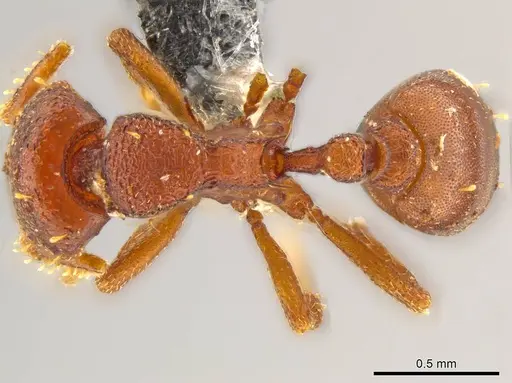
CASENT0627372
View on AntWeb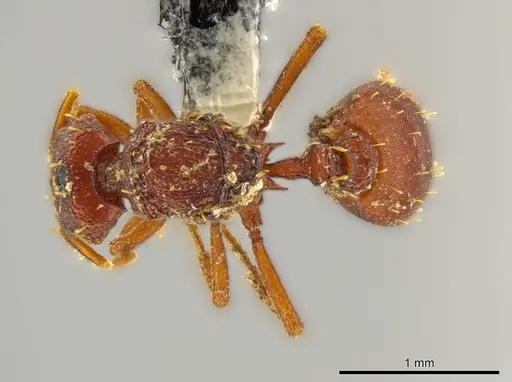
Literature
Loading...Loading products...