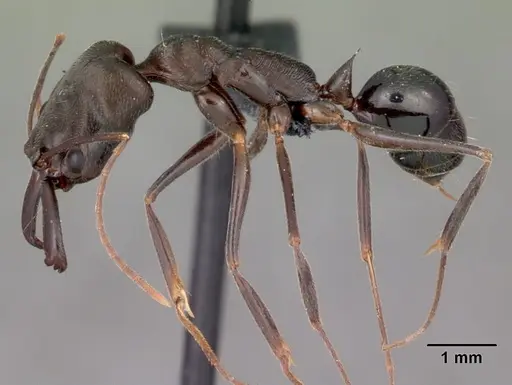
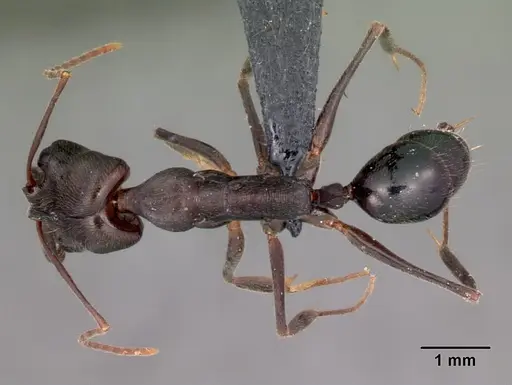
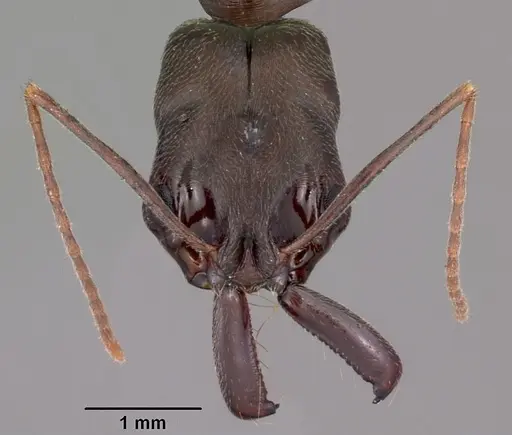
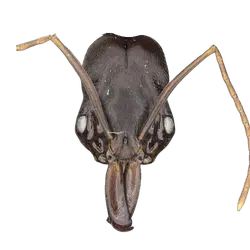
Odontomachus troglodytes - "Troglodyte Trap-jaw Ant"
The Odontomachus troglodytes is a fascinating species of trap-jaw ant, widely recognized for its exceptionally long, spring-loaded mandibles. These powerful jaws can open a full 180 degrees and snap shut with incredible speed and force, making them one of the fastest movements recorded in the animal kingdom. Workers are monomorphic, meaning they are all roughly the same size, typically ranging from 9 to 11mm. Queens are noticeably larger, usually around 12mm. Beyond their impressive mandibles, these ants possess a potent stinger, which they will readily use if provoked. Their appearance is generally dark, though specific coloration can vary.
- Difficulty: Medium
- Origin & Habitat: Sub-Saharan Africa, Madagascar, and Inner Seychelles. They have also been identified as an introduced species in Taiwan. in These ants thrive in tropical and subtropical environments, commonly found in open or loosely wooded areas. They primarily nest in rotting wood on the ground, within tree stumps, among the roots at the base of trees, or directly in well-drained soil and leaf litter. In some regions, they are also found in secondary habitats like coastal scrub and eucalyptus plantations..
- Colony Type: Polygyne (multiple queens), semi-claustral (queen forages) founding.
- Size & Growth:
- Queen: 12-12mm
- Worker: 9-11mm
- Colony: Medium (hundreds to over a thousand workers). Fast growth.
- Antkeeping:
- Temperature: Maintain temperatures between 22-28°C (72-82°F), with an ideal target of 26°C (79°F). While tolerant of heat, consistent temperatures within this range are best for colony health..
- Humidity: High humidity is crucial for this species. Aim for 50-80%, ideally keeping it around 70-80%. Dehydration can be detrimental to the brood..
- Diapause: Not required. Not specified at Not specified.
- Nesting: Odontomachus troglodytes can adapt to various nest types. They do well in mineral-based ant farms, such as those made from Ytong, plaster, or naturalistic setups that mimic their preferred nesting sites. Nests should include areas for substrate and good humidity retention..
- Behavior: Medium (Low towards handler unless provoked, High towards prey and other ants) aggressiveness.
- Common Issues: Dehydration leading to brood death, Humidity fluctuations.
One of the most captivating features of Odontomachus troglodytes is their incredible trap-jaw mandibles. These aren't just for show; they're an evolutionary marvel, snapping shut at speeds that are almost impossible to perceive with the naked eye. This lightning-fast mechanism is primarily used for capturing prey, stunning small insects instantly. However, these agile ants also employ their mandibles as a unique defense strategy, using the powerful snap to launch themselves into the air, effectively jumping away from perceived threats. Observing this behavior in your formicarium is truly a spectacle for any ant enthusiast.
Keepers should be aware that while these ants are generally not aggressive towards handlers unless severely provoked, they do possess a potent sting. If you happen to be on the receiving end, the sting can cause a burning, itchy sensation that may last for several hours, often accompanied by a red patch on the skin for two to three days. It's crucial to exercise caution when interacting with their setup and avoid direct contact with the ants to prevent such incidents. Respecting their space and providing tools for maintenance will ensure a safer and more enjoyable antkeeping experience.
As a semi-claustral species, the queen of Odontomachus troglodytes requires external feeding during the founding stage. Unlike fully claustral queens who rely solely on their stored energy, these queens will venture out to forage for food, especially protein, to support their developing brood. Initially, you'll need to offer small prey items or sugary liquids to the queen every four to five days until her first workers emerge. Once the colony is established and has a good number of foragers, you can extend the feeding intervals to about once a week, ensuring a consistent supply of both protein and carbohydrates to fuel their rapid colony growth.
Maintaining proper humidity levels is paramount for the success of an Odontomachus troglodytes colony. They are particularly sensitive to dehydration, and insufficient moisture can quickly lead to the desiccation and loss of their delicate brood. It’s highly recommended to utilize a nest setup that allows for easy humidity gradients or maintains a consistently high humidity, ideally in the 70-80% range. Regular misting of the outworld or ensuring the nest's hydration system is always topped up will go a long way in preventing this common issue and promoting a thriving colony.
Frequently Asked Questions
What makes Odontomachus troglodytes unique among ant species?
The most distinguishing feature of Odontomachus troglodytes, and indeed all trap-jaw ants, is their incredibly fast and powerful mandibles. They can snap shut at astonishing speeds, used for both catching prey and as a defensive 'jump' to escape danger. This unique hunting and escape mechanism sets them apart from many other ant species.
Are Odontomachus troglodytes good for beginner antkeepers?
While considered one of the 'easier' ponerine species to keep due to their hardiness and adaptability, Odontomachus troglodytes are generally recommended for intermediate antkeepers. Their semi-claustral founding, sting, and specific humidity requirements make them a bit more involved than a typical beginner species.
What should I feed my Odontomachus troglodytes colony?
These ants are primarily carnivorous predators, so a diet rich in live insects is essential. Small crickets, mealworms, roach nymphs, and even termites are excellent choices. They also appreciate sugary liquids like diluted honey or sugar water, though some colonies might prefer fresh fruit pieces like apple over liquid sugars.
How often do I need to feed a newly founding queen?
Since Odontomachus troglodytes queens are semi-claustral, they need to be fed regularly during the founding stage. It's advisable to offer small protein sources and sugary liquids every 4 to 5 days until her first cohort of worker ants emerges. Once the colony grows, feeding frequency can be adjusted, typically to about once a week.
What kind of nest setup is best for them?
Odontomachus troglodytes thrive in setups that mimic their natural nesting environments. Mineral-based formicaria like Ytong, plaster, or hybrid nests with a substrate area are ideal. Ensure the nest provides stable humidity, particularly a consistently moist area, and adequate space for a growing colony. An outworld for foraging is also crucial for these active hunters.
Do Odontomachus troglodytes sting, and how severe is it?
Yes, Odontomachus troglodytes workers possess a stinger and will use it defensively if they feel threatened or provoked. The sting can cause a burning and itchy sensation that may last for several hours, often accompanied by a localized red patch on the skin for a couple of days. While generally not severe, it is unpleasant, so handling the ants directly should be avoided.
How large can an Odontomachus troglodytes colony get?
A mature Odontomachus troglodytes colony can reach a substantial size, often numbering in the hundreds of workers, with some observations indicating colonies exceeding 1,000 individuals. Their colony growth rate is considered fast, so expect your colony to expand quickly under optimal conditions.
Is diapause required for Odontomachus troglodytes?
No, Odontomachus troglodytes does not require a diapause (hibernation) period. They are a tropical species and should be kept at consistent warm temperatures and high humidity year-round for optimal health and continuous development.
Can workers reproduce in Odontomachus troglodytes colonies?
Yes, worker-produced males (gamergates) have been observed in Odontomachus troglodytes colonies. This means that in certain circumstances, workers can lay unfertilized eggs that develop into males, contributing to the colony's reproductive potential.
Why is humidity so important for this species?
Humidity is critical because Odontomachus troglodytes, particularly their brood (eggs, larvae, pupae), are very sensitive to dry conditions. If the humidity drops too low, the brood can quickly dry out and perish, leading to a stalled or failing colony. Maintaining high and stable humidity is key to their successful development.