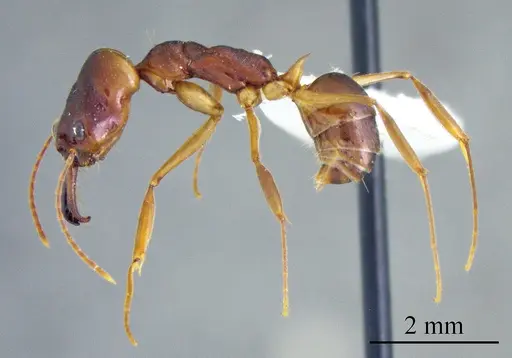
Odontomachus meinerti - "Trap-Jaw Ant"
Odontomachus meinerti is a fascinating trap-jaw ant species renowned for its incredibly fast mandibles, which can snap shut at astonishing speeds. These ants are generally light to dark brown and are among the smaller Odontomachus species, with workers typically having a head length (including mandibles) of less than 2.5mm. Their distinctive mandibles, capable of opening 180 degrees, are not only used for capturing prey with immense force but also as a 'catapult' to escape threats by flinging themselves backward. While primarily predatory, Odontomachus meinerti has also been observed collecting seeds with nutritious arils.
- Difficulty: Medium
- Origin & Habitat: Southern Mexico to Southern Brazil, Bolivia, Costa Rica, Venezuela, Guatemala, Honduras, Panama, Paraguay in Wet to dry forests, coffee farms, under rocks and logs, leaf litter.
- Colony Type: Monogyne (single queen) or Polygyne (multiple queens), semi-claustral (queen forages) founding.
- Size & Growth:
- Queen: 10-13mm
- Worker: 8-12mm
- Colony: Small (hundreds). Medium growth.
- Antkeeping:
- Temperature: Maintain temperatures around 25-28°C (77-82°F) during the day, with a slight drop to 21-24°C (70-75°F) at night. Consistent warmth is crucial for steady brood development..
- Humidity: High humidity is preferred, ideally ranging from 70-80%. Ensure part of the nest is always moist, but avoid stagnant water to prevent mold..
- Diapause: Not required. Not specified at Not specified.
- Nesting: These ants prefer nesting in soil, rotten wood, or under stones in their natural habitat. For captive setups, plaster or naturalistic setups with a good substrate like sand or loam are suitable. Provide a spacious outworld for foraging..
- Behavior: Medium (towards handler, food or other ants) aggressiveness.
- Common Issues: Humidity fluctuations, Overfeeding leading to waste, Colony stalling, Mites, Mold in nest, Queen stress.
One of the most captivating features of Odontomachus meinerti is their incredibly fast trap-jaw mandibles. These mandibles can snap shut in an astonishingly short amount of time, making them formidable predators. Observing their hunting prowess is truly a highlight for any ant keeper. They use these powerful jaws to subdue prey, which they then carry back to the nest for the colony to consume. This unique predatory behavior is something that sets trap-jaw ants apart from many other species in the hobby.
While their mandibles are primarily for hunting, Odontomachus meinerti also employs them as an escape mechanism. If startled or threatened, they can snap their jaws against a surface, effectively launching themselves backward to quickly flee from danger. This 'jaw-propelled leap' is a remarkable adaptation and can be quite surprising to witness. Providing a secure yet accessible outworld for these ants is important, as their escape maneuvers can be quite impressive.
Odontomachus meinerti queens are semi-claustral, meaning they require external feeding during the founding stage of their colony. This is a crucial distinction from fully claustral species where the queen relies solely on her internal reserves until the first workers emerge. Therefore, providing small, freshly killed insects to a founding queen is essential for her survival and the successful establishment of the colony. Regularly offering appropriate protein sources will greatly increase the chances of a successful colony.
These ants are generalist predators, readily accepting a variety of arthropod prey. In addition to insects, some Odontomachus species, including O. meinerti, have been observed collecting seeds with nutritious arils, indicating a broader diet than just pure predation. Offering a diverse diet including various small insects and occasional sugary foods like honey or sugar water will ensure the colony receives all necessary nutrients. Remember to remove uneaten food promptly to prevent mold and mites.
Colony size for Odontomachus meinerti typically remains on the smaller side, usually reaching a few hundred workers. This is a common characteristic for many Ponerine ants. While they may not achieve the massive populations of some other ant genera, their unique behaviors and active foraging make them a highly engaging species to observe. Their more modest colony size also means they might not require as much space as supercolony-forming species, making them suitable for certain formicarium setups.
User blogs will be displayed here.