

Neivamyrmex andrei
- Scientific Name
- Neivamyrmex andrei
- Subfamily
- Dorylinae
- Author
- Emery, 1901
- Distribution
- Found in 2 countries
Neivamyrmex andrei Overview
Neivamyrmex andrei is an ant species of the genus Neivamyrmex. It is primarily documented in 2 countries , including Mexico, United States of America. Detailed taxonomic data and occurrence records can be further explored via authoritative databases such as AntWeb or the Global Biodiversity Information Facility (GBIF).
Neivamyrmex andrei
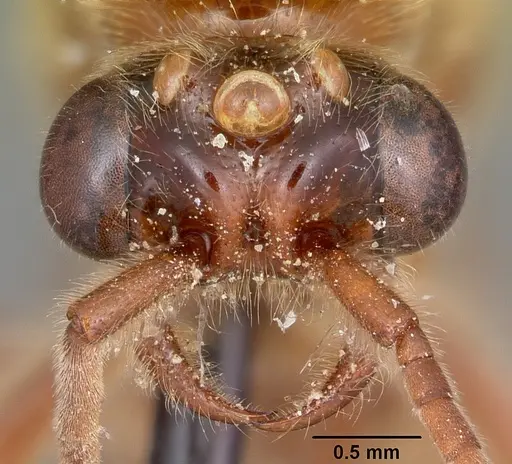
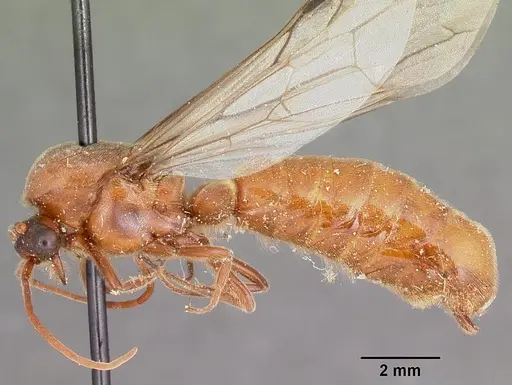
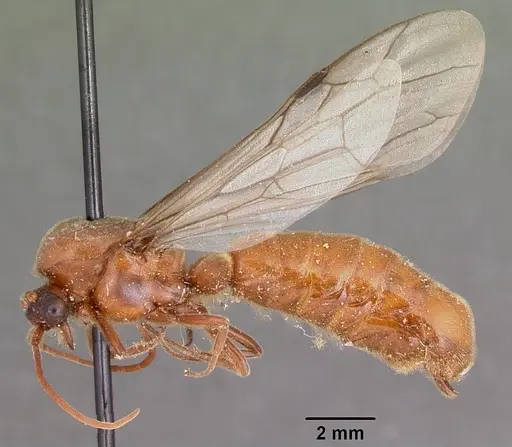
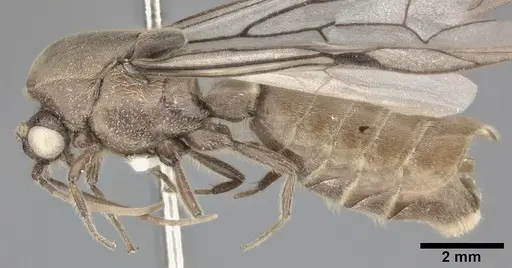
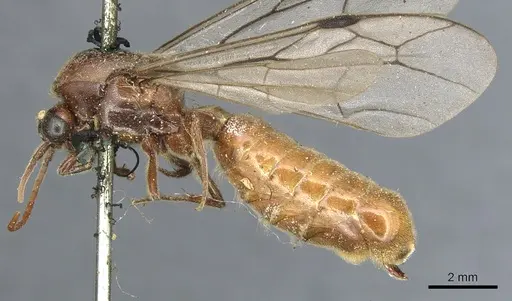
Neivamyrmex andrei is one of the most mysterious army ant species in North America, it is known only from the male caste, meaning we have never observed a queen or worker in this species [1]. Males are relatively large at 10-11mm, with distinctive broad front coxae that set them apart from most other US Neivamyrmex species (except N. swainsonii) [2]. The species ranges from Arizona and New Mexico south through western Mexico (Chihuahua, Colima, Nayarit, Sinaloa, Sonora, Veracruz, Jalisco) [3]. Males have been collected from late June through August, typically in forested areas with damp (mesic) conditions [4].
This species presents a unique challenge for antkeepers: it may actually represent the male form of Neivamyrmex agilis, and since no colony (queen + workers) has ever been documented, it cannot be kept in captivity [2]. This makes N. andrei more of a scientific curiosity than a viable keeping project.
Quick Summary
- Difficulty: Not Keepable
- Origin & Habitat: Arizona and New Mexico in the United States, extending south through western Mexico (Chihuahua, Colima, Nayarit, Sinaloa, Sonora, Veracruz, Jalisco). Found in forested areas, typically in damp (mesic) sites [2][3][4].
- Colony Type: Unknown, only the male caste has ever been documented. The species may represent the male of N. agilis, but no colony structure has been observed [2][1].
- Size & Growth:
- Queen: Unknown, queens have never been described
- Worker: Unknown, workers have never been described
- Colony: Unknown, no colonies have been documented
- Growth: Unknown
- Development: Unknown, no colony data exists (This species is only known from males, no brood or colony development has ever been observed)
- Antkeeping:
- Temperature: Unknown, no colony has been kept to determine requirements
- Humidity: Unknown, no colony observations exist
- Diapause: Unknown
- Nesting: Unknown, no nesting behavior has been documented
- Behavior: Behavior is unstudied since only males have been collected. As an army ant, related Neivamyrmex species are nomadic predators that conduct raids, but specific behavior for N. andrei is unknown [4]. Escape risk cannot be assessed without worker observations.
- Common Issues: This species cannot be kept, only males are known to science, No queen or worker descriptions exist, making captive establishment impossible, The species identity is uncertain, may be males of N. agilis, No captive care research exists for this species
Why This Species Cannot Be Kept
Neivamyrmex andrei represents one of the most significant gaps in ant keeping knowledge. This species is only known from male specimens collected in the early 1900s, no queen or worker has ever been documented [1]. In the ant world, males are the reproductive caste that emerge from established colonies solely for mating flights. Without queens and workers, there is no way to establish a captive colony.
The situation is further complicated by the possibility that N. andrei may actually be the male caste of Neivamyrmex agilis [2]. If this is the case, then what we call N. andrei is simply the male form of an already-described species. Even if you could locate and identify N. andrei males, they would have no value in establishing a colony.
For antkeepers interested in army ants, consider keeping documented Neivamyrmex species where the full colony (queen, workers, brood) has been observed and described. Many army ant species are challenging to keep due to their nomadic nature and specific dietary needs, but at least their care requirements are known.
Distribution and Habitat
Neivamyrmex andrei is found across the southwestern United States and western Mexico. In the US, it has been recorded in Arizona (including the type locality at Nogales) and New Mexico [2]. In Mexico, it has been documented in Chihuahua, Colima, Nayarit, Sinaloa, Sonora, Veracruz, and Jalisco states [3].
The species appears to prefer forested habitats in damp (mesic) locations [4]. Males have been collected from late June through August, which likely represents the nuptial flight period [4]. The broad distribution across western Mexico suggests the species can handle a range of conditions, but without colony observations, we cannot determine what specific temperature and humidity preferences it might have.
Identification and Related Species
Male N. andrei can be identified by a distinctive feature: broad front coxae (the upper leg segments near where the legs attach to the body). In most US Neivamyrmex species, these are longer than broad, but N. andrei and the similar N. swainsonii have distinctly broader coxae [2].
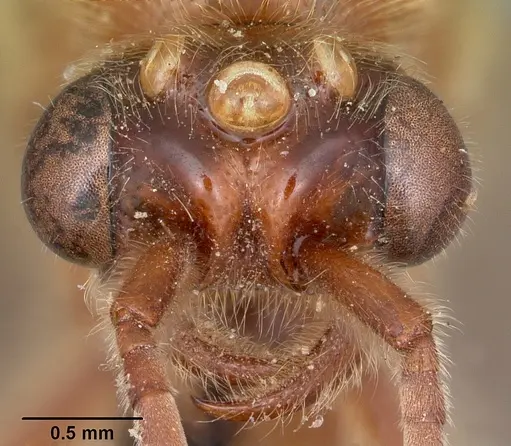
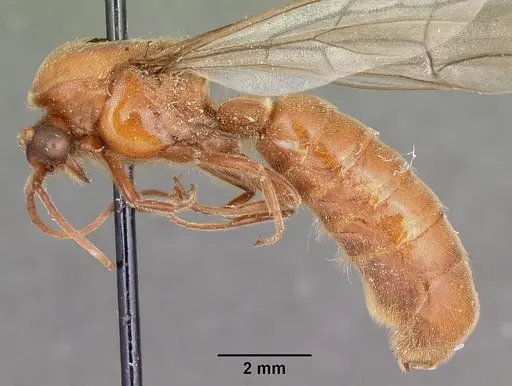
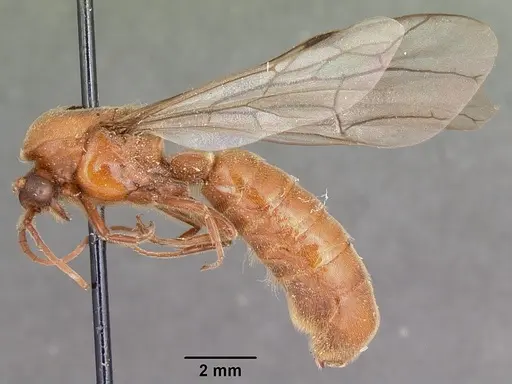
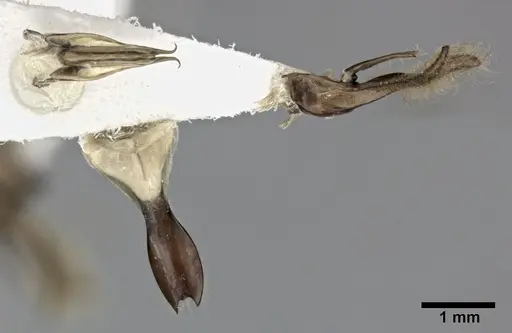
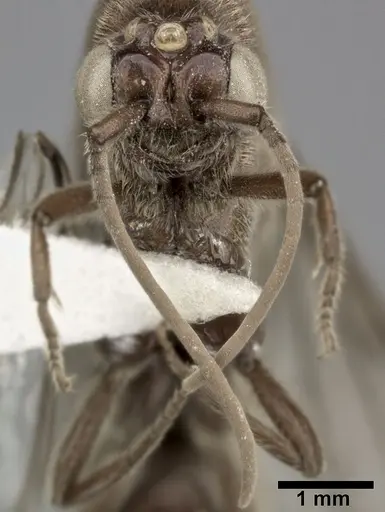
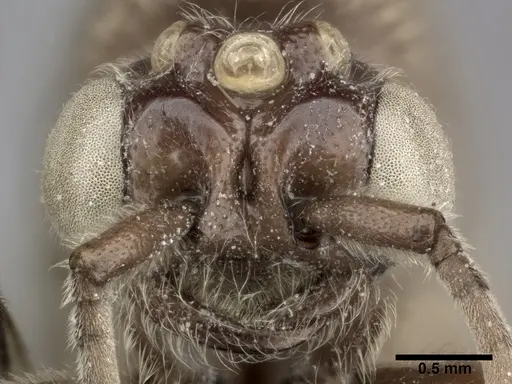
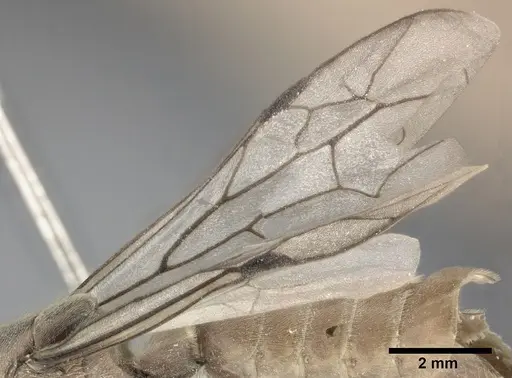
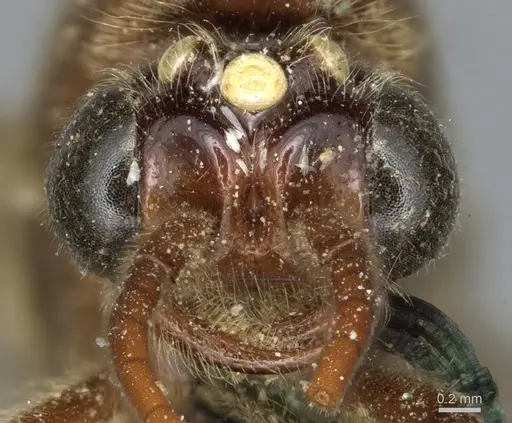
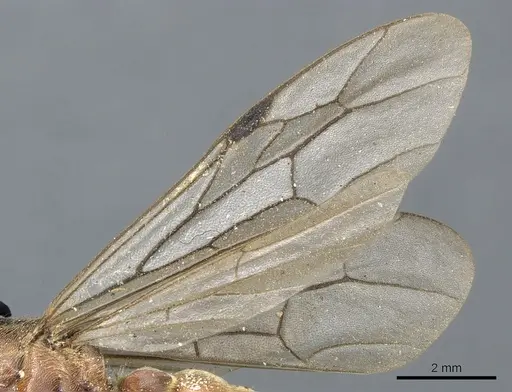
Males measure 10-11mm in length, making them relatively large among US army ants. They have very large eyes and ocelli (simple eyes), a slender thorax, and distinctive genitalia. The body is reddish-brown with the head and thorax often darker, and wings are grayish with brownish-black veins [4].
The species was originally described as Neivamyrmex andrei by Emery in 1901,with Neivamyrmex oslari (described from an Arizona specimen) later synonymized under N. andrei [4].
Frequently Asked Questions
Can I keep Neivamyrmex andrei in captivity?
No. This species is only known from male specimens, no queen or worker has ever been documented or described. Without the fundamental castes needed to form a colony, it cannot be kept in captivity.
Why are only males known for this species?
This is simply a gap in scientific knowledge. Many ant species are known only from one sex, especially in poorly-studied groups like army ants. The males may have been collected during nuptial flights while the colony itself was never located. It's also possible that N. andrei is actually the male of N. agilis.
What do Neivamyrmex andrei ants eat?
Unknown. No colony has ever been observed, so we have no information about their diet. Related army ant species are predators that raid other ant colonies and arthropods, but this is unconfirmed for N. andrei.
Where can I find Neivamyrmex andrei?
The species has been recorded in Arizona (especially around Nogales), New Mexico, and western Mexican states. However, since only males are known and their exact emergence time is uncertain, locating them would be extremely difficult and they cannot be kept anyway.
What is the difference between Neivamyrmex andrei and Neivamyrmex agilis?
Researchers believe N. andrei may actually be the male caste of N. agilis [2]. If this is correct, they are the same species with different castes. N. agilis has documented workers and colonies, while N. andrei remains known only from males.
Are Neivamyrmex andrei army ants aggressive?
Unknown. Army ants (Neivamyrmex) are known for their predatory raiding behavior, but this species has never been observed in colony context. Its temperament cannot be assessed.
What army ant species can I keep instead?
Several documented Neivamyrmex species have established colonies, though they are challenging to keep due to their nomadic nature and need for live prey. Other army ant genera like Labidus, Nomamyrmex, and Eciton also have more complete caste descriptions. Research specific species before attempting to establish a colony.
References

This caresheet is licensed under CC BY-SA 4.0 .
CASENT0104677
View on AntWeb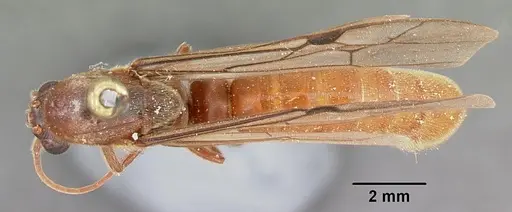
CASENT0104678
View on AntWeb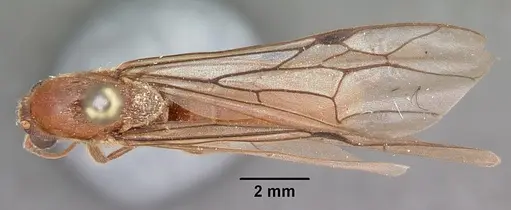
CASENT0246012
View on AntWeb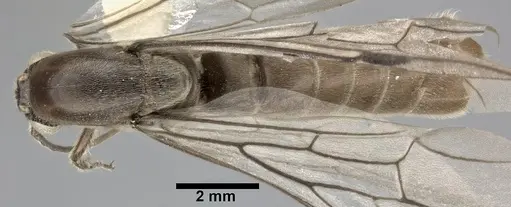
CASENT0903744
View on AntWeb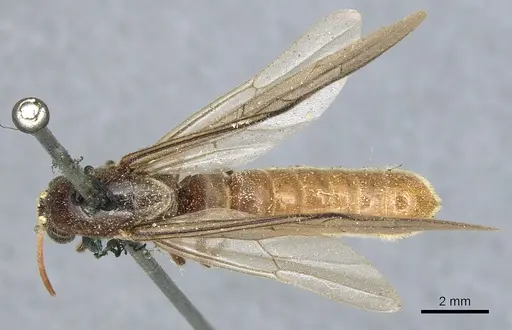
Literature
Loading...Loading products...