

Myrmica punctinops
- Scientific Name
- Myrmica punctinops
- Tribe
- Myrmicini
- Subfamily
- Myrmicinae
- Author
- Francoeur, 2007
- Distribution
- Found in 1 countries
Myrmica punctinops Overview
Myrmica punctinops is an ant species of the genus Myrmica. It is primarily documented in 1 countries , including United States of America. Detailed taxonomic data and occurrence records can be further explored via authoritative databases such as AntWeb or the Global Biodiversity Information Facility (GBIF).
Myrmica punctinops
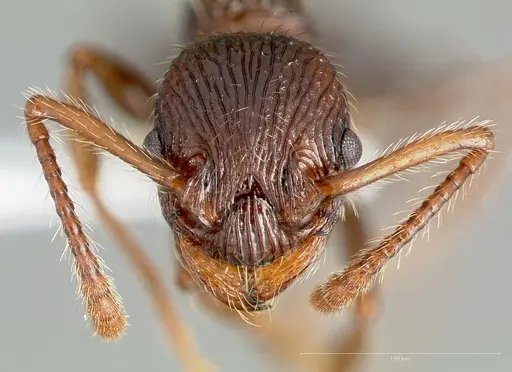
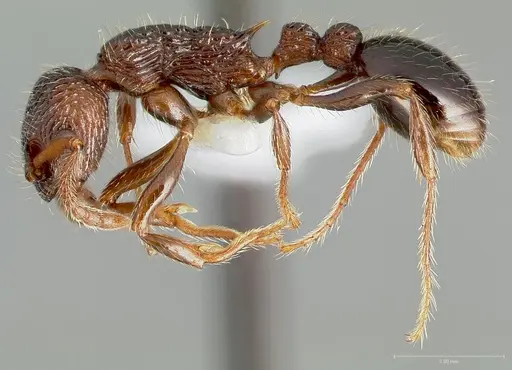
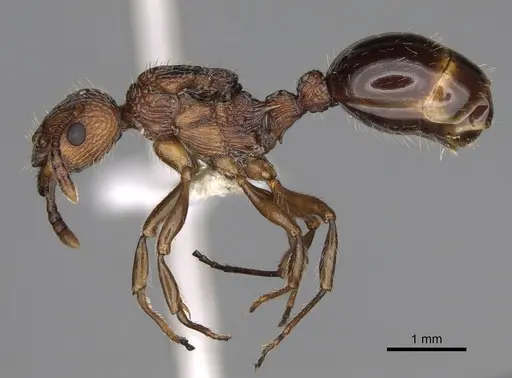
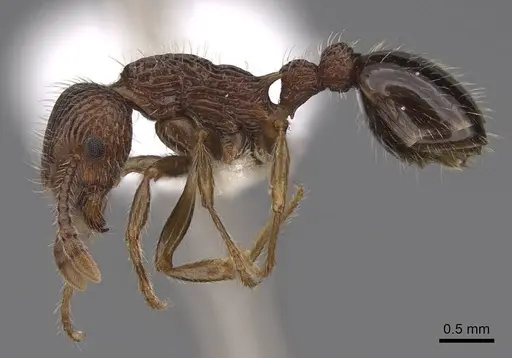
Myrmica punctinops is a small, reddish-brown ant endemic to California, first described in 2007. Workers measure approximately 1-1.3mm in body length with a head width of 0.82-1.05mm. They have the typical Myrmica features including a convex mesosomal profile, short propodeal spines, and a distinctive striated-rugulose mesosoma. The body is light to dark reddish-brown with a darker gaster and lighter yellowish appendages. This species belongs to the punctiventris group and is part of the Pacific ant fauna, found at both low (44m) and high (1615m) elevations in California. The queen and male remain unknown, making this one of the more poorly documented Myrmica species in North America.
Quick Summary
- Difficulty: Medium
- Origin & Habitat: Endemic to California, USA. Found in two distinct habitats: oak and pine forest litter at higher elevations (Charlton Flat, San Gabriel Mountains at 1615m), and maritime chaparral on sand at low elevation (Fort Ord at 44m) [1][2]. The Fort Ord site was dominated by the rare plant Arctostaphylos pumila and contained a mix of warm-loving and cold-tolerant ant species [1].
- Colony Type: Unknown. Only worker specimens have been collected. Colony structure (single-queen or multi-queen) has not been documented. Based on typical Myrmica patterns, expect single-queen colonies, but this is inferred.
- Size & Growth:
- Queen: Unknown, queen has not been described [1]
- Worker: Workers: HW 0.82-1.05mm, HL 1.02-1.27mm, SL 0.87-1.06mm [1]. Body length approximately 1-1.3mm estimated.
- Colony: Unknown, no colony size data exists
- Growth: Unknown, no development data exists
- Development: Unknown. Based on typical Myrmica genus patterns, expect 6-10 weeks at optimal temperature. (No direct development data exists for this species. Estimates based on related Myrmica species.)
- Antkeeping:
- Temperature: Inferred from habitat: likely prefers cooler to moderate temperatures, similar to other California Myrmica. Start around 18-22°C and observe colony activity. A slight gradient allowing workers to choose their preferred temperature is recommended.
- Humidity: Inferred from oak/pine forest habitat: moderate to high humidity preferred. Keep nest substrate consistently moist but not waterlogged. The higher elevation collection site suggests tolerance for cooler, damp conditions.
- Diapause: Likely yes. Myrmica species in temperate North America typically require a winter dormancy period. Provide 3-4 months at 5-10°C during winter.
- Nesting: Based on collection data (sifted from forest litter), they likely prefer soil-based nests with good moisture retention. A test tube setup with moist cotton works well for founding colonies. For established colonies, a Y-tong or plaster nest with moisture control is appropriate.
- Behavior: Not specifically documented, but Myrmica are typically non-aggressive, ground-nesting ants with moderate foraging activity. Workers are small (around 1mm) so escape prevention should be good, they cannot squeeze through standard test tube barriers. Expect typical Myrmica behavior: workers forage for honeydew and small insects, may tend aphids. Stinging risk is minimal as Myrmica stings are too weak to penetrate human skin.
- Common Issues: queen and colony data completely unknown, starting a colony from a wild-caught queen may not be possible, very limited natural history data makes care experimental, no documented diet preferences, rely on typical Myrmica feeding patterns, hibernation requirements are inferred, not confirmed, risk of starting with only workers if no queen is found, Myrmica colonies cannot survive without a queen
Discovery and Taxonomy
Myrmica punctinops was formally described by André Francoeur in 2007 based on worker specimens collected from California. The species was found at two very different locations: Charlton Flat in the San Gabriel Mountains at 1615m elevation (oak and pine forest), and Fort Ord on the Monterey coast at 44m elevation (maritime chaparral on sand). This wide elevation range suggests the species is ecologically flexible. The species belongs to the punctiventris group and is part of the Pacific ant fauna, a group of Nearctic species limited to the Pacific Coast with equivalent forms on the Asian side of the Pacific [1]. Only workers are known, queens and males have never been collected or described.
Natural Habitat and Collection
This species has been collected from two distinct habitat types in California. At higher elevations (1615m), specimens were sifted from oak and pine forest litter, suggesting they live in cool, damp forest floor environments. At the lowland Fort Ord site, they were found in maritime chaparral on sandy soil, alongside a mix of warm-loving (thermophilic) and cold-tolerant ant species. This indicates M. punctinops can tolerate varied conditions, possibly because it occupies different microhabitats across its range. The species is believed to potentially occur in Oregon as well, though only California specimens have been documented [1][2].
Identification and Distinguishing Features
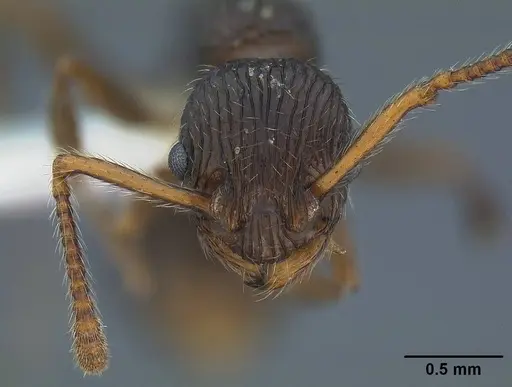
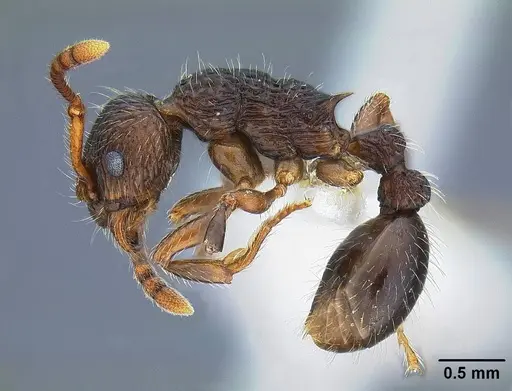
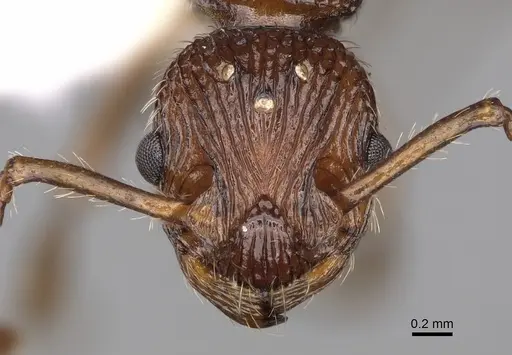
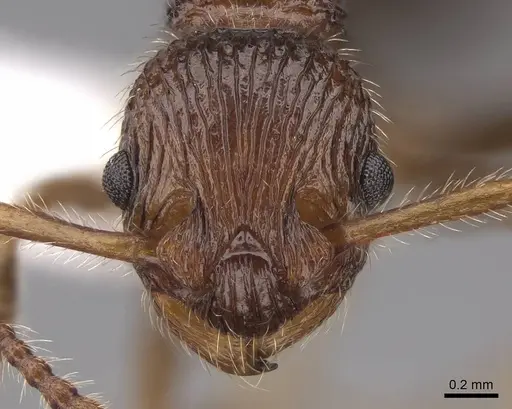
Myrmica punctinops workers can be identified by several key features: the head is subrectangular with convex sides, the mesosomal dorsum has a convex profile (distinctly raised above the propodeum), and the first gastric segment has large rounded punctures but lacks the coarse punctures found in eastern Myrmica species. The propodeal spines are short and thin, projecting backward and upward at about 45°. The body is light to dark reddish-brown with a darker gaster and lighter yellowish appendages. Long erect hairs on the gaster are as long as or longer than the greatest diameter of the eye, this is a useful field characteristic [1].
Housing and Nesting
Since this species has never been kept in captivity, housing recommendations are based on inference from collection data and typical Myrmica husbandry. The forest litter collection suggests they prefer humid, soil-based environments. For founding colonies, a standard test tube setup with a water reservoir works well, keep the cotton moist but not flooded. For established colonies, a Y-tong (acrylic) or plaster nest with a moisture chamber allows for humidity control. The small worker size (around 1mm) means standard test tube barriers are effective, escape risk is low compared to very tiny species.
Feeding and Diet
Diet preferences have not been documented for this species. Based on typical Myrmica behavior, they likely forage for honeydew from aphids and small insects. In captivity, offer sugar water or honey as a constant energy source, and protein sources like fruit flies, small mealworms, or other tiny insects twice weekly. Myrmica are not specialized predators, so a varied diet of sugars and protein works well. Remove uneaten prey after 24-48 hours to prevent mold.
Temperature and Seasonal Care
No specific temperature data exists for this species. The collection sites span from 44m to 1615m elevation in California, suggesting tolerance for varied conditions. However, the higher elevation forest habitat implies a preference for cooler temperatures than tropical ants. Start around 18-22°C and monitor colony behavior, if workers cluster near a heat source, increase slightly, if they avoid it, reduce temperature. Like other Myrmica in temperate regions, they likely require a winter dormancy period. Provide 3-4 months at 5-10°C during winter months to support colony health.
Frequently Asked Questions
How do I identify Myrmica punctinops ants?
Myrmica punctinops workers are small (1-1.3mm body length) with a reddish-brown body, darker gaster, and yellowish legs. Key identification features include a convex mesosomal profile, short propodeal spines pointing back at 45°, and large punctures on the first gastric segment without the coarse punctures seen in eastern species. Long erect hairs on the gaster are as long as or longer than the eye diameter [1].
Where does Myrmica punctinops live?
This species is endemic to California, USA. It has been found at two locations: the San Gabriel Mountains (Charlton Flat at 1615m elevation in oak/pine forest) and Fort Ord on the Monterey coast (44m elevation in maritime chaparral). It may also occur in Oregon [1][2].
Can I keep Myrmica punctinops in a test tube?
Yes, a test tube setup is appropriate for founding colonies. Keep the water reservoir filled and maintain moist cotton. Standard test tube barriers work well since workers are about 1mm, they cannot easily escape. For established colonies, consider a Y-tong or plaster nest for better humidity control.
What do Myrmica punctinops ants eat?
Diet is not documented for this species, but based on typical Myrmica behavior, offer sugar water or honey as a constant energy source and small insects (fruit flies, pinhead crickets, small mealworms) as protein twice weekly. Remove uneaten prey after 24-48 hours.
Do Myrmica punctinops ants need hibernation?
Likely yes. Most Myrmica species in temperate North America require a winter dormancy period. Provide 3-4 months at 5-10°C during winter. This is inferred from typical Myrmica biology, not specifically documented for this species.
How long does it take for Myrmica punctinops to develop from egg to worker?
This is unknown, no development data exists for this species. Based on typical Myrmica genus patterns, expect approximately 6-10 weeks from egg to first worker at optimal temperature. This is an estimate only.
Are Myrmica punctinops good for beginners?
This species is not recommended for beginners due to the complete lack of documented care information. Only workers have ever been collected, finding a queen may be difficult or impossible. Starting a colony is essentially experimental. For beginners, better-documented Myrmica species like Myrmica rubra or Myrmica ruginodis are recommended.
Do Myrmica punctinops ants sting?
Myrmica ants have stingers but their stings are typically too weak to penetrate human skin. Most keepers report only a mild sensation if stung. The sting is primarily effective against small prey insects rather than human skin.
How big do Myrmica punctinops colonies get?
Colony size is unknown, no colony data exists for this species. Most Myrmica colonies reach several hundred to a few thousand workers. Expect moderate colony growth based on typical genus patterns.
Can I keep multiple Myrmica punctinops queens together?
This is unknown. Colony structure (single-queen or multi-queen) has not been documented for this species. Most Myrmica are monogyne (single queen), but some species can be polygynous. Do not attempt combining unrelated queens without research specific to this species.
What temperature should I keep Myrmica punctinops at?
No specific data exists. Based on habitat inference (cool forest elevations), start around 18-22°C. Monitor colony behavior, workers will move toward their preferred temperature zone. Avoid overheating.
Why is so little known about Myrmica punctinops?
This is a recently described species (2007) known only from a handful of worker specimens. The queen and male have never been collected, and no ecological or behavioral studies have been published. It represents an opportunity for careful observation if you can locate a colony.
References

This caresheet is licensed under CC BY-SA 4.0 .
CASENT0005706
View on AntWeb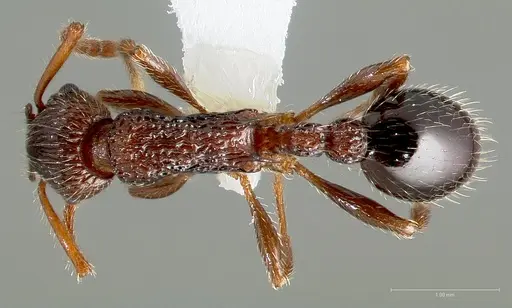
CASENT0844118
View on AntWeb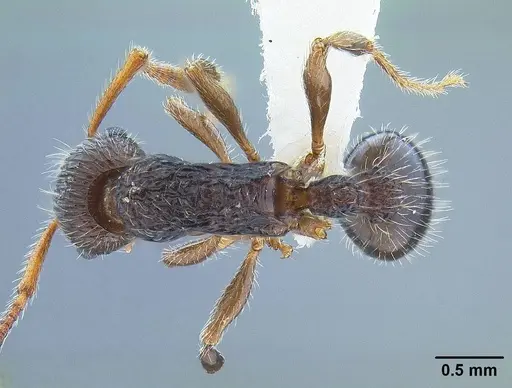
CASENT0862448
View on AntWeb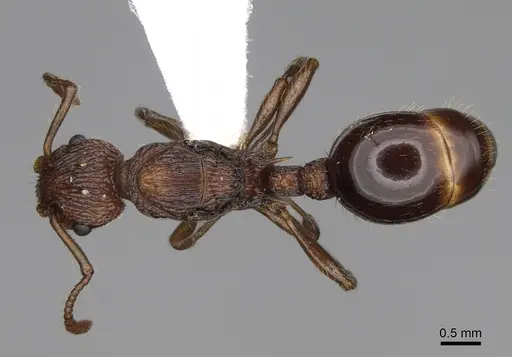
CASENT0922760
View on AntWeb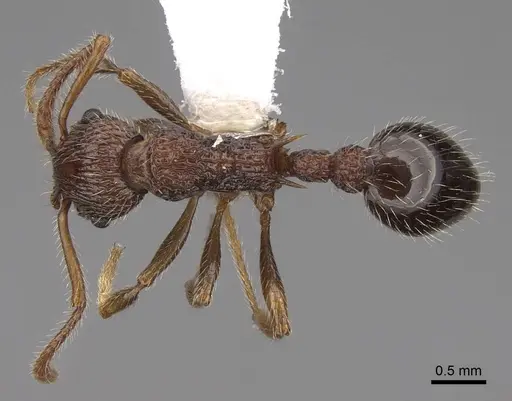
Literature
Loading...Loading products...