

Myrmica nefaria
- Scientific Name
- Myrmica nefaria
- Tribe
- Myrmicini
- Subfamily
- Myrmicinae
- Author
- Bharti, 2012
- Distribution
- Found in 1 countries
Myrmica nefaria Overview
Myrmica nefaria is an ant species of the genus Myrmica. It is primarily documented in 1 countries , including India. Detailed taxonomic data and occurrence records can be further explored via authoritative databases such as AntWeb or the Global Biodiversity Information Facility (GBIF).
Myrmica nefaria
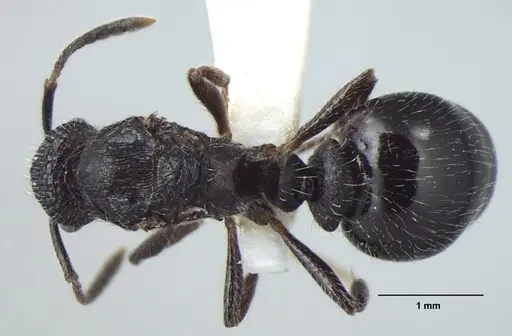
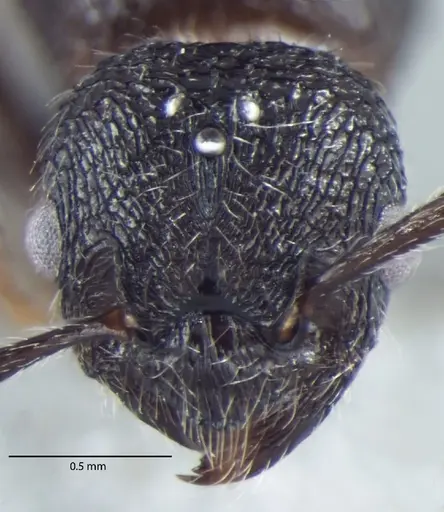
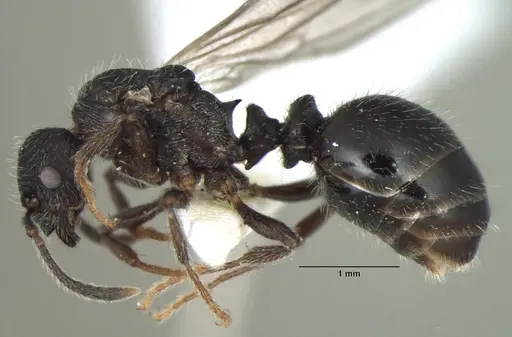
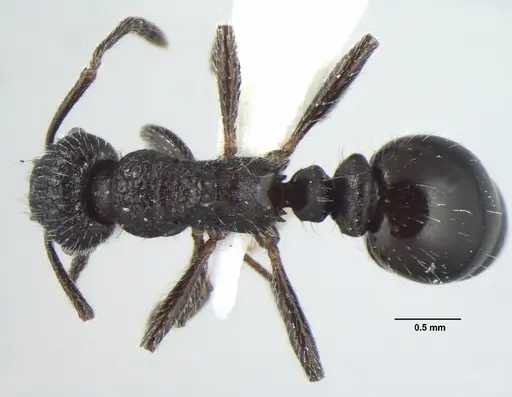
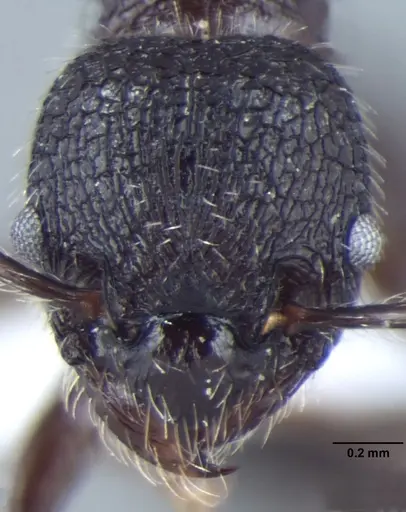
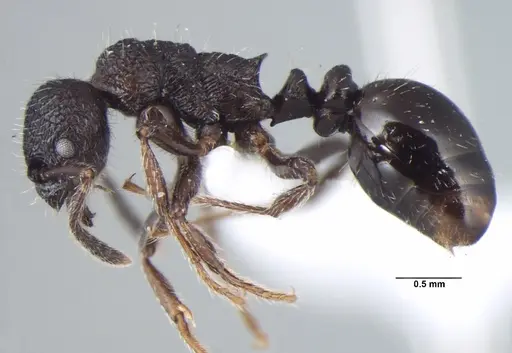
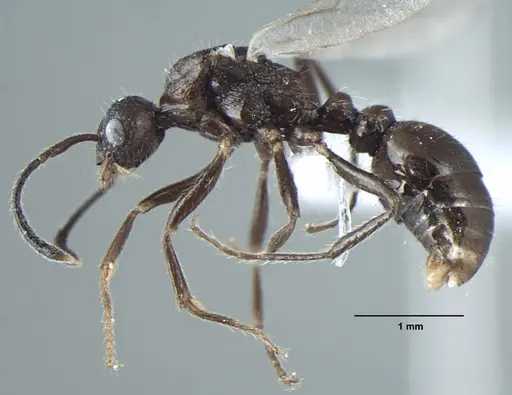
Myrmica nefaria is a small, socially parasitic ant species endemic to the high altitudes of the Indian Himalaya. The species has a distinctive appearance with a dark brown head, alitrunk, petiole and post-petiole, while the antennae, mandibles and legs are reddish-yellow [1]. This ant is a true inquiline social parasite, it lives within colonies of its host species Myrmica rupestris, where the parasitic queen coexists with the host queen rather than replacing her [1][2]. This makes M. nefaria one of the more unusual Myrmica species you could consider keeping, as it cannot establish a colony independently. The species follows what scientists call Emery's rule, meaning it closely resembles its host species in appearance, likely having evolved from it relatively recently [1].
Quick Summary
- Difficulty: Expert
- Origin & Habitat: Solang Valley, Himachal Pradesh, India at 2469m elevation in the temperate Himalayan zone [3]. Nests are found under stones in open grassland with mixed vegetation including bushes, shrubs, broadleaf trees and scattered conifers [3]. The region experiences snow cover from December to March and represents a transitional zone between Greater and Trans Himalaya [3].
- Colony Type: Inquiline social parasite, parasitic queen coexists with host queen Myrmica rupestris in the same colony. Unlike some social parasites, M. nefaria is not completely workerless and has the potential to produce its own workers [1][2]. This is NOT a species you can keep as an independent colony.
- Size & Growth:
- Queen:{.size-link} ~6-8mm (inferred from Myrmica genus)
- Worker:{.size-link} ~4-6mm (inferred from Myrmica genus)
- Colony: Unknown, as a parasitic species living in host colonies, typical colony size is difficult to determine separately from the host
- Growth: Unknown, parasitic nature makes growth patterns difficult to study
- Development: Unknown, no direct studies on development timing exist for this species (Development is likely tied to the host colony cycle. As an inquiline, this species raises its brood alongside host brood using host worker resources.)
- Antkeeping:
- Temperature: Based on collection data: 30°C air temperature at time of collection [3]. However, this was a single point measurement. Given the high-altitude Himalayan location (2469m), expect preference for cooler conditions than tropical ants. Aim for roughly 18-22°C as a starting point, similar to other Himalayan Myrmica species.
- Humidity: Recorded at 68% relative humidity at collection site [3]. Keep nest substrate moderately moist but not waterlogged. Provide a gradient with slightly drier areas available.
- Diapause: Yes, the region experiences snow cover from December to March [3]. You will need to provide a winter dormancy period mimicking these conditions, likely 3-4 months at cool temperatures (5-10°C).
- Nesting: In nature, nests are found under stones in soil [3]. For captive care, you would need a naturalistic setup with a host Myrmica rupestris colony. A formicarium with soil substrate and stones on top would mimic natural conditions. However, keeping this species requires advanced knowledge of social parasitism.
- Behavior: This is a specialized social parasite. The parasitic queens infiltrate host colonies and coexist with the host queen rather than killing her. Workers are produced that may assist the host workers or operate somewhat independently. The species is not aggressive and relies entirely on the host colony for survival during the founding phase. Escape risk is low given the small colony sizes typical of parasitic species, but the primary challenge is keeping the host colony alive and healthy.
- Common Issues: This species cannot be kept without a host Myrmica rupestris colony, it is an obligate social parasite., Host colony health is critical, if the host colony dies, the parasitic colony will also die., Finding a legitimate host species (Myrmica rupestris) may be difficult or impossible in captivity., Social parasite colonies are inherently unstable compared to normal ant colonies., This species should only be kept by expert antkeepers with specific experience in parasitic ant husbandry.
Understanding Myrmica nefaria as a Parasitic Species
Myrmica nefaria is what scientists call an inquiline social parasite. This is one of the most specialized lifestyles in the ant world. Unlike some parasites that kill the host queen and take over the colony, M. nefaria queens actually coexist peacefully with the host Myrmica rupestris queen in the same nest [1][2]. This is remarkably unusual, most social parasites are much more aggressive toward their hosts. The species follows Emery's rule, meaning it looks very similar to its host species. This makes biological sense because the parasite evolved from the host species relatively recently, and looking similar helps the parasite blend in and avoid being recognized as an intruder by host workers [1]. What makes this species even more unusual is that it's not completely workerless like many inquiline parasites, it has the potential to produce its own workers alongside the host workers [1]. This represents a rare intermediate stage in the evolution of social parasitism.
The Challenge of Keeping a Parasitic Ant Species
You cannot keep Myrmica nefaria the way you would keep a normal ant species. This is an obligate social parasite, meaning it cannot survive without a host colony of Myrmica rupestris. The parasitic queen needs host workers to feed her, care for her brood, and maintain the nest. Without a host colony, the parasitic colony will simply die. This makes M. nefaria one of the most challenging ant species to keep in captivity, it is absolutely not suitable for beginners or even intermediate antkeepers. You would need to first establish a healthy Myrmica rupestris colony, then somehow introduce the parasitic queen without the host workers killing her. This is extraordinarily difficult and rarely attempted even by professional ant researchers. The parasitic relationship is delicate, and any disturbance can cause the host workers to turn on and kill the intruder [1][2].
Natural Habitat and Environmental Conditions
In the wild, Myrmica nefaria is known only from the Solang Valley in Himachal Pradesh, India, at an altitude of 2469 meters [3]. This is a high-altitude temperate environment that remains snow-covered from December to March. The nests are found under stones in open grassland areas with mixed vegetation including bushes, shrubs, broadleaf trees, and widely scattered conifers [3]. At the time researchers collected the type specimens, the air temperature was 30°C and relative humidity was 68% [3]. However, this was a single measurement during summer collection. The region experiences freezing winters, so the ants are adapted to significant seasonal temperature variations. The valley has two distinct areas: sunny, dry, rock-strewn areas where Formica species dominate, and shadier, wetter areas with more vegetation where Myrmica species are found [3]. This suggests M. nefaria prefers the cooler, shadier microhabitats.
Why Most Antkeepers Should Not Keep This Species
Let me be direct: unless you are a professional myrmecologist or have specific research objectives, you should not attempt to keep Myrmica nefaria. This species is not available through any legitimate ant vendors because it cannot be kept independently. The requirements for successful husbandry are extraordinarily specific: you need a living Myrmica rupestris host colony, you need to obtain a parasitic queen without the host workers killing her, and you need to maintain both species in equilibrium. There is no established protocol for this in captive antkeeping because it is fundamentally different from keeping any free-living ant species. Even researchers who described this species in 2012 collected the parasitic ants from wild nests alongside their hosts, they did not attempt to maintain them in captivity [1]. If you are interested in keeping Myrmica species, consider much more accessible species like Myrmica rubra or Myrmica ruginodis that are widely available and well-documented.
Frequently Asked Questions
Can I keep Myrmica nefaria like other Myrmica ants?
No. Myrmica nefaria is an obligate social parasite that cannot survive without a host Myrmica rupestris colony. It is not a free-living species and cannot be kept using standard antkeeping methods. This species is not available through any ant vendors and should only be kept by professional researchers.
What is an inquiline ant species?
An inquiline is a social parasite that lives within a host ant colony without completely taking it over. Unlike slave-makers that raid other colonies for workers, or temporary parasites that kill the host queen, inquiline parasites like M. nefaria coexist peacefully with the host queen and use the host workers to raise their brood [1][2].
What does Myrmica nefaria eat?
As a parasitic species living within a host colony, M. nefaria would be fed by host workers. The specific diet is not documented, but it would likely accept similar foods to its host Myrmica rupestris, typically nectar, honeydew, and small insects. However, you cannot keep this species without its host, making feeding considerations academic.
Do I need to hibernate Myrmica nefaria?
Yes, likely. The species comes from high-altitude Himalayan regions where winter temperatures drop significantly and snow covers the ground from December to March [3]. You would need to provide a winter dormancy period, but this would also require maintaining a healthy host colony through hibernation, an extremely complex undertaking.
How big do Myrmica nefaria colonies get?
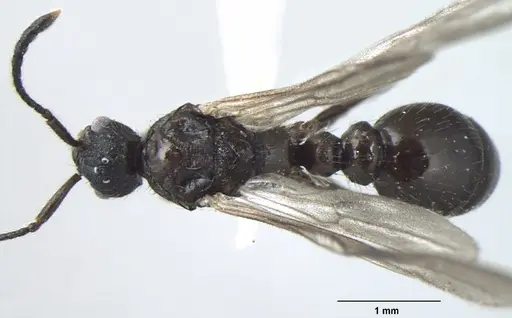
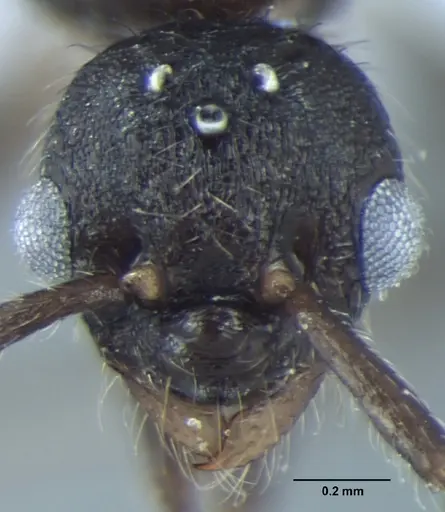
The maximum colony size is unknown. As an inquiline species, M. nefaria exists within host colonies, making it impossible to separate colony size estimates from the host colony. The original description mentions finding 62 alate gynes,5 workers, and 4 males along with 42 host workers from a single nest [1].
Is Myrmica nefaria a good species for beginners?
Absolutely not. This is an expert-level species, and in reality, it should only be kept by professional researchers. The species cannot be kept independently, requires a specific host species that is also difficult to obtain, and the parasitic relationship is extraordinarily delicate. There are no established captive breeding protocols for this species.
Where does Myrmica nefaria live in the wild?
Only known from Solang Valley in Himachal Pradesh, India, at 2469m elevation [3]. The species is endemic to this region and has not been found anywhere else in the world. Nests are found under stones in open grassland in the Himalayan temperate zone.
What makes Myrmica nefaria different from other Myrmica ants?
Most Myrmica species are free-living with their own queens founding colonies independently. M. nefaria is one of only a handful of known socially parasitic Myrmica species, and it represents a rare case where the parasite is not completely workerless, it can potentially produce its own workers while living alongside host workers [1]. This is an evolutionary intermediate form that fascinates researchers studying the origins of social parasitism.
Report an Issue
The current care sheet is based fully on literature. See inconsistencies, or something that's incorrect? Please , it will be resolved after review from an admin. Contributing to the blogs tab also helps providing information, to make us be able to further improve the caresheets. Thank you for your support!
References

This caresheet is licensed under CC BY-SA 4.0 .
Literature
Loading...Loading products...