

Myrmica bergi
- Scientific Name
- Myrmica bergi
- Tribe
- Myrmicini
- Subfamily
- Myrmicinae
- Author
- Ruzsky, 1902
- Distribution
- Found in 3 countries
Myrmica bergi Overview
Myrmica bergi is an ant species of the genus Myrmica. It is primarily documented in 3 countries , including Iran, Islamic Republic of, Kazakhstan. Detailed taxonomic data and occurrence records can be further explored via authoritative databases such as AntWeb or the Global Biodiversity Information Facility (GBIF).
Myrmica bergi
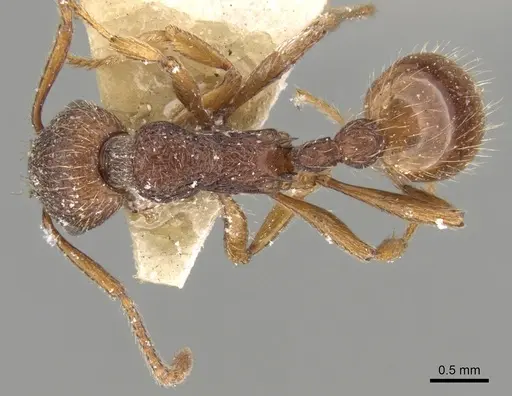
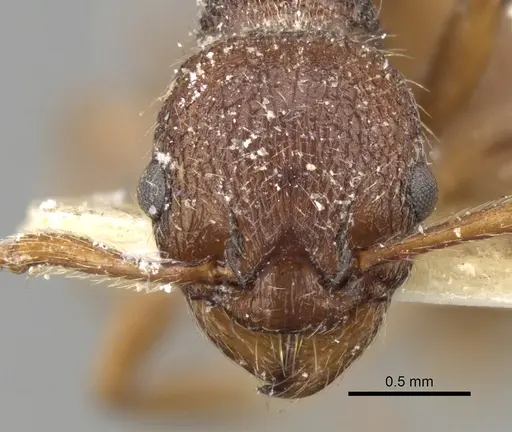
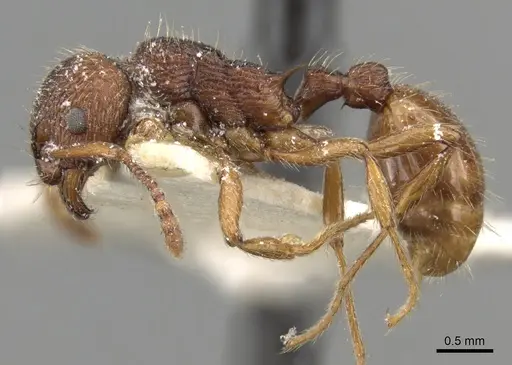
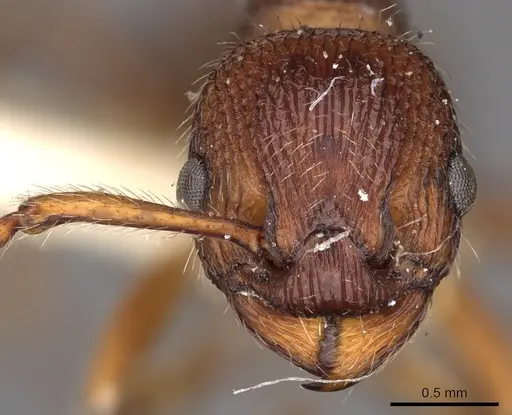
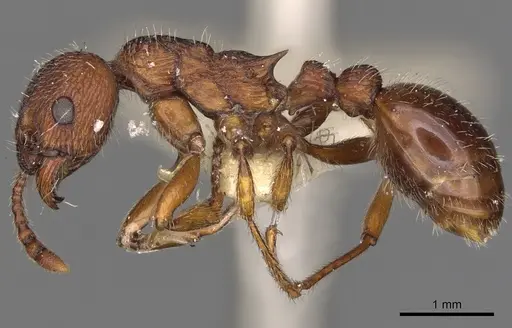
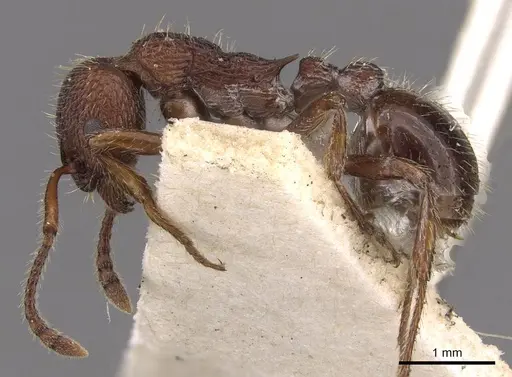
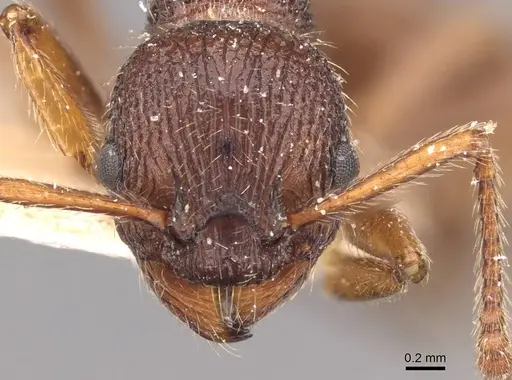
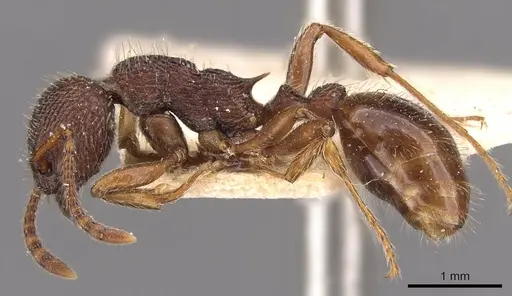
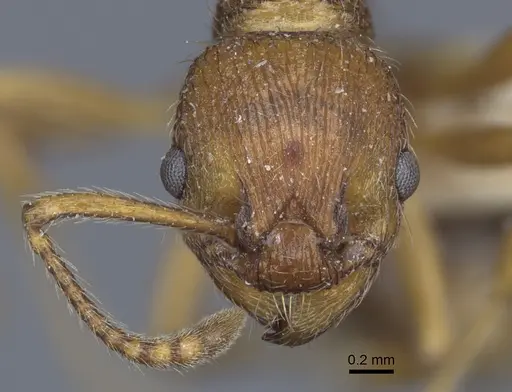
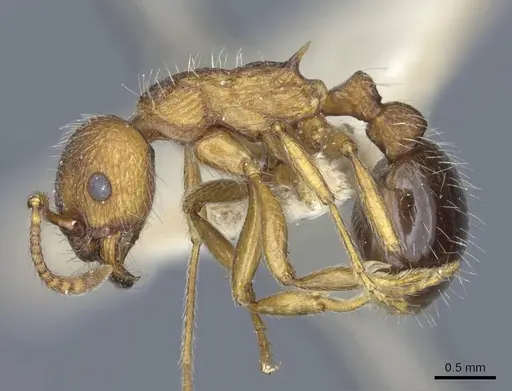
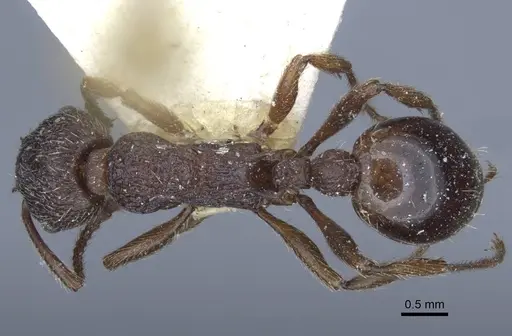
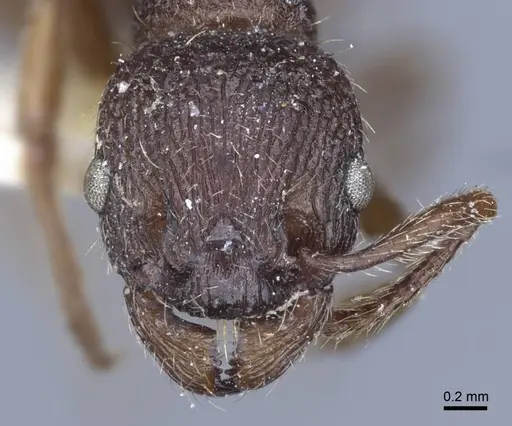
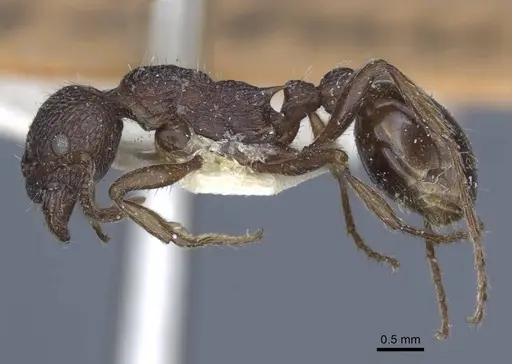
Myrmica bergi is a medium-sized Myrmica ant belonging to the scabrinodis species group. Workers are reddish-brown with a darker gaster, and they feature the characteristic short propodeal spines typical of the bergi-complex. This species is most similar to Myrmica gallienii but can be distinguished by its shorter spines and darker coloration [1]. Queens are similar in build to workers but larger, with full wing musculature for colony founding. The species was named after Prof. Lev Semenovich Berg, a distinguished Russian natural scientist [1].
What makes M. bergi truly remarkable is its extreme habitat specialization. Despite being found across dry regions from Europe to Central Asia, it exclusively inhabits damp, often salty locations like salt marshes, bogs, and riverbanks. These ants have developed impressive flood survival skills, when water levels rise, colonies migrate up plant stems and workers can swim dozens of meters to reach safety. They build distinctive soil mounds around their nests and form large polygynous colonies that can span multiple nests [1][2].
Quick Summary
- Difficulty: Medium
- Origin & Habitat: Myrmica bergi ranges across the Palaearctic region from Austria and Romania through Russia, Kazakhstan, Kyrgyzstan, Iran, and Turkey [1][3]. Despite being distributed in semi-arid and even arid regions, it lives exclusively in intrazonal damp habitats, think salt marshes bordering the Black Sea, lagoon shores, and the banks of salted lakes. In the Ukrainian steppe zone, they nest in reed, sedge, and grass associations that surround saline lakes. Around these lakes, workers forage over white salty deposits even in full sunshine [1]. In Kyrgyzstan, they live along river and stream banks up to 1600m altitude, in semi-shaded spots near willows and reeds [1].
- Colony Type: Facultatively polygynous, colonies can have either a single queen or multiple queens. Ukrainian populations are polygynous with several thousand workers and can form polycalic systems (multiple connected nests). However, populations in Kyrgyzstan have been recorded as monogynous (single queen). This flexibility likely represents local adaptation to different environmental conditions [1][2].
- Colony: Optionally polygyne
- Founding: Claustral
- Size & Growth:
- Queen: Estimated 6-8mm based on typical Myrmica morphology
- Worker: Estimated 4-6mm based on genus typical size
- Colony: Several thousand workers in mature colonies [1][2]
- Growth: Moderate, typical Myrmica development timeline
- Development: Estimated 6-10 weeks based on typical Myrmica scabrinodis-group development at warm temperatures (Development time follows typical Myrmica patterns, faster in warmer conditions (24-26°C), slower if kept cooler. First workers (nanitics) are typically smaller than mature workers.)
- Antkeeping:
- Temperature: Keep at 20-24°C. This is a temperate species that prefers moderate warmth rather than tropical heat. Room temperature (around 20-22°C) is ideal, with slight warming to 24°C accelerating brood development.
- Humidity: High humidity is essential, these ants naturally live in damp habitats like salt marshes and riverbanks. Keep nest substrate consistently moist but not waterlogged. Provide a water tube as a constant moisture source. The substrate should feel damp to the touch with no dry patches [1].
- Diapause: Yes, as a temperate species, Myrmica bergi requires a winter dormancy period. Reduce temperature to 5-10°C for 3-4 months (roughly October-March depending on your hemisphere). Place the colony in a cool location like an unheated garage or refrigerator during this period.
- Nesting: Y-tong (acrylic) nests work well for this species. They prefer chambers that aren't too large, appropriately scaled to colony size. Because they naturally build soil mounds, a naturalistic setup with moist substrate and some structure (like pieces of grass or reed stems) would be appreciated. Test tube setups work for founding colonies.
- Behavior: Myrmica bergi workers are active foragers that readily search for food both day and night depending on conditions. In their natural habitat, they forage in morning and evening on open ground but retreat to shade during hot midday hours. They are not particularly aggressive but will defend their nest vigorously if threatened. Workers have a functional stinger and can deliver a mild sting if handled roughly. Escape prevention is important, while not among the smallest ants, they are agile and will explore any gaps. Use standard Myrmica-level barriers (Fluon on test tube rims, tight-fitting lids) [1].
Housing and Nest Setup
For Myrmica bergi, you'll want to replicate their natural damp, structured habitat. Y-tong (acrylic) nests work excellently, choose one with chambers appropriately sized to your colony. The key requirement is maintaining high humidity. Use a water tube connected to the nest to provide constant moisture, and check that the substrate stays damp but never develops standing water.
For founding colonies, a simple test tube setup works well. Place the queen in a dark tube with a water reservoir (standard test tube setup). Once you have 10-20 workers, you can transition to a formicarium. Because they naturally build mounds around plant stalks, adding some structure to the outworld, like small pieces of wood or artificial plants, gives them something to anchor their activity around.
The outworld should be escape-proof. While M. bergi isn't among the tiniest ants, they're still skilled climbers. Apply Fluon to test tube rims and ensure all connections between nest and outworld are sealed. A standard barrier setup works fine for this species [1].
Feeding and Diet
Myrmica bergi is an opportunistic feeder with a typical Myrmica diet. In the wild, they forage for honeydew from aphids and other small insects. In captivity, offer a varied diet to ensure colony health.
Protein is essential for brood development. Offer small insects like fruit flies, small crickets, or mealworms. Feed protein prey 2-3 times per week, adjusting based on colony size. Remove any uneaten prey after 24-48 hours to prevent mold.
For carbohydrates, provide sugar water, honey, or diluted honey water. Change sugar sources every few days. A constant supply of sugar water helps sustain workers and supports queen egg-laying.
Fresh water must always be available. These ants naturally live in damp habitats and need reliable access to moisture [1][2].
Temperature and Seasonal Care
Myrmica bergi does best at moderate temperatures in the 20-24°C range. This matches their temperate origin across the Eurasian steppe zone. Room temperature (around 20-22°C) is perfectly suitable, and slight warming to 24°C can accelerate brood development during the active season.
Winter dormancy is essential for this species. As a temperate ant adapted to seasonal climates, they require a 3-4 month period of reduced activity. In autumn, gradually reduce temperature to around 5-10°C and keep them in a cool location, an unheated garage, basement, or refrigerator works well. This simulates natural winter conditions and helps synchronize the colony's biological rhythms.
During the active season (spring through fall), maintain stable warmth and humidity. Avoid placing the nest in direct sunlight or near heating vents that could cause drying. Their natural habitat in salt marshes and riverbanks provides consistent moisture, so avoid anything that might dry out the nest [1].
Colony Structure and Queen Care
One of the fascinating aspects of Myrmica bergi is its flexible colony structure. In Ukrainian populations, colonies are polygynous with multiple reproductive queens and can grow to several thousand workers, forming polycalic systems with multiple connected nests. However, in Kyrgyzstan populations, colonies are monogynous with just a single queen.
For antkeepers, this means your colony could develop either way. If you start with a single queen, she should establish a healthy monogyne colony. If you acquire a wild colony, it may already have multiple queens, this is normal for the species and they generally coexist peacefully.
Queens are claustral founders, after mating, the queen seals herself in a small chamber and raises the first brood alone using stored fat reserves. She doesn't forage during this time. The first workers (nanitics) are smaller than mature workers but will begin foraging to support colony growth. Expect 6-10 weeks from egg to first worker under optimal conditions [1][2].
Flood Adaptation and Unique Behaviors
Myrmica bergi has developed remarkable adaptations to flooding, which is directly relevant to their care. In their natural salt marsh habitat, seasonal flooding is common. When waters rise, colonies don't drown, instead, they migrate upward along plant stems, constructing temporary nests high above the water level, covered with soil and vegetation fragments. Workers have been observed swimming for dozens of meters to reach safety.
In captivity, this tells you something important: these ants are resilient to moisture but need escape routes. Ensure your setup allows them to stay above any water accumulation. The large soil mounds they build in nature also suggest they prefer some structural complexity in their nesting material.
Their foraging patterns are also distinctive. In nature, they forage actively in morning and evening on open ground but retreat to shade during hot midday hours. You might observe similar behavior in captivity, workers becoming more active during cooler parts of the day [1].
Frequently Asked Questions
How long does it take for Myrmica bergi to raise first workers?
Expect 6-10 weeks from egg to first worker under optimal conditions (around 24°C). The exact timing depends on temperature, warmer speeds development, cooler slows it. The queen will remain sealed in her chamber until the first nanitics emerge, then she will begin accepting food brought by workers.
Can I keep multiple Myrmica bergi queens together?
Yes, this species is facultatively polygynous, multiple queens can coexist in the same colony. Wild populations in Ukraine regularly have multiple queens. However, if combining unrelated foundress queens, introduce them carefully in a spacious setup with multiple chambers. Some keepers prefer to start with single queens to avoid potential aggression during founding [1][2].
Do Myrmica bergi ants sting?
Yes, Myrmica bergi workers have a functional stinger and can deliver a mild sting if threatened or handled roughly. The sting is not dangerous to healthy humans but can cause brief pain and minor irritation. They are not aggressive toward keepers but will defend their nest if disturbed [1].
What temperature range is best for Myrmica bergi?
Keep them at 20-24°C. Room temperature (20-22°C) is ideal, with slight warming to 24°C during active growth periods. Avoid temperatures above 28°C or below 15°C for extended periods. They are a temperate species and do not need tropical heat.
Do Myrmica bergi need hibernation?
Yes, they require a winter dormancy period. Reduce temperature to 5-10°C for 3-4 months during winter (roughly October-March). Place the colony in a cool location like an unheated garage or refrigerator. This rest period is important for colony health and may trigger spring breeding behavior.
How big do Myrmica bergi colonies get?
Mature colonies can reach several thousand workers. In their natural habitat in Ukraine, polygynous colonies are known to grow very large and can form polycalic systems spanning multiple nests. With proper care, your colony should reach several hundred workers within 1-2 years [1][2].
What should I feed Myrmica bergi?
Offer a varied diet: protein (small insects like fruit flies, crickets, or mealworms) 2-3 times per week, and constant access to sugar sources (sugar water, honey). Fresh water must always be available. Remove uneaten prey after 24-48 hours to prevent mold [1].
Is Myrmica bergi good for beginners?
This species is rated as medium difficulty. They have more specific humidity requirements than some hardy species, needing consistently damp conditions. However, they are not overly aggressive and their care requirements are well understood. If you can maintain proper moisture levels and provide winter dormancy, they are a rewarding species to keep.
When should I move Myrmica bergi from a test tube to a formicarium?
Move them once you have 15-25 workers and the test tube is becoming crowded. Make sure the formicarium has appropriately sized chambers, not too large for the colony size. The transition should be smooth, connect the test tube to the formicarium and let workers explore before removing the tube.
Why is my Myrmica bergi colony declining?
Common causes include: too dry conditions (they need constant moisture), improper temperature (too cold slows activity, too hot stresses the colony), insufficient food (especially protein for brood), or stress from disturbance. Check humidity first, their natural habitat is very damp. Also ensure they had proper hibernation if approaching winter.
References

This caresheet is licensed under CC BY-SA 4.0 .
CASENT0280824
View on AntWeb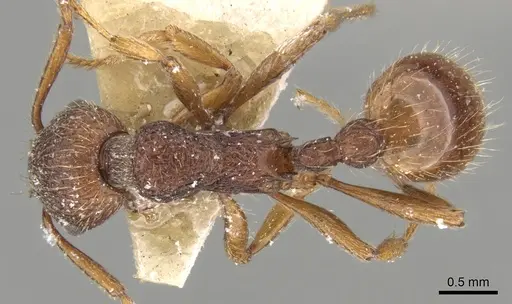
CASENT0900284
View on AntWeb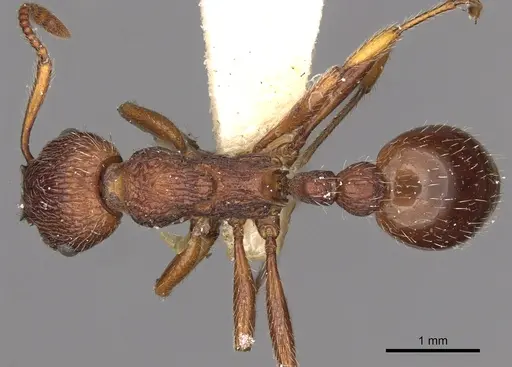
CASENT0904086
View on AntWeb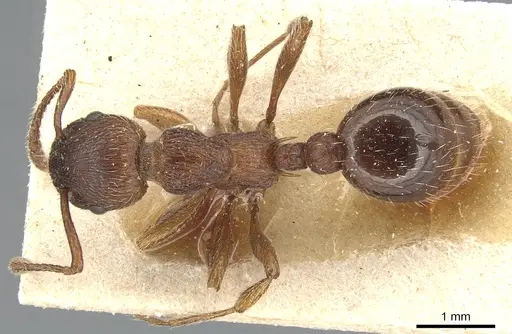
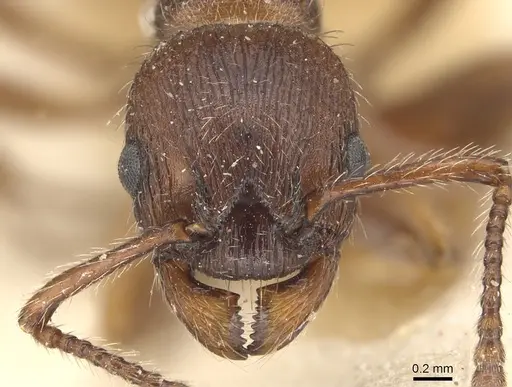
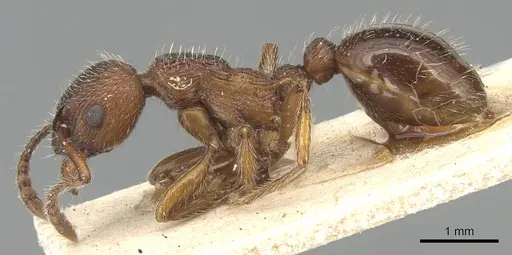
CASENT0907633
View on AntWeb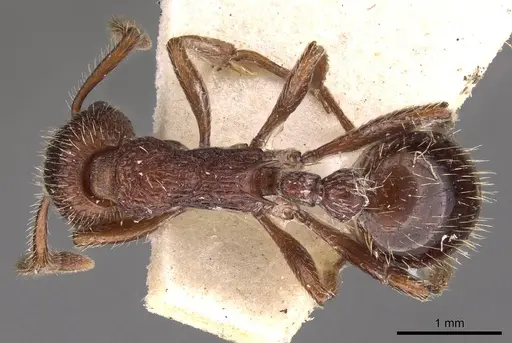
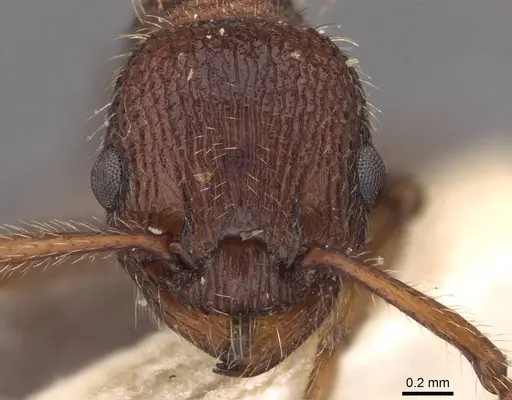
CASENT0907651
View on AntWeb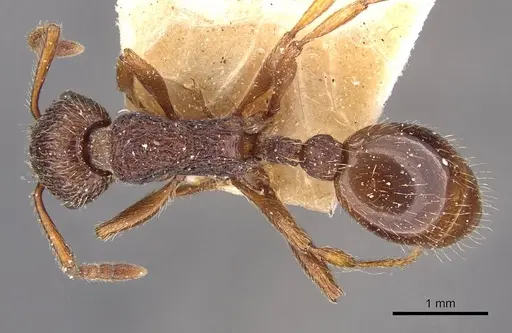
CASENT0916878
View on AntWeb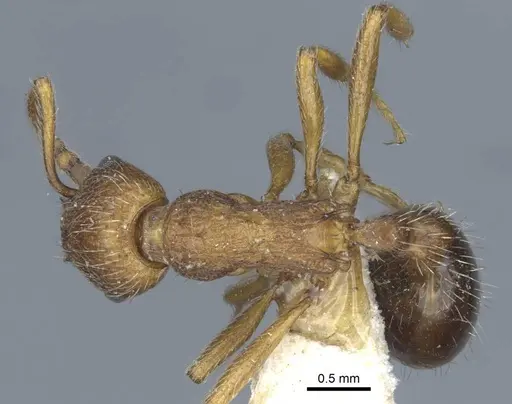
CASENT0916880
View on AntWeb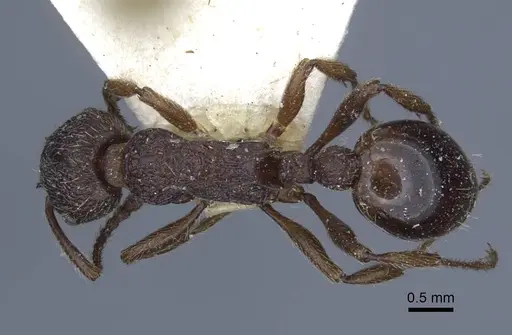
Literature
Loading...Loading products...