

Myrmica aloba
- Scientific Name
- Myrmica aloba
- Tribe
- Myrmicini
- Subfamily
- Myrmicinae
- Author
- Forel, 1909
- Distribution
- Found in 4 countries
Myrmica aloba Overview
Myrmica aloba is an ant species of the genus Myrmica. It is primarily documented in 4 countries , including Spain, France, Morocco. Detailed taxonomic data and occurrence records can be further explored via authoritative databases such as AntWeb or the Global Biodiversity Information Facility (GBIF).
Myrmica aloba
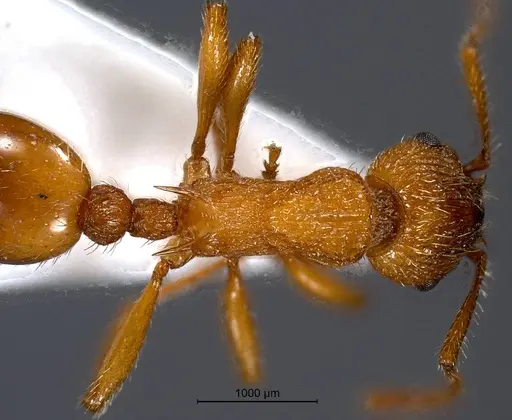
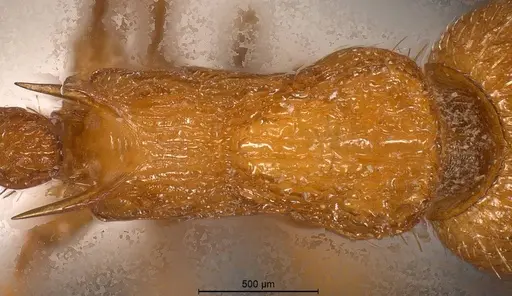
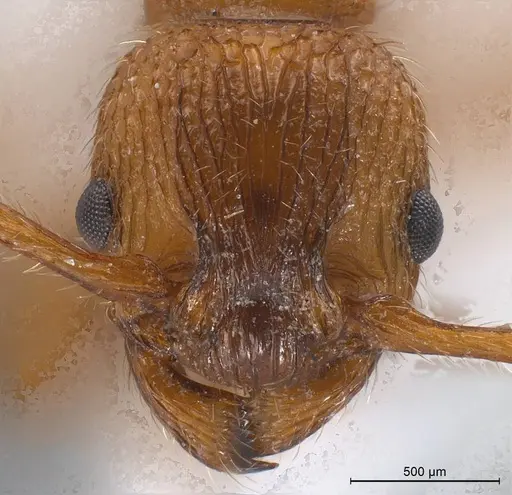
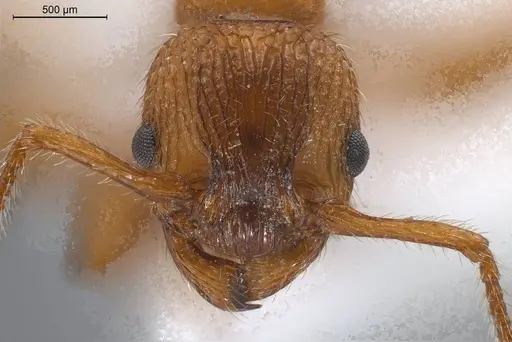
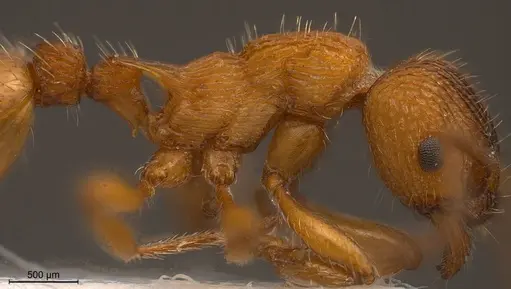
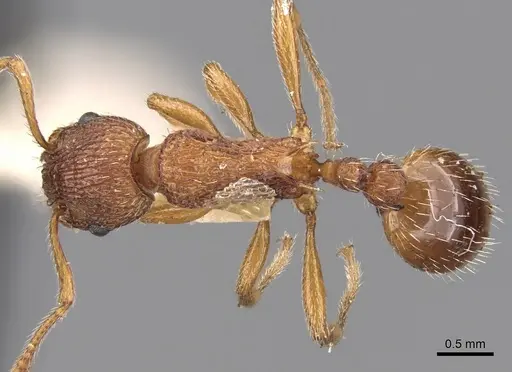
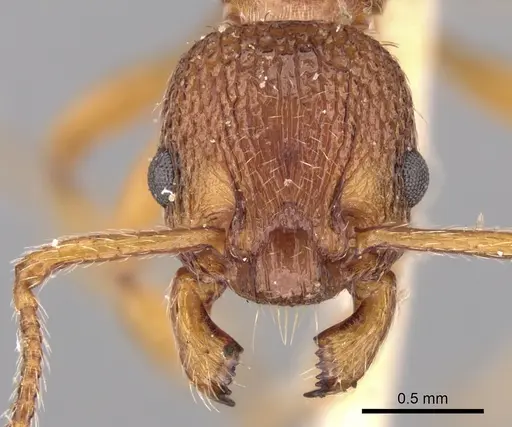
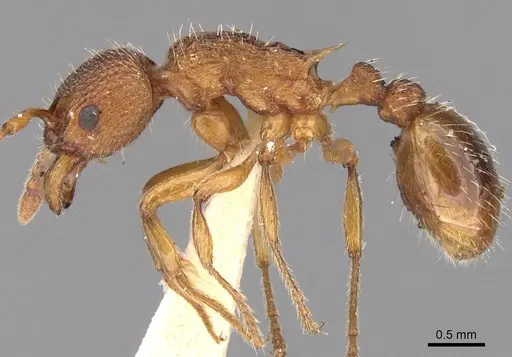
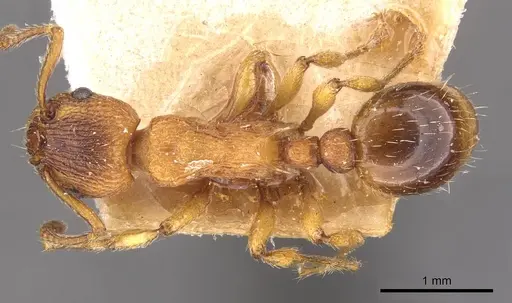
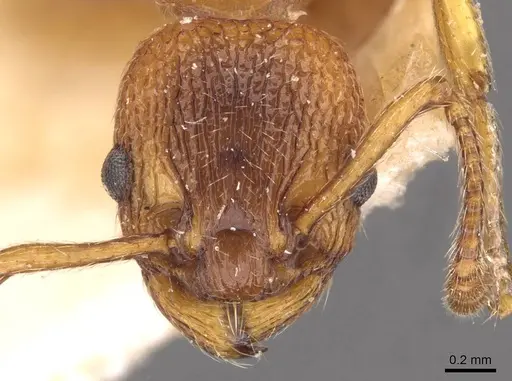
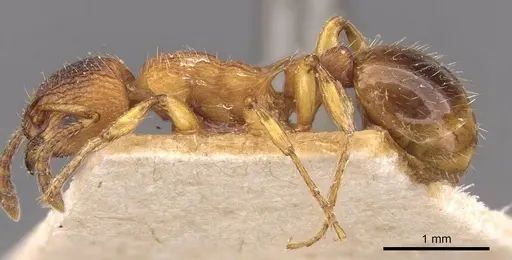
Myrmica aloba is a small reddish-brown ant belonging to the Myrmica scabrinodis species group, native to the Iberian Peninsula and surrounding regions. Workers measure around 4-6mm with the characteristic strongly curved antennal scape, but unlike its close relative M. scabrinodis, M. aloba lacks the lobe at the bend of the scape, this is how it got its name (a-loba means 'without lobe' in Greek). Queens are similar but larger. This species is one of the most thermophilic Myrmica ants, preferring hot but moist grassland habitats across Spain, Portugal, and the Balearic Islands. It often lives in cattle-grazed meadows near springs and watercourses, and serves as a host for the endangered Large Blue Butterfly (Phengaris alcon). Colonies are single-queen (monogyne) and can become quite populous.
Quick Summary
- Difficulty: Medium
- Origin & Habitat: Iberian Peninsula endemic found in hot but moist grasslands, river flood meadows, marshy areas, and mountain meadows from sea level to over 1,300m elevation. Prefers humid areas near water sources like springs, lakes, and dried-up watercourses. Found across Spain, Portugal, the Balearic Islands, and southern France [1][2][3].
- Colony Type: Monogyne (single-queen colonies). Queens are known to found nests claustrally, the queen seals herself in a chamber and raises the first workers alone using stored fat reserves. Documented as host to the social parasite Myrmica babiensis [4][5].
- Colony: Monogyne
- Founding: Claustral
- Size & Growth:
- Queen: Approximately 5-6mm (estimated based on genus patterns)
- Worker: 4-6mm [6]
- Colony: Likely several hundred workers based on related species in the scabrinodis group
- Growth: Moderate, typical for Myrmica species
- Development: 6-10 weeks (estimated based on typical Myrmica scabrinodis-group development at warm temperatures) (As a warmth-loving species from southern Europe, development may be faster than northern Myrmica species. Keep at warm room temperature for optimal development.)
- Antkeeping:
- Temperature: Warm conditions preferred, aim for 20-26°C. This is one of the most thermophilic Myrmica species, so provide warmer conditions than you would for northern European Myrmica like M. rubra. A heating cable on one side of the nest creates a useful gradient [2][3].
- Humidity: Moderate to high, they naturally live in moist habitats. Keep the nest substrate consistently damp but not waterlogged. Provide a water tube as a constant moisture source. Their native habitats include marshy grasslands and areas near springs [1][7].
- Diapause: Yes, as a temperate species, colonies will benefit from a winter rest period. Reduce temperature to around 5-10°C for 2-3 months during winter, mimicking their natural seasonal cycle in the Iberian mountains.
- Nesting: Y-tong (AAC) nests or plaster nests work well. These ants prefer tight chambers and will readily accept test tube setups for founding colonies. Provide soil or sand as substrate for nest building. Natural nesting sites include soil under grass tussocks and in cattle meadows near water [8].
- Behavior: Workers are active foragers, often seen hunting on rocks near dried-up watercourses in the wild. They are not particularly aggressive but will defend the nest if threatened. Like most Myrmica, they have a functional stinger but rarely sting unless handled roughly. Escape risk is moderate, use standard barrier techniques. They are generalist feeders accepting both protein and sugar sources. Colonies show moderate activity levels and can become quite populous over time [2].
- Common Issues: moisture management is critical, too dry and brood dies, too wet and mold becomes a problem, as a warmth-loving species, keeping them too cold will slow or stop colony development, social parasite Myrmica babiensis may attempt invasion, monitor for unusual large queens, wild-caught colonies may have parasites that need treatment, slow initial growth during founding phase can lead to overfeeding and mold problems
Natural History and Range
Myrmica aloba is an Iberian endemic, found exclusively in Spain, Portugal, the Balearic Islands, and southern France. It is one of the most thermophilic (warmth-loving) Myrmica species in Europe, which is unusual for a genus typically associated with cooler climates. This species occupies a similar ecological niche to Myrmica scabrinodis but in warmer regions, where M. scabrinodis lives in cooler climates, M. aloba takes its place in hotter but still moist habitats. They are commonly found in cattle-grazed meadows near springs, river flood plains, and marshy grasslands. In the mountains of Soria, Spain, they live alongside M. scabrinodis, with M. aloba avoiding the very boggy areas closest to springs. They are also a known host for the Large Blue Butterfly (Phengaris alcon), making them ecologically important beyond just being ants [9][2][3][1].
Temperature and Heating
This species needs warmer conditions than typical northern European Myrmica. In the wild, they inhabit hot Iberian grasslands and mountain meadows, so aim for 20-26°C in the nest area. Room temperature is often sufficient, but you may need a heating cable during cooler months. Unlike M. rubra or M. ruginodis that prefer cool conditions, M. aloba will thrive with warmth. Place a heating cable on one side of the nest to create a temperature gradient so workers can choose their preferred zone. Watch for increased activity near the warmer areas, if they consistently avoid your heated zone, reduce temperature slightly. Cold temperatures will slow or stop brood development entirely [2][3].
Humidity and Moisture
Despite being a warmth-loving species, M. aloba requires moist conditions, they are hygrophytic (moisture-loving). In the wild, they live in marshy grasslands, near springs, and in river flood meadows. Keep the nest substrate consistently damp but never waterlogged. A water tube connected to the nest works well for constant humidity. The substrate should feel damp to the touch. Allow some areas to dry slightly between waterings so the ants can choose their preferred moisture level. Too dry and your brood will fail, too wet and mold becomes a serious problem. Good ventilation helps balance moisture without letting the nest dry out [1][7].
Feeding and Diet
Like other Myrmica species, M. aloba is a generalist feeder. Offer protein sources like small insects (fruit flies, small crickets, mealworms) and sugar sources (honey water, sugar water). They will also collect honeydew from aphids if available. Feed protein 2-3 times per week and keep sugar water constantly available. Remove uneaten prey after 24-48 hours to prevent mold. Workers are active foragers in the wild, often hunting on rocks near watercourses, so they will readily search out food in captivity. A varied diet helps promote healthy colony growth [8].
Colony Founding
M. aloba follows the typical claustral founding pattern for Myrmica. A newly mated queen digs a small chamber in soil or under cover, then seals herself in. She lives entirely on her stored fat reserves while laying eggs and raising the first workers (nanitics). The founding chamber should be dark and undisturbed. Do not open or disturb the founding setup until you see workers, this usually takes 4-8 weeks depending on temperature. Once the first workers emerge, the colony can be fed small amounts of protein. The founding queen will remain laying eggs for the life of the colony [8].
Winter Care and Diapause
As a temperate species from the Iberian mountains, M. aloba benefits from a winter rest period. Reduce temperatures to around 5-10°C for 2-3 months during winter (roughly November through February in the Northern Hemisphere). Place the colony in a cool location like an unheated garage or refrigerator. Do not feed during diapause but keep the substrate slightly moist, never let it dry out completely. The cold period helps synchronize the colony's seasonal cycle and promotes healthy reproduction in spring. Do not skip hibernation for established colonies as it can weaken the colony over time [8].
Escape Prevention
Myrmica aloba workers are 4-6mm, so standard ant keeping barriers work well. Use Fluon or similar barrier coatings on the edges of outworlds. Test tube setups should have tight-fitting cotton plugs. When moving to a formicarium, ensure all connections are secure. They are not particularly strong climbers compared to some species, but they are determined foragers. Check for gaps around lids and tube connections regularly. Good escape prevention is especially important during nuptial flights when alates (reproductives) are present [8].
Frequently Asked Questions
Is Myrmica aloba a good species for beginners?
Myrmica aloba is rated as medium difficulty. While not as challenging as some exotic species, it does have specific requirements, particularly warmth and moisture. If you've kept other Myrmica like M. rubra successfully, this species should be manageable. The main challenges are providing adequate warmth (warmer than most Myrmica) and maintaining proper humidity without overwatering.
How long does it take for Myrmica aloba to produce first workers?
Expect 6-10 weeks from egg to first worker at optimal temperatures (around 22-26°C). The claustral queen seals herself in and raises the first brood alone. Once workers emerge, growth accelerates as the colony begins foraging. Patience is key during the founding phase, do not disturb the queen while she is sealed in her chamber.
Do Myrmica aloba ants sting?
Yes, Myrmica aloba has a stinger, but they rarely use it unless directly threatened or handled roughly. The sting is mild for most people, similar to a minor bee sting. These ants are not aggressive toward humans and will usually flee rather than attack. They are more likely to defend their nest if disturbed.
Can I keep multiple Myrmica aloba queens together?
No, M. aloba is monogyne, colonies have a single queen. Unlike some social parasites or polygynous species, multiple unrelated queens will fight. If you capture a dealate queen, house her alone in a founding setup. Only introduce a queen to an established colony if you are attempting pleometrosis (multiple queens founding together), which is not recommended for this species.
What temperature do Myrmica aloba need?
Keep them warm, aim for 20-26°C. This is one of the most thermophilic Myrmica species, so provide warmer conditions than you would for northern European species. Room temperature is often sufficient, but you may need supplemental heating in cooler climates. A heating cable on part of the nest creates a gradient workers can choose between.
Do Myrmica aloba need hibernation?
Yes, they benefit from a winter rest period. Reduce temperature to 5-10°C for 2-3 months during winter. This mimics their natural seasonal cycle in the Iberian mountains. Keep the substrate slightly moist during diapause but do not feed. Skipping hibernation can weaken colonies over time.
What do Myrmica aloba eat?
They are generalist feeders. Offer small insects (fruit flies, pinhead crickets, mealworms) as protein 2-3 times per week, and provide sugar water or honey water constantly. They will also collect honeydew from aphids. Remove uneaten prey after 24-48 hours to prevent mold.
How big do Myrmica aloba colonies get?
Based on related species in the scabrinodis group, colonies likely reach several hundred workers. They are not among the largest Myrmica but can become quite populous over several years. Growth rate is moderate, faster once the first workers emerge and begin foraging.
Where is Myrmica aloba found in the wild?
M. aloba is endemic to the Iberian Peninsula, found in Spain, Portugal, the Balearic Islands, and southern France. They live in hot but moist grasslands, marshy meadows, river flood plains, and mountain pastures near springs. They are one of the most thermophilic Myrmica species in Europe.
Is Myrmica aloba endangered by the Argentine ant?
Yes, this is a concern. M. aloba is vulnerable to Argentine ant (Linepithema humile) invasion. Studies in Doñana National Park and the Balearic Islands show M. aloba declines where Argentine ants establish. They are native to humid natural habitats and do poorly in disturbed areas. On islands like Mallorca, M. aloba has been pushed to near extinction by Argentine ants.
What makes Myrmica aloba different from Myrmica scabrinodis?
M. aloba is almost identical to M. scabrinodis but lacks the lobe at the bend of the antennal scape (hence the name 'aloba' meaning without lobe). It also prefers warmer, more humid habitats than M. scabrinodis. In Spain, M. aloba replaces M. scabrinodis in warmer regions. They are members of the same species complex and were once classified as the same species.
References

This caresheet is licensed under CC BY-SA 4.0 .
Literature
Loading...Loading products...