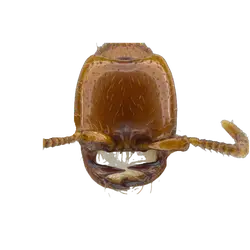
Neoponera cavinodis - "Unknown"
Neoponera cavinodis is a fascinating Neotropical ant species, distinct for its unique petiolar shape. Workers are dark brown, measuring around 8 mm in total length, with a petiole that has a strongly concave posterior face and a broadly rounded, convex anterior face, ending in a point posteriorly. Queens are similarly sized, about 8 mm, and are dark reddish-brown. Males are also around 8 mm, medium brown with yellowish-brown heads. This species is known from various parts of South and Central America, and has been collected from tropical canopy fogging experiments, indicating an arboreal or semi-arboreal lifestyle.
- Difficulty: Medium
- Origin & Habitat: South America (Brazil, Ecuador, Peru, Guyana) and Central America (Panama). in Tropical rain forests, typically found at elevations between 50 and 600 meters. They have been collected via canopy fogging, suggesting they inhabit trees..
- Colony Type: Monogyne, claustral (queens collected as dealates from canopy, though specific founding details are not well documented). founding.
- Size & Growth:
- Queen: 8-8mm
- Worker: 8-8mm
- Colony: Small (likely hundreds, based on general Ponerine characteristics, but specific data for N. cavinodis is limited). Slow (Ponerine ants often have slower growth rates compared to Myrmicine or Formicine species) growth.
- Antkeeping:
- Temperature: Aim for a stable temperature range of 24-28°C (75-82°F) to mimic their tropical habitat. Consistency is key for their brood development..
- Humidity: High humidity is crucial, ideally between 70-90%. A constant moisture gradient in the nest is beneficial for all life stages..
- Diapause: Not required. Not specified at Not specified.
- Nesting: Given their collection from canopy fogging, a nest with arboreal features or a good substrate setup is recommended. Nests that allow for a humidity gradient are ideal. Ytong, naturalistic setups with cork bark, or even specialized acrylic setups with a substrate layer would be suitable..
- Behavior: Medium (towards prey, potentially defensive if nest is disturbed) aggressiveness.
- Common Issues: Humidity fluctuations, Insufficient protein diet, Stress from disturbance, Escape attempts (Ponerines can be good at finding weaknesses in setups).
Neoponera cavinodis ants, being a tropical species, thrive in a stable and warm environment. Maintaining consistent temperatures and high humidity is paramount for their well-being. Fluctuations can stress the colony and hinder brood development, so a reliable heating source and a setup that retains moisture well are vital. Consider using a thermometer and hygrometer to monitor these conditions closely within their formicarium.
Feeding these ants requires a diverse diet of protein and sugars. They are predatory, so live insects like crickets, roaches, or mealworms are essential for their protein needs. Offer various sugar sources, such as diluted honey or sugar water, which provide necessary energy for the colony. Always ensure any feeder insects are captive-bred to avoid introducing pesticides or parasites to your colony.
Observation of Neoponera cavinodis might be a bit different from other commonly kept species. Some related Neoponera species are known to be quite shy or to hide when disturbed, which can make observation challenging. Providing a dark area for their nest and using a red filter for viewing can help reduce stress and encourage more natural behavior for those moments you want to peek in.
Ponerine ants, including Neoponera, are known for their distinct life cycles and colony structures. While specific details for N. cavinodis can be scarce, understanding the general Ponerine behavior, such as their often smaller colony sizes and direct larval feeding, will aid in their care. These ants do not have true workers and queens that look vastly different in size, making identification of the queen more subtle.
Frequently Asked Questions
What is the ideal temperature for a Neoponera cavinodis colony?
For optimal health and development, aim to keep your Neoponera cavinodis colony within a stable temperature range of 24-28°C (75-82°F). Consistency is key to their success in the formicarium.
How much humidity do Neoponera cavinodis ants need?
These tropical ants require high humidity, ideally between 70-90%. A well-designed nest that provides a constant moisture gradient will help them thrive and keep their brood healthy.
What should I feed my Neoponera cavinodis ants?
Neoponera cavinodis are predatory ants, so a diet rich in protein is essential. Offer them live insects like crickets, small roaches, or mealworms. Supplement this with various sugar sources, such as diluted honey or sugar water, to provide them with ample energy.
What kind of nest is best for Neoponera cavinodis?
Given their natural habitat in tropical canopies, a nest that can maintain high humidity and offers a naturalistic feel is best. Options like Ytong nests, setups with cork bark, or specialized acrylic nests with a substrate layer are often recommended.
Are Neoponera cavinodis queens claustral or semi-claustral?
Neoponera cavinodis queens are considered claustral. This means the queen can found her colony independently, sealing herself in a chamber and relying on her stored energy to raise the first generation of workers.
How large do Neoponera cavinodis colonies get?
While specific numbers for Neoponera cavinodis are limited, Ponerine species generally form smaller colonies compared to many other ant groups, likely numbering in the hundreds rather than thousands.
Do Neoponera cavinodis sting?
Yes, like many Ponerine ants, Neoponera cavinodis workers are capable of stinging. While generally not aggressive towards keepers unless provoked, caution should always be exercised during handling or maintenance.
What is the size difference between a Neoponera cavinodis queen and worker?
Both queens and workers of Neoponera cavinodis are around 8 mm in total length. This slight morphological difference between castes is typical for many Ponerine species, where queens and workers can appear quite similar.
Is diapause required for Neoponera cavinodis?
No, Neoponera cavinodis is a tropical species and does not require diapause or a hibernation period. Consistent warm temperatures and high humidity year-round are necessary for their continuous development.
What are common issues when keeping Neoponera cavinodis?
Keep an eye out for common antkeeping issues such as humidity fluctuations, which can be detrimental. Ensuring a consistent protein diet is crucial, and minimizing disturbances will help reduce stress. Like many ants, they can also be prone to escape attempts if your setup isn't secure.