

Myrmecocystus koso
- Scientific Name
- Myrmecocystus koso
- Tribe
- Lasiini
- Subfamily
- Formicinae
- Author
- Snelling, 1976
- Distribution
- Found in 1 countries
Myrmecocystus koso Overview
Myrmecocystus koso is an ant species of the genus Myrmecocystus. It is primarily documented in 1 countries , including United States of America. Detailed taxonomic data and occurrence records can be further explored via authoritative databases such as AntWeb or the Global Biodiversity Information Facility (GBIF).
Myrmecocystus koso
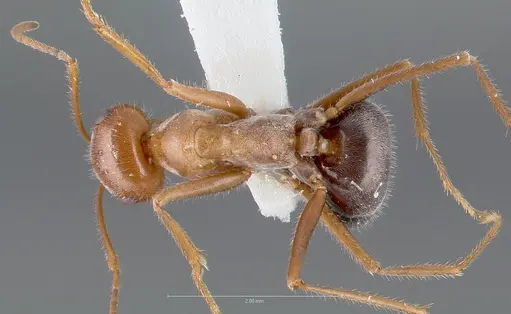
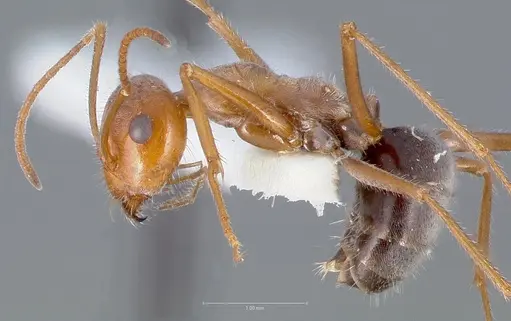
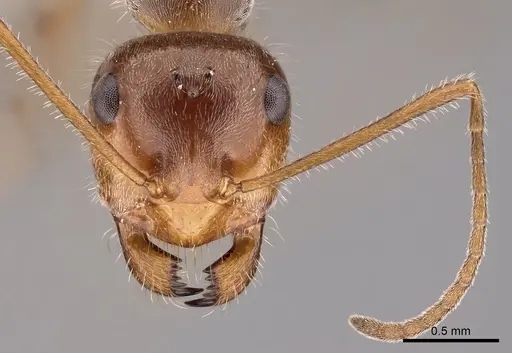
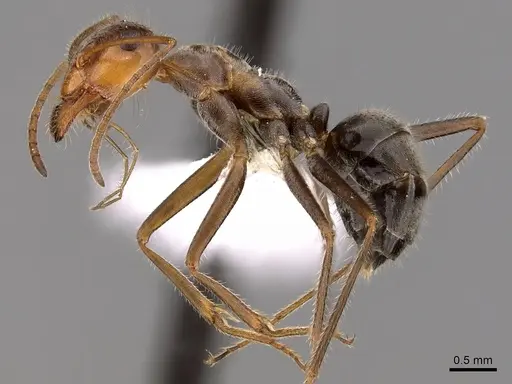
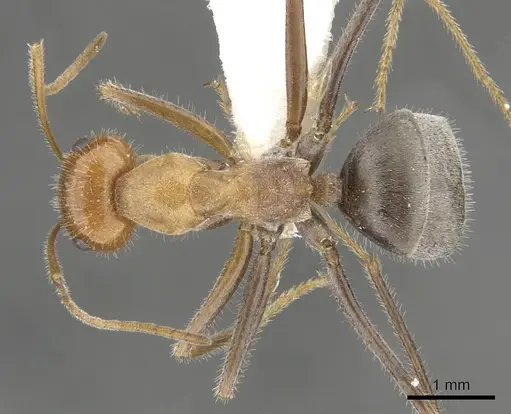
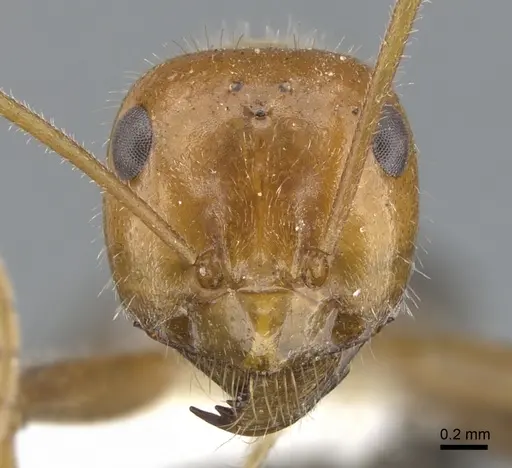
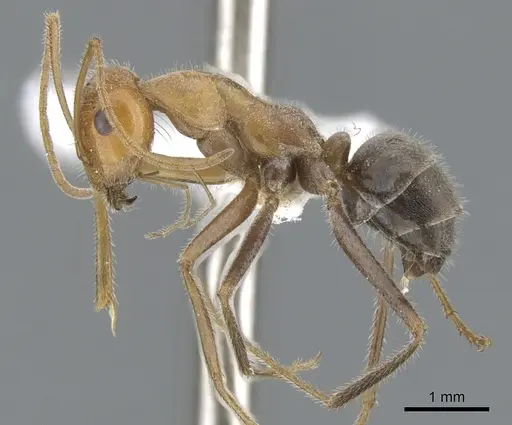
Myrmecocystus koso is a small honey ant species native to the mountain ranges of the northern Mojave Desert in California and Nevada. Workers are distinctive for their reddish-brown (ferruginous) head and thorax with a medium to dark brown abdomen, measuring 0.73-1.67mm in head width. Queens are larger at 1.63-1.80mm head width with a robust thorax. This species belongs to the Endiodioctes subgenus and is closely related to Myrmecocystus romainei, from which it can be distinguished by the coarser, sparser punctures on the face and the presence of hairs on the fourth abdominal tergum in most workers [1].
What makes this species particularly interesting is its habitat specialization in the Mojave Desert's mountain ranges at elevations between 6000-6600 feet. It inhabits diverse desert communities from Pinon-Juniper Woodland to Shadscale Scrub, and colonies can become very populous. The species is named after the Koso tribe (a Piute-Shoshonean group), with 'koso' meaning 'Land of Fire' in Shoshoni, appropriately describing the hot desert regions where these ants occur [1].
Quick Summary
- Difficulty: Medium
- Origin & Habitat: Mountain ranges of northern Mojave Desert in California and Nevada, at elevations of 6000-6600 feet. Found in Pinon-Juniper Woodland, Shadscale Scrub, Grayia-Lycium, Larrea-Franseria, Atriplex-Kochia, and mixed desert communities [1].
- Colony Type: Likely single-queen colonies (monogyne) based on typical Myrmecocystus genus patterns. Colonies are very populous according to field observations [1].
- Size & Growth:
- Queen: 1.63-1.80mm head width [1]
- Worker: 0.73-1.67mm head width [1]
- Colony: Very populous colonies observed in the Panamint Range [1]
- Growth: Unknown, no documented development times
- Development: Unknown, no direct studies on development timeline. Based on related Myrmecocystus species, estimate 6-10 weeks at optimal warm temperatures. (Estimated based on genus patterns, no specific research exists for this species)
- Antkeeping:
- Temperature: Warm desert conditions. Aim for 24-30°C with a gradient, allowing ants to self-regulate. This species comes from hot desert mountain habitats [1].
- Humidity: Low humidity requirements typical of desert species. Keep nest substrate moderately dry, with a small water tube for humidity. Avoid damp conditions.
- Diapause: Likely required. Alates were collected in early November with many sexual pupae present, suggesting they overwinter and fly in spring warm weather [1]. Provide a cool period around 10-15°C for 2-3 months during winter.
- Nesting: Natural nesting occurs in open areas with low circular craters. In captivity, a Y-tong (AAC) nest or plaster formicarium works well. Provide dry to moderately moist substrate. Avoid humid, damp setups.
- Behavior: Workers are active foragers typical of honey ants. They likely collect honeydew from aphids and tend scale insects, characteristic of the Myrmecocystus genus. Colonies are well-established and populous. Escape risk is moderate, workers are small but not tiny, standard escape prevention measures should suffice. Temperament is generally peaceful toward keepers.
- Common Issues: limited availability, this is a rarely kept species with few sources, no documented captive breeding success to reference, desert habitat requirements mean humidity control is critical, too much moisture can be fatal, slow colony growth due to unknown development timeline may frustrate beginners, winter diapause requirements are inferred but not confirmed for captive colonies
Natural History and Distribution
Myrmecocystus koso is endemic to the mountain ranges of the northern Mojave Desert, specifically found in California and Nevada at elevations between 6000-6600 feet. The type locality is in the Panamint Range in Inyo County, California. This species inhabits diverse desert communities including Pinon-Juniper Woodland at higher elevations and Shadscale Scrub at lower elevations. Cole (1966) recorded this ant from the Nevada Test Site, finding it well-represented in Grayia-Lycium, Larrea-Franseria, Atriplex-Kochia, and mixed communities, but scarce in Coleogyne and Salsola communities [1].
Nests are typically found in open areas and are usually surmounted by a low, circular crater. This crater may be absent in some cases, possibly due to wind and rain action. The species appears to be closely related to Myrmecocystus romainei, from which it can be distinguished by the sparser, coarser, and less well-defined punctures on the side of the face, and the conspicuously shagreened appearance of that area [1].
Identification and Distinguishing Features
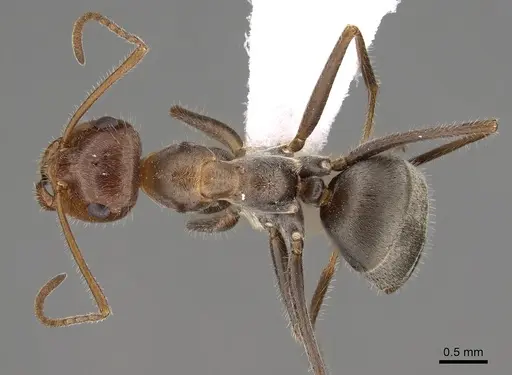
Workers of Myrmecocystus koso resemble those of Myrmecocystus placodops but are distinctly smaller, with major workers having a head width greater than 1.7mm. The presence of numerous punctures on the face also helps separate them from placodops. The species is more difficult to distinguish from Myrmecocystus romainei, to which it appears closely related.
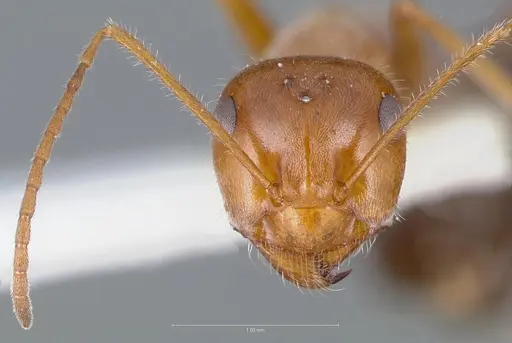
In koso workers, the punctures on the side of the face are sparser, coarser, and less well-defined than in romainei, and this part of the face is conspicuously shagreened. The pronotal hairs are longer and more slender than the mesonotal hairs in koso, while in romainei they are about equally long and thick. Both species have a pubescent third abdominal tergum, but the fourth is bare in romainei and usually pubescent in koso, except in the smallest workers [1].
Workers have a ferruginous (reddish-brown) head, thorax, and appendages, with a medium to dark brown gaster (abdomen). Queens are larger with a robust thorax and similar coloration patterns.
Reproduction and Nuptial Flights
Nothing is definitively known about the mating flights of this species. However, alates of both sexes were collected from the allotype colony in early November at Wildrose Canyon in the Panamint Range. These were mostly callows (newly emerged adults), and many sexual pupae were present in the colony at that time. Since the season was already approaching winter at that altitude, researchers believed a mating flight would not occur so late in the season, and that the sexual forms would instead overwinter and fly during warm vernal weather [1].
This pattern suggests spring nuptial flights, which is typical for many desert ant species that time their reproduction to take advantage of favorable conditions after winter rains and before summer heat.
Housing and Nest Setup
For captive care, provide a nest that mimics their natural desert habitat. A Y-tong (acrylic) nest or plaster formicarium works well for this species. The nest should have chambers scaled to their size, workers range from 0.73-1.67mm in head width, so choose a nest with appropriately sized tunnels.
Keep the nest relatively dry with low humidity, typical of desert species. A small water tube can provide moisture if needed, but avoid creating damp or humid conditions inside the nest chamber. Provide a temperature gradient of 24-30°C, with the warmer end around 28-30°C and cooler areas available for self-regulation.
The outworld should be simple with a foraging area, water test tube, and protein food offerings. Standard escape prevention is adequate for this species, they are small but not extremely tiny, so standard barriers should prevent escapes.
Feeding and Diet
Myrmecocystus honey ants are known for their characteristic behavior of tending aphids and collecting honeydew, along with hunting small insects. In captivity, offer a varied diet including sugar water or honey as a carbohydrate source, and protein sources such as small insects (fruit flies, small mealworms, crickets).
As a desert species, they may have specific water requirements, ensure fresh water is always available. The colony's populous nature means they will consume moderate amounts of food once established. Feed protein 2-3 times per week and keep sugar sources available continuously.
Seasonal Care and Overwintering
Based on the collection data showing alates and sexual pupae present in early November, this species likely requires a winter diapause period. Provide a cool period at temperatures around 10-15°C for 2-3 months during winter, typically from late November through February in the Northern Hemisphere.
During diapause, reduce feeding frequency and allow the colony to slow down. Do not feed heavily during this period. Ensure some moisture remains available but reduce humidity. After the winter period, gradually warm the colony back to room temperature to trigger spring activity.
This species is adapted to the extreme conditions of the Mojave Desert, including hot summers and cold winters at higher elevations. Replicating these seasonal temperature variations is important for long-term colony health. [1]
Frequently Asked Questions
How long does it take for Myrmecocystus koso to produce first workers?
The egg-to-worker development timeline is unconfirmed for this species. Based on related Myrmecocystus species, expect approximately 6-10 weeks at optimal warm temperatures (around 28°C). Patience is essential as this species is rarely kept and documented breeding timelines do not exist.
What temperature do Myrmecocystus koso ants need?
Keep them warm, around 24-30°C with a temperature gradient. This desert species comes from the hot Mojave Desert mountain ranges and prefers warmer conditions. A heating cable on one side of the nest can help maintain these temperatures.
Do Myrmecocystus koso ants need hibernation?
Yes, a winter diapause is likely required. In their natural habitat in the Mojave Desert mountains, they experience cold winters. Provide 2-3 months at 10-15°C during winter, typically from late November through February.
Are Myrmecocystus koso good for beginners?
This species is not recommended for beginners. It is rarely kept, with limited availability and no documented captive breeding success. Additionally, its specific desert habitat requirements (low humidity, warm temperatures, winter diapause) make it more challenging than common beginner species.
How big do Myrmecocystus koso colonies get?
Field observations indicate colonies become very populous. While exact maximum sizes are not documented, Myrmecocystus species typically form large colonies with hundreds to over a thousand workers.
What do Myrmecocystus koso ants eat?
Like other honey ants, they likely feed on honeydew from aphids and scale insects, plus small insects for protein. In captivity, offer sugar water or honey continuously, and provide small insects (fruit flies, small mealworms) as protein 2-3 times per week.
Can I keep multiple Myrmecocystus koso queens together?
Colony structure is not well-documented for this species. Based on typical Myrmecocystus patterns, they likely form single-queen colonies. Combining unrelated queens is not recommended without documented evidence of success.
How do I identify Myrmecocystus koso ants?
Workers have a ferruginous (reddish-brown) head and thorax with a dark brown abdomen. They are distinguished from similar species by the coarser, sparser punctures on the face and the presence of hairs on the fourth abdominal tergum. Major workers have head widths exceeding 1.7mm.
Why is Myrmecocystus koso called the Koso Honey Ant?
The species is named after the Koso Amerindian tribe, a Piute-Shoshonean group who formerly inhabited the Panamint Range. The word 'koso' in Shoshoni means 'Land of Fire, ' which appropriately describes the hot desert regions where this species occurs.
References

This caresheet is licensed under CC BY-SA 4.0 .
Literature
Loading...Loading products...