

Myrmecocystus romainei
- Scientific Name
- Myrmecocystus romainei
- Tribe
- Lasiini
- Subfamily
- Formicinae
- Author
- Snelling, 1975
- Common Name
- Romaine's Honeypot Ant
- Distribution
- Found in 2 countries
Myrmecocystus romainei Overview
Myrmecocystus romainei (commonly known as the Romaine's Honeypot Ant) is an ant species of the genus Myrmecocystus. It is primarily documented in 2 countries , including Mexico, United States of America. Detailed taxonomic data and occurrence records can be further explored via authoritative databases such as AntWeb or the Global Biodiversity Information Facility (GBIF).
Myrmecocystus romainei - "Romaine's Honeypot Ant"
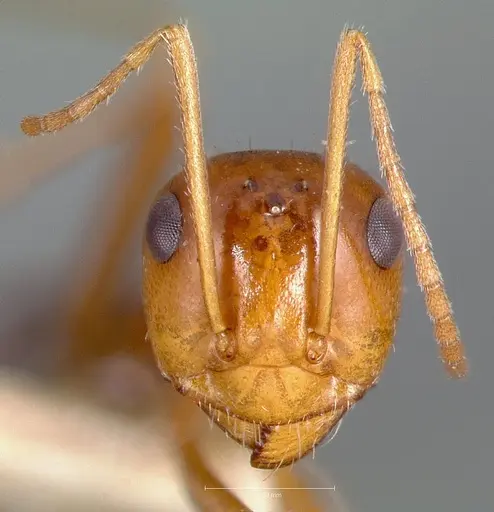
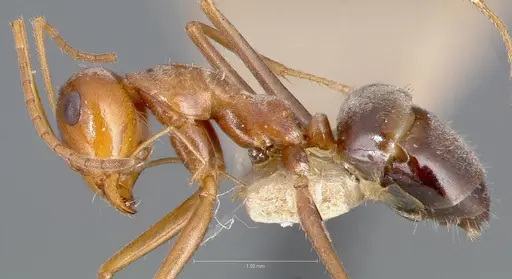
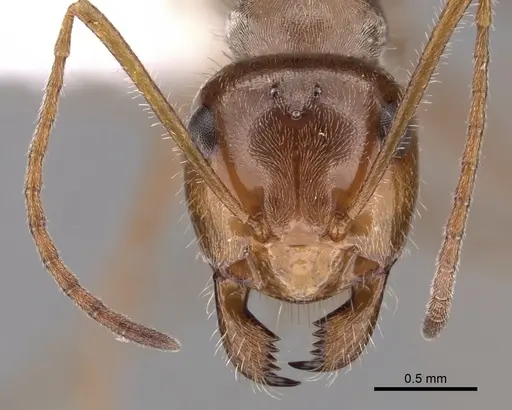
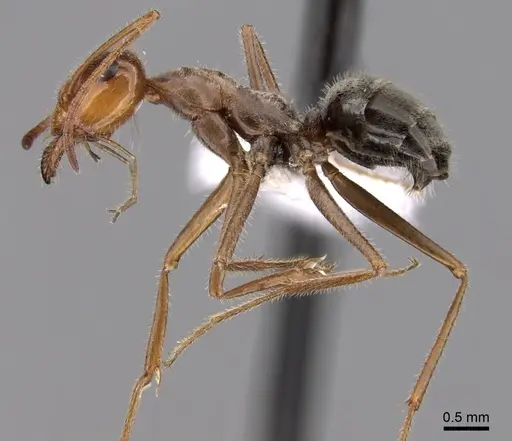
Myrmecocystus romainei is a medium-sized honey ant found across the western United States from Kansas to Utah and central Arizona, extending into northern Mexico. Workers measure 0.75-1.47mm in head width and display the characteristic ferruginous (reddish-brown) head and alitrunk with a blackish-brown gaster typical of the genus. This species belongs to the Endiodioctes subgenus and the romainei species group, closely related to M. kennedyi. Colonies nest in very deep, loose sandy soil, constructing irregular crater-shaped tumuli up to 20cm in diameter with chambers extending over four feet below the surface[1].
What makes this species distinctive is its nesting behavior in extremely deep, soft sand, unlike many honey ants that create vertical shafts, M. romainei builds a few surface chambers connected by narrow, difficult-to-follow tunnels descending deep into loose sand. Some populations at White Sands National Monument were reported to have brilliant metallic blue gasters in living workers, though this fades after preservation.
Quick Summary
- Difficulty: Medium
- Origin & Habitat: Western United States (Kansas, Oklahoma, Texas, Utah, Arizona) and northern Mexico. Found in Bluestem-Grama Prairie, Pinon-Juniper Woodland, Trans-Pecos Shrub Savanna, and Creosote bush-Tarbush Grassland habitats at elevations between 4200-5700 feet[2][1].
- Colony Type: Colony structure is not directly documented in available research. Based on typical Myrmecocystus patterns, likely single-queen (monogyne) colonies. Ergatoid queen presence and replacement reproductives have not been studied for this species.
- Colony: Monogyne
- Founding: Claustral
- Size & Growth:
- Queen: 1.58-1.80mm HL,1.67-1.88mm HW
- Worker: 0.90-1.53mm HL,0.75-1.47mm HW
- Colony: Unknown, not directly studied. Related Myrmecocystus species typically reach several hundred workers.
- Growth: Moderate, based on typical genus development patterns
- Development: Estimated 6-10 weeks based on related Myrmecocystus species at optimal temperature. Not directly studied for this species. (Development time inferred from genus-level data, specific timeline unconfirmed.)
- Antkeeping:
- Temperature: Keep warm at 26-32°C. This is a hot-climate specialist adapted to desert conditions [2]. Room temperature may be insufficient, use a heating cable on one side of the nest to create a gradient. Can likely tolerate temperatures into the high 30s°C based on desert habitat.
- Humidity: Low to moderate. Native to arid sandy habitats. Keep nest substrate dry to moderately moist, avoid excessive moisture that would collapse their deep sand tunnels. Provide a shallow water dish in the outworld.
- Diapause: Likely required. Based on temperate desert distribution, colonies probably need a winter rest period of 2-3 months at 10-15°C. This aligns with seasonal activity patterns observed in related species.
- Nesting: Deep, sandy substrate is essential. This species nests in very loose, deep sand with chambers extending over four feet. In captivity, provide a deep sand-filled setup, a naturalistic terrarium with at least 6-8 inches of fine, loose sand works well. Avoid compact substrates that would prevent their natural tunnel-building behavior.
- Behavior: Generally docile honey ants with typical Formicinae temperament. Workers are not aggressive but will defend the nest if threatened. Foraging activity peaks during warmer months (March through summer). As omnivores, they likely consume honeydew, nectar, and small insects. Escape risk is moderate, workers are medium-sized (up to 1.5mm) but standard barrier methods like Fluon work well. Major workers (larger individuals) may be present in established colonies.
- Common Issues: deep sand nesting requirements can be difficult to replicate in standard formicariums, they need loose, deep substrate, colonies may be slow to establish due to deep nest architecture requirements, winter diapause is likely required but specific timing and temperatures are unconfirmed, loose sandy substrate can collapse during excavation if not properly maintained, escape prevention needed though not as critical as for tiny ants
Nest Preferences and Housing
Myrmecocystus romainei presents unique housing challenges due to its natural history of nesting in extremely deep, loose sandy soil. In the wild, colonies excavate chambers near the surface with a single narrow tunnel descending over four feet into loose sand, this deep vertical architecture is unusual among honey ants, which typically build larger vertical shafts.
For captive care, you need to replicate these conditions as closely as possible. A naturalistic setup with at least 6-8 inches of fine, loose, dry sand works best. Avoid compact or damp substrates that would prevent their tunnel-building behavior. The sand should be loose enough to crumble easily, think desert dune conditions, not packed soil. You can create a hybrid setup with a deep sand section in a naturalistic terrarium, or use a custom deep formicarium with loose sandy substrate.
The key is providing enough depth for them to construct their characteristic deep nest while allowing you to observe colony activity. Some keepers use a vertical setup with a deep sand chamber connected to an outworld via tubes. Surface decorations like small rocks or plants can help them feel secure, but keep the nest area relatively open and undisturbed. [2][1]
Feeding and Diet
Myrmecocystus romainei is classified as an omnivore, consistent with other honey ants in the genus [2]. In nature, they likely consume honeydew from aphids and scale insects, nectar from flowers, and small insects they can capture or scavenge.
In captivity, offer a varied diet: sugar water or honey water constantly available in a shallow dish or cotton wick. For protein, provide small insects like fruit flies, small crickets, or mealworms. You can also offer tiny pieces of fruit or seeds occasionally. Feed protein sources 2-3 times per week, removing any uneaten prey after 24 hours.
Because they nest in deep sand, food should be placed in the outworld rather than directly on the nest. This keeps the nest tunnels from being contaminated with mold or debris. The deep sand nesting also means they may take longer to discover food in the outworld, be patient and place food in consistent locations.
Temperature and Seasonal Care
This species is a hot-climate specialist adapted to desert and semi-arid environments of the American Southwest [2]. Keep the nest area warm, ideally between 26-32°C. Room temperature alone is likely insufficient, use a heating cable or heat mat on one side of the nest to create a temperature gradient, allowing workers to choose their preferred warmth.
Based on their desert distribution spanning from Kansas to Arizona, colonies likely experience cold winters and would benefit from a diapause period. Provide 2-3 months of winter rest at 10-15°C (like a refrigerator or cold garage). Reduce feeding during this period and keep the nest slightly cooler but not frozen. This mimics the seasonal conditions they would experience in their natural range.
Activity increases from March through summer, matching the warmer months in their native habitat [2]. During peak summer heat, they may become less active during the hottest parts of the day and more active during cooler morning and evening hours.
Behavior and Colony Dynamics
Myrmecocystus romainei workers are medium-sized ants with the typical honey ant body plan, ferruginous head and alitrunk with a darker gaster. They construct distinctive crater-shaped nest entrances up to 20cm in diameter with irregular, low tumuli. The colonies are not particularly aggressive but will defend their nest if disturbed.
Workers likely forage individually for honeydew, nectar, and small prey. The genus name "honey ant" comes from their ability to store honeydew in their gasters, creating "repletes" or "honeypots" that serve as living food storage, though this behavior is more pronounced in some Myrmecocystus species than others.
Major workers (larger individuals with broader heads) may appear in well-established colonies, as is typical for the genus. The colony will grow gradually, with the queen producing workers continuously during the warm season. Patience is key, this species is not a fast grower compared to some tropical ants. [1]
Frequently Asked Questions
How long does it take for Myrmecocystus romainei to produce first workers?
The exact timeline is unconfirmed for this species, but based on related Myrmecocystus species, expect 6-10 weeks from egg to first worker at optimal warm temperatures (around 26-28°C). Founding colonies are slow to establish due to their deep-nesting behavior.
Can I keep Myrmecocystus romainei in a test tube?
Test tubes are not ideal for this species. They naturally nest in very deep, loose sand with tunnels extending over four feet. A naturalistic setup with deep sandy substrate (at least 6-8 inches) is much better suited to their needs. Test tubes can work for temporary housing or founding queens but not for established colonies.
What temperature do Myrmecocystus romainei ants need?
Keep them warm at 26-32°C. This is a hot-climate specialist adapted to desert conditions. Use a heating cable on one side of the nest to create a gradient, allowing workers to regulate their own temperature.
Do Myrmecocystus romainei ants need hibernation?
Yes, likely required. Based on their temperate desert distribution, provide a winter rest period of 2-3 months at 10-15°C. Reduce feeding and keep the colony cool but not frozen during this period.
What do Myrmecocystus romainei ants eat?
They are omnivores. Offer sugar water or honey constantly, plus small insects (fruit flies, small crickets, mealworms) 2-3 times per week. They may also accept tiny fruit pieces or seeds occasionally.
How big do Myrmecocystus romainei colonies get?
Colony size is not directly documented, but related Myrmecocystus species typically reach several hundred workers. Growth is moderate, expect gradual expansion over several years.
Are Myrmecocystus romainei ants good for beginners?
This species is rated as medium difficulty. The main challenge is providing proper deep sandy housing, they need loose, deep substrate that most standard formicariums cannot accommodate. If you're willing to set up a naturalistic sand terrarium, they can be rewarding.
When should I move my colony to a formicarium?
Move them when the colony reaches at least 20-30 workers and you can provide a deep sand chamber. A naturalistic setup works best, avoid compact formicariums that don't allow their natural tunnel-building behavior.
Can I keep multiple Myrmecocystus romainei queens together?
This is not recommended. The colony structure is likely single-queen (monogyne), and combining unrelated queens has not been documented. If you catch multiple founding queens, house them separately.
References

This caresheet is licensed under CC BY-SA 4.0 .
CASENT0005886
View on AntWeb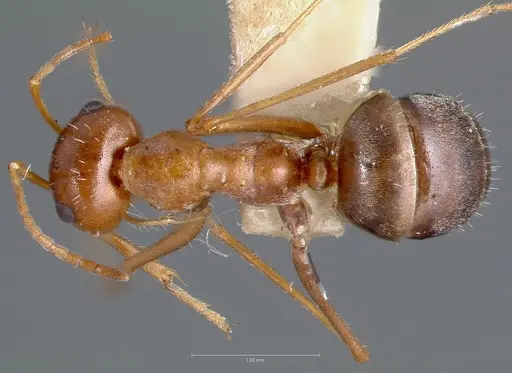
CASENT0280520
View on AntWeb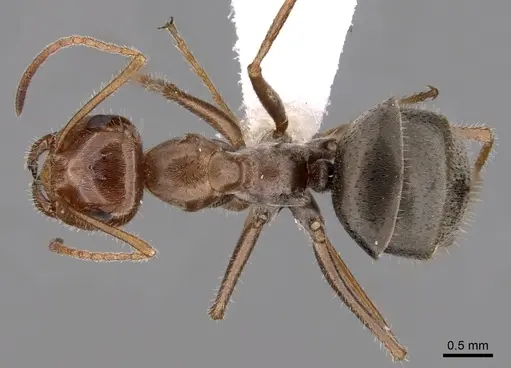
Literature
Loading...Loading products...