

Myrmecina melonii
- Scientific Name
- Myrmecina melonii
- Tribe
- Crematogastrini
- Subfamily
- Myrmicinae
- Author
- Rigato, 1999
- Distribution
- Found in 1 countries
Myrmecina melonii Overview
Myrmecina melonii is an ant species of the genus Myrmecina. It is primarily documented in 1 countries , including Italy. Detailed taxonomic data and occurrence records can be further explored via authoritative databases such as AntWeb or the Global Biodiversity Information Facility (GBIF).
Myrmecina melonii
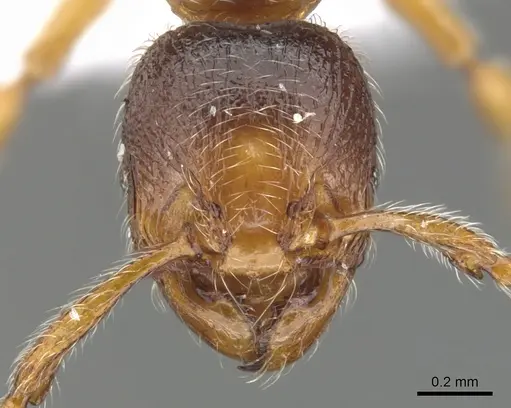
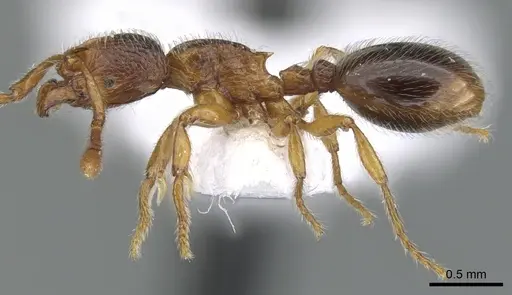
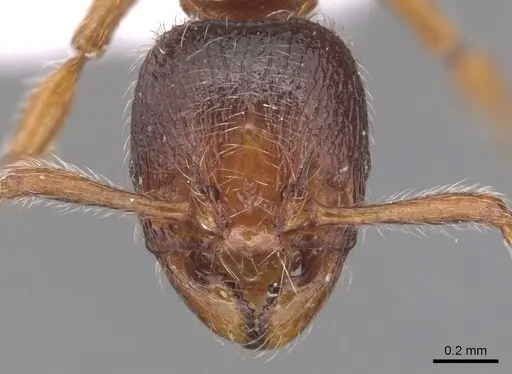
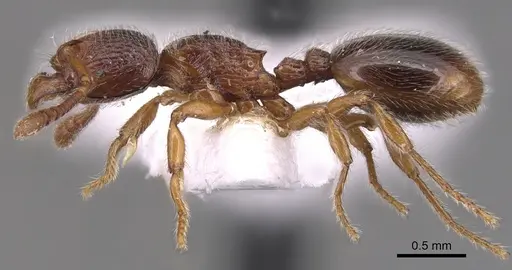
Myrmecina melonii is a tiny, rusty-red ant endemic to southern Sardinia, Italy. Workers measure just 2.9-3.5mm with a distinctive appearance featuring longitudinal rugulae (wrinkles) on the head and short propodeal spines. The body is bright ferrugineous (rusty orange-red) with the posterior half of the head darker and the first gaster segment brown with a reddish tint. This species belongs to the Myrmicinae subfamily and is closely related to Myrmecina sicula and Myrmecina atlantis, sharing similar reddish coloration and scape shape but differing in sculpture details. What makes M. melonii particularly special is its extremely limited range, it is known only from a handful of localities in southern Sardinia, making it one of the rarest European ants and a true Sardinian endemic [1][2].
Quick Summary
- Difficulty: Unknown, no captive husbandry data available
- Origin & Habitat: Sardinia, Italy, found under stones in Mediterranean scrub (oleo-ceratonion plant association) at 60-200m elevation [3]
- Colony Type: Unconfirmed, colony structure has not been documented in scientific literature
- Size & Growth:
- Queen: Unknown, queen morphology not described [3]
- Worker: 2.9-3.5mm [3]
- Colony: Unknown, no colony size data available [3]
- Growth: Unknown
- Development: Unknown, estimate based on related Myrmecina species: 6-10 weeks (No direct development data exists for this species. Related Myrmecina species typically develop in 6-10 weeks at optimal temperatures.)
- Antkeeping:
- Temperature: Inferred from Mediterranean habitat: aim for 22-26°C with some variation. Provide a gentle temperature gradient allowing ants to self-regulate. Avoid temperatures below 15°C or above 30°C.
- Humidity: Moderate humidity preferred, typical of Mediterranean scrub habitats. Keep nest substrate lightly moist but not waterlogged. Allow some drying between waterings.
- Diapause: Likely, exhibits underground aestivation (summer dormancy) based on collection data showing they move deeper into soil during warm months [4]. Winter diapause is probable given Sardinian climate.
- Nesting: Natural nesting is under stones in dry to moderately damp soil. In captivity, a small test tube setup or Y-tong nest with tight chambers scaled to their tiny 3mm size works well. Provide moderate substrate depth.
- Behavior: This is a very small, cryptic ant that nests under stones. Workers are slow-moving and not particularly aggressive. They are likely nocturnal or crepuscular foragers based on their small eye size (about 12 ommatidia). Escape prevention is critical due to their tiny 3mm size, they can squeeze through standard test tube barriers. Use fine mesh and tight-fitting lids. No documented sting.
- Common Issues: no captive husbandry data exists, all care recommendations are speculative, extremely rare in the hobby with no established keeping protocols, tiny size makes escape prevention challenging, endemic status means wild collection is both difficult and ethically questionable, slow growth typical of small Myrmicinae may frustrate beginners
Species Discovery and Taxonomy
Myrmecina melonii was first described in 1999 by Francesco Rigato from specimens collected in southern Sardinia. The type locality is Perdas de Fogu on the island of Sant'Antioco off the coast of Sardinia, with paratypes collected from nearby Santadi. The species name 'melonii' honors C. Meloni, who collected the specimens. This ant is part of a species complex that includes Myrmecina sicula and Myrmecina atlantis, all sharing similar reddish coloration and scape morphology. The species can be distinguished from its relatives by its sculpture of longitudinal rugulae that are weakly developed on the alitrunk (middle body section) and by its short propodeal spines [3][4].
Distribution and Endemism
This species is a true Sardinian endemic, known only from a handful of localities in southern Sardinia. It is one of only two elements of the Sardinian ant fauna that testify to ancient colonization of the Southern-Tyrrenian region. The distribution is extremely narrow and geographically very close to M. atlantis and M. sicula, which are found on other Mediterranean islands. Unlike those species, M. melonii is allopatric (geographically separated) from its relatives, separated only by sea. However, it is sympatric with Myrmecina graminicola, meaning they occur in the same areas. This limited distribution makes any wild collection ethically problematic and contributes to the species' conservation concern [1][4][2].
Natural History and Behavior
In the wild, Myrmecina melonii nests under stones in Mediterranean scrubland, specifically the oleo-ceratonion plant association typical of dry Mediterranean landscapes. Collection data suggests this species exhibits underground aestivation, they move deeper into the ground during the warmer summer months when they have been searched for but never collected. This behavior explains why they are rarely found during summer. The ants are typically active during cooler periods, likely in spring and autumn, and likely become dormant during both summer heat and winter cold. Workers are small and slow-moving, foraging primarily at night or during twilight based on their reduced eye size [3][4].
Keeping Considerations
Because this species has never been documented in the ant-keeping hobby, all care recommendations are speculative estimates based on related species and natural habitat data. Start with a small test tube setup with tight-fitting barriers since workers are only 3mm. Temperature should be in the low-to-mid 20s°C range, mimicking Mediterranean conditions. Humidity should be moderate, damp but not wet substrate. Given their tiny size and cryptic nature, they likely prefer quiet, dark locations and should not be disturbed frequently. Do not expect rapid colony growth. If you obtain a colony, document your observations carefully as this species represents an opportunity to contribute new knowledge to ant-keeping [3].
Frequently Asked Questions
Can I keep Myrmecina melonii in a test tube?
Yes, a test tube setup should work well. Use a small test tube with a tight-fitting cotton barrier, their tiny 3mm size means standard barriers may not be sufficient. Consider adding a small water reservoir and keeping the tube in a dark, quiet location.
How long does it take for Myrmecina melonii to develop from egg to worker?
This is unknown, no development data exists for this species. Based on related Myrmecina species, expect 6-10 weeks at optimal temperature. Expect slow growth typical of small Myrmicinae.
Are Myrmecina melonii good for beginners?
No. This species is not recommended for beginners because no captive husbandry protocols exist, they are extremely rare in the hobby, and all care must be extrapolated from related species. Additionally, being a Sardinian endemic, ethical sourcing is a significant concern.
Do Myrmecina melonii ants sting?
Unknown, no documented sting reports exist. Given their tiny 3mm size, any sting would be negligible to humans. They are not considered dangerous.
What do Myrmecina melonii eat?
Unknown for this specific species. Related Myrmecina species are generalist foragers that likely eat small insects, honeydew, and seeds. Offer small prey items like fruit flies and occasional sugar water.
Do Myrmecina melonii need hibernation?
Likely yes, they exhibit underground aestivation (summer dormancy) and are from a temperate Mediterranean climate. A winter rest period of 2-3 months at 10-15°C is probably beneficial, though not well-documented.
How big do Myrmecina melonii colonies get?
Unknown, no colony size data exists. Based on related species, colonies are likely small, probably under 100 workers. They are cryptic ants that do not form large colonies.
Can I keep multiple queens together?
Unknown, colony structure has not been documented. Do not attempt combining unrelated queens without documented evidence that this species tolerates polygyny.
Where is Myrmecina melonii found in the wild?
Myrmecina melonii is endemic to southern Sardinia, Italy. It is only known from a few localities near Sant'Antioco and Santadi at 60-200m elevation. This makes it one of the rarest European ants.
When should I move Myrmecina melonii to a formicarium?
There is no established protocol for this species. Given their tiny size and cryptic nature, keep them in a test tube or small setup long-term. Only move to a formicarium if the colony grows significantly beyond 50 workers.
Are Myrmecina melonii aggressive?
No, these are small, cryptic ants that are not known to be aggressive. Workers are slow-moving and likely avoid confrontation. They pose no threat to keepers.
References

This caresheet is licensed under CC BY-SA 4.0 .
CASENT0901733
View on AntWeb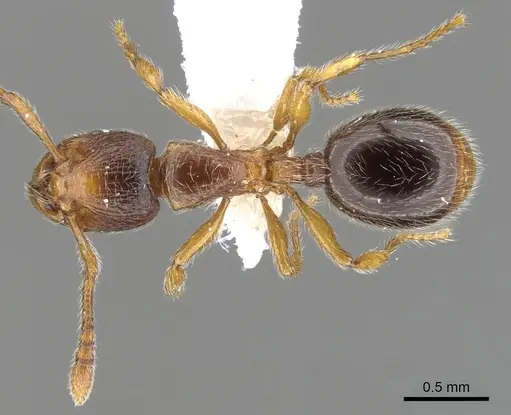
CASENT0904563
View on AntWeb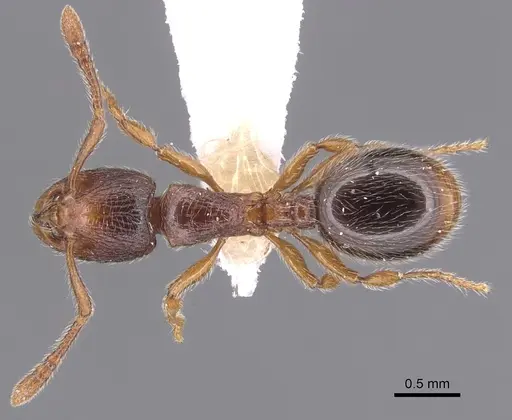
Literature
Loading...Loading products...