

Myrmecina atlantis
- Scientific Name
- Myrmecina atlantis
- Tribe
- Crematogastrini
- Subfamily
- Myrmicinae
- Author
- Santschi, 1939
- Distribution
- Found in 0 countries
Myrmecina atlantis Overview
Myrmecina atlantis is an ant species of the genus Myrmecina. It is primarily documented in 0 countries . Detailed taxonomic data and occurrence records can be further explored via authoritative databases such as AntWeb or the Global Biodiversity Information Facility (GBIF).
Myrmecina atlantis
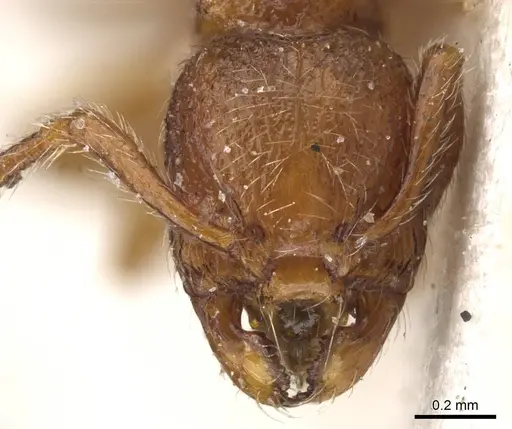
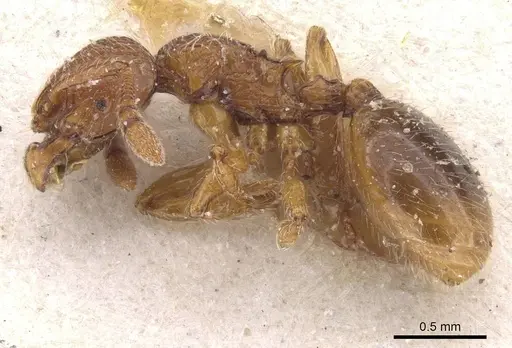
Myrmecina atlantis is a tiny reddish-brown ant measuring just 2.7-3.4mm in total length [1]. This species belongs to the Myrmicinae subfamily and is part of the Myrmecina genus, which includes small, ground-dwelling ants known for their distinctive sculptured appearance. The workers have a reddish body with a mostly brown gaster, and their head and alitrunk feature characteristic longitudinal rugulae (ridge-like sculptures) that help distinguish them from related species [1].
This ant is endemic to a very narrow range along the Mediterranean coast of North Africa, specifically in Algeria and nearby Tunisia [2][3]. It was originally described as a variety of Myrmecina graminicola but was raised to full species status in 1999 [1]. What makes M. atlantis particularly interesting is that it's morphologically closely related to two other Mediterranean species (M. melonii and M. sicula), yet it occupies its own allopatric range, separated from its relatives by the sea [3]. This species is part of a proposed species complex with M. sicula and M. melonii, suggesting there may be more to discover about their evolutionary relationships.
Quick Summary
- Difficulty: Unknown, insufficient data for difficulty rating
- Origin & Habitat: Native to the Mediterranean coast of North Africa, specifically Algeria and Tunisia. Found in coastal land regions at the center of the Mediterranean basin, often sympatric with Myrmecina graminicola [3][2].
- Colony Type: Unconfirmed, colony structure has not been documented for this species
- Size & Growth:
- Queen: Unknown, queen measurements not documented
- Worker: 2.7-3.4mm total length [1]
- Colony: Unknown, no colony size data available
- Growth: Unknown, no development data available
- Development: Unknown, no direct measurements. Based on typical Myrmicinae patterns and Mediterranean climate, estimate 6-10 weeks at optimal temperature, but this is speculative. (No species-specific development data exists. Related Myrmecina species typically develop within 6-10 weeks at warm temperatures, but this estimate has low confidence.)
- Antkeeping:
- Temperature: Based on its Mediterranean distribution and relation to M. graminicola, aim for roughly 22-26°C with a gentle gradient. Room temperature (around 20-24°C) is likely suitable for this species.
- Humidity: Mediterranean species typically prefer moderate humidity. Keep nest substrate moderately moist with some drier areas available. Avoid both waterlogging and complete drying.
- Diapause: Unknown for this specific species. Mediterranean Myrmecina may tolerate cooler winter temperatures but true diapause requirements are unconfirmed.
- Nesting: In nature, Myrmecina species typically nest in soil or under stones in natural areas. For captivity, a small test tube setup or Y-tong nest with appropriately scaled chambers works well. Their tiny size means chambers should be small and tight-fitting.
- Behavior: Behavior is unconfirmed for this species. Based on genus patterns, these are likely docile, non-aggressive ants that forage quietly for small prey and honeydew. Their tiny size makes escape prevention critical, they can squeeze through very small gaps. Exercise caution with any potential sting, though most Myrmecina are too small to penetrate human skin.
- Common Issues: no biological data means all care is speculative, expect a learning curve, tiny size creates high escape risk, use fine mesh barriers and tight-fitting lids, colony may be slow-growing given limited data on development, winter care is uncertain, monitor colony behavior for signs of stress, wild-caught colonies may have unknown parasites or health issues
Species Identification and Relationships
Myrmecina atlantis was originally described by Santschi in 1939 as a variety of Myrmecina graminicola, but was elevated to full species status by Rigato in 1999 based on morphological differences [1]. The species can be distinguished from the similar M. graminicola by its scape (antenna) shape, which it shares with M. sicula and M. melonii. However, some M. graminicola specimens can have a cylindrical scape similar to M. atlantis, making identification challenging. Interestingly, specimens of both typical dark M. graminicola and the paler M. atlantis have been collected from the same localities in Tunisia, suggesting they often appear sympatrically without intermediates [1]. Workers measure 2.7-3.4mm in total length and have a reddish body with a mostly brown gaster [1].
Distribution and Habitat
This species has an extremely limited distribution, known only from a small area around the border between Algeria and Tunisia in North Africa [3]. It occupies coastal land regions at the center of the Mediterranean basin. The species is allopatric relative to its closest relatives M. melonii and M. sicula, meaning it is separated from them by geographic barriers (in this case, the sea) [3]. However, it is sympatric with M. graminicola, meaning they can be found in the same areas. Type localities include Philippeville and Bone in Algeria, and Ain Draham and Le Kef in Tunisia [1]. The Mediterranean climate of this region features warm, dry summers and mild, wet winters.
Keeping Myrmecina atlantis in Captivity
Since no biological data exists for this species, all care recommendations are based on genus-level information and inference from related species. Myrmecina ants are small, ground-dwelling ants that typically nest in soil or under stones. For captivity, use a small test tube setup or a Y-tong nest with appropriately scaled, tight chambers. Their tiny size (under 3.5mm) means escape prevention must be excellent, use fine mesh barriers and ensure all openings are sealed. Temperature should be around 22-26°C, which is typical room temperature in many homes. Humidity should be moderate, keep the nest substrate moist but not waterlogged, with some drier areas available for the ants to regulate their own conditions. Feed small protein sources like fruit flies, pinhead crickets, or tiny insects, along with sugar water or honey as an energy source.
Feeding and Diet
The specific diet of M. atlantis is unstudied, but Myrmecina species are generally omnivorous, feeding on small insects, honeydew, and plant nectar. In captivity, offer small live prey appropriate to their tiny size, fruit flies, newly hatched crickets, or small mealworms work well. Sugar sources like diluted honey or sugar water should be available, especially for colony founding and worker activity. Feed small amounts 2-3 times per week, removing uneaten food to prevent mold. Since this is a poorly understood species, observe your colony's preferences and adjust accordingly.
Growth and Development
No specific development data exists for Myrmecina atlantis. Workers measure 2.7-3.4mm, which gives an indication of their small size [1]. Queen size is unknown as no queen specimens have been documented in scientific literature. Based on typical Myrmicinae development patterns and the Mediterranean climate of their native range, development from egg to worker likely takes 6-10 weeks at optimal warm temperatures (around 24-26°C). However, this is a rough estimate with low confidence. Colonies are likely small to moderate in size based on typical Myrmecina patterns, but exact maximum colony sizes are unknown. Expect slow, steady growth and be patient with this species.
Frequently Asked Questions
How long does it take for Myrmecina atlantis to produce first workers?
The egg-to-worker timeline is unknown for this species as no development studies exist. Based on typical Myrmicinae patterns and Mediterranean climate, estimate 6-10 weeks at optimal temperature, but this is speculative with low confidence.
What do Myrmecina atlantis ants eat?
Specific diet is unstudied, but Myrmecina species are omnivorous. Offer small live prey (fruit flies, tiny crickets) and sugar sources (honey water, sugar water). Feed small amounts 2-3 times per week.
What temperature do Myrmecina atlantis ants need?
Based on their Mediterranean distribution, aim for 22-26°C. Standard room temperature is likely suitable. Avoid temperature extremes.
Are Myrmecina atlantis good for beginners?
Difficulty level is unknown due to lack of biological data. This species is not recommended for beginners due to the complete lack of species-specific care information, you will essentially be pioneering husbandry for this ant.
How big do Myrmecina atlantis colonies get?
Colony size is unknown. Based on typical Myrmecina patterns, colonies are likely small to moderate (under a few hundred workers), but this is an estimate.
Do Myrmecina atlantis ants sting?
Stinging ability is not documented for this species. Most Myrmecina are too small to penetrate human skin, but exercise caution with any ant.
Can I keep multiple Myrmecina atlantis queens together?
Colony structure is unconfirmed. No data exists on whether this species is single-queen (monogyne) or multi-queen (polygyne). Combining unrelated queens is not recommended without data.
What size nest does Myrmecina atlantis need?
Use a small test tube setup or Y-tong nest with small, tight-fitting chambers scaled to their tiny 2.7-3.4mm worker size. Escape prevention is critical due to their small size.
Where is Myrmecina atlantis native to?
This species is native to the Mediterranean coast of North Africa, specifically Algeria and Tunisia. It has a very narrow distribution around the border region between these countries.
Does Myrmecina atlantis need hibernation?
Diapause requirements are unknown. Mediterranean species may tolerate cooler winter temperatures but true hibernation needs are unconfirmed. Monitor your colony's behavior.
References

This caresheet is licensed under CC BY-SA 4.0 .
CASENT0913027
View on AntWeb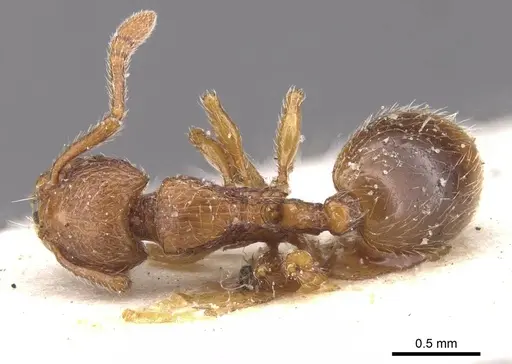
Literature
Loading...Loading products...