

Myrmecina sicula
- Scientific Name
- Myrmecina sicula
- Tribe
- Crematogastrini
- Subfamily
- Myrmicinae
- Author
- Emery, 1882
- Distribution
- Found in 1 countries
Myrmecina sicula Overview
Myrmecina sicula is an ant species of the genus Myrmecina. It is primarily documented in 1 countries , including Italy. Detailed taxonomic data and occurrence records can be further explored via authoritative databases such as AntWeb or the Global Biodiversity Information Facility (GBIF).
Myrmecina sicula
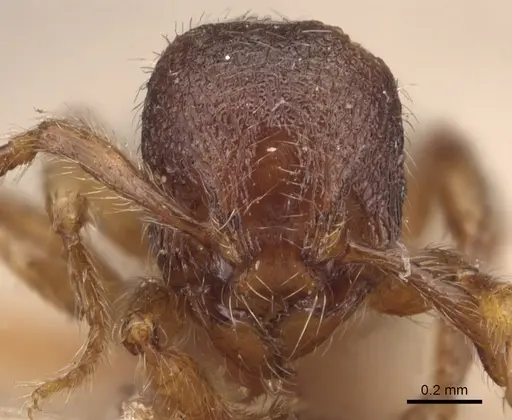
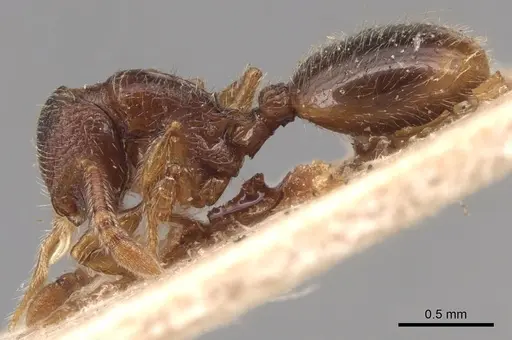
Myrmecina sicula is an extremely rare tiny ant species endemic to the coastal regions of northwestern Sicily and the nearby Egadi Islands [1]. Workers measure approximately 3mm and are bright orange to brownish in color, with a distinctive smooth promesonotum that sets them apart from their close relative Myrmecina graminicola [2][1]. This species was lost to science for over 140 years until being rediscovered in 2020,and remains one of the least-studied ants in Europe [1]. Queens and males have never been documented, and almost nothing is known about their colony structure or biology [1]. The species occupies a unique ecological niche among European ants, living in low-altitude coastal areas on old carbonate formations where it nests in soil crevices, under stones, and within leaf litter [1].
Quick Summary
- Difficulty: Expert
- Origin & Habitat: Endemic to coastal northwestern Sicily and the Egadi Archipelago, Italy. Found exclusively in low to mid-altitude, often sparsely vegetated sites close to the sea on old carbonate formations [1].
- Colony Type: Unknown, queens and colony structure have never been documented. Based on related Myrmecina species, likely single-queen colonies with small colony size [1].
- Size & Growth:
- Queen: Unknown, queens have never been described [1]
- Worker: Approximately 3mm (workers measure 2.7-3mm) [2][1]
- Colony: Likely small, colonies appear very small in the field, likely under 100 workers based on related species [1]
- Growth: Unknown
- Development: Unknown, no development data exists for this species. Based on related Myrmecina species, estimate 6-10 weeks at optimal temperature. (No direct data exists. Related Myrmecina species typically develop in 6-10 weeks.)
- Antkeeping:
- Temperature: Based on its Sicilian coastal habitat, likely tolerates warm conditions. Recommend 22-26°C as a starting point and observe colony activity [1].
- Humidity: Found in soil crevices, under stones, and under moss suggests moderate humidity needs. Keep nest substrate lightly moist but not waterlogged [1].
- Diapause: Likely, the species shows seasonal activity patterns, disappearing underground during dry periods. Probably requires a mild winter rest period, but specific requirements are unknown [1].
- Nesting: Natural nesting occurs in soil crevices, under stones, under moss, and within leaf litter. A naturalistic setup with a moist soil chamber or small acrylic nest with tight chambers scaled to their tiny size would be appropriate [1].
- Behavior: Virtually unknown. Workers are rarely seen above ground and likely forage at night or during brief periods of favorable conditions [1]. The species appears to be very secretive and colonies are extremely small [1]. Escape prevention should be excellent despite their small size, they can likely squeeze through tiny gaps. No sting is documented, but Myrmecina ants are not known for aggressive behavior or stinging [1].
- Common Issues: almost no biological data exists, this is one of the least-known ant species in Europe, queens have never been documented, making captive breeding from wild colonies nearly impossible, colonies are extremely small and fragile in the wild, making collection and establishment difficult, the species aestivates underground during dry periods, requiring careful attention to seasonal moisture cycles, no established care protocols exist, keepers must essentially pioneer all aspects of husbandry
Discovery and Rarity
Myrmecina sicula represents one of the most remarkable rediscoveries in European myrmecology. Originally described by André in 1882 as a variety of Myrmecina graminicola, it was raised to full species status by Emery in 1916 [2]. However, the type specimens were considered lost, and the species was virtually unknown to science for over 140 years [1]. In 2020,researchers finally rediscovered the species in northwestern Sicily, collecting 44 workers from 13 sites across approximately 200 km² [1]. This ant remains extremely rare and difficult to find even at known locations, colonies appear to be very small, and workers probably forage only at night or during brief favorable conditions [1]. For antkeepers, this means acquiring Myrmecina sicula is exceptionally difficult, and keeping it successfully is essentially pioneering new territory in ant husbandry [1].
Natural Habitat and Microclimate
This species occupies a very specific ecological niche in coastal northwestern Sicily, found at altitudes averaging 323 meters (range 15-660m) and typically within 4 km of the sea [1]. Unlike its close relative M. graminicola which prefers inland and higher altitude habitats, M. sicula is strongly associated with old carbonate formations and often sparsely vegetated coastal areas [1]. Workers have been collected from soil crevices, between grass roots, under stones, under moss, and within leaf litter [1]. A particularly interesting behavior is their apparent aestivation, the species disappears underground during the dry spring, summer, and autumn months, becoming active only during the wetter winter period [1]. This means captive colonies will likely need careful attention to seasonal moisture cycles, with periods of reduced activity simulating natural dry seasons [1].
Relationship to Other Myrmecina
Myrmecina sicula is part of a species complex that includes M. atlantis and M. melonii, all sharing similar morphology including a smooth mesosomal dorsum, characteristic scapi shape, brownish pigmentation, and reduced dorsal striae [1]. These three species are allopatric (geographically separated by sea) and occupy coastal regions at the center of the Mediterranean basin [1]. The species is most similar to M. graminicola, the most widespread European Myrmecina, but can be distinguished by its smoother pronotum and mesonotum, less developed head sculpture, and different clypeal structure [2]. For keepers, this relationship suggests that care requirements may be similar to M. graminicola, though M. sicula appears to prefer warmer, more coastal conditions [1][2].
Keeping This Species in Captivity
Because almost nothing is known about Myrmecina sicula biology, keeping this species successfully would require careful observation and experimentation. Start with a small naturalistic setup or acrylic nest with chambers scaled to their tiny 3mm size. Keep the substrate lightly moist, they naturally nest in soil crevices and under stones where moisture is moderate but not saturated [1]. Temperature should be in the low-to-mid 20s°C range, reflecting their Sicilian coastal habitat [1]. Pay close attention to seasonal cycles, the species naturally becomes inactive during dry periods, so consider reducing moisture and cooling slightly during what would be summer months in Sicily [1]. Feed small protein sources like fruit flies or tiny crickets, and provide a small sugar source like diluted honey water. Because colonies are naturally very small, do not expect rapid growth or large worker populations [1]. This species is recommended only for experienced antkeepers who enjoy experimenting and documenting new observations.
Frequently Asked Questions
How long does it take for Myrmecina sicula to develop from egg to worker?
This is completely unknown, no development data exists for this species. Based on related Myrmecina species, expect approximately 6-10 weeks at optimal temperature, but this is purely an estimate.
Can I keep multiple Myrmecina sicula queens together?
We don't know. Queens have never been documented in this species, so colony structure is entirely unknown. Do not attempt combining unrelated queens until more is known.
What do Myrmecina sicula ants eat?
Not directly studied, but based on related species, they likely accept small insects and honeydew. Offer tiny prey items like fruit flies, and a small sugar source like diluted honey water. Feed conservatively given their small colony size.
Do Myrmecina sicula ants sting?
Not documented. Myrmecina ants are not known for stinging or aggressive behavior. Their small size and docile nature make them unlikely to pose any threat.
Are Myrmecina sicula good for beginners?
No. This is an expert-level species due to almost complete lack of biological data. Queens have never been described, colonies are extremely small and fragile, and no established care protocols exist. Only experienced antkeepers should attempt this species.
Where can I get Myrmecina sicula?
Extremely difficult to acquire. The species is known only from a small area in northwestern Sicily and has only been collected 17 times total. It is not available from commercial ant sellers and would require field collection in Sicily, which may have legal restrictions.
Do Myrmecina sicula need hibernation?
Likely yes, based on their seasonal activity patterns. The species disappears underground during dry periods and is active mainly during winter months in Sicily. A mild winter rest period with reduced moisture is probably appropriate, though specific requirements are unknown.
How big do Myrmecina sicula colonies get?
Likely small, likely under 100 workers. Field observations indicate colonies are very small, and no large colonies have ever been documented [1].
What is the best nest type for Myrmecina sicula?
Small naturalistic setups with moist soil chambers or small acrylic nests with tight chambers scaled to their 3mm size. They naturally nest in soil crevices and under stones, so a setup that provides these conditions would be ideal.
Why is Myrmecina sicula so rare?
This species has a very limited geographic range (only ~200 km² in coastal Sicily), very small colony sizes, and secretive behavior with workers rarely appearing above ground. It was also lost to science for over 140 years, contributing to its rarity in collections.
References

This caresheet is licensed under CC BY-SA 4.0 .
CASENT0904689
View on AntWeb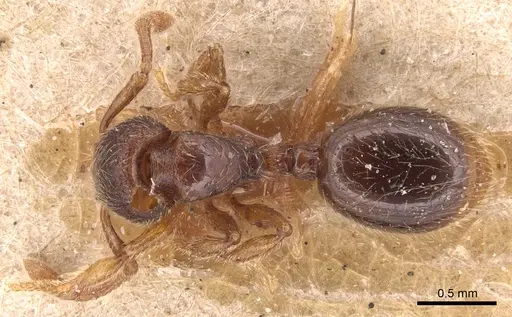
Literature
Loading...Loading products...