

Monomorium xuthosoma
- Scientific Name
- Monomorium xuthosoma
- Tribe
- Solenopsidini
- Subfamily
- Myrmicinae
- Author
- Heterick, 2006
- Distribution
- Found in 1 countries
Monomorium xuthosoma Overview
Monomorium xuthosoma is an ant species of the genus Monomorium. It is primarily documented in 1 countries , including Madagascar. Detailed taxonomic data and occurrence records can be further explored via authoritative databases such as AntWeb or the Global Biodiversity Information Facility (GBIF).
Monomorium xuthosoma
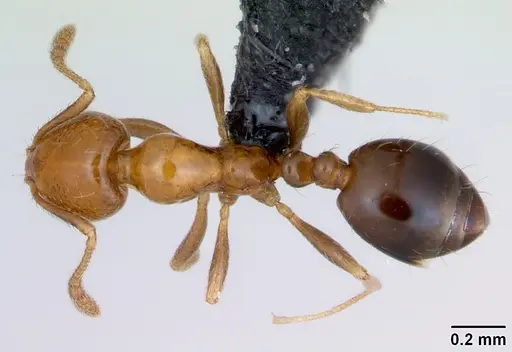
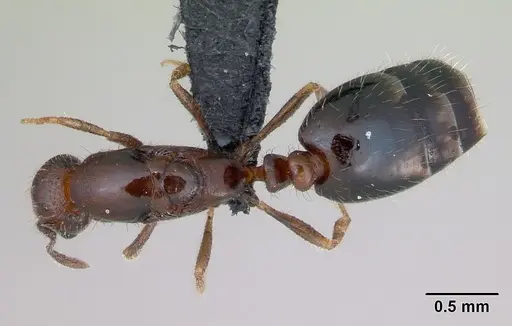
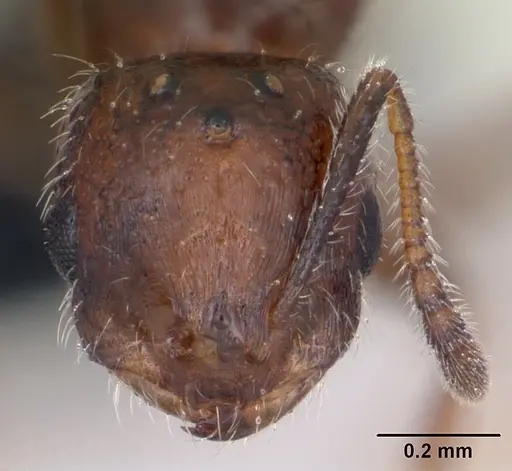
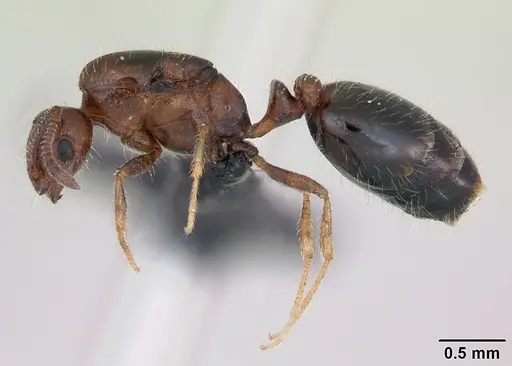
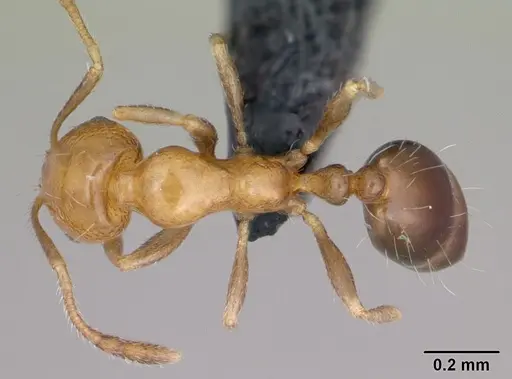
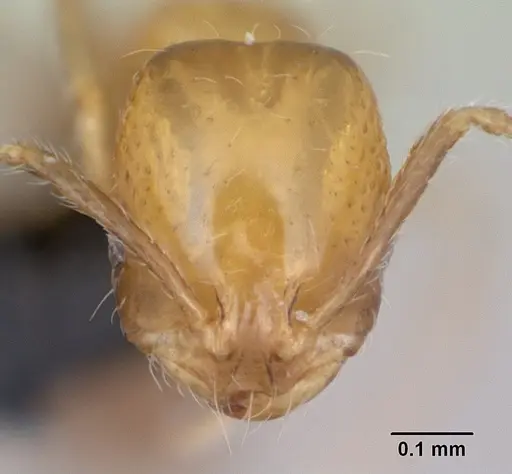
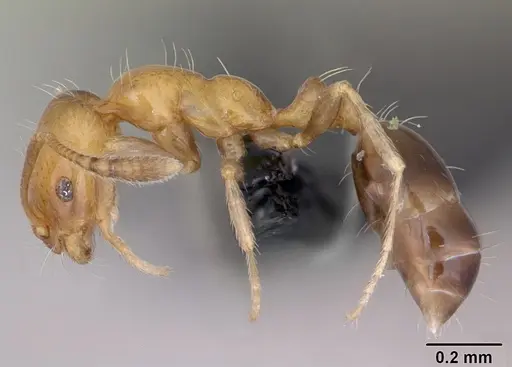
Monomorium xuthosoma is a small, colorful ant species endemic to Madagascar. Workers measure just 1.13-1.32mm in total length, with tawny-yellow to orange foreparts and a distinctive chocolate-colored gaster. The species belongs to the Monomorium rhopalocerum complex within the Monomorium monomorium species group. Queens are significantly larger at 2.27-2.43mm and have a distinctly striolate frons (the front part of the head has fine longitudinal lines). This species appears to be confined to the spiny forest habitat of southwestern Madagascar, where it has been collected from sifted leaf litter and from colonies nesting in rotting logs [1][2].
Quick Summary
- Difficulty: Unknown, this is a rarely kept species with limited available care information
- Origin & Habitat: Endemic to Madagascar, specifically Toliara Province in the southwestern corner. Found in spiny forest habitat, a unique dry, thorny forest ecosystem. Collected from sifted litter and rotting logs [1][2].
- Colony Type: Unknown colony structure. The species has not been studied in detail regarding queen number. Based on typical Monomorium genus patterns, they may form single-queen colonies, but this is unconfirmed for this species.
- Size & Growth:
- Queen: 2.27-2.43mm [2]
- Worker: 1.13-1.32mm total length (HML 1.13-1.32,HL 0.43-0.50mm) [1][2]
- Colony: Unknown, no colony size data available for this species
- Growth: Unknown, no development data available
- Development: Unknown, no direct measurements. Based on typical Monomorium patterns in tropical species, estimate 4-8 weeks at optimal temperature, but this is a rough guess. (No specific development data exists for this species. Estimates based on genus-level patterns.)
- Antkeeping:
- Temperature: Likely 22-28°C based on Madagascar spiny forest habitat (warm, dry conditions). Start in the mid-range and observe colony activity. Provide a gentle temperature gradient if possible.
- Humidity: Dry to moderate conditions. Spiny forest is a dry habitat, so aim for lower humidity than typical rainforest species. Allow the nest to dry out partially between waterings. Avoid overly damp conditions.
- Diapause: Unknown, no data on overwintering requirements. Madagascar has mild winters, so they may not require a true diapause. Keep at slightly reduced temperatures (15-18°C) for a few months during winter if colony shows reduced activity.
- Nesting: In the wild, colonies have been found in rotting logs and sifted litter. In captivity, a small test tube setup or acrylic nest with narrow chambers would work well. The small worker size means chambers should be appropriately scaled. A dry to moderately humid nest environment is likely preferred.
- Behavior: Behavior is not well documented. Based on genus patterns, they are likely generalist foragers that scavenge and may tend aphids for honeydew. Workers are small but not extremely tiny, so escape prevention should be moderate, use standard barrier methods. The species is not known to be particularly aggressive. No sting data is available, but given the small size, any sting would be minimal.
- Common Issues: limited availability, this species is rarely available in the antkeeping hobby, no established care protocols, keepers will be pioneering husbandry methods, small colony sizes expected, Monomorium species typically have smaller colonies, humidity sensitivity, spiny forest is dry, so avoid over-humid conditions, unknown diapause requirements, winter care is speculative
Natural History and Distribution
Monomorium xuthosoma is endemic to Madagascar, where it is found primarily in the southwestern corner of the island in Toliara Province. The species appears to be confined to the unique spiny forest ecosystem, a dry, thorny forest characterized by drought-adapted plants like baobab trees and Didieraceae. Specimens have been collected from sifted leaf litter and from a colony found nesting in a rotting log [1][2]. One slightly aberrant specimen was collected from Berenty Reserve in the southeast of the island, but the core distribution remains the southwestern spiny forest region. The species was formally described by Brian Heterick in 2006 as part of a revision of Malagasy Monomorium ants.
Identification and Morphology
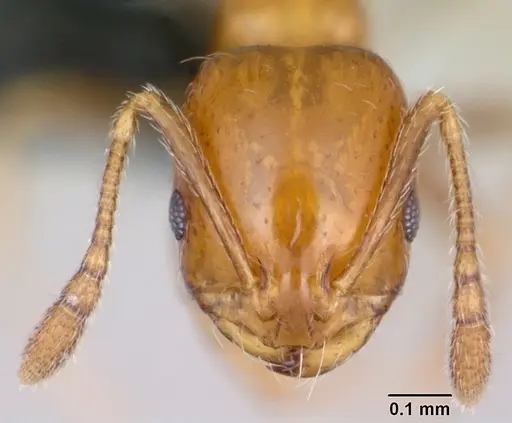
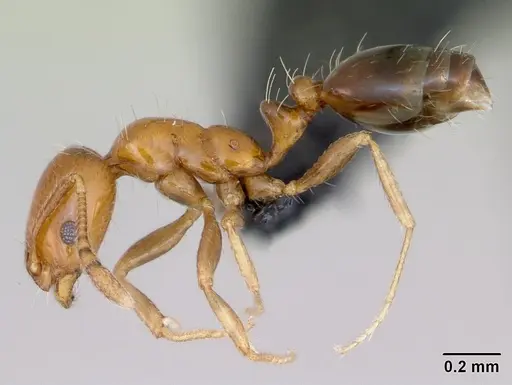
This species belongs to the Monomorium rhopalocerum complex within the Monomorium monomorium species group. Workers are small at 1.13-1.32mm total length, with a distinctive color pattern: tawny-yellow to orange foreparts, brown antennae, and a chocolate-colored gaster (the rear body section). The head is rectangular with a planar or weakly concave vertex. The promesonotum (the middle body section) is shining and mainly smooth. Workers have 12 antennal segments with a 3-segmented club. Queens are significantly larger at 2.27-2.43mm and can be distinguished by their markedly longitudinally striolate frons. The species closely resembles Monomorium termitobium form 'binatu' but can be separated by its larger propodeal spiracle, slightly different propodeum shape, higher postpetiole, and promesonotal pilosity (at least four prominent pairs of erect setae including the infrahumeral pair) [2][1].
Housing and Nest Setup
Based on the natural nesting habitat (rotting logs in spiny forest), a naturalistic setup with appropriately sized chambers would suit this species. The small worker size (just over 1mm) means chambers and passages should be relatively small. A test tube setup can work for founding colonies, but ensure the cotton is properly packed to prevent escapes. For established colonies, a small acrylic nest or Y-tong style formicarium with narrow chambers works well. The spiny forest is a dry environment, so keep the nest on the drier side, allow partial drying between waterings. Avoid overly humid conditions that could cause mold issues. Provide a shallow water foraging area and a small outworld for feeding.
Feeding and Diet
The specific diet of M. xuthosoma has not been documented, but based on typical Monomorium genus behavior, they are likely generalist foragers. Offer small protein sources like fruit flies, small crickets, or mealworm pieces. They may also accept sugar sources like honey water or sugar water, though this should be offered occasionally and removed if not consumed. As with many small Myrmicinae ants, they likely scavenge and may tend aphids for honeydew in nature. Start with small prey items appropriate to their tiny size and observe acceptance. Remove any uneaten prey after 24-48 hours to prevent mold.
Temperature and Seasonal Care
As a Madagascar species from the warm, dry spiny forest, this ant likely prefers temperatures in the 22-28°C range. Provide a gentle temperature gradient if possible, allowing the colony to choose its optimal zone. During the winter months or cooler periods, they may tolerate slightly reduced temperatures (15-18°C) but true hibernation may not be necessary given Madagascar's mild climate. Monitor colony activity, if workers become less active, a slight temperature reduction may be appropriate. Avoid cold temperatures below 15°C as this could be harmful. The dry nature of their habitat suggests they are adapted to seasonal dry periods rather than cold dormancy.
Challenges and Considerations
This species presents several challenges for antkeepers. First, it is rarely available in the hobby since it is endemic to Madagascar and not commonly collected. Second, there is very limited scientific literature on its biology, meaning keepers will essentially be pioneering husbandry methods. Colony sizes are likely to remain small, Monomorium species typically form colonies of only dozens to a few hundred workers, not the massive colonies seen in some genera. The small worker size requires attention to escape prevention, though they are not as tiny as some other Myrmicinae. Finally, the unknown diapause requirements mean keepers will need to experiment with winter care to find what works best for their colony.
Frequently Asked Questions
How long does it take for Monomorium xuthosoma to produce first workers?
The egg-to-worker development time is unknown for this species. Based on typical Monomorium genus patterns for tropical species, it likely takes 4-8 weeks at optimal temperature, but this is a rough estimate rather than confirmed data.
What do Monomorium xuthosoma ants eat?
Their specific diet has not been documented, but they likely accept small protein sources like fruit flies, small crickets, or mealworm pieces. They probably also scavenge and may accept sugar sources like honey water. Offer small prey items appropriate to their tiny size.
Are Monomorium xuthosoma good for beginners?
This species is not recommended for beginners due to limited available care information and rarity in the hobby. It is better suited for experienced antkeepers who are comfortable experimenting with new species and pioneering husbandry methods.
What temperature do Monomorium xuthosoma ants need?
Based on their Madagascar spiny forest origin, they likely prefer warm conditions around 22-28°C. Provide a gentle gradient if possible and avoid temperatures below 15°C.
How big do Monomorium xuthosoma colonies get?
Colony size is unknown for this species. Based on typical Monomorium genus patterns, colonies likely reach dozens to a few hundred workers rather than large colonies.
Do Monomorium xuthosoma need hibernation?
Diapause requirements are unknown. Madagascar has mild winters, so they may not require a true hibernation. A slight temperature reduction (15-18°C) for a few months during winter may be appropriate if the colony shows reduced activity.
Can I keep multiple Monomorium xuthosoma queens together?
Colony structure (monogyne vs polygyne) has not been documented for this species. Combining unrelated queens is not recommended since this has not been studied and could result in aggression.
Where is Monomorium xuthosoma found in the wild?
This species is endemic to Madagascar, specifically the southwestern corner in Toliara Province. It lives in spiny forest habitat, a unique dry, thorny ecosystem. Specimens have been collected from sifted leaf litter and from colonies in rotting logs.
References

This caresheet is licensed under CC BY-SA 4.0 .
Literature
Loading...Loading products...