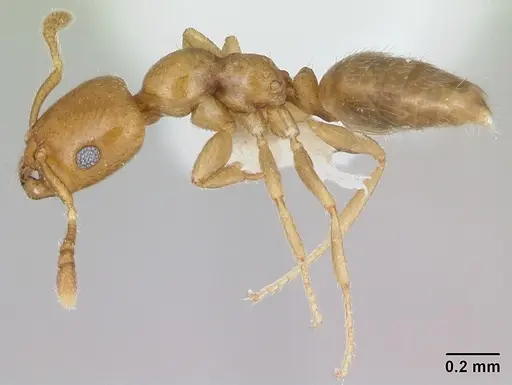
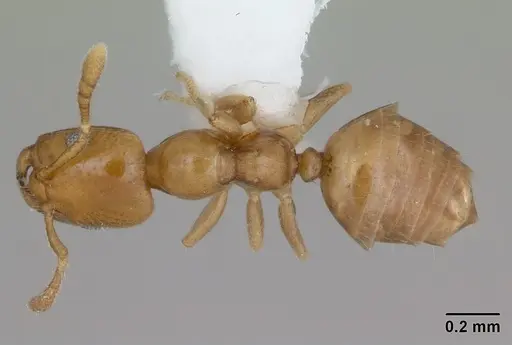
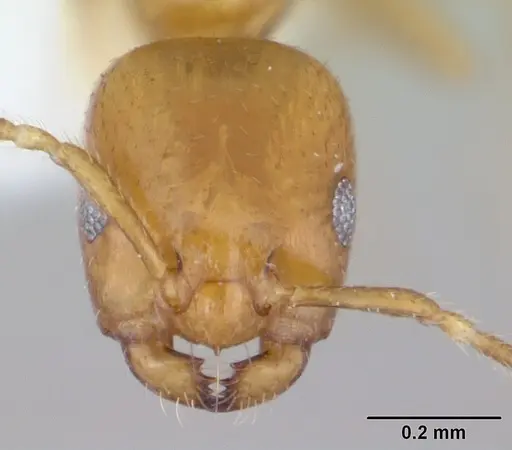
Myrmelachista nodigera - "None widely accepted"
Myrmelachista nodigera are fascinating small-bodied ants belonging to the Formicinae subfamily, exclusively found in the Neotropical region. They are primarily arboreal, meaning they live and forage in trees, often establishing their colonies within live or dead wood and even fallen twigs. These ants are known for forming intricate mutualistic relationships with certain plants, particularly myrmecophytes (ant-plants), as well as with Coccidae and Pseudococcidae (scale insects), which they often tend for their honeydew. While their exact size can vary, workers are generally quite small, and queens are slightly larger. A unique defensive behavior within the Myrmelachista genus is the use of formic acid, which they can spray to deter threats and, in some related species, even as a herbicide to clear vegetation around their host plants. Their antennae typically have 10 segments, a common trait for South American Myrmelachista species.
- Difficulty: Hard
- Origin & Habitat: Neotropical Region (Argentina, Bolivia, Brazil, Paraguay, Uruguay) in Arboreal (live/dead trees, trunk cavities, twigs), fallen twigs in leaf litter, mature wet forests, cloud forests, disturbed habitats..
- Colony Type: Monogyne or Polygyne, semi-claustral founding.
- Size & Growth:
- Queen: 0.8-1.1mm
- Worker: 0.5-0.8mm
- Colony: Medium (hundreds to thousands). Medium, with colonies potentially growing to dominate entire trees. growth.
- Antkeeping:
- Temperature: These ants thrive in warm, tropical conditions. A consistent temperature range between 24-28°C (75-82°F) is ideal to mimic their natural Neotropical environment..
- Humidity: High humidity is crucial, reflecting their rainforest origins. Maintain humidity levels between 70-90% within the nest and outworld to prevent desiccation and support colony health..
- Diapause: Not required. Not specified at Not specified.
- Nesting: Given their arboreal nature, Myrmelachista nodigera prefer nests that simulate hollowed-out wood or twigs. Artificial nests like ytong, cork, or even bamboo test tube setups with suitable humidity levels could work for smaller colonies. For larger setups, a naturalistic arboreal formicarium with pre-drilled wooden sections would be best..
- Behavior: Low (towards handler), Medium (towards rival ants/plants) aggressiveness.
- Common Issues: Mold in wooden nests if humidity is not properly ventilated, Difficulty replicating natural arboreal nesting conditions, Maintaining consistent high humidity without excessive condensation, Finding suitable and varied protein sources, Small worker size makes escape prevention critical.
One of the most captivating aspects of keeping Myrmelachista nodigera is their obligate arboreal lifestyle and unique ecological interactions. These ants are adapted to nest primarily within the cavities of living or dead trees and even fallen twigs in their natural habitat. This means that standard ground-based setups might not be ideal, and hobbyists should consider specialized vertical or arboreal formicaria to cater to their natural nesting preferences. Providing suitable wooden structures or pre-drilled bamboo sections within the nest can greatly enhance their comfort and natural behavior, mimicking their wild homes.
Myrmelachista nodigera are known to form mutualistic associations with certain plants, acting as protectors against herbivores. While replicating complex myrmecophytic relationships in a typical home setup might be challenging, understanding this behavior is key to their care. They also tend Coccidae and Pseudococcidae for their sugary honeydew, which is a significant part of their diet. Consider offering alternative sugar sources like sugar water or honey-based diets, alongside protein, to meet their nutritional needs, especially since maintaining live scale insect colonies can be tricky for the average antkeeper.
A notable trait within the Myrmelachista genus, exemplified by species like M. schumanni, is their ability to create 'devil's gardens' by using formic acid as a herbicide to clear competing plants, promoting the growth of their preferred host trees. While M. nodigera specifically may not form these gardens to the same extent, it highlights their unique chemical defenses and their active role in shaping their environment. Antkeepers should be aware of their formic acid defense; although they do not sting, direct exposure can be irritating, so handle with care.
Information on the exact life cycle duration and optimal rearing parameters for Myrmelachista nodigera is relatively scarce in antkeeping literature. This means that keeping them might involve a degree of experimentation and careful observation to fine-tune temperature, humidity, and feeding schedules. Patience and a willingness to adapt your care regimen based on the colony's response will be essential for success. Documenting your observations can also contribute valuable data to the broader antkeeping community.
Despite their small individual size, Myrmelachista nodigera colonies can grow quite large, potentially reaching into the thousands of workers. This growth capacity necessitates planning for future expansion, especially if you start with a founding queen or a small colony. Ensure your initial setup allows for easy expansion or migration into larger arboreal formicaria. The small size of the workers also means they are adept at escaping, so secure enclosures with fine mesh or talc barriers are crucial to prevent breakouts.
Frequently Asked Questions
What do Myrmelachista nodigera ants eat?
These ants are omnivores with a diverse diet. In the wild, they consume extrafloral nectaries from plants and protein from insects. They are also known to tend to scale insects (Coccidae and Pseudococcidae) for their sugary honeydew. In captivity, you can offer them sugar water, honey-based diets, and various feeder insects like fruit flies or small roaches for protein.
Where do Myrmelachista nodigera ants typically live?
Myrmelachista nodigera are exclusively Neotropical and arboreal ants. They prefer to nest within the natural cavities of living or dead trees, as well as hollowed-out fallen twigs in rainforests, cloud forests, and even disturbed areas across Argentina, Bolivia, Brazil, Paraguay, and Uruguay.
Are Myrmelachista nodigera difficult to keep for hobbyists?
Yes, they are generally considered a 'Hard' species to keep. Their specialized arboreal nesting requirements, need for high humidity, and the scarcity of detailed care information make them more challenging than many beginner species. Replicating their natural habitat and diet takes dedication and experience.
How large do Myrmelachista nodigera colonies get?
Myrmelachista nodigera colonies can reach considerable sizes, ranging from hundreds to thousands of individuals. In their natural environment, mature colonies can become quite extensive, sometimes even dominating the canopy of an entire tree.
Do Myrmelachista nodigera ants sting?
No, Myrmelachista nodigera do not possess a sting. However, like many ants in the Formicinae subfamily, they are capable of spraying formic acid as a defensive mechanism. While not a sting, this acid can be irritating if it comes into contact with skin or eyes, so caution is advised during handling.
What kind of nest setup is best for Myrmelachista nodigera?
Given their arboreal nature, a nest that mimics hollow wood or bamboo is highly recommended. This could be a vertical acrylic setup with pre-drilled wooden inserts, a stacked cork nest, or even test tubes within bamboo pieces for smaller colonies. The key is to provide vertical nesting spaces with appropriate humidity.
Are Myrmelachista nodigera queens monogynous or polygynous?
Myrmelachista colonies can exhibit both monogyny (single queen) and polygyny (multiple queens). This flexibility in colony structure means you might encounter either type, depending on the specific colony and its founding.
How do Myrmelachista nodigera interact with plants?
These ants have a fascinating mutualistic relationship with certain plants, particularly myrmecophytes, where they live within the plant's structures and protect it from herbivores. They also tend to scale insects on plants for their honeydew. Some related species are even known to use formic acid as a herbicide to cultivate specific host plants.
What is a 'devil's garden' in relation to Myrmelachista?
A 'devil's garden' is a large, often circular, clearing in the rainforest where only one or a few species of trees grow. It's created by certain Myrmelachista species, most famously M. schumanni, who kill off competing plants by injecting them with formic acid. This ensures their preferred host trees have ample space and resources. While M. nodigera may not create these specific gardens, it illustrates the genus's remarkable ecological impact.
Do Myrmelachista nodigera require diapause?
As a species native to the tropical Neotropical region, Myrmelachista nodigera do not require a diapause period. They are accustomed to year-round warm temperatures and high humidity, and attempting to put them into diapause could be detrimental to the colony's health.