

Monomorium megalops
- Scientific Name
- Monomorium megalops
- Tribe
- Solenopsidini
- Subfamily
- Myrmicinae
- Author
- Heterick, 2001
- Distribution
- Found in 1 countries
Monomorium megalops Overview
Monomorium megalops is an ant species of the genus Monomorium. It is primarily documented in 1 countries , including Australia. Detailed taxonomic data and occurrence records can be further explored via authoritative databases such as AntWeb or the Global Biodiversity Information Facility (GBIF).
Monomorium megalops
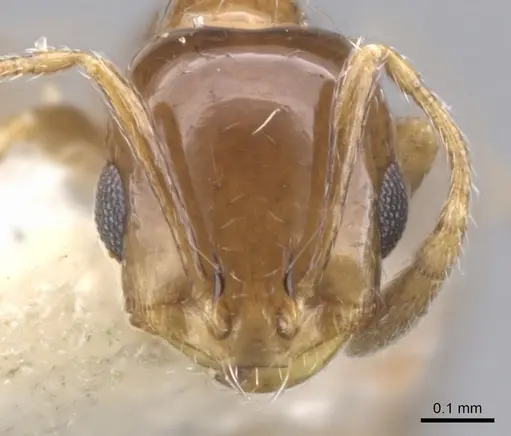
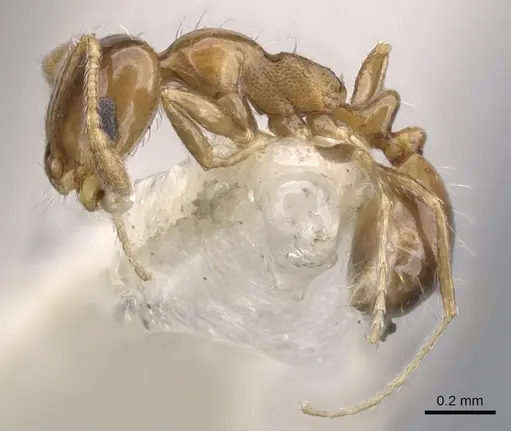
Monomorium megalops is a tiny Australian ant species measuring just 1.2-1.5mm in total length, making it one of the smaller ants you'll encounter. Its most distinctive feature is its remarkably large, kidney-shaped eyes, so prominent they inspired the species name 'megalops' (Greek for 'large-eyed'). The workers are brown to tawny orange, with the head often darker than the body, and a chocolate-colored gaster. This species is virtually identical in appearance to the more widespread Monomorium sordidum, and some researchers believe it may eventually prove to be just a variant of that species. The large eyes may be an adaptation to its arid habitat, helping with foraging in low-light conditions or detecting movement [1].
What makes this species interesting is its restricted distribution in Australia's arid interior, primarily inland New South Wales and South Australia, with a single record from Western Australia. It was only formally described in 2001,meaning we know very little about its biology in the wild. Based on its habitat and related species, it likely forms small colonies in soil or under stones in desert and semi-arid areas. For antkeepers, this is a species for patient hobbyists who enjoy the challenge of keeping a less-documented species.
Quick Summary
- Difficulty: Medium
- Origin & Habitat: Eastern arid zone of Australia, primarily inland NSW and SA, with one record from WA. Found in Victoria Desert, clay soils, and areas with Casuarina vegetation [2].
- Colony Type: Colony structure is unconfirmed. Based on related Monomorium species, likely forms single-queen colonies (monogyne).
- Size & Growth:
- Queen: Unknown, queen has not been described. Estimated 4-5mm based on genus patterns.
- Worker: 1.18-1.50mm total length (head 0.47-0.58mm, head width 0.38-0.49mm) [2]
- Colony: Likely small, under 500 workers based on related species and arid habitat
- Growth: Unknown, likely moderate like other Australian Monomorium
- Development: Estimated 6-8 weeks at optimal temperature based on genus patterns for small Myrmicinae in warm climates (Direct development data unavailable. Related Monomorium species in Australia typically develop in 6-8 weeks at 25-28°C.)
- Antkeeping:
- Temperature: Keep at 24-28°C. Arid Australian species prefer warmer conditions, but avoid extreme heat. A gentle gradient allowing workers to move between warmer and cooler areas is ideal.
- Humidity: Low to moderate. This is an arid-adapted species, keep substrate moderately dry with a small moist area. Do not overwet the nest. Think desert conditions, not rainforest.
- Diapause: Likely required. Arid Australian ants typically slow down during winter months. Provide a cool period around 15-18°C for 2-3 months, reducing feeding frequency.
- Nesting: Natural nesting is in soil and under stones in arid areas. In captivity, a small test tube setup works well for founding colonies. For established colonies, a small formicarium or acrylic nest with sand/soil substrate. Keep chambers relatively small and dry.
- Behavior: Workers are small and fast-moving. They are likely generalist foragers, gathering nectar, honeydew, and small insects. Escape prevention is critical due to their tiny size, they can squeeze through remarkably small gaps. Use fine mesh and tight-fitting barriers. Not aggressive, but may bite if threatened. Their large eyes suggest they may rely more on visual cues than many ant species.
- Common Issues: tiny size means escapes are likely without fine mesh barriers, limited biological data makes precise care challenging, slow colony growth can frustrate beginners, arid species prone to mold if kept too humid, wild-caught colonies may have parasites
Appearance and Identification
Monomorium megalops is one of the smallest ants you're likely to keep, workers measure just 1.2-1.5mm total length. The most distinctive feature is the remarkably large, kidney-shaped eyes that set this species apart from most other Monomorium. The workers are brown to tawny orange, with the head typically darker than the alitrunk (middle body section), and a dark chocolate-colored gaster (abdomen). They are virtually identical in morphology to the common Monomorium sordidum, differing mainly in eye size and shape. If you're trying to identify a suspected M. megalops, look for the large eyes as the key distinguishing feature. Queens have not been described in the scientific literature, so if you catch a founding queen, you'll need to rely on location (eastern arid Australia) and the large eyes to confirm identification [2].
Natural Distribution and Habitat
This species is endemic to arid Australia, with a distribution centered on inland New South Wales and South Australia. There's a single record from Westonia in Western Australia's goldfields, making it primarily an eastern arid zone species. Specimens have been collected from the Victoria Desert, areas with Casuarina vegetation, and clay soils at a minesite. This suggests it prefers open, arid habitats with sandy or clay soils, typical of Australia's interior. The species was only formally described in 2001,which tells you how little we know about its biology. If you're in Australia and find this species, it's likely in dry, open areas with minimal vegetation cover [1][2].
Feeding and Diet
Like other Monomorium species, this is likely a generalist forager that collects nectar, honeydew from sap-sucking insects, and small insects. In captivity, offer a varied diet: sugar water or honey water as a constant energy source, and protein sources like small fruit flies, pinhead crickets, or other tiny insects. Given their small size, prey items should be appropriately sized, very small insects or pre-killed pieces of larger insects. Feed protein roughly twice weekly, and keep sugar water available at all times. Remove uneaten prey after 24-48 hours to prevent mold. Because we have no specific feeding studies for this species, observe your colony's preferences and adjust accordingly [2].
Temperature and Heating
As an arid Australian species, Monomorium megalops prefers warmer temperatures, aim for 24-28°C in the nest area. You can achieve this with a heating cable on one side of the nest, creating a temperature gradient so workers can choose their preferred zone. Avoid temperatures above 32°C, as this can stress the colony. Room temperature (around 20-22°C) may be too cool for optimal development, so supplemental heating is likely beneficial. During winter, if your room temperature drops significantly, you can reduce heating to provide a natural cool period, this may help trigger seasonal behavior patterns. Just don't cool them below around 15°C.
Nesting Requirements
In the wild, this species nests in soil and has been found under stones in arid areas. For captive care, start with a simple test tube setup for founding colonies, a small test tube with a cotton water reservoir works well. Keep the substrate moderately dry, not soggy. Once the colony reaches 20-30 workers, you can move to a small formicarium. Use a sandy or sandy-clay substrate that allows for some moisture retention without staying wet. The chambers should be appropriately scaled to their tiny size, small passages and chambers. Avoid large, open spaces. A small acrylic nest or ytong nest with a sand chamber works well for established colonies.
Colony Establishment and Growth
Since the queen has not been described and founding behavior has not been documented, we must rely on what we know about related Monomorium species. Most Monomorium are claustral, the queen seals herself in a chamber and lives off stored fat reserves until her first workers (nanitics) emerge. Expect a wait of several months before first workers appear. The colony will likely grow slowly at first, small colonies of arid species often take their time. Be patient and resist the urge to overfeed or disturb the founding chamber. Once workers establish, growth typically accelerates. Based on similar species, expect a mature colony of perhaps a few hundred workers. The key to success is stability, avoid frequent disturbances and maintain consistent conditions.
Frequently Asked Questions
How long does it take for Monomorium megalops to go from egg to worker?
The exact development timeline has not been studied for this species. Based on related Australian Monomorium species, estimate 6-8 weeks at optimal temperature (around 25-28°C). Be patient, small arid-zone species often develop more slowly than tropical ants.
What do Monomorium megalops ants eat?
Like other Monomorium, they are generalists. Offer sugar water or honey water constantly, and protein sources like small fruit flies, pinhead crickets, or tiny insects twice weekly. Remove uneaten prey after a day to prevent mold.
Are Monomorium megalops good for beginners?
This is a challenging species for beginners. We know very little about their specific care requirements, they are very small (escape risk is high), and colony growth is likely slow. Consider starting with a more documented species like Monomorium pharaonis or a local species before attempting M. megalops.
Do Monomorium megalops ants sting?
They are too small to effectively sting humans. If threatened, they may bite, but the bite is negligible due to their tiny size.
What temperature do Monomorium megalops need?
Keep them warm, around 24-28°C is ideal. A heating cable on one side of the nest creates a gradient. Avoid temperatures above 32°C or below 15°C.
How big do Monomorium megalops colonies get?
Colony size is not documented, but based on related species and their arid habitat, colonies likely reach a few hundred workers at most. They are not a large colony species.
Do Monomorium megalops need hibernation?
Likely yes. As an arid Australian species, they probably experience cooler winters in their natural range. Provide a cool period around 15-18°C for 2-3 months during winter, reducing feeding frequency.
Can I keep multiple Monomorium megalops queens together?
We don't have data on colony founding for this species. Most Monomorium are monogyne (single queen), but some can found colonies together temporarily. Until we have more data, it's best to keep only one queen per setup.
Why are my Monomorium megalops escaping?
Their tiny size means they can squeeze through incredibly small gaps. Use fine mesh (at least 0.5mm), seal all joints with fluon or petroleum jelly, and check lids frequently. Even a tiny crack is an escape route for these ants.
Is Monomorium megalops invasive anywhere?
No. This is an Australian endemic species with a limited distribution in the arid interior. It has not been documented as invasive anywhere.
References

This caresheet is licensed under CC BY-SA 4.0 .
CASENT0902314
View on AntWeb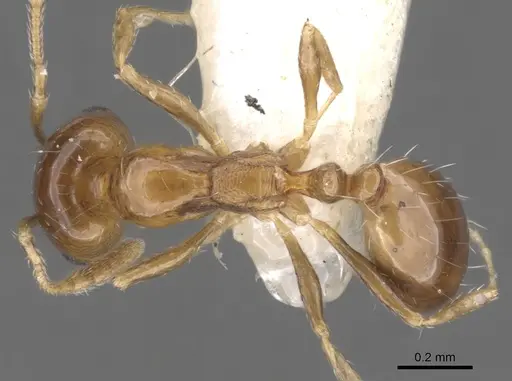
Literature
Loading...Loading products...